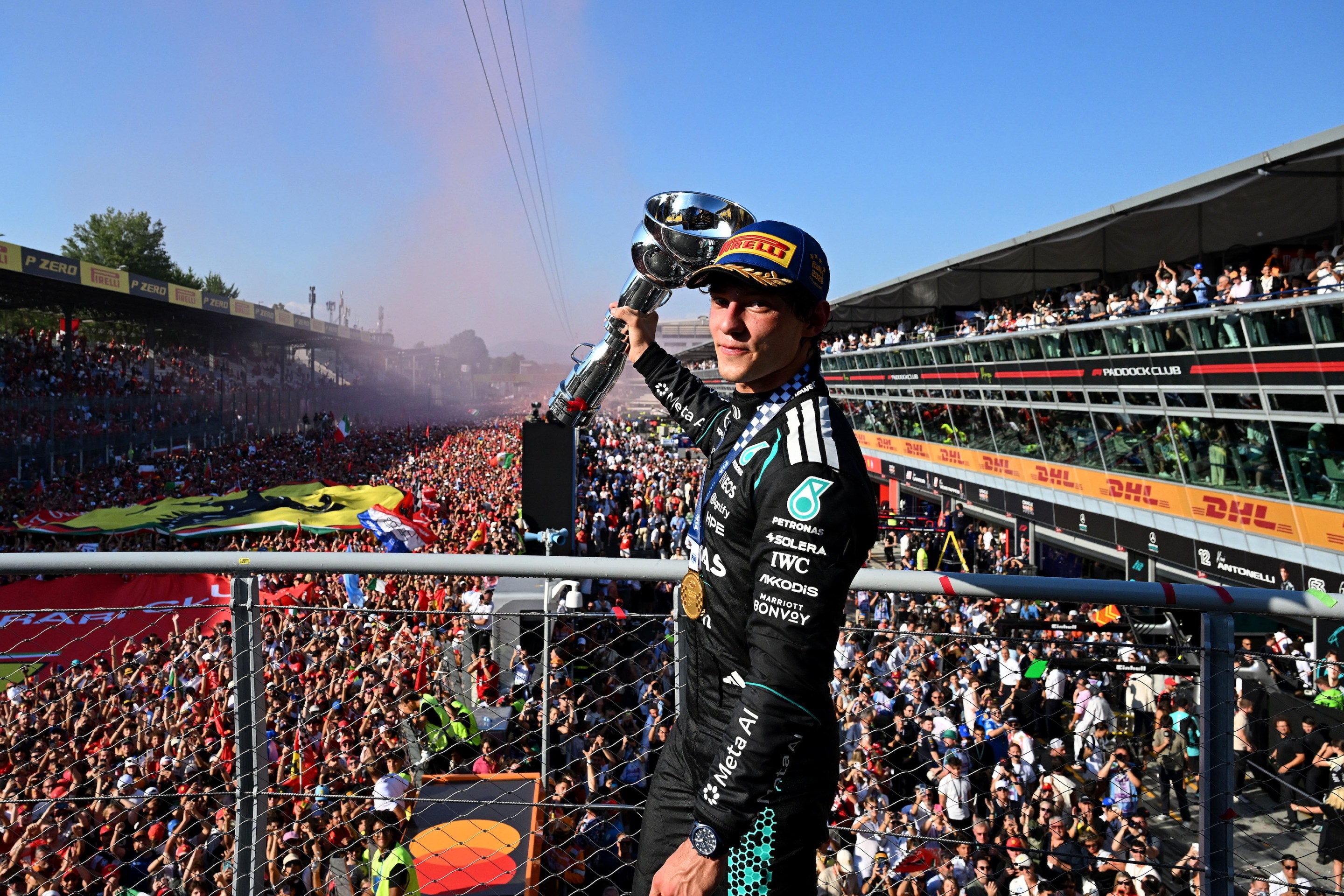
And let the conspiracy theories begin. George Russell had spent the past three race weekends painstakingly narrowing the gap to his wunderkind Mercedes teammate in the Drivers' Championship standings. Luck, for once, fell in his favor. And then on Sunday at the Belgian Grand Prix, Russell yet again had a hellish day. With luck a tired nemesis, it fell upon spectators to find another cosmic horror to blame. Such as: Mercedes boss Toto Wolff.
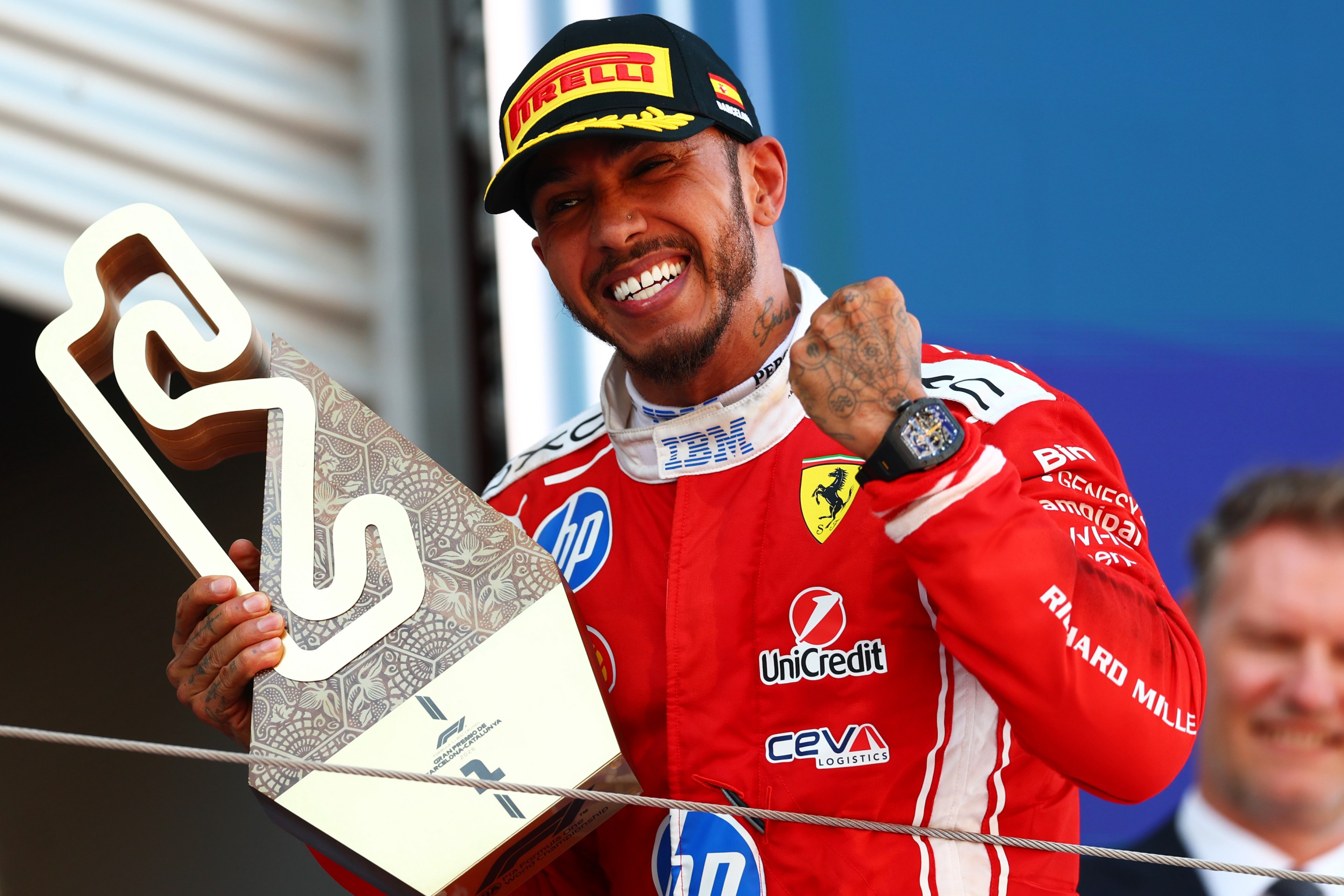
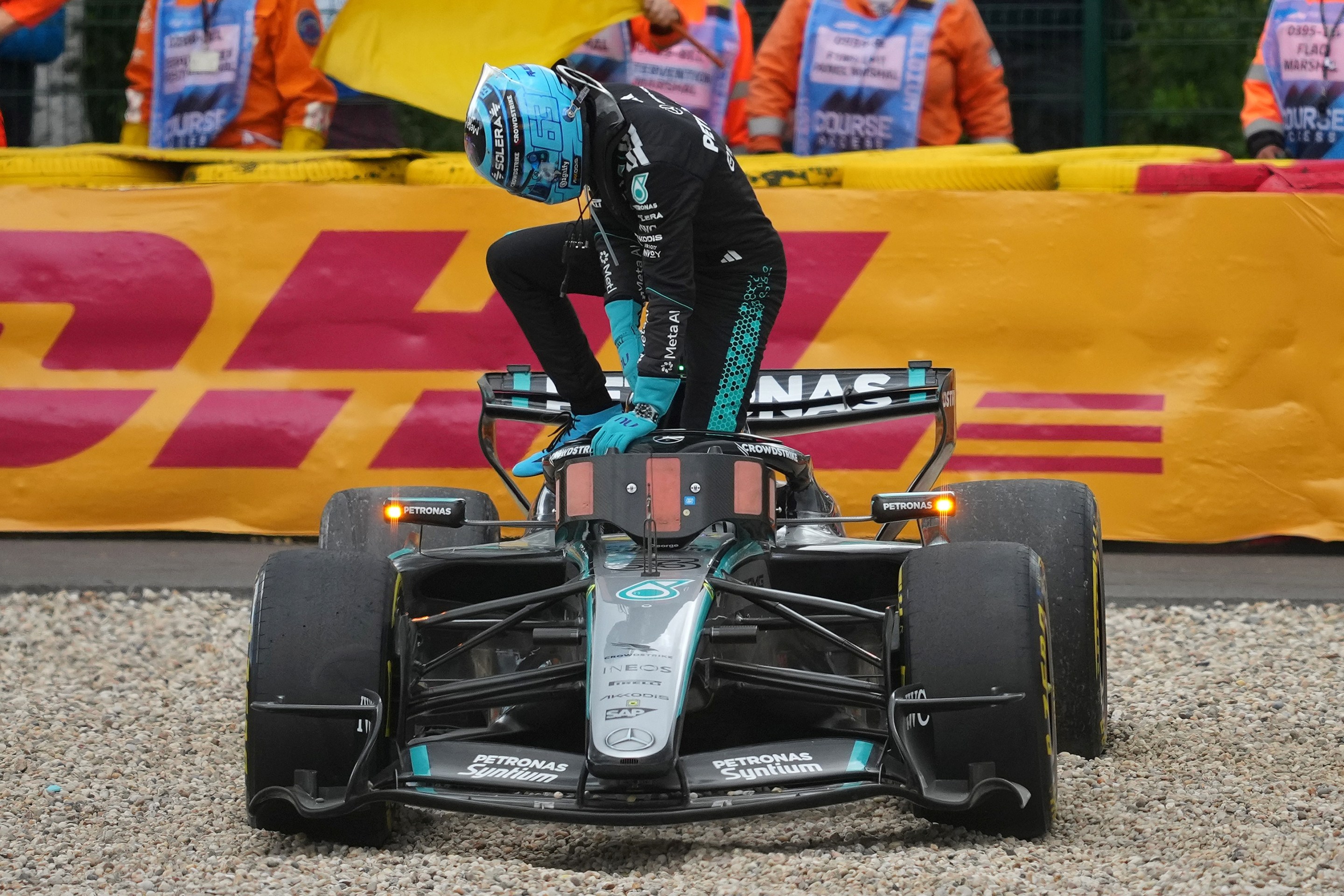
Here are some factual observations. Russell, who started third on the grid, had a relatively poor start off the line, and was swarmed by both Ferrari drivers from behind. While Russell managed to cling to his position through the first corner, his engine struggled to deploy energy on the Kemmel Straight, leaving him a sitting duck. First, Charles Leclerc zipped by. Then, Lewis Hamilton stayed on the inside of Russell through the next corner, washed slightly wide, and spun Russell out of the race. Russell was far angrier about the lack of straight-line power than the collision. "I had no fucking battery down the straight!" he yelled on the radio after literally crashing out. Over the course of the past three race weekends, Russell had managed to close the gap by 25 points. After less than one lap of racing, all of that progress had been undone.
That collision with Hamilton helps demonstrate why it is easy to theorize in F1. Though Hamilton was on cold tires during the first lap of the race and left plenty of room for Russell—and both Russell and commentator Jolyon Palmer dubbed the collision a racing incident—Hamilton was saddled with a harsh five-second penalty. Meanwhile on lap eight, Hamilton's teammate Leclerc took the liberty of trying to squeeze the McLaren of Oscar Piastri off the race track and just bumped into the side of him, and somehow went entirely unpenalized.
Which is to say that Formula 1, like certain other sports or sporting events, has a fundamentally corrupt governing body and some detestable or broadly smarmy team leaders to match. Wolff falls rather firmly into the second category, but without an even more malicious figure on the grid for perspective, he can be placed into the first as well.
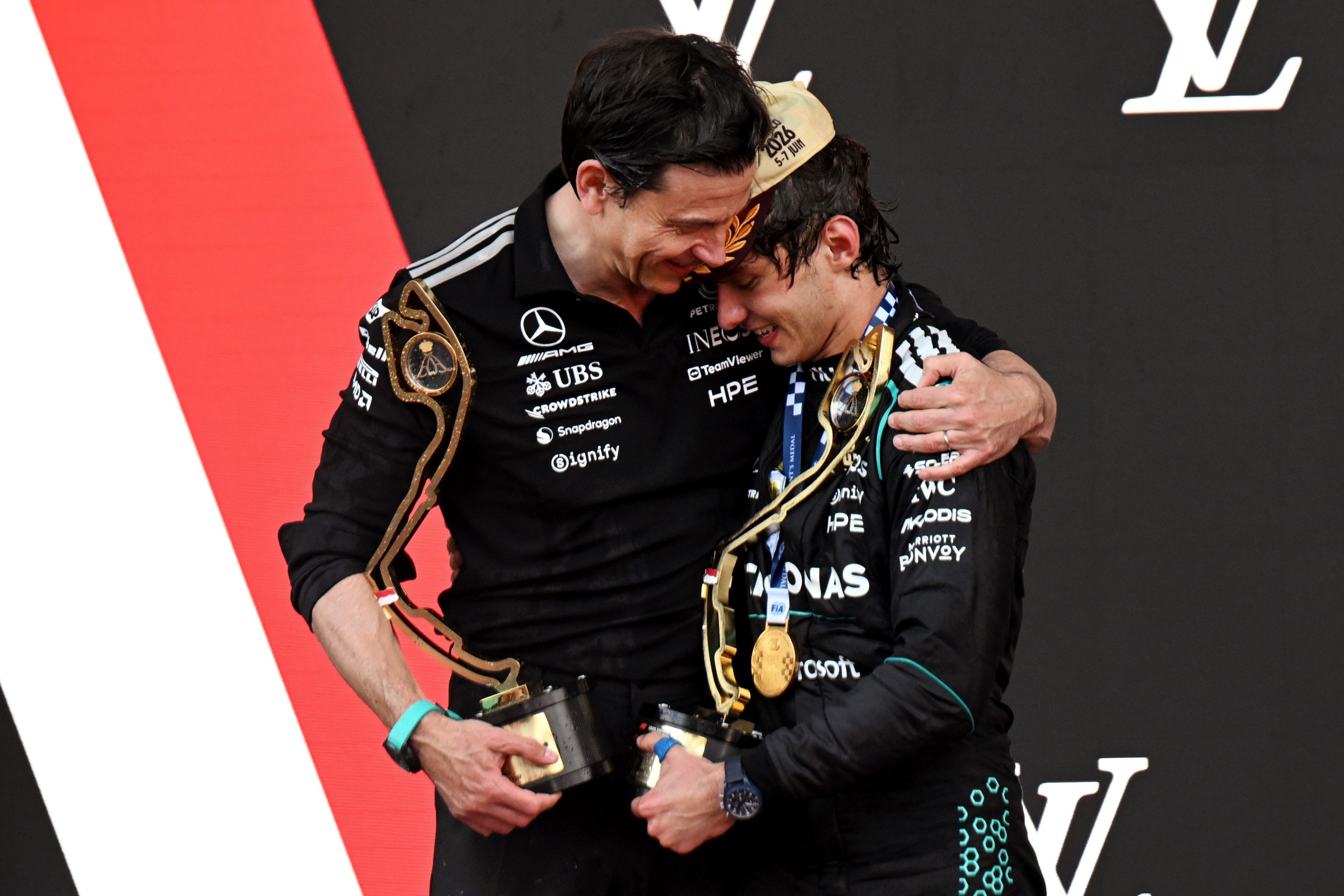
Here are some more factual observations. After the race, Wolff acknowledged an issue with straight-line power "on all Mercedes engines" which affected Russell, and was "100 percent on us." Wolff helpfully elaborated on some more percentages: "George has 100 percent our support. George had a difficult weekend. Half of it is to be attributed to the power unit that wasn’t as good as it should have been and the other half may be on the driving. But we are in this together, we all make mistakes, today is the mistake of the team and another day is going to be the driver. We just need to minimize it and support each other."
Unfortunately, the team and driver have not always been minimizing it and supporting each other. Though there have been moments of camaraderie this season, it is easy to focus on the negative, such as Russell's minor post-race dispute with Wolff after his Silverstone podium: "Let's really try to get on top of this straight-line speed stuff. That was a very frustrating weekend," Russell said. Wolff responded, "Yeah, George, I think straight-line was OK in the race."
Piece those observations together in a vacuum, and you can come to plenty of conclusions. One can check, say, Reddit, and bear witness to a broad variety of variably conspiracy-minded ones. Perhaps there is even an argument to be made that Mercedes has been publicly favoring Antonelli, its championship leader.
But the benefit to the kind of intentional intra-team sabotage some have convinced themselves they are seeing is, materially speaking, nonexistent. It is always best for all drivers on a team to perform as well as possible. That is how teamwork can win Championships, and if a driver should get particularly unlucky, another one can be there to win in their place. If malicious Torger Wolff wanted to evict George Russell for a different driver—the narrative is not quite clear on whether this would be an eviction for underperformance (i.e. Wolff is hungry for Max Verstappen in a Mercedes) or overperformance (i.e. Wolff wants a clear second driver who can't compete with Antonelli)—there are certainly easier ways of doing it, like buying out Russell's contract or simply not re-signing him. Cost, for Mercedes, especially if the team wins both championships—a feat that is easier with two successful drivers—would be irrelevant.
Unless more revelatory information comes out, there is no real reason to assume that what is happening to Russell is so different from what happened to Sebastian Vettel at Ferrari in his later years, or Daniel Ricciardo at McLaren in his later years: A previously successful driver finds himself regularly outperformed by a fresher, younger teammate. The expectation going into the season fails to align with the subsequent results. Driver and fans and perhaps even the team look, first, to blame non-driver factors. The driver begins to feel as though the team is not supporting him as much as it should; the team, perhaps, begins to feel unfairly blamed by the driver for his own mistakes or flaws. The relationship sours, which only exacerbates the aforementioned issues. And the cycle continues. If there is a unique cruelty to Russell's position, it is that he is younger than when it happened to Vettel and Ricciardo.
But any conspiracy theory, even as it is used to try to defend Russell, speaks to how people view Antonelli's capabilities. It only serves to valorize Antonelli's performances this year. If Russell can be so readily deposed by internal machinations, then Antonelli's performance must be good enough, and consistent enough, that Mercedes does not even need a back-up plan for bad luck.
This time last year, Antonelli was having the worst stretch of his season. On Sunday in Belgium, Antonelli demonstrated an almost alarming degree of mastery for a driver of his seniority and age. He asserted himself as the driver to beat from the very first session. He got on pole position, and wrangled the race lead back from Verstappen after losing it at the start. Even after an unlucky safety car that handed Leclerc the race lead, Antonelli worked his way back to the front, and managed to fend off Leclerc, who was fighting desperately—and futilely—to stay within a second.
It has felt like a long drought without a race win for Antonelli, though of course it has only been three races. In two of those races, Antonelli outperformed his teammate, only to get smote by luck. Even knowing that, it can be difficult to keep perspective, though Antonelli has managed that as impressively as everything else.
During a limp post-race interview, Jacques Villeneuve asked Antonelli if he thought he had the momentum going again. "Yeah, no, I think the momentum was always there," Antonelli said. "It was just about getting the result." On Sunday, he got the result; if he didn't know immediately after the victory, he could certainly tell because of the noise.