

Formula 1 has a qualifying problem. This, the FIA acknowledges—that the new power unit regulations have resulted in unfortunate and confusing qualifying laps in which the cars physically cannot go, by some definitions, "as fast as possible." The actual racing, however, is more in dispute. At the Chinese Grand Prix two weeks ago, the new engine specifications and overtake mode were a considerable success for racing; by the fickle nature of F1, the Japanese Grand Prix this Sunday proved that they are a disaster. One crash is all it takes.
The issues in racing, too, stem from the new power unit regulations. While power units under previous rule sets were also hybridized, this year's have shifted from a roughly 85-15 percentage split in provided power between the internal combustion engine (ICE) and electric motor (MGU-K, which alternately charges or deploys battery energy) to a 50-50 split. To get into the nitty gritty numbers, cars can regenerate roughly 8.5 MJ of energy over the course of a lap—that is, roughly 8.5 MJ of energy, as the precise amount varies depending on track, session, and race state—but can only store up to 4 MJ of energy at any given time. F1 cars, then, have to deploy and recharge battery at optimal points over the course of a lap, whether on the straights or in the corners. (As always, Chain Bear has a helpful video visualization of the phenomenon.)
Combined, this battery cycle and power split has resulted in some funky and fresh issues: superclipping, energy starvation, and software-dependent energy deployment. Ordinarily, hybrid engines recharge their batteries in braking zones, where the MGU-K converts the kinetic energy of the car into electric energy. The MGU-K can also be programmed to steal power from the ICE to charge the battery while the car is still at full throttle on a straight, resulting in a massive drop in straight-line speed—the dreaded superclipping phenomenon.
"As fast as possible" has a certain amount of definitional vagueness. Strictly speaking, superclipping can enable a car to go as fast as its parts make possible over the course of a lap, but it runs contrary to what has traditionally looked and felt fast: going full-power on the straights and trying to carry as much speed as possible into the braking zones, the romantic ideal of the last of the late brakers. If qualifying suffers, it is primarily from superclipping, and watching carefully as cars, lap times aside, are visibly losing speed while the drivers are pressing the gas pedal all the way down, at times upwards of 50 kilometers per hour. The intuition no longer aligns with reality, a discordance both drivers and fans experience. "It hurts your soul," said reigning World Champion Lando Norris.
The hubbub around superclipping has resulted in conspiracy theory–level speculation of an FIA cover-up of the phenomenon. In Suzuka, Kimi Antonelli once again beat out his Mercedes teammate, George "Mr. Saturday" Russell, to score his second consecutive pole position, and the primary discourse was about the onboard camera cutting away during his lap. Despite the FIA's attempted intervention, superclipping was still prominent during the session. The official post of Antonelli's pole lap was briefly community-noted on X, the everything app; the official explanation by the F1 account was that Antonelli's onboard camera glitched out during the lap. F1's explanation lines up with Antonelli's telemetry glitching out in the latter part of his pole lap (the teal line seen here) and the fact that superclipping was a very well-known phenomenon going into the weekend; the conspiracy explanation better aligns with the unhappiness fans and drivers have been expressing about the new set of regulations, and helpfully projects shame onto F1's governing body about this year's purported failure of an on-track product.
If there is a discordance between fans and (most) drivers, it exists in the quality of the race product. Battles between drivers where it takes multiple attempts across different parts of a track to make an overtake stick—rather than the DRS-era of "press a button to zoom ahead"—is visually interesting but perhaps not as much a controlled expression of driver skill as some may like. The way energy deployment was spoken of going into the season was an additional part, somewhat like DRS, that drivers could control. But according to Norris, the drivers are broadly at the whims of their power unit's software, which dictates when the car harvests and deploys energy. This not only affects qualifying, but also the race product.
"There's the racing point of view, and honestly, some of the racing ... I didn't even want to overtake Lewis, it's just the battery deploys when I don't want it to deploy, and I can't control it," Norris said about his on-track battle with Lewis Hamilton. "So, I overtake him, and then I have no battery, so he just flies past. This is not racing. This yo-yoing, even if he says it's not." (By contrast, both Ferrari drivers were happy with the battle they waged in China. Then again, the last season of the ground effect era was so miserable than any on-track success would translate into a fondness for the change of pace.)
Skill expression is not usually the primary concern of spectators or even the governing body, both of which prioritize entertainment, though it is difficult to get around how gimmicky the new regulations feel. If 75 years of history is not enough, then receiving a handout with varying megajoule values each race weekend will. Power levels over the course of a lap can be managed, though that management comes less in the form of Go wider in turn four and more as a directive from the pit wall to Use six percent less throttle in turn 13 to get more power on the upcoming straight.
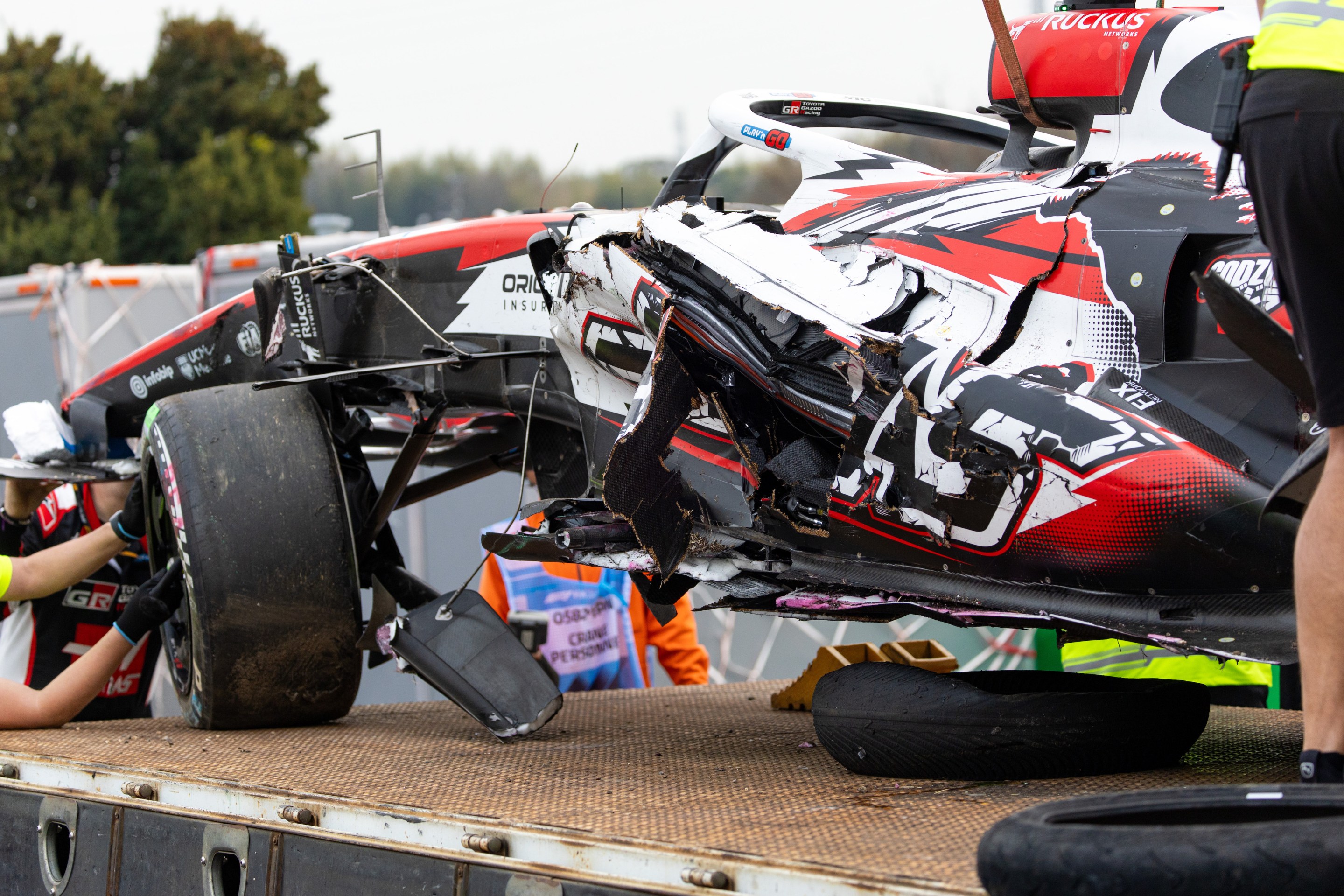
The more pressing matter is that of on-track safety. While under the previous set of regulations, cars would have 85 percent of their power available to them if the MGU-K was not supplying any, under the current set of regulations, cars only have 50 percent of their total power if the MGU-K doesn't deploy. If, as Norris says, drivers cannot fully control whether or not the car's battery deploys, that means that drivers cannot fully control their speed. This is, in part, how you get a crash like Sunday's, in which the Haas of Ollie Bearman went into the barriers at over 50G after avoiding the slow-moving Alpine of Franco Colapinto. Bearman was limping after the crash, but was able to leave the car under his own power, and did not suffer any fractures.
"Here we were lucky there was an escape road. Now imagine going to Baku or going to Singapore or going to Vegas and having this kind of closing speeds and crashes next to the walls," Williams driver Carlos Sainz Jr. said about Bearman's crash. "We, as the [Grand Prix Drivers' Association], we've warned the FIA these accidents are going to happen a lot with this set of regulations, and we need to change something soon if we don't want them to happen."
Three races will have to be enough of a sample size for regulation discourse. The FIA released a statement after Bearman's crash, confirming that there would be meetings held in April to discuss the regulations. With the absence of races next month, after the cancellation of the Saudi Arabian and Bahrain Grands Prix, both the GPDA and F1's governing body will be under pressure to come up with some changes before anybody gets back on the track.