
It is difficult to be a conscientious viewer of Formula 1, a sport which occurs in discrete windows, not all that frequently, and on tracks with their own variable characteristics that can skew results any which way. To be specific, any possible conclusion to be made off the back of the Chinese Grand Prix that took place Sunday in the wee hours of Eastern Daylight Time is negotiating a sample size of two races, and should be treated as such. And with that disclaimer disclaimed: Mercedes is running away with the championship.
Spectators who watched F1 prior to 2021 will be familiar with the horrors of watching two Mercedes cars finish a race well over 10 seconds ahead of the nearest car. There was the infamous HAM BOT VER—Lewis Hamilton, Valtteri Bottas, Max Verstappen—podium trio that defined 2020, and then HAM ROS VET—Hamilton, Nico Rosberg, Sebastian Vettel—before that. Worse, Mercedes rarely had or has the decency to be affected by internal beeves with any sort of consistency, especially when the team starts a season firing on all cylinders. Even one of the most noxious teammate pairings in F1 history, Hamilton and Rosberg, couldn't break the stalwart Mercedes winning machine.
If there is potential for some upset to the Mercedes formula, it will be on slower circuits later in the season. And it is not unheard for a team to make major gains even midway through a single season, as McLaren did back in 2023. Indeed, Ferrari looks to have a couple of upgrades in the pipeline that the team aggressively trotted out to test during the Chinese GP. But to seriously contend in the championship, those upgrades would have to be fully ready sooner rather than later.
In Australia a week ago, both Mercedes cars started in the front row, and both finished over 12 seconds ahead of the closest competitor. In China (spoiler alert), both Mercedes cars started in the front row, and both finished nearly 20 seconds ahead of the closest competitor. The Ferraris proved to be very quick off the line, and Hamilton briefly took the lead of the Chinese GP in the opening laps. They proved punchy immediately following a pit stop, too: With all the cars on fresh hard tires, both Ferraris were able to pass the Mercedes of George Russell and come close to Antonelli's lead. But they couldn't match the pace once the Mercedes cars got their own tires hot. Russell re-passed the Ferraris on laps 29 and 30, then sailed off into the far distance.
Read all of that once appropriately somberly. Then read it again chipperly. The good news is that a championship battle is not the only characteristic that dictates F1's quality as a viewing experience, even if that has been true in recent memory. If we are drawing hasty negative conclusions from the second race of the season, we may as well draw hasty positives ones too: Kimi Antonelli has the potential—the potential!—to take it to George Russell, and bar that, the racing might just be fun to watch.
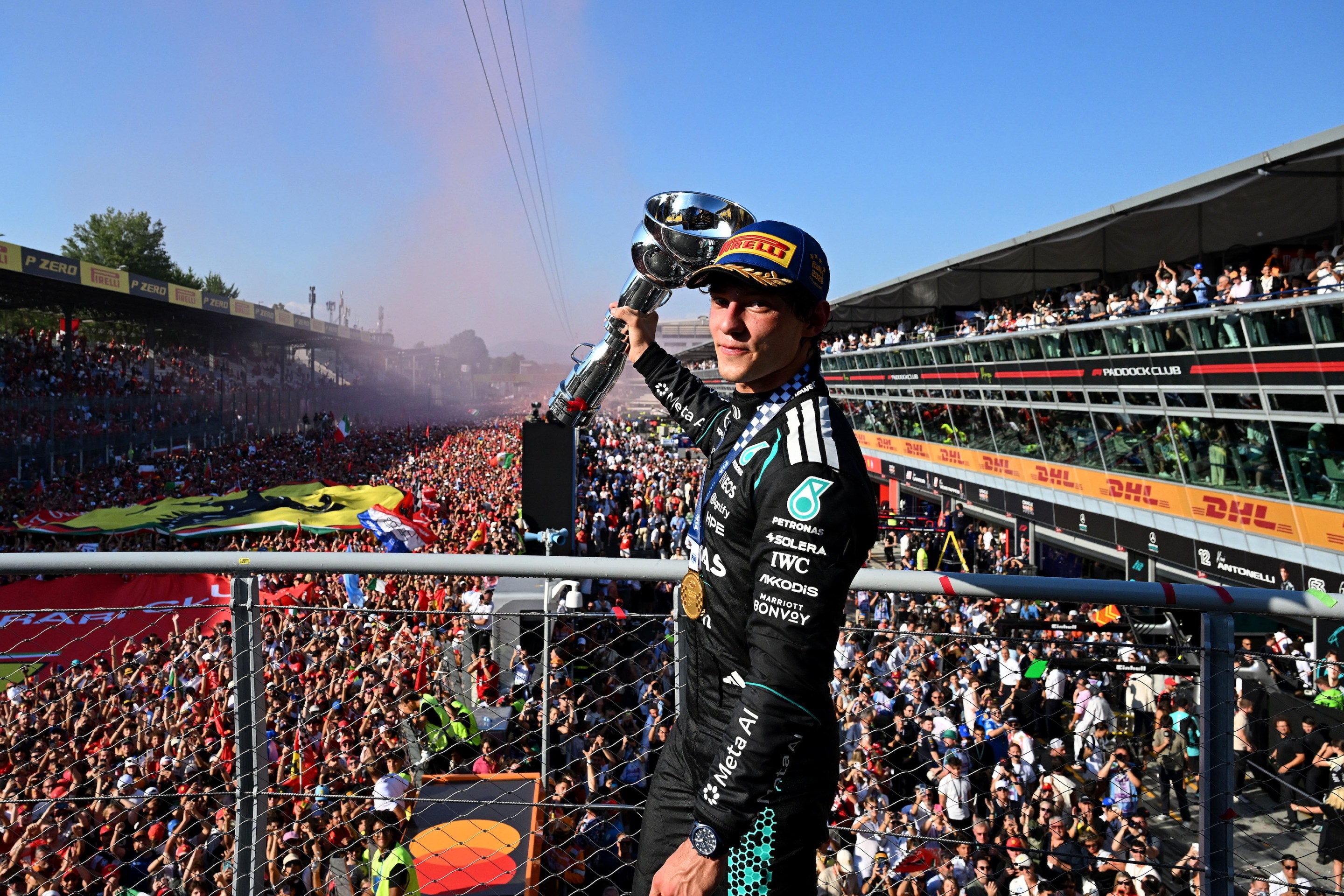
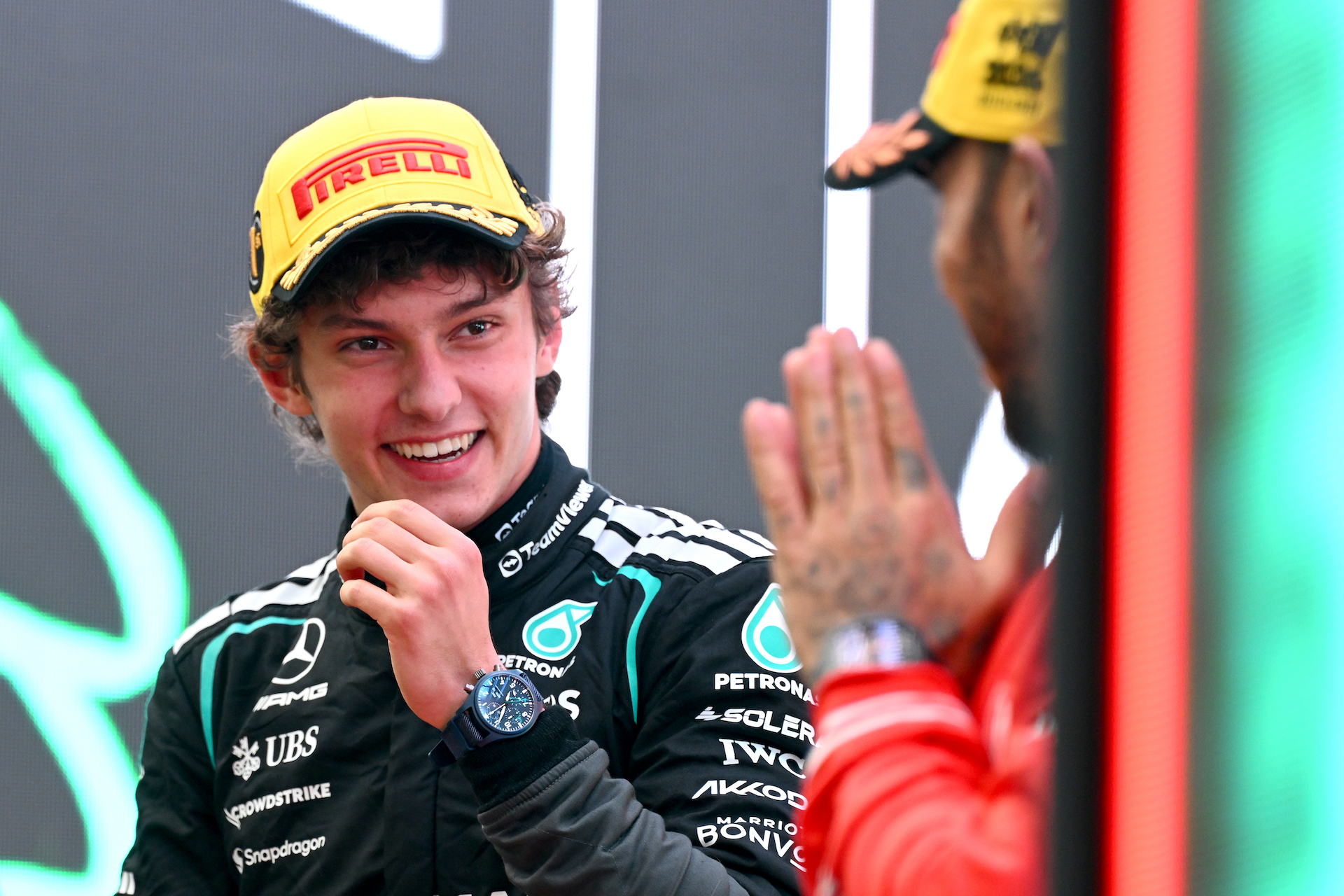
Antonelli's 2025 season was up and down, which was expected, as he was 18 for much of it. This weekend he proved his ceiling. By outqualifying his teammate George "Mr. Saturday" Russell, Antonelli became the youngest polesitter in F1 history, shattering Vettel's longstanding record. Antonelli benefitted massively from his pole, maintaining P2 immediately after race start, and avoiding the Ferraris after his initial pit stop. By winning comfortably from pole position, Antonelli became the second-youngest winner in F1 history, behind Max Verstappen's 2016 victory; the youngest to win a race from pole position (there had to be at least one hyper-specific stat in here); and the first Italian driver to win a race since 2006.
After Antonelli's victory, Mercedes team boss Toto Wolff took it upon himself to put down the critics over the race radio. "'He's too young. We shouldn't put him in a Mercedes. Put him in a smaller team. He needed experience. Look at the mistakes he make.' Here we go, Kimi," Wolff said. "Victory."
Antonelli responded, emotional, "Thank you, Toto." In a later interview, he said, "I'm speechless, I'm about to cry to be honest." His honesty was charmingly not overstated: As he thanked his team, Antonelli did in fact start crying.
The criticism Wolff imitated provides a reminder that it is unwise to place too much pressure on the shoulders of a teenager. Antonelli will likely continue to have ups and downs that Russell, who is nine years older and has six years more experience, will not. He proved that he could be the best driver over the course of a full weekend; that alone is enough.
The fate of the 2026 F1 season does not hinge on the performance of a 19-year-old. The Chinese GP proved that, championship battle aside, a race can be, well, fun to watch in isolation without confounding factors like significant rain. This was thanks to some shenanigans, for sure, but put aside the on-track menaces, there were the Ferraris, who delivered lap upon lap of some of the best wheel-to-wheel racing in years.
Hamilton and Leclerc started wrestling on track on lap 24 and, bar a brief pause as Russell passed them both, never really stopped until lap 40. Usually racing between teammates is a negative, and the commentary was convinced that the Ferraris were wasting away their chance at a race victory with petty squabbling; at the time that they started to race each other, Antonelli was still relatively in sight, and Russell was right behind. But after Russell passed and both Mercedes ran off into the distance, it became clear that the Ferraris were correct to serve the much nobler goal of entertainment.
The Ferraris demonstrated what happens when you get two of the cleanest wheel-to-wheel racers in the world and make them capable of actually racing each other for prolonged periods of time. The full overtake and re-overtake and re-overtake sequences are well worth watching in full. Even the drivers themselves got a kick out of it: "That is actually quite a fun battle," Leclerc told his engineer live over the race radio, to which his engineer replied, "I'm glad."
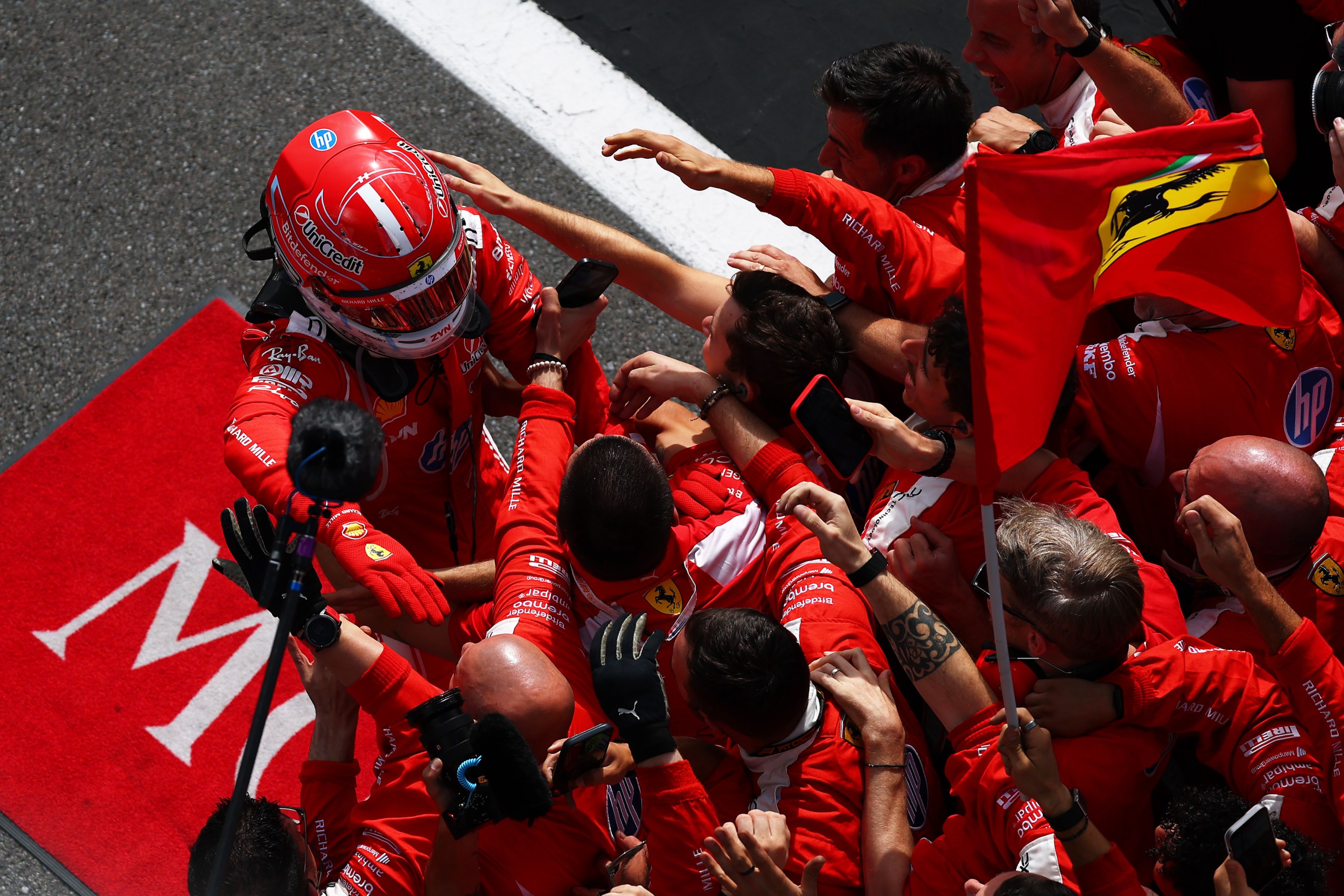
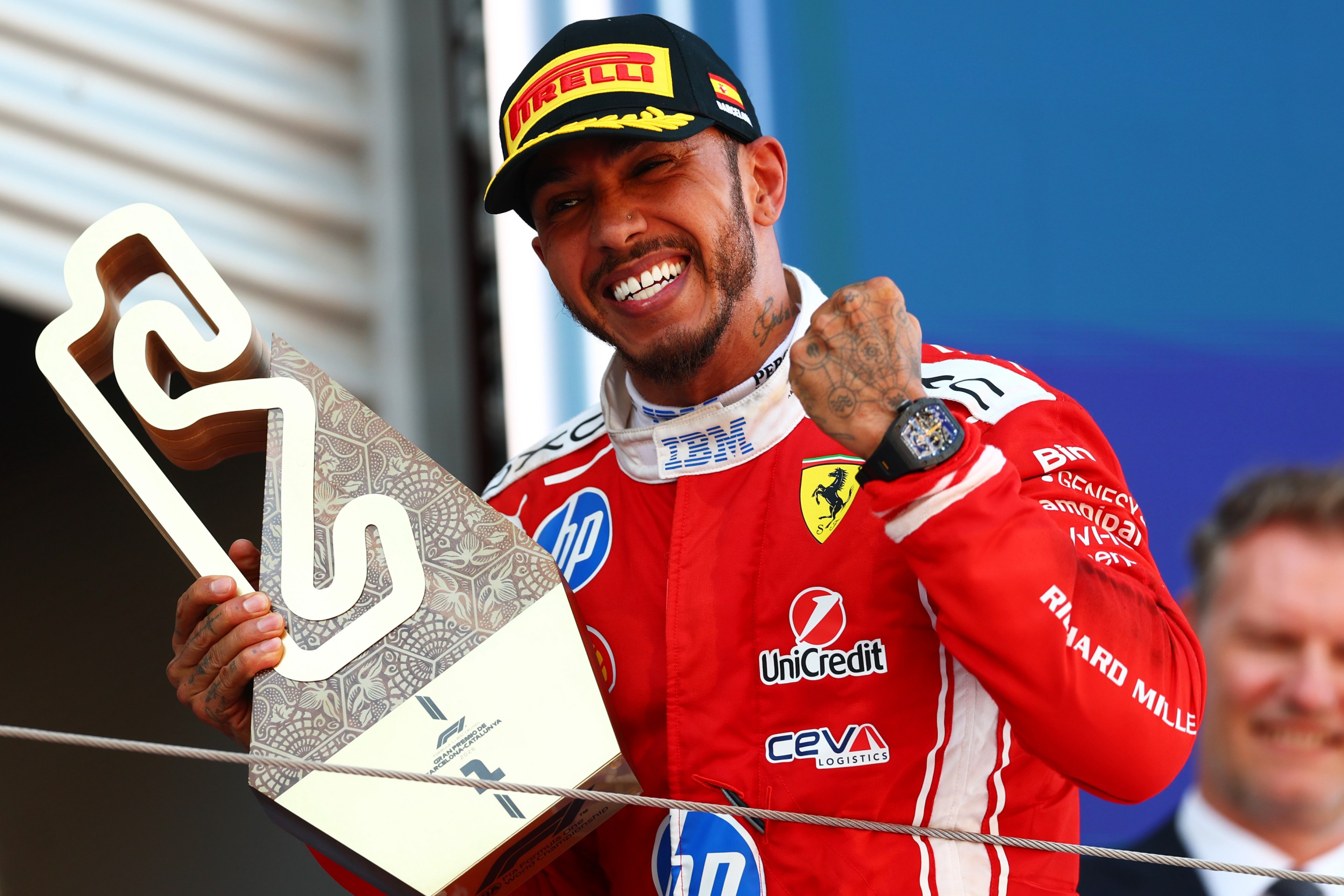
In the end, it was 41-year-old Lewis Hamilton, finally freed from the horrors of the ground-effect era, who won out to earn his first podium with Ferrari. It felt poetic that Hamilton, who dominated so long with Mercedes, should celebrate his resurgence along with Antonelli's first-ever win. They were appropriately joined by Hamilton's former and Antonelli's current race engineer, Pete "Bono" Bonnington. There were Mercedes's past, present, and future, all neatly arranged on the one podium.
At some point, it will be possible to officially bang the gavel on the success of the new regulations, both for the quality of racing and for the quality of the broadcast. (The one thing to be definitely said right now is to beg for the return of multiple decimal places in the live timings, if only to avoid the horrifying sight of +0.0.) There are certainly plenty of complaints to be had about cars losing power on the straights, and how battery levels and overtake mode translate on the screen. But it's difficult to care too much while watching cars actually be able to follow each other through the corners. In the interest of not drawing any conclusions at all, I can only say this: That was, despite everything, fun. Let's hope it happens again.