


The trick with every Formula 1 season is to believe, at the start, that it will be exciting. Fortunately, if last year's preview was any indication, sports fans tend to be quite good about doing this.
But this year, this year really, there is a lot to be excited for. There's a massive regulations overhaul that is shrinking the cars, if just by a little, and dramatically changing how they operate. There's a whole new team on the grid, with not-so-new drivers. Even if there aren't so many new rookies as last year, there is one (a teenage non-pay driver, at that!), plus a lot of sophomores to watch develop. There is already a disaster story on the horizon, for those who enjoy schadenfreude.
Because this is F1, there is also plenty to be wary of. The American broadcast rights have been moved to Apple TV; what this will mean for the sport's popular streaming product, F1 TV, and overall broadcast quality, is unknown. The new regulations may very well be a huge dud that will produce poor racing. Who knows?
Because there are so many unknowns, a team-by-team breakdown of expectation and performance is hard to do. In some ways, that is the most exciting part of the new season: Nobody knows, and you can believe anything. At the same time, there does exist some data from preseason testing, so we can at least make educated guesses. Without further ado, here are six storylines to look out for going into next season.
New Rules!
The newest rules overhaul in F1 is, boastfully, the most dramatic in the sports history, or at least the most dramatic since the last rules overhaul four years ago. If the sheer noise coming out of preseason testing is any indication, however, the 2026 F1 cars should indeed drive very differently—for better or worse—from those of previous years. In our great time of need, Chain Bear, beloved F1 technical YouTuber, has returned to help explain the new regulations, replete with visualizations.
Among the plethora of regulation changes, the most visually striking is the allowance of active aerodynamics. Active aero resembles the now defunct Drag Reduction System, or DRS, in which the flaps of the car's rear wing could be flipped open to increase top speed, but is not to be conflated with DRS. For one, teams are allowed to manipulate the car’s front wings as well as the rear wings, and there are no restrictions on how wide the car can open its flaps, as witnessed by Ferrari, at one point during preseason testing, literally flipping the top of its rear wing upside down.
For another, active aero serves a very different purpose from DRS. Unlike DRS, active aero is not an overtaking tool, but rather built to help the new engines use their power more efficiently, by enabling the car to switch from "straight line mode," where a car would rather reduce drag for a higher top speed, to "cornering mode," when a car would rather generate high downforce. Under the new regulations, active aero can also be used on any lap, by any car, on any stretch of straight track deemed safe, unlike DRS, which could only be used in certain straight zones by a car within one second of the car ahead.
Better power-unit efficiency is key here, as the power units are undergoing dramatic change for the first time since 2014, and seriously changing at all for the first time since the engine freeze in 2022, which essentially barred development for four seasons. The power units are still hybrid, with both a V6 internal combustion engine (or ICE) and an electric motor (or MGU-K, which can draw current from the battery to power the driveshaft or harvest rotational energy from the driveshaft to charge the battery), but there are two major differences. The new power units lack an MGU-H (a device which recovered energy from the heat of exhaust gases), and the percentage of power generated by the ICE and MGU-K is different.
The first change has resulted in an overhaul of race start procedures. To understand the full details and consequences of an absent MGU-H, you can read Mark Hughes's breakdown, but to summarize, cars now need more time to rev the engine in order to access the full power of the ICE. As a result, drivers will now receive a five-second pre-start warning, before the standard start light procedure will commence. Getting off the race line without power can be disastrous, while nailing a race start can be a comparably huge advantage, as Lewis Hamilton helped demonstrate during a practice start in testing.
Slapstick nature of engine revving aside, it is the change in power split that is the most dramatic and potentially the most problematic. The MGU-K has gone from providing about 15 percent of the total power for the car to nearly 50 percent. Running out of power in that unit is thus far more costly than before, as the car, powered only by the ICE, would have 50 percent rather than 85 percent of its theoretical max power. To compensate for increased energy demand, teams can now store more maximum energy in their batteries and recharge their batteries more quickly. However even with these changes, cars have appeared, during testing, to not have enough energy to meet desired power output each lap. That means that cars will have to lift and coast even more into corners, and likely take corners more slowly in order to harvest more energy.
This issue is potentially compounded by F1's new overtaking aid, helpfully called "overtaking mode." Overtaking mode has to do with a car's energy deployment. If a car is less than a second behind the car in front, the trailing car can store slightly more energy in its battery and deploy a bit more energy in certain circumstances (you can see a very helpful visual breakdown of the exact energy and exact circumstances starting at 6:38 in the above Chain Bear video). The only problem is that if cars are already starved for energy driving a normal lap, they won’t be able to deploy even more energy in an attempt to overtake.
If the term "energy starvation" sounds pessimistic to you, well, drivers are being even more extreme. Fernando Alonso declared that a chef could drive the car at the speed it goes through corners; Max Verstappen described it as "not a lot of fun" and "anti-racing." Traditionally the way cars have been hard to drive has been defined by, well, going as fast as possible. The primary limiting factor was corner speed and traction—thus the phrase "the last of the late breakers"—which has been rendered, by engineering, less relevant with the increased number of turns that modern F1 cars can take flat out. (Still the greatest and sexiest example of this is the 2020 Mercedes, driven by Lewis Hamilton, at the Circuit de Spa-Francorchamps.) The 2026 cars promise to be difficult to drive, in the sense that drivers will have to micromanage energy deployment and timing, but that difficulty is unrelated to what difficulty has historically looked like. Instead, it’s kind of like taking a first-person shooter video game and deciding that the best way to make it more difficult is by making resource management the primary mechanic.
Pundits are already racing to discuss how and how not to fix the regulations, but seeing as cars have still yet to even race, it's worth waiting at least a quarter of the season before coming to any conclusions. Cars will naturally perform differently on different tracks and, with the energy management, even lap-by-lap. As long as that lap-by-lap racing is exciting and overtakes are prevalent, fans will probably find it within themselves to forgive the fact that a chef could drive the car. If it isn't, well. We can tackle that once we get there. Thankfully, sports fans have never been reactionary in their lives. - Kathryn Xu
I Swear, This Is Ferrari's Year
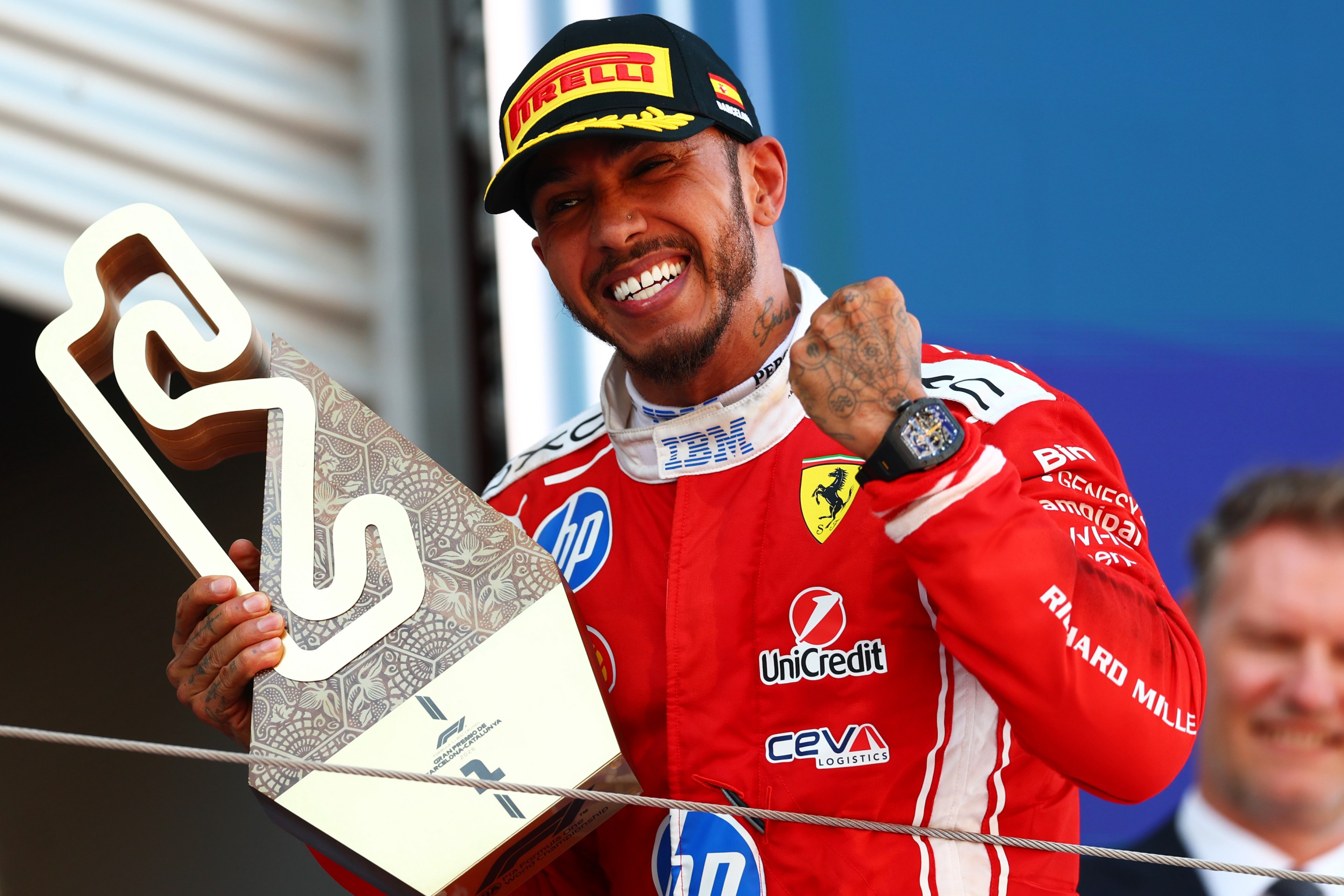
In last season’s preview, I made the same mistake that millions of Ferrari fans make every offseason: I had hope. In my defense, it was totally going to be Ferrari's year. After Ferrari finished second in the Constructors' Championship in 2024 and brought in the GOAT himself, Lewis Hamilton, I fully bought into the hype. How did that go for me? Not well!
Ferrari spent much of the 2025 season vacillating between bad performances and institutional fuck-ups (hello, double DQ!). Hamilton was as likely to get into an argument with his race engineer as he was to finish in the top six, if not more so. Charles Leclerc was ... fine, but it was clear that the car wasn't up to par with the McLaren rocket ship, and the driver performances weren't consistent enough to even replicate 2024's success. Ferrari finished fourth in the Constructors in 2025, behind Red Bull (who basically just had Max Verstappen scoring points), Mercedes (rocking a teenager in what had been Hamilton's seat), and, of course, McLaren (no shame in losing to that beast of a machine). It was a disappointing year for F1's flagship team, coming off of a tsunami of hype. Surely, there's a lesson there not to overreact to preseason, and maybe a more important lesson not to believe in Ferrari until the team has proven it deserves that belief.
OK, with that out of the way, I'm ready to be hurt again: This is totally Ferrari’s year. Preseason testing can be a mirage, and teams can sandbag their upgrades to hide the true speed until race weekend, but I don't care. Ferrari looked phenomenal at one-lap pace in Bahrain testing, with Leclerc putting in the fastest lap of anyone on the final day. This should, in theory, bode well for qualifying this season, which is probably a good thing when you have two of the best qualifiers in F1 history as your drivers. Hamilton has said he feels more "connected" with the 2026 car, which bodes well given how badly he struggled to adjust after moving teams for the first time in 12 years. And Ferrari even got a little cheeky with its design, seemingly for the better: Its rear wing inversion both looks cool and apparently adds more speed than everyone else's.
You spin me right round! 😵💫
— Formula 1 (@F1) February 19, 2026
Here's Ferrari's innovative solution to moving the upper flap of the rear wing as part of this season's active aero introduction 👀 #F1 #F1Testing pic.twitter.com/yY0ZcI1Kph
I know, I know. It's still Ferrari. There will be reliability issues, and pit-wall mistakes, and driver fuck-ups. I've seen it all before, but I don't care. Formula 1 deserves at least one season of Lewis Hamilton winning races in red, and of Leclerc not having an existential crisis every weekend. The car looks ready to provide the framework for renewed Ferrari success. It's definitely Ferrari's year, I just know it. - Luis Paez-Pumar
OK, Get Real: Who Will Actually Win?
One of the three M's: Mercedes, McLaren, or Max Verstappen.
If you are into sports gambling, Mercedes and, specifically, George Russell are the bookmaker's favorites for the new season. Mercedes has historically performed very well after power-unit overhauls—see its incredible stretch from 2014 to 2020, when it won both the Constructors' and Drivers' championships seven straight seasons (and won the Constructors' again in 2021)—and though Ferrari had the best lap times in preseason testing, Mercedes performed best over long runs. Mercedes also has the historical benefit of a good competitive culture and being able to handle itself as the favorite. It is difficult to put Kimi Antonelli's name in there along with Russell, as Antonelli is literally a teenager and likely still a couple years off from his full potential, but it'll be worth keeping an eye on his race-to-race achievements.
At the same time, German media is writing sensationalist previews of the team's odds, which could be bad mojo. Antonelli also experienced some mild reliability concerns during testing. Mercedes is also in the somewhat strange position this year of being the engine provider to another presumed favorite: McLaren.
With regulation changes, success from previous years does not necessarily carry over as well to F1 as it does in other sports, but the heuristic of the reigning champion remains very tempting. While McLaren did not have the same raw performance as Ferrari or Mercedes during preseason testing, the team was also reportedly running an older specification of the Mercedes power unit. Insofar as any team principal can be trusted, McLaren's Andrea Stella stated that Mercedes and Ferrari would be the teams to beat, with McLaren and Red Bull behind.
Russell, while acknowledging that Mercedes was in a very good position to start the season, was also sure to point out that the Red Bull looked "suspiciously slow" during the second Bahrain test. While the Red Bull looked to have a significant advantage in energy deployment at the first test, they lost time come the second. Here we once again encounter the dreaded concept of "sandbagging," or making the car work worse than it appears, thus making practice and preseason sessions unreliable as references. (If Russell is to be trusted, Mercedes were very straightforward in their own testing, with no potential psychological gamesmanship.)
Also to Red Bull's benefit—or, at the very least, new second driver Isack Hadjar's—is the absence of former team bosses Helmut Marko and Christian Horner for a refreshed, hopefully healthier environment. Other than that, Russell is helpfully showing that the exercise in judging performance based on preseason testing is mostly for amusement. There's no real answer to whether or not Red Bull is sandbagging until the first race of the season, but if last year proved anything, you simply cannot count out Max Verstappen.
That said, all of this speculation will ultimately prove ill-starred as two other M's—Merrari and Lewis HaMilton—will actually win the whole thing. It's definitely Ferrari's year, I just know it. - Kathryn Xu
A New Team Has Entered The Villa Paddock
What's new is old and vice versa. The 2026 F1 season will be the first in 10 years to feature 11 teams (and 22 drivers) on the grid, as Cadillac enters the fray. Whatever shiny new feelings that might elicit will be dulled somewhat by Cadillac's driver pairing of choice: If some teams (McLaren, Ferrari) have two number-one drivers competing for the top spot, Cadillac has two number-two drivers. Welcome back, Sergio "Checo" Pérez and Valtteri "Boat Ass" Bottas!
Though both drivers' previous stints in F1 did not end in what anyone could call success—Checo had a meltdown in the cursed second Red Bull seat and was replaced by Liam Lawson for 2025, who was then swiftly replaced by Yuki Tsunoda; Bottas was part of a dead-duck driver lineup at Sauber in 2024—this is probably a smart choice for a brand-new team. Both drivers have steady resumes of competence, no matter how badly things cratered in 2024, and both drivers know how to work with their teammates to secure the most points for the team as a whole. Bottas was Lewis Hamilton's very capable wingman while Mercedes was scooping up every title for half a decade, and Checo's support of Max Verstappen in 2021, specifically in the final race of the season, helped end that Mercedes hegemony. (OK, Michael Masi also had something to do with it, but whatever.)
Cadillac will need every bit of competence from its ancient-by-F1-standards driver lineup. The car is only not the worst on the grid to start the season because of a disaster unfolding at Aston Martin. (More on this in a bit.) That's to be expected; as part of its agreement to join F1, Cadillac has "last place" restrictions on its budget and wind tunnel, and will be playing catch-up for the foreseeable future. This goes a long way toward explaining why the team didn't opt for two young drivers it could nurture into lengthy tenures: There is little margin for error. The hope here will be that Checo and Bottas can put together enough veteran savvy to scoop points and climb out of the cellar, in order to cause a snowball effect of sorts: more money, more development time, more success. Cadillac is, strange though it sounds given the driver pairing, playing a long game here, and though neither Checo nor Bottas will likely be in the long-term plans for the team, their return to F1 seats is the team's best bet toward relevance and longevity. - Luis Paez-Pumar
More Like Asston Martin
It was already increasingly difficult to maintain excitement for Aston Martin in the time following their early 2023 podium run, but even by recent standards, the state in which the team is leaving preseason is disastrous. If you want more detail about the current Honda-powered Aston Martin crisis, you can read a short breakdown here, but to summarize: Undiagnosed vibration issues have caused extreme reliability issues for Aston Martin, which will make the team highly unlikely to finish at the first race of the season. The reasons why the team will be unable to finish the race include such alarming potentialities as The vibrations are causing damage to the battery package in the engine and The vibrations are actively maiming our drivers.
This is just about the most disastrous state an F1 car can be in just coming out of preseason. To find a similar level of disaster, you will have to go back to, well, back when Honda was providing engines to McLaren from 2015 to 2017, and Jenson Button and Fernando Alonso were teammates. However, in 2015, Button at least managed to finish in Australia, even if he was lapped twice along the way.
The bigger concern for Aston Martin at this juncture is not whether or not its cars can finish the opening race (they likely cannot), but how quickly the team can diagnose the problems and fix them. The F1 season opens with back-to-back races in Australia and China, so any major overhauls will likely have to be made in the two-week gap between the Chinese and Japanese Grands Prix. Back in 2015, it took six races for a Honda-powered McLaren to finish in the points; of course, Button was rewarded for that success with three straight retirements. In total, Alonso retired five times in the first nine races of that season; Button retired four times, and once failed to start a race. The McLarens would finish ninth in the Constructors' Championship standings, just ahead of Marussia.
Considering the probability that Alonso experiences extreme war flashbacks whenever he sees a Honda engine, he is displaying diplomatic levels of optimism to the media. Even though he personally stated that 20 to 25 minutes in the car is enough for his hands to go numb, Alonso also maintained, "I mean, the adrenaline is just way higher than any pain. You know, if we were fighting for wins, we can do three hours in the car." Truly spoken like a man who suffered three seasons in a McHonda. - Kathryn Xu
Ah, To Be Young Again
Last year's rookies were a mixed bag, right from the start. The 2025 Australian Grand Prix was a trial by, err, rain, and the messy conditions took a heavy toll on the children of the grid: Four of the six rookies (Liam Lawson, Jack Doohan, Gabriel Bortoleto, and poor Isack Hadjar) crashed out of the race, while a fifth, Ollie Bearman, finished last among the cars that finished at all. Only Kimi Antonelli in the Mercedes surpassed expectations, finishing fourth. The rest of the season wasn't quite as dramatic as all that, but the crushing pressure of an F1 season, especially on a rookie, took its pound of flesh anyway.
Doohan was given six races at Alpine before getting dumped for Franco Colapinto, who was also considered a rookie despite starting nine races at the tail end of 2024. Lawson had just two races in the second Red Bull seat before the team got trigger-happy and swapped him back to Racing Bulls in favor of Yuki Tsunoda. Bortoleto finished five races in the points, but also finished last of any driver who competed the whole season.
There were good showings from the rookies as well, though. Bearman actually beat out his much more experienced teammate Esteban Ocon for the season on points, 41 to 38. Hadjar bounced back from a formation-lap disaster in Australia to perform so well—including a podium in the Netherlands—that he has been, uh, "rewarded" with the Red Bull second seat for 2026. (Good luck!) And Antonelli ended up as the best of the bunch, despite entering the season as the youngest driver on the grid. He wasn't flawless by any means, but three podiums and a second-place finish in Brazil speak for themselves.
This year, those rookies are now grizzled veterans, so expectations will be significantly higher. Antonelli and Hadjar will be expected to keep pace with George Russell and Max freakin' Verstappen, respectively, while Colapinto, Bortoleto, and Lawson will all look to improve on their poor first (full) year showings. I'm going to keep an eye specifically on Bearman: The Haas car looked great in preseason testing, and he showed last year that he has the pace and composure to rack up points.
There is one rookie as well: British teen Arvid Lindblad, who took over Hadjar's spot on the Racing Bulls. The 18-year-old is now the youngest driver on the grid, and his path up the Formula series has been swift. He was in Formula 4 in 2023, moved to Formula 3 in 2024, and finished sixth in Formula 2 last year. Red Bull clearly sees a lot of potential in the rookie, and though the Racing Bulls car has been tricky in testing, the team will surely look for Lindblad to push Lawson, and maybe surpass him. (That would likely spell the end of Lawson's F1 dreams.) Luckily for Lindblad, this weekend's opener in Australia looks to be a dry race, so perhaps he will dodge the mayhem that afflicted last year's rookies in the wet conditions. - Luis Paez-Pumar
Defector's Bonus Livery Corner
Best: Audi
OK, so I don't think Audi has the best livery of the 2026 grid. But this is our preview and our rules, so I am going to call out the rebranded Sauber team as the most improved livery heading into this season. I'm shocked about this; in last season's preview, I praised the Shego green-and-black toy car aesthetic that Sauber had since it rebranded from Alfa Romeo in 2024. I still have a soft spot for that car, more so because it was the color scheme on the day Niko Hulkenberg finally got his first podium.
That being said, the new Audi is gorgeous: The silver and black call to mind Mercedes, but where the accents on that car are teal, the reddish orange pop of color on the back of the 2026 Audi is distinct and eye-grabbing. The number on the nose of the car looks fantastic, as does the color "A" on the exhaust. While I will miss having the unique green monstrosity on the grid, this recolor fits Audi's mission of being taken just a bit more seriously than it was when it was sponsored by the livestreaming site for assholes. - Luis Paez-Pumar
Best: VCARB
I nearly did the same act of grading on a curve here, and putting Red Bull over VCARB based purely on past years' looks. While I adored VCARB's livery from last year (egg! cute!), Red Bull has been running the same damn design back for years, and so any change is a revelation. The changes that Red Bull chose to make—a slightly lighter blue, glossy all over, the colors really popping more—all work really well, if just as a breath of fresh air. On the other hand, when I saw the VCARB, I didn't love the encroachment of navy blue onto the livery, which broke up the bright white and yellow that worked so well last year. But the more I see it, the more it's grown on me, especially with the addition of the white wheel covers which pop on track. I would still like it even more if there was just a bit less navy, but it still makes for a beautiful shot. I'm not sure what it says about me that my first compliment for a livery is usually "edible" but the VCARB really does look edible. Just look at that picture! It's like candy, and still just barely giving egg.
An honorable mention goes to Mercedes, who get points for the car looking like a literal silver arrow from a top-down perspective. I like the concept, if not necessarily the execution. - Kathryn Xu
Worst: Alpine
Alright, enough with the Pepto-Bismol pink. This year's Alpine has basically the same livery as last year—a small change in the wing design adds yet another space for pink—and it's still just as bad as it was then. I don't have much to say that I didn't say last season, but I urge Alpine to be a bit more judicious with the pink in its next livery redesign. A little can go a long way here, while still making the car stand out among all of the blue on the grid. Or, fuck it, go all in on the pink, as Alpine does in the alternative livery; it'll look terrible but at least I'll have something new to talk about next season. - Luis Paez-Pumar
Worst: Ferrari
Hewlett-Packard, you will be punished for your crimes. - Kathryn Xu
Sweeties and Enemies
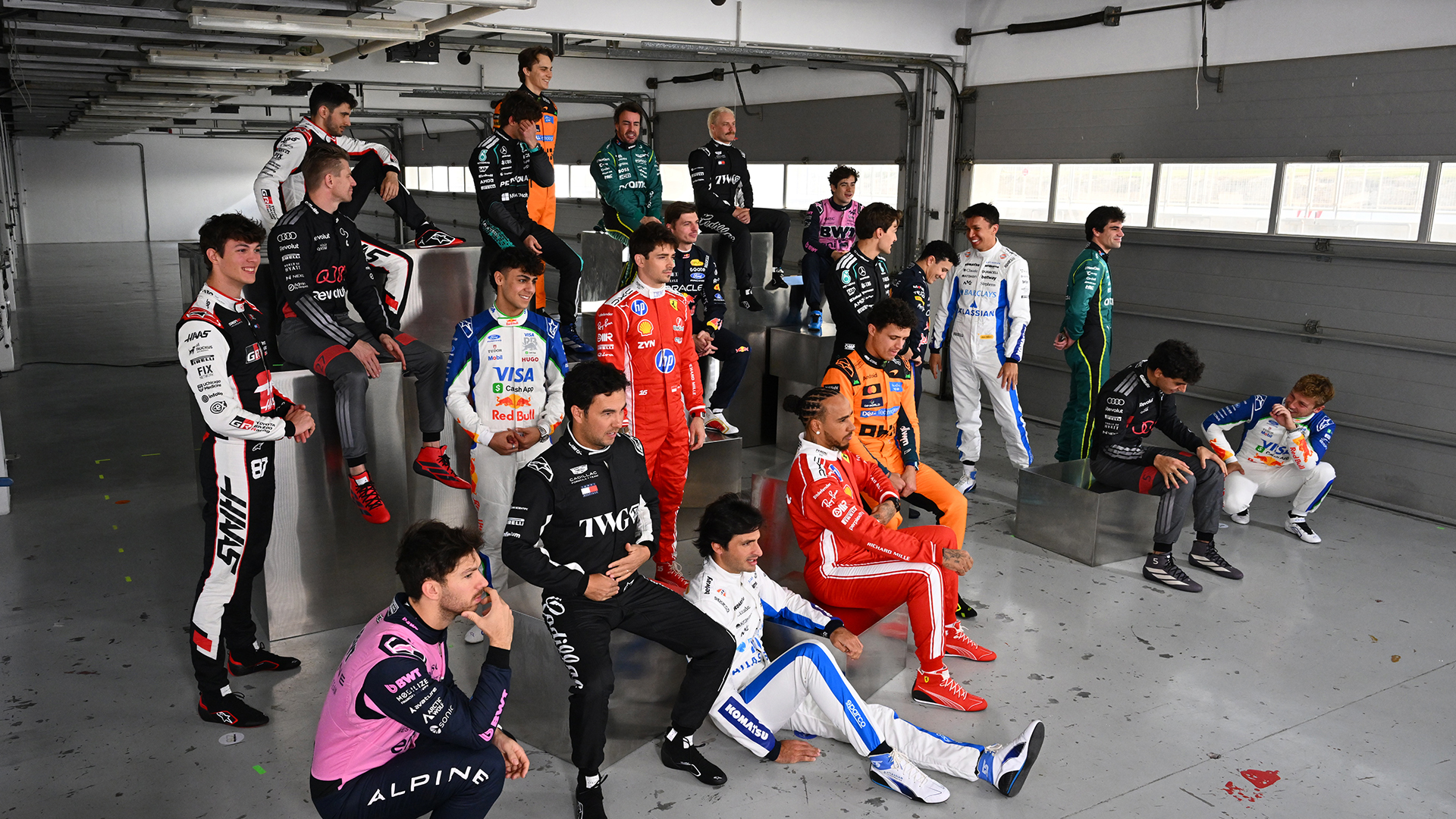
One of the most fun parts of previewing a new F1 season comes from seeing how wildly the Sweeties and Enemies list changes from year to year. More than the grid itself, our list—cobbled together from mathematical averages of rankings by Defector's vroomheads—is fluid, and we have perhaps the biggest shift in the now-four years that we have put it out: Max Verstappen is no longer an Enemy! Wow! Congrats to Max on the biggest accomplishment of his life.
As a reminder, rookies can't be called Enemies, so Arvid Lindblad will stay off the list at least for this year. The sophomores are fair game, though, and we took advantage of that, as you'll see below. Ok, let's get on with it, everyone knows the deal by now.
Sweeties
Lewis Hamilton
Alex Albon
Charles Leclerc
Kimi Antonelli
Valtteri Bottas
Enemies
Lance Stroll
Liam Lawson
Esteban Ocon
George Russell
Sergio Pérez