

Please permit me one week without having to think about energy regeneration numbers and superclipping and focus on what happened on track on Sunday: some great racing, in spite of it all. Formula 1 went on hiatus for over a month, as the Bahrain and Saudi Arabian Grands Prix were canceled due to an immoral and murderous war in the Middle East. In keeping with the ethic of the sport, the race that restarted the season took place in the country that provoked the war, and thus the previous cancellations.
The Miami Grand Prix is a bloated race weekend that pairs the excess of its presentation with an equal excess of schedule: double qualifying and double races. It was not the first sprint weekend of the season—that honor goes to the Chinese Grand Prix—but the timing after a long layoff made the bloat feel overcompensatory. At their worst, sprint races take the sting out of both the key Saturday and Sunday sessions, either confusing the narrative contours of the weekend or spoiling them entirely. At their best, they can be ignored beyond cherrypicking an incident or two to fuel the next day's tension. I choose to view the Miami sprint in the best possible way, as giving a framework for Sunday without imitating it: The McLaren car can contend again, and baby-faced Mercedes teenager Kimi Antonelli has almost put it all together. The final results, beyond the points allotted, can be safely ignored.
McLaren was one of many teams—Ferrari and Red Bull included, with both teams most visibly trotting out their versions of the Macarena wing—to bring a huge upgrade package to its car in Miami. Unlike Ferrari and Red Bull, McLaren also has the benefit of a Mercedes engine, easily the best on the grid right now, which was enough to propel its team toward the very front of the grid. Meanwhile, the sprint weekend showed off many of Antonelli's weaknesses: He had a poor start, received a penalty for track-limits violations, and caused Charles Leclerc to heatedly lambast his wheel-to-wheel racing skills. But it also helped him prove that out-qualifying his teammate, seven-year veteran George "Mr. Saturday" Russell, was not some arbitrary occurrence. Antonelli had the opportunity to do it twice, and in the qualifying session that actually mattered, he stuck his car in pole position, ahead of the Red Bull of Max Verstappen and the Ferrari of Charles Leclerc.
Looming thunderstorms provided one last threat to a high-quality race. In order to avoid a 2021 Belgian Grand Prix scenario, race control chose to move the start of the race up by two hours, which then had the potential opposite threat of a boring race without the benefit of rain strategy. And despite that, despite all of that, the race proved entertaining in its own right from the very start.
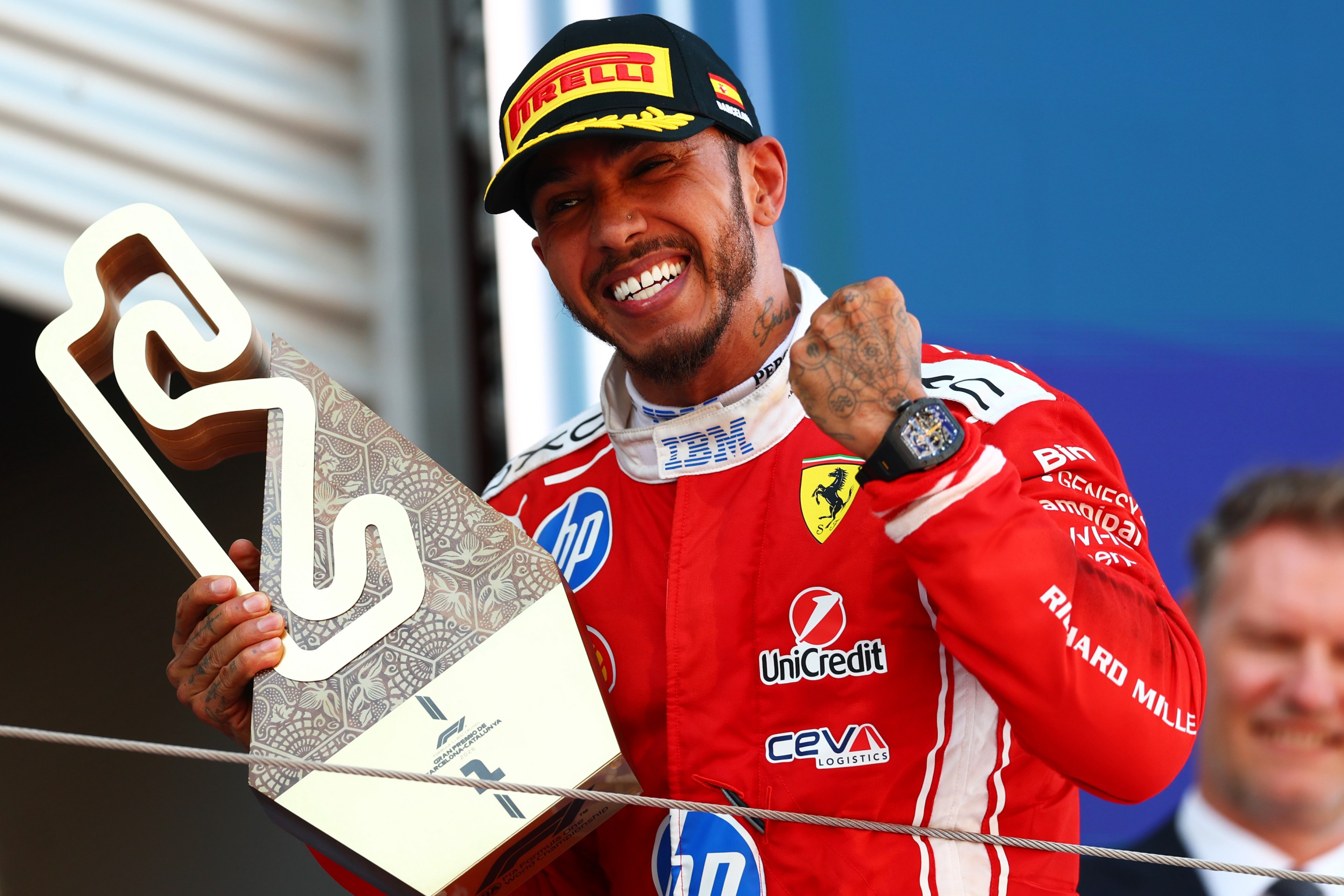
Even if the smaller Ferrari turbo is not a race-winning formula, it helpfully provides early intrigue. Any Ferrari starting toward the front of the grid can reliably rocket forward to an early lead, as Leclerc had. Despite fears of Antonelli's poor starts, it was Verstappen who had the most dramatic first-lap error, completing a full 360-degree spin and still recovering well, in true Verstappen fashion. This helpfully narrowed the field of potential victors that led out the race: the Ferrari of Leclerc, the Mercedes of Antonelli, and the dual McLarens of Lando Norris and Oscar Piastri.
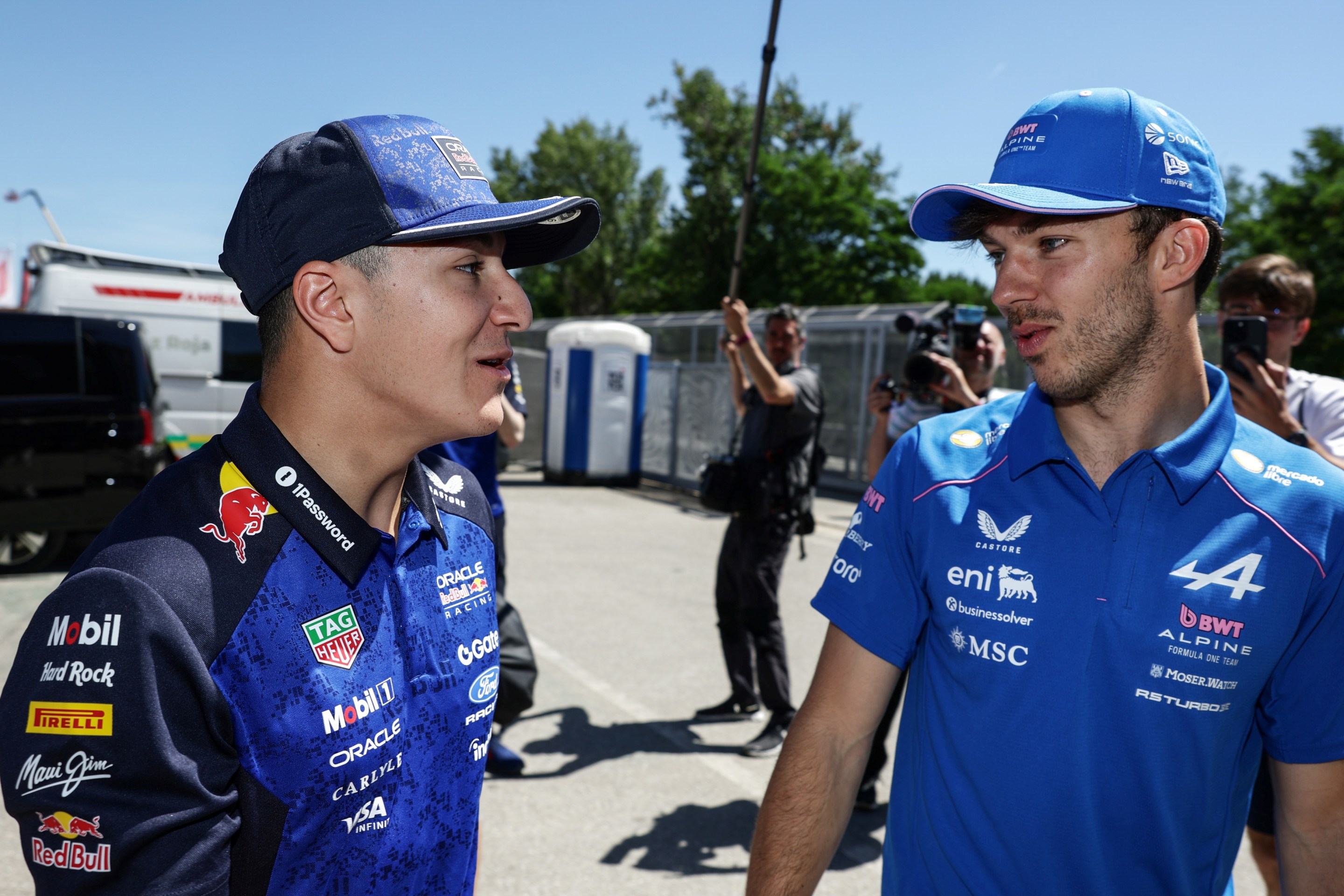
There were some meaningful on-track overtakes in the early stretch of the race. Norris managed to pass Antonelli in the opening laps, just before a safety car was called out for the dual incidents of Red Bull–affiliated drivers: Isack Hadjar clipped a wall, and VCARB's Liam Lawson crashed into the Alpine of Pierre Gasly in a frightening but ultimately relatively safe collision, after his car went into anti-stall. With such an early safety car and threats of rain on the horizon, only Verstappen took the discounted pit stop. Upon the restart, both Norris and Antonelli were able to pass Leclerc.
But the race itself was won and lost in the pit stops, and the truest entertainment was for all of the freaks who love to watch the timing tower. Mercedes pulled off an old-fashioned strategic coup. On lap 21, the team made the first call, summoning Russell, who'd been treading water in fifth behind Leclerc and Piastri, into the pits. Russell had a 2.6-second pit stop. The very next lap, Ferrari reactively pit Leclerc to cover off Russell's attempted undercut. Instead, Leclerc exited the pits biting at Russell's rear wing.
The result, if not the thought process, was brutal enough for Leclerc that he broke out a plea in the healthy communication styles of a couple who had gone to therapy together: "Next time you make a decision, please speak with me. I am here as well." (Spoiler alert: His day would get even worse.) Even so the strategy was not entirely to blame. Ferrari would have successfully covered off Russell if not for a slow stop; Mercedes's pit-stop timing was greatly benefited by Leclerc spending 3.7 seconds entirely stationary. But it was still proof of concept that the undercut, even with Mercedes's early season tire-warming woes, could gain time. At the time Russell entered the pits, he was 2.3 seconds behind Leclerc, which means, after some basic arithmetic, that the earlier stop had been worth approximately 1.2 seconds on its own merit.
Mercedes applied that same arithmetic to Antonelli on lap 27. While at times Antonelli's gap to Norris ahead was as large as 2.9 seconds, Antonelli managed to narrow it down to 1.9 seconds by the time he entered the pits. The Mercedes pit crew delivered by giving him the quickest pit stop of the race at 2.2 seconds. McLaren pit Norris the following lap, with a 2.8-second pit stop. Here is the oversimplified arithmetic: a net 0.6-second gain on pit stop times added with 1.2 seconds from the undercut for a total gain of 1.8 seconds compared to an initial 1.9-second deficit.
And indeed, Norris came out of the pits just ahead of Antonelli. But Antonelli, on one-lap-warmer tires, easily sped past him. More importantly, he was able to then quickly pass Verstappen, who was ahead on much older tires, in order to steal some clear air and start building a gap, however small, to Norris behind. In doing so, Antonelli welcomed in the second phase of races defined by single, pivotal pit stop strategy: the tensely and intensely boring stage of management.
Antonelli was never able to fully pull clear of Norris, who managed to keep the gap under three seconds and, at times, pulled within the coveted one-second overtake mode window. In those conditions, managing the race lead is all about anxiety. There is no wheel-to-wheel racing, only the threat of wheel-to-wheel racing. That is not to say that it is always boring visually; this weekend in particular featured the kaleidoscopic effect of two McLarens simultaneously pursuing two Mercedes, and some brief visual confusion during an overtake. (It was Piastri over Russell, rather than Norris over Antonelli.) But the primary action is in the timing tower and sector times and marginal gains and the constant danger of something going very wrong.
Partway through the pursuit, with 20 laps to go, Antonelli radioed the team with no small amount of panic. "My rears are gone, man. Like, they're dropping quite a bit," he said, a more verbose version of, "Bono, my tires are gone." The calming voice of Pete "Bono" Bonnington, who led Lewis Hamilton to six of his world championships, responded, "It's just temp[erature], Kimi, just temp." Nine laps later, after Norris, unable to make inroads on the race win, complained of track-limits violations (which had earned Antonelli a five-second penalty during the earlier sprint race), Bonnington's input proved necessary again: "We have a second strike for track limits, so no more, Kimi. No more."
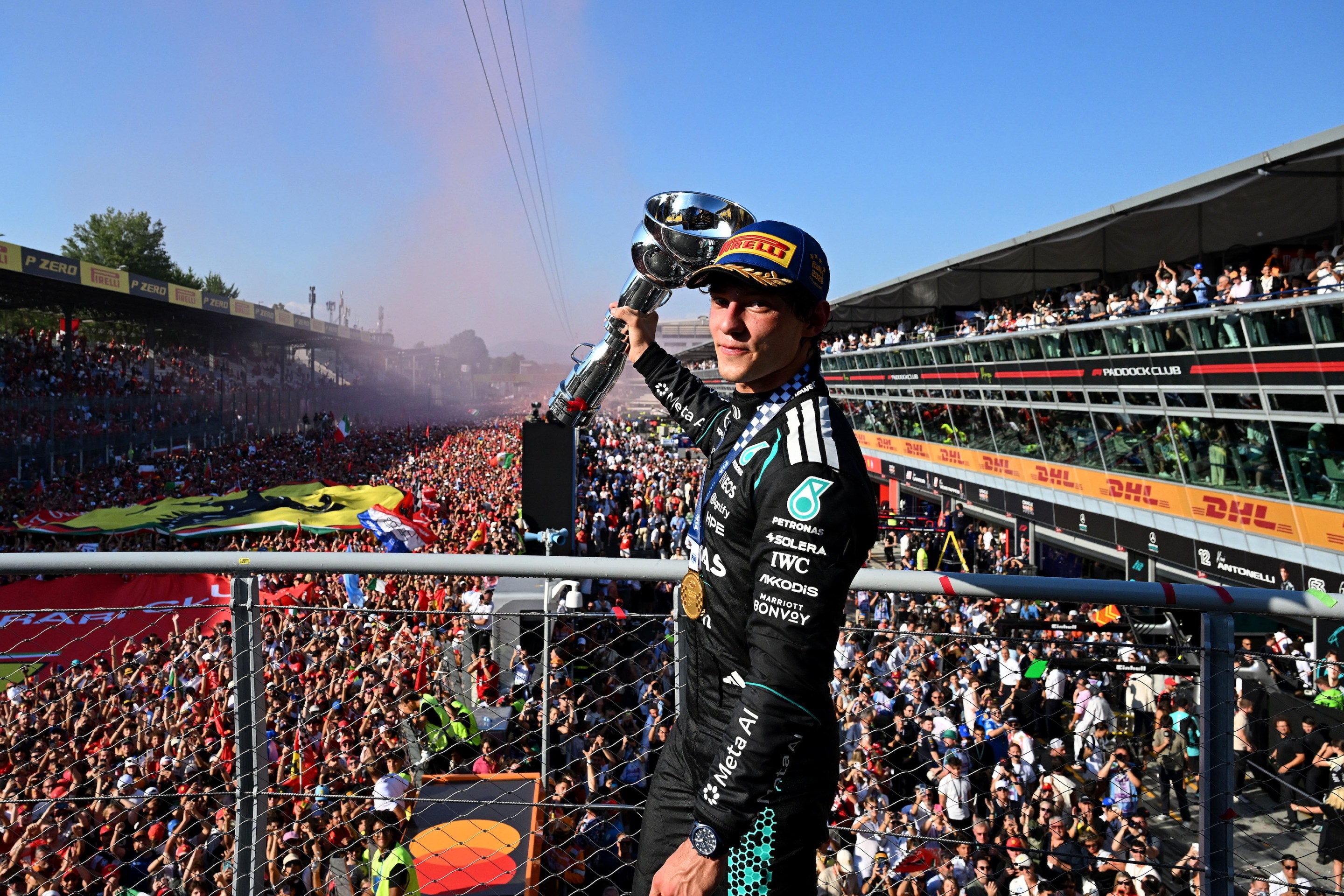
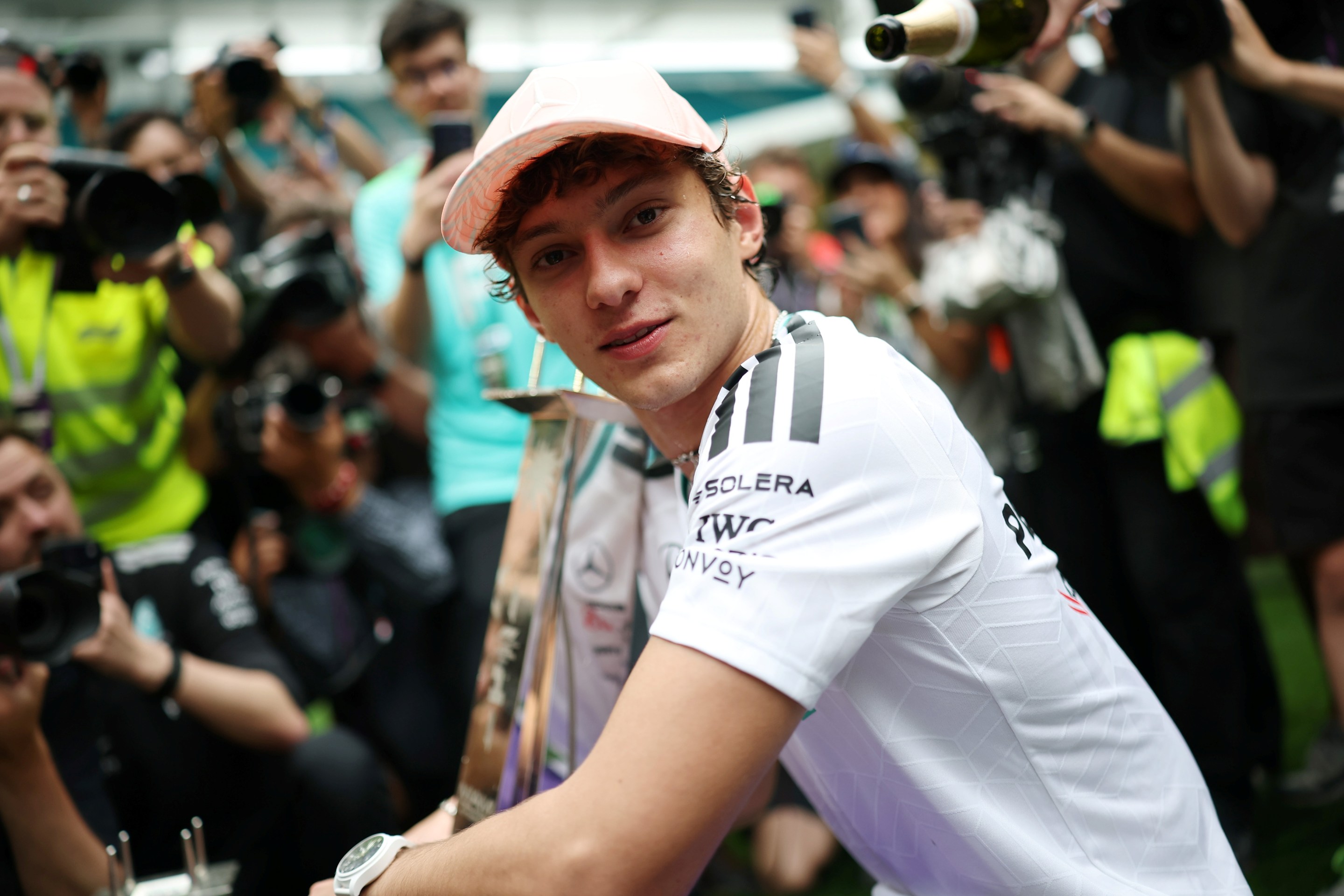
Antonelli listened well to both directives, and took the car to the finish line for his third consecutive pole-to-win conversion, despite never leading the first lap of the race. That has been Antonelli's most impressive showing this season, especially for a driver so young: He is always fast, and he does what needs to be done. So far he has been faster than his teammate, Russell, consistently and on merit. Even after placing fourth due to Leclerc's Ferrari helpfully falling apart on the final lap of the race, Russell's primary role wound up being that of a helpful strategic guinea pig. After Antonelli's victory in Miami, he tallied a nice even 100 points on the season so far, extending his lead to his teammate by 20.
Shall we, like Antonelli, obligatorily cool the tires a little bit? It is a long season, and he is still very young: At 19, he was not even allowed to partake in champagne during the podium celebrations. If last year proved anything for the sport, it is that there is no lead that can't be squandered. With McLaren now in the picture, the championship standings become a fair bit more complicated. But Antonelli has the potential and Mercedes proved an extraordinarily refreshing example this weekend of a team that, despite the horrors of the ground effect era, knows how to win. That, at least, is more than can be said for McLaren.