

In 2000, midway through the first season of The West Wing, Aaron Sorkin started posting on a discussion forum on the site Television Without Pity as “Benjamin,” his middle name. Specifically, he posted on the forum dedicated to discussing The West Wing. “Benjamin” was met with some initial skepticism, but after proving to their satisfaction that he really was the show’s creator, his interactions with fans were warm. They fawned over him, and he thanked them for watching. Things took a turn in 2001 when posters commented on Sorkin’s unseemly hogging of the mic in an acceptance speech for an Emmy he won with a co-writer, Rick Cleveland. The incident snowballed into full-fledged forum drama, with Sorkin and Cleveland trading lengthy, bitter replies; Sorkin eventually admitted he was wrong, apologized, and stopped posting. Later, when the site’s West Wing recaps took a more critical turn, he reappeared, angry and defensive, asking why the recapper was even bothering to watch the show and write about it if she didn’t like it. The site’s founder responded that the recapper was doing this because it was her job and they paid her.
This was Sorkin’s first dance with the internet, and it seems to have left a mark. An entire storyline in a third-season West Wing episode is dedicated to White House deputy chief of staff Josh Lyman discovering a Josh Lyman fan forum and accidentally running afoul of its hostile, pajama-clad users. The forum’s moderator, who polices infractions like posting in the wrong thread or writing in all caps, is described by Josh as “a dictatorial leader who I’m sure wears a muumuu and chain-smokes Parliaments.” Sorkin’s next TV show, Studio 60 on the Sunset Strip, careened between goofy comedy and somber drama as it struggled and ultimately failed to find its footing, but a consistent thread was the corrosive influence of the internet, manifested in everything from unscrupulous gossip bloggers to foreign terrorists posting hostage videos on YouTube. The Newsroom was similarly erratic in tone while even more laser-focused on the harm that the likes of Gawker and Twitter were causing to journalism, politics, and our very souls. In its unapologetically pro-elite credentialism, its score-settling attitude toward women, and its often deranged determination to offer Frank Capra-style uplift no matter the circumstances, the show remains the purest distillation of Sorkin’s fixations.
In 2010, when The Social Network was released, the general public largely still trusted the tech industry. The iPhone felt futuristic. Facebook was still kind of cool. Today, depicting Silicon Valley as a malign force is cliché; 16 years ago, it was subversive. The alchemy of Sorkin’s collaboration with David Fincher—a non-obvious director for a quippy, dense script—resulted in a perfectly calibrated dark comedy warning us about the future of human interaction and the people bringing it into being. In the decade that followed, reality caught up to the film’s bleak outlook. The preoccupations that had once marked Sorkin as an aggrieved and out-of-touch Luddite now made him look improbably prescient. It makes sense that he would feel the urge to take a victory lap.
The Social Reckoning has been marketed as a “companion piece” rather than a sequel to The Social Network, presumably to help manage expectations. Sorkin directs his own script this time, and it’s no real slight to say he’s a downgrade from Fincher—pretty much anyone would be. Still, it’s hard to think of two directors whose instincts are more different. One is an obsessively precise stylist who delights in unsettling his audience by mining the darker corners of the human psyche; the other is meticulous only on the page, largely indifferent to the craft of filmmaking, and he wants to leave us feeling inspired. The true story of a courageous whistleblower and the reporter who helped her expose the truth would appear, on paper, to be a natural vehicle for the kind of old-fashioned idealism Sorkin deals in. The only problem is events haven’t quite cooperated with the Hollywood ending he insists on giving us. We’ve been living in the epilogue of this story, and it’s the opposite of feel-good.
The main thread of the dual narrative follows Frances Haugen, a data engineer on Facebook’s Civic Integrity Team who grows concerned about her employer’s engagement algorithms after seeing a friend become radicalized by far-right groups on the platform. Her misgivings make her cautiously receptive to outreach from Jeff Horwitz, a Wall Street Journal reporter trying to build sources at the company. The story’s somewhat undercooked dramatic tension arises from Haugen’s competing priorities: She wants to get the truth out, but she doesn’t want to risk losing a job she loves. The revelations she leaks to Horwitz between 2019 and 2021 mainly relate to Facebook’s non-moderation of misinformation and hate speech. This is classic Sorkin material. His blog-era critiques of the internet were animated by his indignation that the rabble could now publish whatever they wanted, without gatekeepers to rein them in. He sounded like a crank. Now that the role of old media has been fully usurped and the democratizing effects of social platforms have turned out to be something of a mixed bag, liberal consensus has shifted his way. He tried to warn us.
Mikey Madison delivers a sensitive and intelligent performance as Haugen, though Sorkin can’t seem to resist sexualizing her and building elaborate alibis for doing so. Why do the first shots of her in the film feature a languid pan down from her thighs to her bare feet? Well, it’s because we’re supposed to notice her thick wool leg warmers, which we later learn she wears due to a celiac-related neuropathic disorder that makes her feel cold all the time. Why does she show up to a clandestine meeting at Horwitz’s hotel in a form-fitting cocktail dress? Because she’s trying not to draw attention to herself, and she believes the best way to go unnoticed is to make people think she’s a call girl visiting a client. It makes perfect sense.
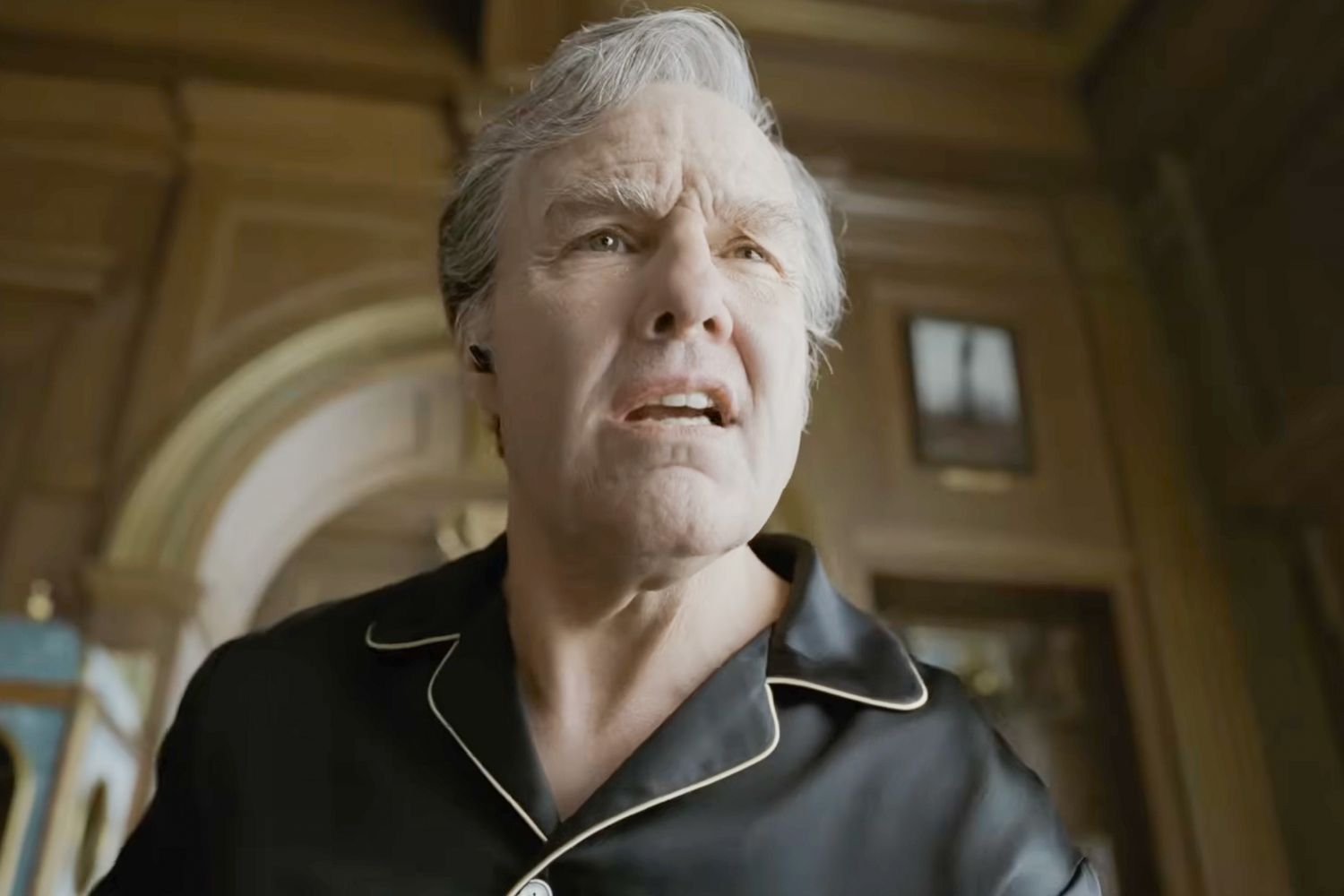
In a parallel storyline set in 2021, Mark Zuckerberg reluctantly undergoes coaching from a crisis management consultant as he prepares to testify before the Senate. Jeremy Strong steps into a role with a unique double bind: Not only has Jesse Eisenberg’s jangly, soulful work in The Social Network become iconic, but over the last decade and a half, the world has also gained some familiarity with the real-life Zuckerberg. Strong mostly chooses to ignore Eisenberg’s take and commits to an almost parodically sinister interpretation of the real person. His Zuckerberg is a dead-eyed sociopath whose soul, if he ever had one, evaporated long ago. Chillingly remote and devoid of anything resembling a conscience, he comes across a bit like a malevolent extraterrestrial sent here to destroy human civilization from the inside. It’s a choice that might have been potent in a less earnest, more caustic film. Here, it just feels comical.
For most of its runtime, the film is diverting in a TV-movie kind of way. It’s only in the final act that it veers into disaster. Zuckerberg’s PR prep is revealed to be occurring on a particular date in 2021—January 6—and as the situation at the U.S. Capitol deteriorates, the Facebook CEO is whisked to a Mission Control-style war room to monitor events. Sorkin depicts the MAGA riot with grave solemnity, treating it as an American tragedy precipitated by Facebook’s lax content moderation and outrage-amplifying news feed. Zuckerberg stares at the live footage, frozen, unable to decide whether to revoke the president’s posting privileges. This is intercut with the late-2021 climax of Haugen’s storyline, where she testifies to Congress about the harm Facebook has knowingly caused. The score swells as she presents the truth. The juxtaposed violence of Donald Trump’s mob is framed as a direct consequence of the corporate decisions she’s bringing to light. The forces that led to the riot are the cancer that her brave actions will now allow the nation to address.
This would have been laughable back in 2024, when Sorkin was writing the script. Today, it’s simply baffling. The man responsible for the attack on the Capitol—looming over the events of the film, but never mentioned by name—is now running the country again. Zuckerberg, who kept Trump at arm’s length during his first term, has become one of his closest allies. The same day that The Social Reckoning held its world premiere, Zuckerberg appeared with Trump at the White House; the president pulled him close and joked with him privately as they watched Anthropic’s Dario Amodei take questions from the press. Meanwhile, the people of Earth are still addicted to social media, and Meta’s revenue is hitting record highs.
Inspirational true-story films usually end with obligatory text cards explaining what happened afterward. Sorkin gives us what might be the all-time funniest instance of this. The most he can say about Haugen’s actions is that “she caused some pain.” He then informs us that following her testimony, Facebook revisited its policy of not fact-checking political ads and decided to no longer fact-check anything. Finally, he offers a grim factoid: 43 percent of adults get their news from Facebook. All of this is set against visuals and music that remain in the standard register of an uplifting whistleblower drama. It’s unclear what exactly Sorkin wants us to think here.
Writing for Film Comment, Katie Kadue points out that the concluding shot of the film, where Haugen locks eyes with Horwitz and punches the air in celebration, is perhaps more complicated than it seems: The moment is a callback to an earlier scene where she’s perplexed by a basketball player on TV making the same gesture after tying a game and sending it into overtime. (Despite her intelligence, Frances is a female Sorkin character, which means the basic rules of sports need to be explained to her.) Maybe with this image, and with his ambivalent postscript, Sorkin is trying to tell us that the battle was only extended instead of won. A movie that argued this point would be interesting. Unfortunately, it’s not the movie Sorkin made. His half-formed suggestions of a hollow victory are awkwardly grafted onto the final moments of a story designed to rouse us. It’s like if The Insider was released in a world where smoking was more popular than ever, and the Marlboro Man had recently been elected president.
Within Sorkin’s body of work, The Social Network is an outlier for its wry cynicism—fueled, maybe, by his long-standing distrust of people living behind computer screens—but he’s unable or unwilling to conjure a similarly mordant perspective here. In theory, a movie about Mark Zuckerberg on January 6 could actually be pretty good, but it would need to feel less like tragedy and more like farce. It’s not a job for a writer whose primary mode is soaring optimism. An honest version of Haugen’s story would have to face the truth head-on: Courageous as she may have been, nothing really changed. There was no reckoning. This isn’t a story that Sorkin, with his unshakeable faith in the triumph of decency, is capable of telling.