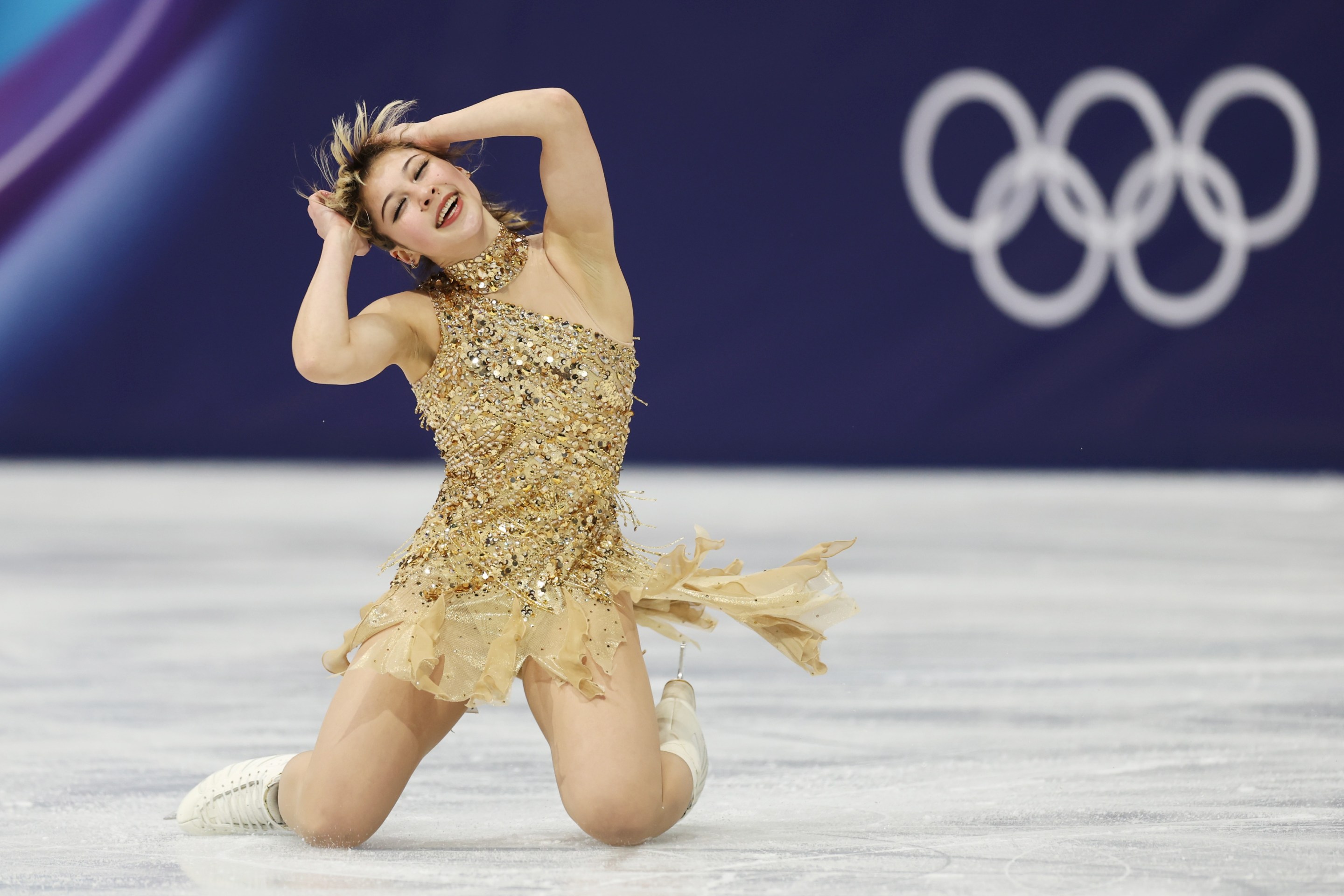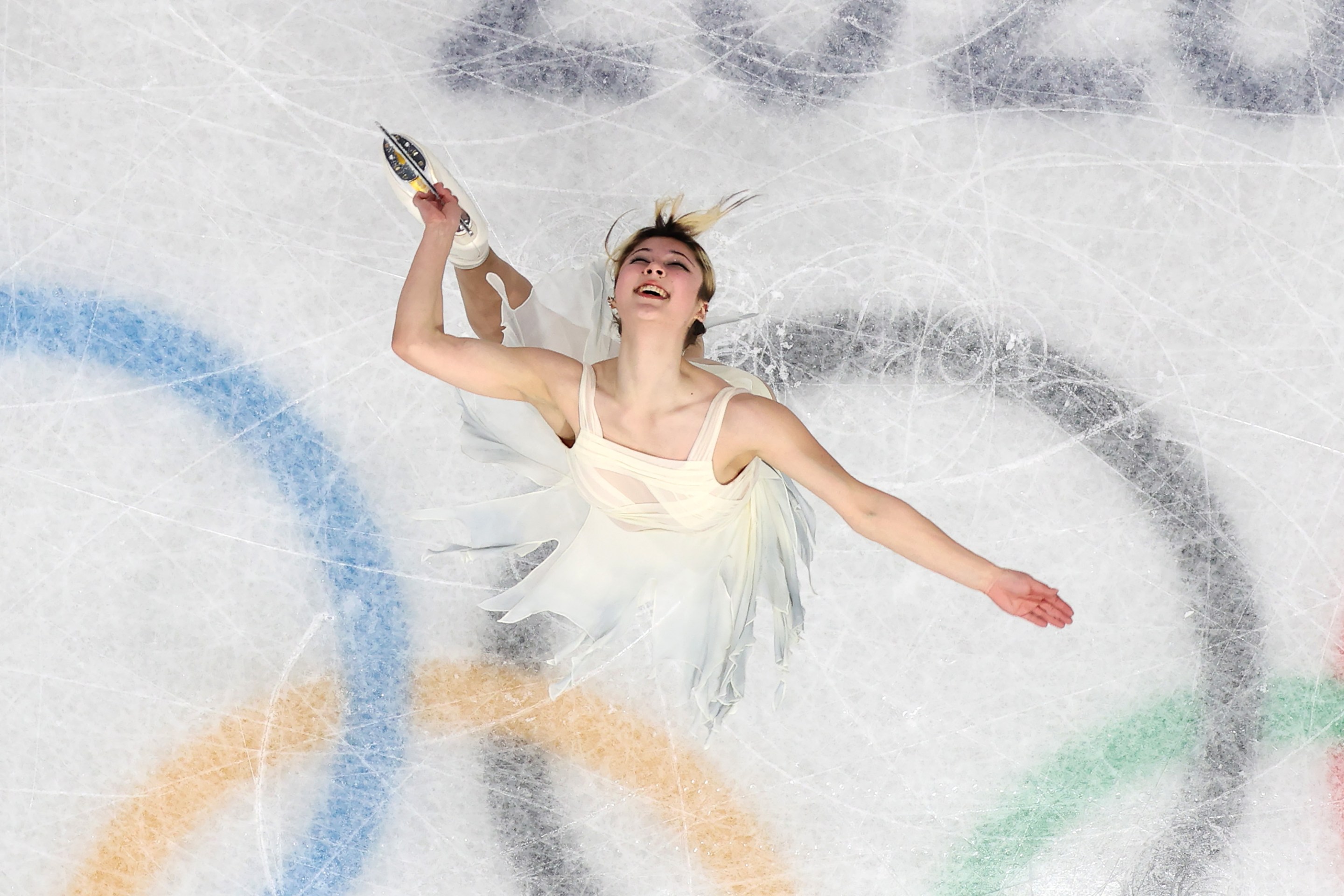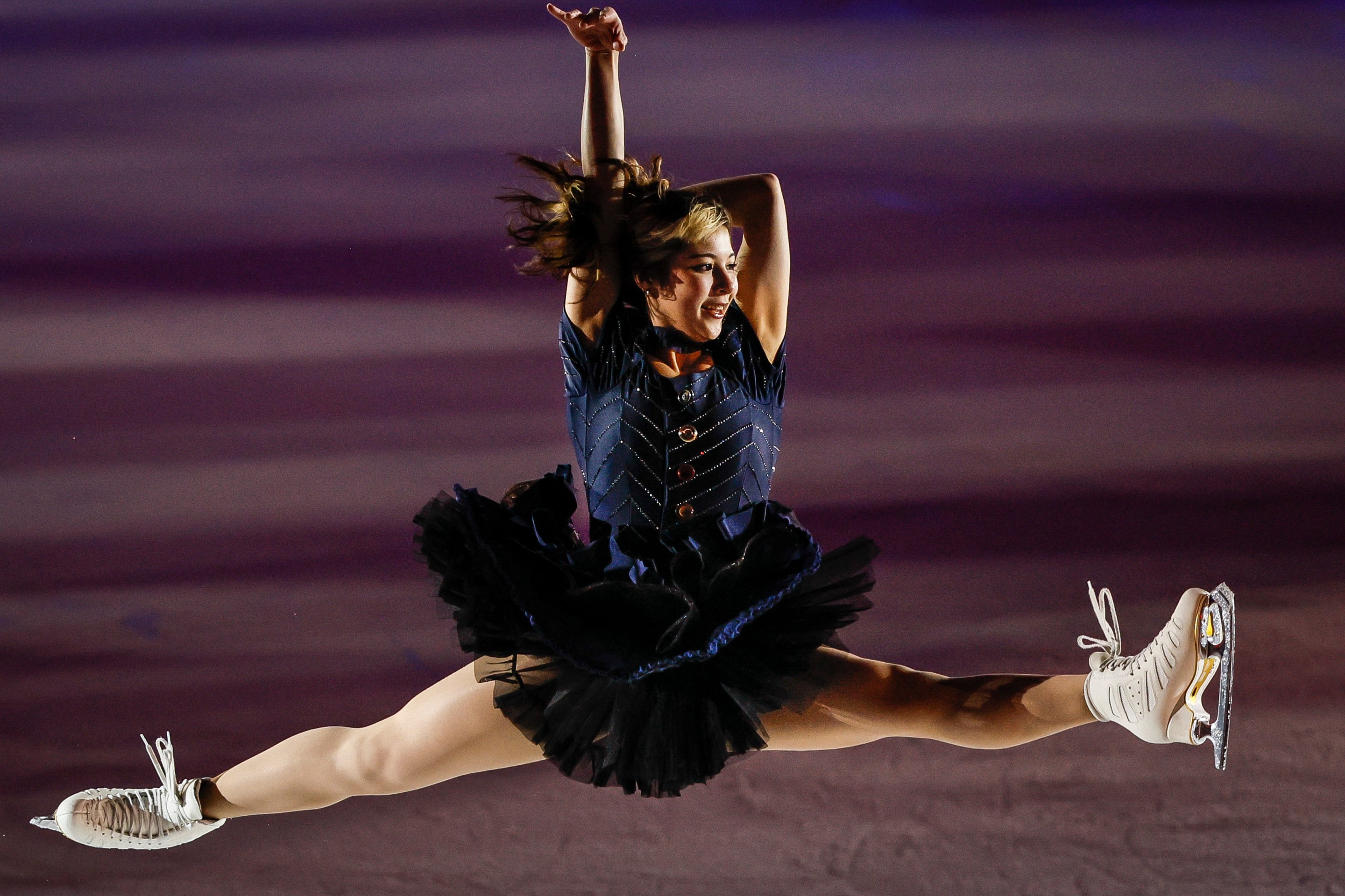

ANAHEIM, Calif. — There is no fandom quite like the fandom of teenage girls. It is powerful and pure, untainted by the burdensome knowledge of adulthood while burning with an intensity that feels beyond human comprehension. That's why the screaming for Alysa Liu sounds the way it does, and why it starts immediately, the moment her thousands of fans believe she is about to head out on the ice. They have come here to cheer, to cry, to sing along with the lyrics to the songs she skates to. They are prepared for this moment in a way that adults cannot really be prepared for anything. But also, in a more basic sense, they are prepared; I am thinking here of the two young people I heard behind me in line for the bathroom, who spent part of the wait time discussing what they would do when the reigning Olympic gold medalist came out and performed her viral "Stateside" skate.
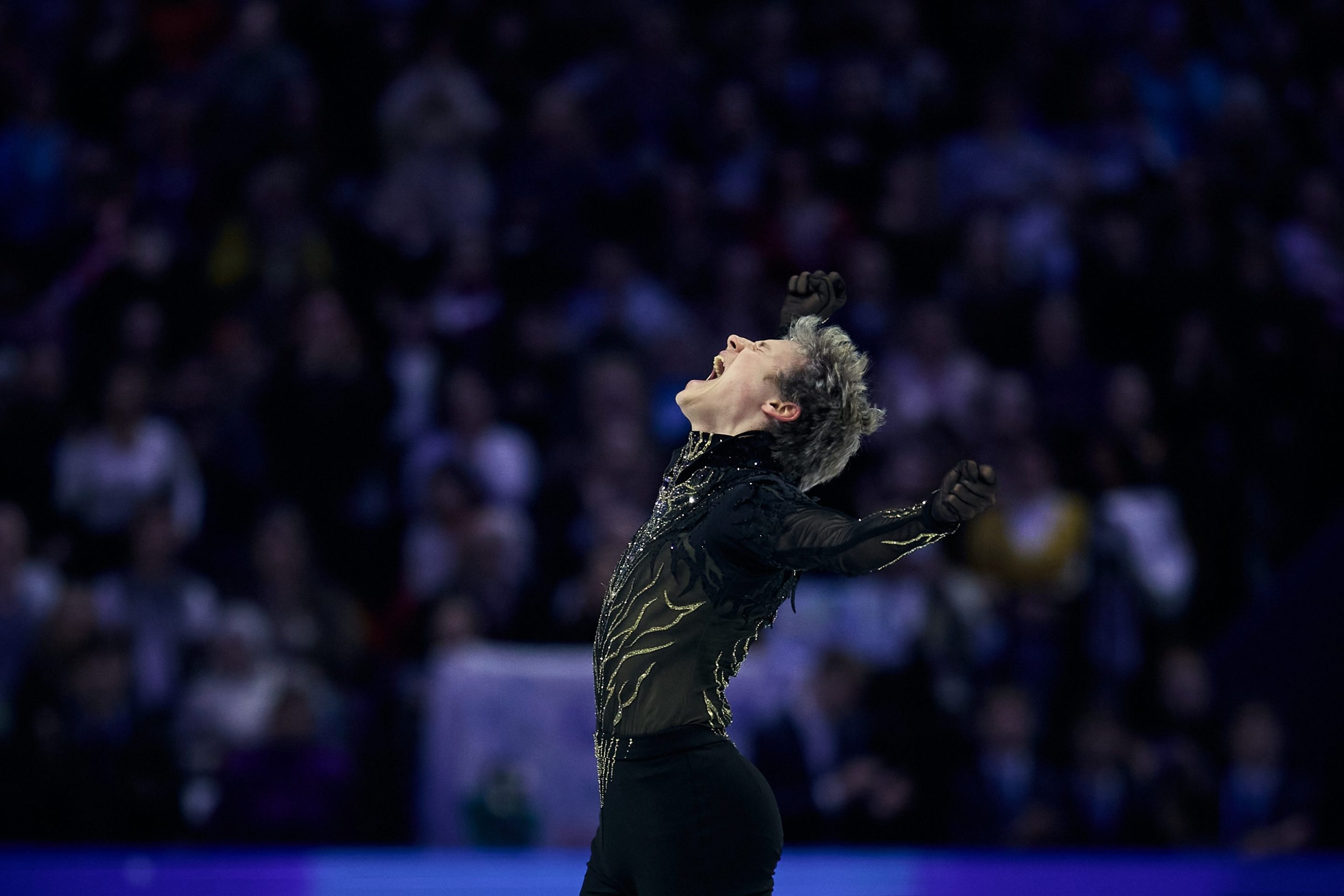
We are here, at the Southern California tour stop of the Stars On Ice show, for all the figure skaters, of course—for "Quad God" Ilia Malinin, for U.S. champions Amber Glenn and Isabeau Levito, for Olympians Evan Bates, Madison Chock, Danny O'Shea, and Ellie Kam. All get heavy rounds of applause and calls from the crowd of "We love you!" But there's no denying that there is one skater for whom the audience got and stayed the loudest, for whom the most phones go up in the air. Liu is still in college, but there's no age minimum for being a pop star. The 20-year-old from Oakland is inarguably one of those now.
At this tour stop, the show starts late because it's up against the most recent installment of the Dodgers/Angels non-rivalry. That game is happening across the street as I arrive, making traffic around the arena even worse than the usual woeful Orange County standard. But by the time the lights go down, the stands are packed; Shohei Ohtani played to a sold-out house, too, but these stars come to town much less often. Our show opened with a group number to a brooding piece of music called "Brink of Annihilation/Fearless"—followed by skates from Andrew Torgashev (to Bradley Cooper's "Out of Time" from A Star Is Born), Levito (living her best ice princess life, skating to Madonna's "Material Girl"), and ice dancers Christina Carreira and Anthony Ponomarenko (a super-fun medley of Nelly Furtado's "Say It Right" and "Maneater"). All earned huge responses from the crowd.
Then comes Liu, and somehow the fans dig deeper and roar louder. So much louder. For her first solo skate of the night, she reprises her Olympic short program skate, which was set to Laufey's "Promise." It feels like watching a musician sing one of their hit songs at a concert. The crowd syncs up their reactions to the big moments they know are coming. To my right, I hear a few people singing along to the song in the softest possible voices. I've seen Liu skate this program dozens of times before, but always on TV. While I've appreciated the skating skill, I had never quite connected to it. With the lights low and the voices of some rapt strangers lightly accompanying, it almost brings me to tears.
Stars On Ice is an exhibition, not a competition. The brainchild of Olympic gold medalist Scott Hamilton and sports executive Bob Kain, it's been going on since the the mid-1980s. If you're old enough, you might recall seeing it on TV back in the 1990s. The vibe is more that of a midsummer soccer friendly or the NBA Dunk Contest during its heyday. It's heavy on fan experience, mood lighting, and crowd-pleasing spectacle, with some inside jokes thrown in for the obsessives. One of these came when Malinin told Chock, "I love your skirt so much! Where did you get it?" If you know, you know. This all works because, as a largely individual sport, figure skaters don't win by dominating another person. They skate either alone or with one partner. They ultimately compete against themselves much more than they do other athletes.
This means that at exhibitions like Stars On Ice, they can dial down their skills a notch—turn a triple-axel jump into a triple loop—without the performances suffering even a little bit. It helps that, at the highest levels, even pedestrian-seeming skating skills are so absurd that the vast majority of the population shouldn't even attempt them for their own safety. So when Glenn changes the opening jump of her skate to Madonna's "Like a Prayer" from a triple axel to an easier jump, nobody in the crowd cares. Instead they cheer and record video as if she'd just won gold. Being liberated from Olympic-style scoring also means that there are so many backflips. I lost count of how many Malinin did.
Even skates reprised from official competition feel more alive in this setting. Surely, some of that is about the pressure being gone. But the theatrical lighting helps too. Chock and Bates's Olympic ice dance to "Paint It, Black"—in which she is the bullfighter, he is the bull—just looks better in the dark, with a spotlight shining on them with complementary red and black lighting.
After the opening, the show segues into an homage to the United States' gold medal victory in the team event from this most recent Olympics. Liu and Glenn take turns acting as hosts—to many, many more crowd cheers—while various skaters perform more routines, all building up to a makeshift podium on the ice, at which the skaters give each other medals. But that almost feels subdued compared to what comes next: Jason Brown skating to "Friend Like Me," the song made famous by the comedian Robin Williams in the 1992 Disney movie Aladdin.
Brown legendarily competes without a single quad jump, but has continued to have a long and successful career because of his ability to master every single little detail of skating. The lack of high-wattage jumps is what it is, but that talent gives his performance a sense of craftsmanship that can move a crowd to laughter or tears even if they don't know his backstory or who he is. There are better skaters at this event, at least by the standards used in competition. But this isn't a competition, and Brown can do things that none of those skaters can.
All of which is to say that, despite him not wearing any blue makeup or outrageous costuming, Brown on ice might be the closest I have seen a human being come to embodying the spirit of Williams's performance as the Genie. He's joyous, mischievous, and keeps a few surprises tucked away for the audience. Brown stays in character the entire time, all through the handoff to Glenn for a recreation of her own Olympic gala skate, which went viral, to Lady Gaga's cover of "That's Life."
From here on out, the show is about a very particular kind of entertainment. Pairs skaters O'Shea and Kam capitalize on O'Shea's baldness to do a full-on Pitbull tribute, with O'Shea in a white suit and the duo taking turns wearing the aviator sunglasses. Malinin goes full hot emo boyfriend to Yungblud's "I Was Made for Lovin' You," skating in black jeans, white tank, and a white button-down shirt while holding a single rose. He skates like man on a mission to steal your girl. He pumps his arms. He flexes his biceps. He tosses the rose to a lucky person in the crowd. As he whizzes by my seat, I could see him singing along with the words. You will not be surprised to learn that he eventually loses the button-down. The crowd howls. Whatever is lost in technical difficulty is more than made up for in spectator happiness.
And, yes, this crowd skews very female. Boys and men are there too, of course; I saw one young boy practicing his spins in the hallway during intermission. But they are not the majority or the show's target audience. This is obvious from the show itself, but also the arena converted some of the men's restrooms to women's (by changing the signage) to reflect the show's demographics. It's not enough to alleviate the long bathroom lines, as it turns out, because the men's rooms are mostly urinals with just a few stalls, but it was a nice gesture all the same. When "the boys" of Stars On Ice, as the announcer calls them, open the second act of the show, they do so in suits with the collars very open.
But what truly gets the crowd going wild is the Blade Angels—Glenn, Levito, and Liu—skating to "Golden" from KPop Demon Hunters. The three emerge in full-on Huntrix costumes: Glenn is Mira, Levito is Zoe, with her hair in Zoe-style dual buns, and of course Liu is the group's fearless leader, Rumi. Everyone knew it was coming; clips from this portion had already gone viral online. Moments beforehand, when it's clear "Golden" is about to happen, a group of women and children sitting nearby debate who will make the sacrifice of recording it while everyone else watches. The element of surprise is lost, but the expectation only makes people want it more.
A cynic, or just someone who thinks that real sports only involve pucks and balls, might dismiss all this as more fan service. But the success of Stars On Ice matters because, while it is not a competition, it very much is how most figure skating fans will get to experience their heroes in person. The international organization that oversees competitive figure skating holds a handful of competitions in the United States every year, but that's it. The rest are overseas. For most Americans, the chances of an international figure skating event ever coming to your town are slim. But Stars On Ice? If you live near a major metro, it will probably be there. The show has even resisted some of the price inflation for other live sports; the night I went, nosebleeds were selling for half the price of the cheapest resale tickets to the baseball game next door. You can take your whole family to Stars On Ice and not feel like you just squandered your daughter's entire college fund.
And your daughter might also be like a lot of the teen girls here this night, screaming for Liu. Only Liu gets an introductory video montage built around clips of various TV news broadcasts celebrating her achievements. Then comes the moment so many people have been waiting for. The lights dim, and a spotlight shines on one corner of the rink. It's Liu. "Stateside" plays. There's screaming. Then Liu hits the opening pose of the "Stateside" dance—right arm up, left arm down, both wide open and at an angle; big energy—and the screams get louder. Liu starts skating, and the sound crescendos. Their idol is here, and she is delivering. Where "Promise" held the crowd in quiet rapture, "Stateside" grants them full-on permission to lose their minds in joy. And they do.
The show's final performance is one last group number—with Malinin and Torgashev tossing in a few more backflips for good measure—and ends with everyone doing a high kick and bow. Then it's lights up and back to the less sparkling and glamorous mundanity of everyday life, which will hit the moment when that full house empties into the parking lot and gets itself stuck once again in SoCal traffic.
I know the feeling all too well. Decades ago, when I was a pre-teen girl, my grandmother got tickets for herself, my mother, and me to see Stars On Ice. I wanted to see all the athletes, but what I wanted to see most of all was Viktor Petrenko's skate to "The Twist." Like "Stateside," it was not a competition skate but a pure crowd pleaser that every skating fan of its era adored, mostly because Petrenko could really swivel those hips. I can still remember sitting in our seats, waiting, waiting, and waiting until Petrenko emerged and we went wild. Afterward, I couldn't believe I had seen it live. I have it on good authority that I did not shut up about it for weeks.
A little older and marginally wiser now, the transition back to normal life wasn't as jarring. I can appreciate now how rare it is to get a chance to just call out "I love you!" at your favorite person on Earth and be pretty sure they actually heard you. Life is hard, and filled with compromises and bad breaks, and so much of it exists beyond your control. But you can forget all that for a few hours at Stars On Ice. Here, everyone sparkles, everyone has a good time, all the jumps are landed, and you can be sure Alysa Liu is gonna skate to "Stateside." What else is there to do but scream your lungs out for it?