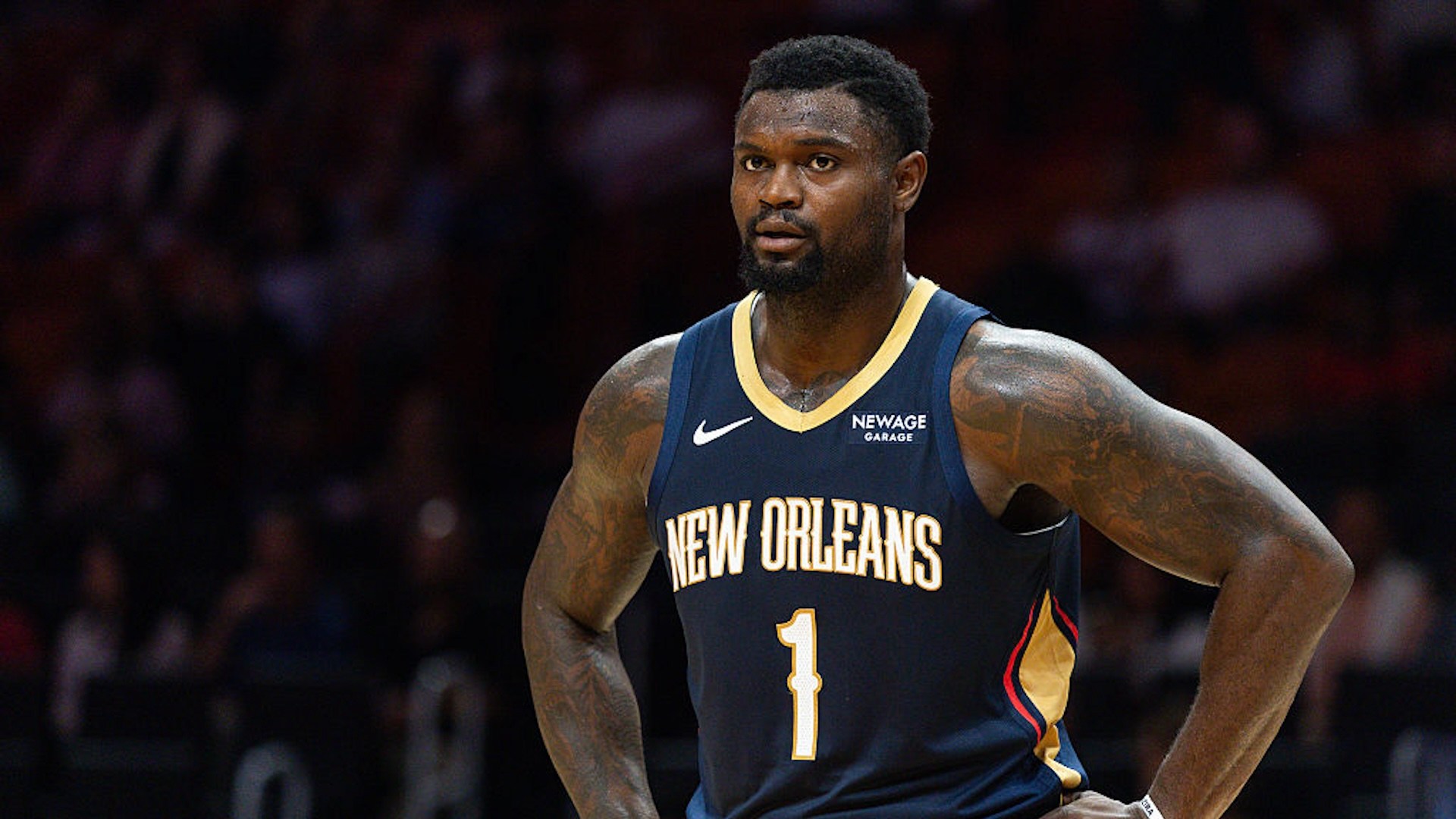


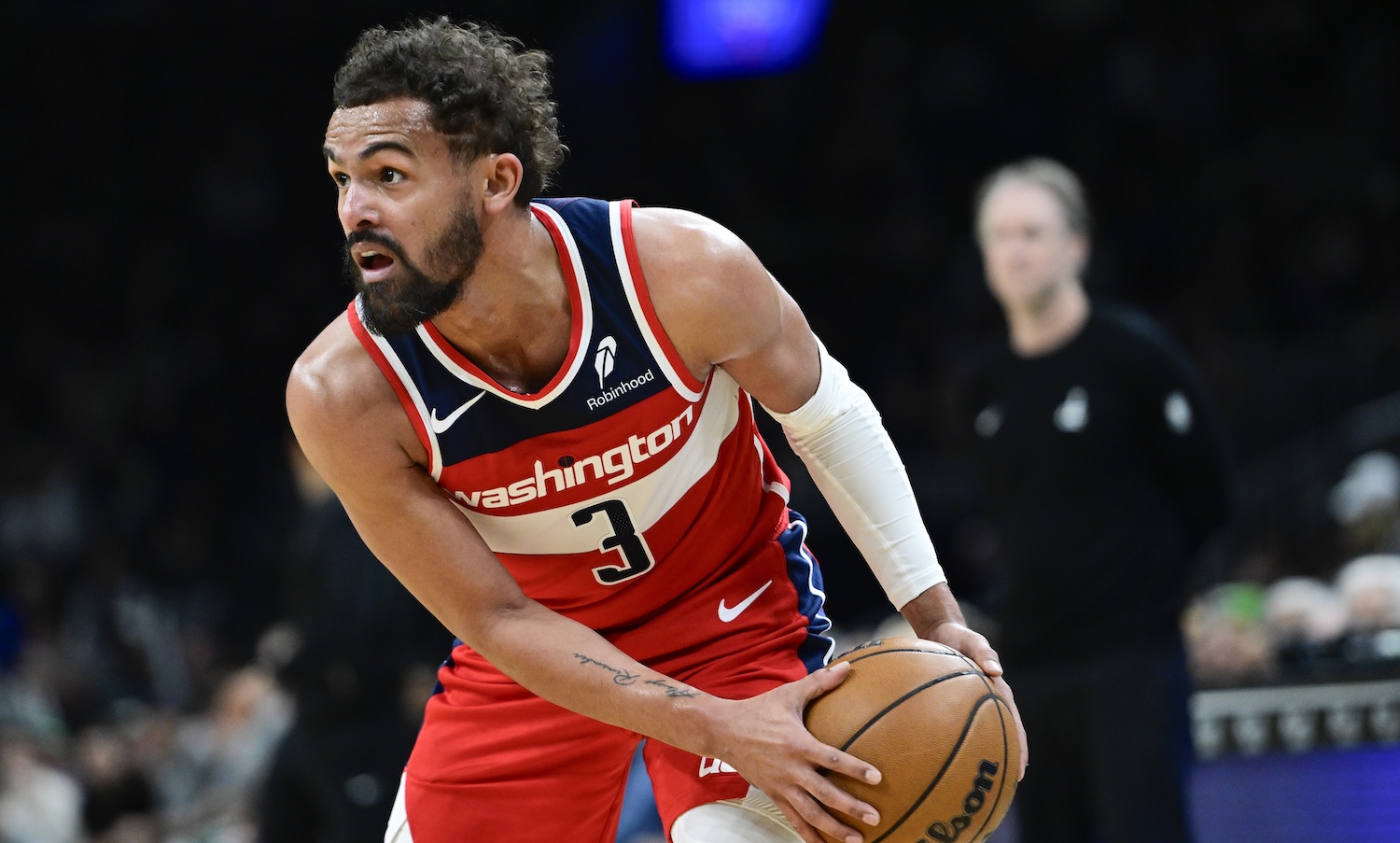
As if they were trying to win the 2019 NBA Championship seven years too late, the horrible Washington Wizards made two of the most interesting moves at the deadline last year, relieving the Dallas Mavericks of Anthony Davis in exchange for basically one good first-round pick, and taking Trae Young off the Atlanta Hawks' hands for some expiring contracts. Despite Young's considerable flaws, the deal was a fine one for the Wizards, since they didn't surrender any real assets, happily allowing the Hawks to salary-dump their former franchise cornerstone. But after what the Wizards did this week, the trade looks more like a disaster than a happy flier.
A day before they will make the first overall pick in Tuesday night's draft, the Wizards reportedly signed Young to a four-year, $212 million deal. Signing a tiny, perpetually injured, rapidly obsolescing point guard in a league that is increasingly hostile to that player type's existence is, to put it charitably, a bad idea, as is extending a player that a rival team salary-dumped.
If you squint to the point of shutting your eyes and seeing photonegative stars, you can make an argument that Jalen Brunson's Finals MVP run marked a turning point in the saga of the tiny guard, disproving the Hammon Corollary once and for all and justifying 53 million American dollars per season for a guy who stands 6-foot-1 and somehow defends a foot shorter. The Brunson comparison falls apart instantly under examination, as Brunson is a non-disastrous defender who is also capable of using his body to create space. Is Trae Young bashing people out of the way with his battering-ram head? No. His only relationship to contact is seeking fouls that the league has legislated out of the game.
There might still be a good player in Young, who will presumably be healthy next season. He's a genius passer, and now that he's on a team with several variously coordinated children who have endured two seasons of the worst point-guard situation in the NBA, his force of organization will go a long way toward bringing them along and teaching them how to play basketball. Either Darryn Peterson or A.J. Dybantsa will enjoy the luxury of starting their career getting set up for buckets by Young. With Anthony Davis and Alex Sarr promising 48 minutes of great rim protection between them, Young's colander-style perimeter defense will perhaps be less damaging. The problem is, all of that isn't worth the money the Wizards are paying Young, especially if they want to win the games that matter.
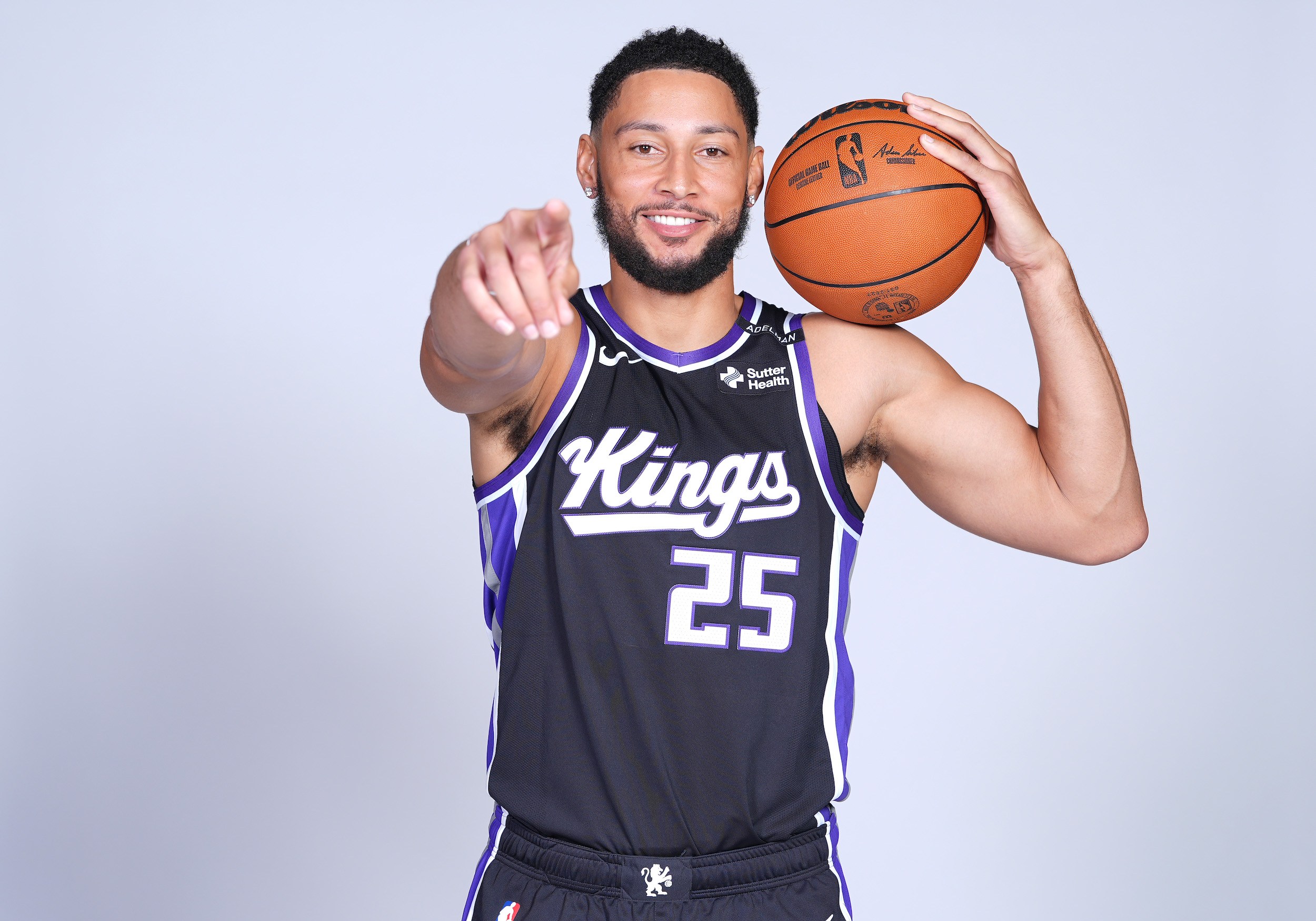
Young's deal will be compared unfairly to De'Aaron Fox's mega-extension with San Antonio, but they are completely different players. Fox may have played a disastrous NBA Finals, missing an unbelievable number of open jumpers as well as the single most costly shot of the entire playoffs, but he's still a plus defender and a great athlete. His trade value is probably pretty low right now—one wonders when we'll get the inflated, post-facto story about how bad Fox's high ankle sprain was—but he was mission-critical in the Spurs' Conference Finals victory over the Oklahoma City Thunder. Do you think Young could have survived that series? The Thunder guards would have turned him into Trae Ancient.
The Wizards might argue that they're less concerned with winning playoff games (prudent, given how many sub–drinking-age players are on the roster) and more concerned with winning any games. With the league's new anti-tanking measures ensuring that even the worst teams in the league (that control their own picks, that is) will have incentive to compete, floor-raisers like Young are more valuable. This also explains why the Brooklyn Nets traded for Julius Randle on Monday.
Here's the most eyebrow-raising tidbit from The Athletic's Josh Robbins's report on the signing:
But in recent weeks, Wizards decision-makers became convinced that, with the NBA’s new anti-tanking measures compelling more teams to compete, Young was going to command maximum-salary contract offers from other franchises through either a straight free-agent signing or a sign-and-trade proposal.
Players in the Young, Randle, and Domantas Sabonis genre must be thrilled with the way the new anti-tanking rules have reshaped the market, though a stronger incentive to win 33 games doesn't mean there's no such thing as a bad contract anymore. The best the Wizards can hope for is that Young puts them in a position to lose in the playoffs, and that the worst teams' new incentive structure will hold Young's trade value aloft for the duration of the deal. But that's an over-hedge. The tanking purge doesn't change the tough reality facing the league's tiny guards.