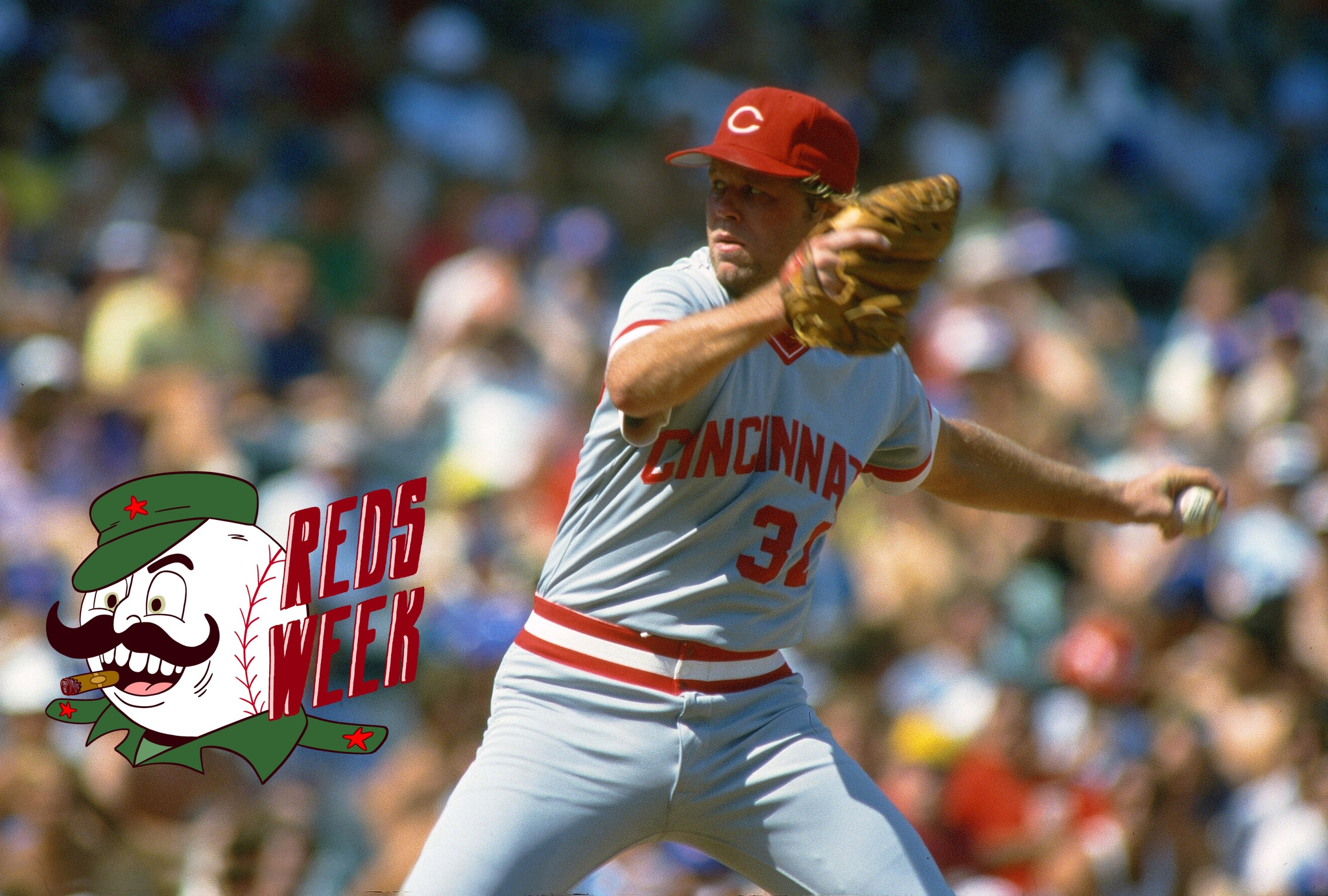
There are certain types of baseball players that just are not coming back. Some of these guys have been written out of the story by changes in the game's rules; future generations will be unable to comprehend the wealth of saturnine lefty specialists whom the world once watched trudge-jogging from the league's bullpens, not just because the mind naturally reels at such beauty, but because the role no longer exists as such. An evolving set of best practices has also narrowed the field of Guys, or just refined it in a way that puts the squeeze on elite specialists and the lumpen class of ham-and-egger generalists alike. In baseball's optimized future, pinch-runners and innings eaters will both be endangered species.
If you're old enough to remember a version of the game that was not like this—all those kludgy and misshapen rosters built from those kinds of irregulars—it is natural to mourn its passing. Contemporary baseball is not worse than that bygone version played by guys who looked like bartenders and bar-goers, but anyone old enough to remember all that would also be old enough to default to mourning where the past is concerned. The sport's margins have always been narrow, and basically every career teeters on a knife's edge; this is a workplace, after all. But as business-brained optimization has spread throughout the sport, the fact of all that has escaped the anxious liminality of subtext to create a new and dispiritingly contingent type of job. If baseball has created a new type of Guy during its ongoing efficiency revolution, it is the ultra-fungible bottom-of-the-roster type who changes teams three or four times per season during and after stints in DFA limbo; some of the people doing that work have been All-Stars, but most of them are pluggers whose names few fans will learn or remember. They are big-leaguers, too, but as Dreams Come True go, this one doesn't seem like much fun.
There aren't many pitchers like Tom Browning in the majors in 2026. His greatest ability during 12 big-league seasons, 11 of which he spent with the Cincinnati Reds, was availability, followed closely by durability. If you want to expand the list further, you'd still hit affability before bringing up his screwball he picked up in A-ball. He pitched a lot of innings and gave up a decent amount of hits; he didn't strike many batters out and walked even fewer than that. He won 20 games in a season and the third game of the Reds' World Series sweep in 1990; he threw a perfect game at home in 1988 after waiting out a rain delay of more than two-and-a-half hours. Over the course of his career, Browning led the league in starts four times, home runs allowed three times, and earned runs allowed once.
This is not the sort of career that gets a player a nickname like "Mr. Perfect," but also that's the gag implicit in a nickname like that. It's a joke that Browning himself was always in on. "Most of the other time, I was imperfect," Browning later said, in a book he co-wrote with the sportswriter Dann Stupp. "And stubborn, immature, and even a bit of a wiseass." This is a type of ballplayer that still exists, but the extent to which Browning inhabited that role feels antique. To look at the goofy grin on Browning's face when TV cameras caught him hanging out on a Waveland Avenue rooftop—in his fucking uniform—during a game against the Cubs is to see a ballplayer out of time.
Baseball has not stopped producing galoots or goofballs, to be clear, and it never will. But the weirder details of Browning's career—a miserable 1987 campaign that he later blamed on an injury resulting from offseason martial arts training with another big-leaguer, a woeful second half in 1991 that followed a hip injury sustained in a Houston bar fight, playing on a series of contentious one-year contracts negotiated with his vile boss—have the picaresque dimensions of players from 50 or 75 years earlier, the Dizzys and Dazzys and Daffys who played the game back when it really was a half-disreputable job, and who might have been too odd to make it in any other line of work. Browning did not just get a pass for that; he was by all accounts beloved for it. He stayed around the organization as a broadcaster and a minor league coach, and when he died at the age of 62 in 2022, it was at his home in Northern Kentucky.
"He was there for Reds opening day parades, and the media would always flock around him," former Cincinnati radio host Andy Furman remembered after Browning's passing. "He was always available, you know, he never 'big-leagued' you."
It's not really salient to any of Browning's achievements that, as a kid, I couldn't stand him. This big donkey, squinting and breathing heavily and generally looking like Gary Larson drew him, absolutely shoved against the Mets; the team hit just .244 against him in 20 career starts. His 3.08 ERA in those starts was nearly a half-run lower than his ERA against any team that he pitched against more than a handful of times.
"I couldn’t rely on natural talent," Browning wrote in his book, "because I didn’t have much of it. I wasn’t the hardest thrower, the fastest runner, or the most gifted athlete. But I had a solid and durable arm, and I worked hard." This is an admirable sort of career to make, and Browning seemed appropriately grateful and appropriately amused to have made it. It is also, I think, a totally normal thing for a fan to be infuriated by watching a guy like that beat their team in the ways that guys like that manage it, which is mostly by being insistent and unafraid and letting the other guys do the work. It all gets much easier to celebrate once you realize how rare it is, and once you are old enough to see your own life in it a little bit, and to appreciate how much harder and how much more rare all that progress will make it.