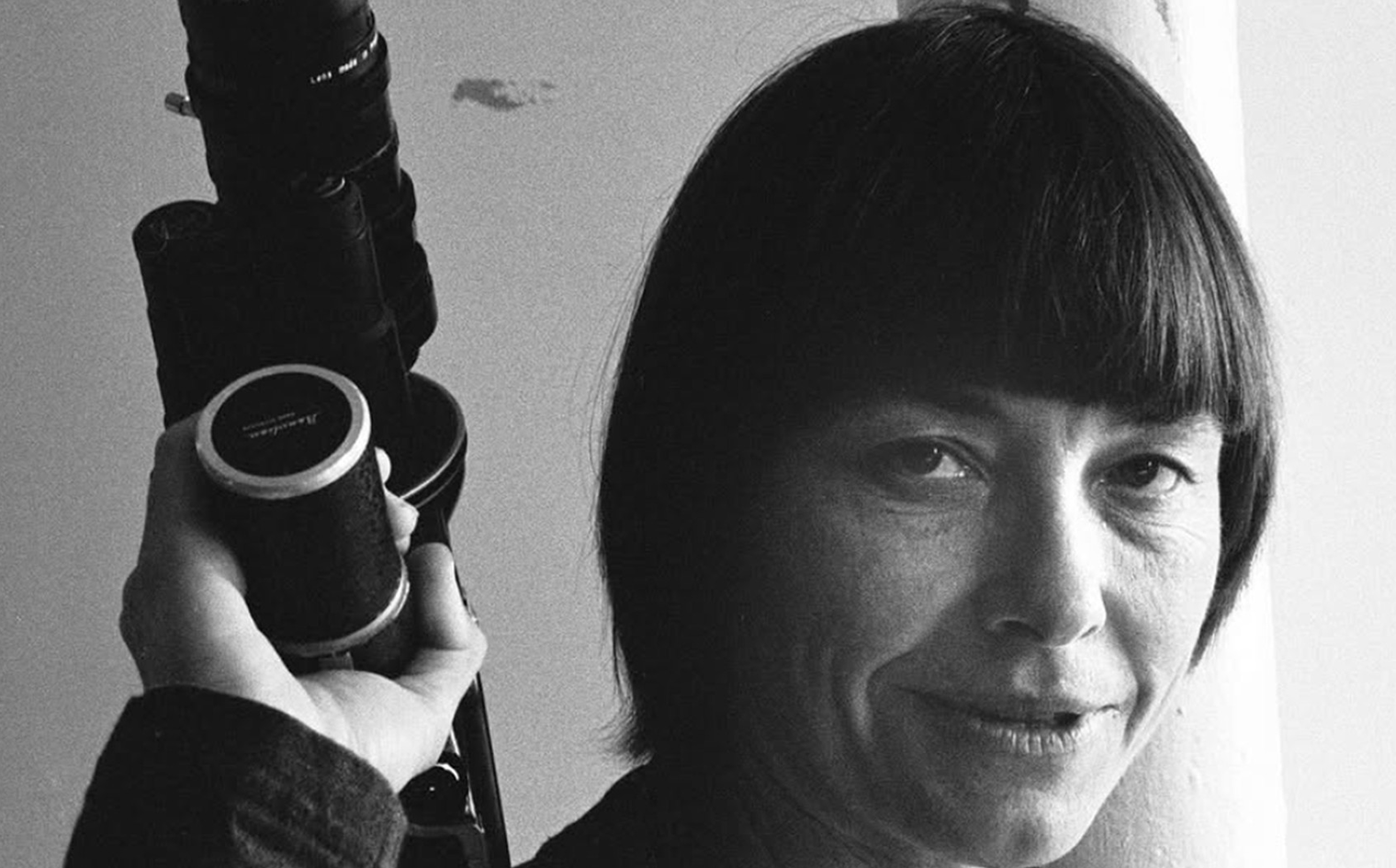
The specifics are a little difficult to pin down, but that’s true of most things surrounding novelist, filmmaker, and playwright Missouri Williams. Here are the facts I’ve been able to piece together: At some point in her young adulthood, Williams began to have seizures. In a 2025 interview with TriQuarterly, Williams said that the episodes began after she had moved to “a new city with a new language” (location and tongue unspecified), and while she was working in a cafe while trying to learn more than simple phrases. As she put it: “I spent a lot of time getting orders wrong, being reprimanded without quite understanding why. It was useful to feel so stupid.” Around this time, misfires in her temporal lobe began to incite epileptic episodes. These issues in the part of the brain responsible for language and memory completely destabilized Williams. Already struggling to get a foothold in her new surroundings, she then began to forget words in her native English. She found that she was thinking entire sentences backward. She made woozy, tenuous connections between ideas and objects. “Everything suggested everything else in the strangest of ways,” she said.
Unable to hold onto words, ideas, or memories, Williams began an obsessive cataloging. She built a network of complex sentences that would circle back and collapse in on themselves like murmurating birds. It was as if each word was “driven by the need to confirm each and every thing that had preceded them,” as she wrote for Granta in 2022. Soon these sentences began to pile up, and eventually she was able to shape many of them into a book.
The Doloriad, Williams's award-winning 2022 debut, reached an instant sort of cult-classic status, partially for its body-horror grotesqueries, but also for its undeniable beauty and off-kilter theology. The book suggests that as one gets closer to Christ, His wounds open up on your body. The Divine and The Gross often coexist.
The biographical details, scant as they are, are important for the purpose of explaining Williams’s whole thing. Doubt and ambiguity are two major themes in her work. Stemming from her relationship to language, a firsthand brush with being unable to trust her own brain, Williams seems content to ask readers to figure it out. For her, the only real certainty is that consequences ensue, as they always must.
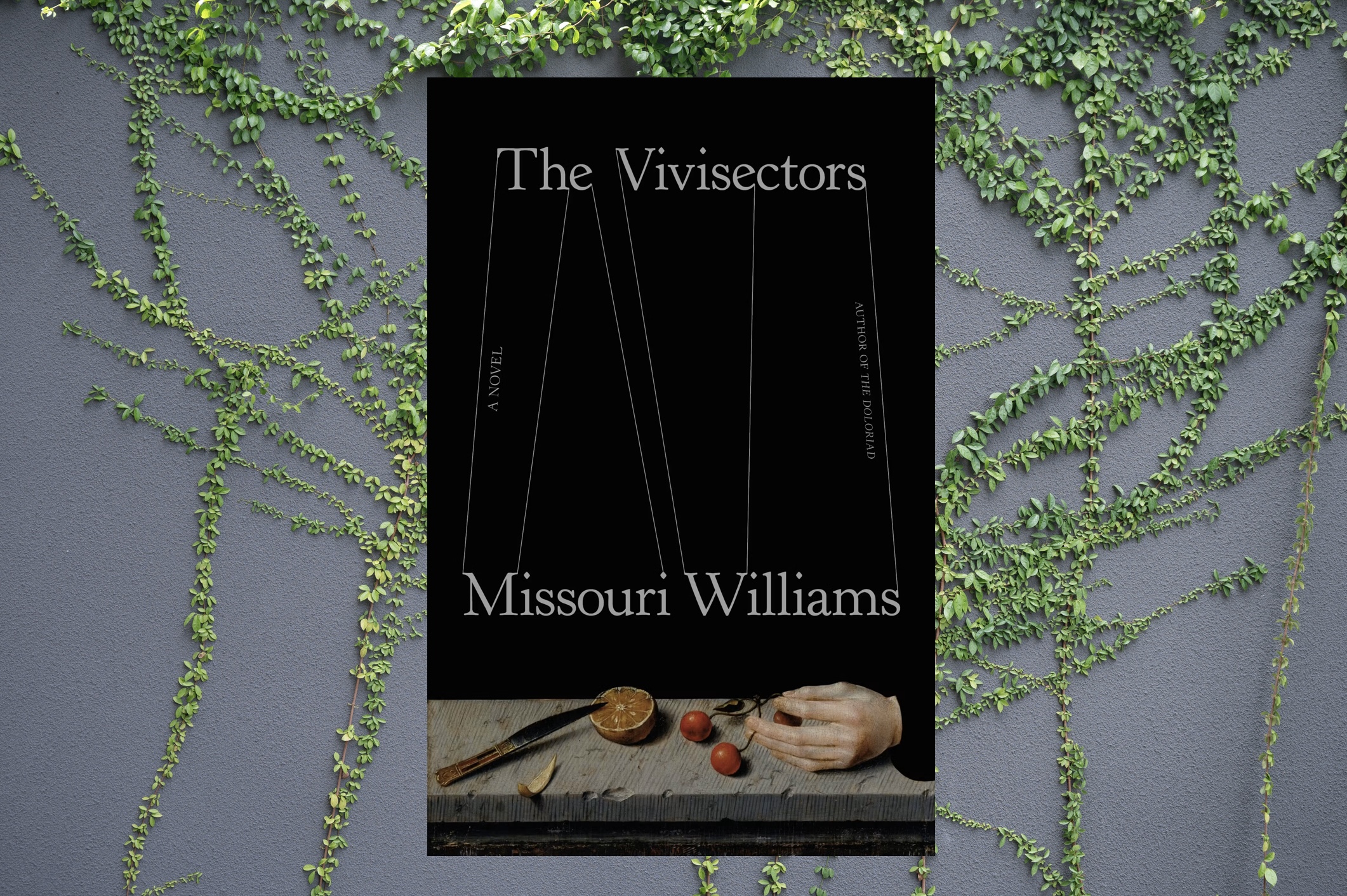
The contents of her spiky sophomore novel, The Vivisectors, will come as no great surprise to anyone familiar with her work. Both novels unfold in a smudgy sort of post-Soviet nowhere. Her characters navigate loosely Eastern European locales that have been stripped of most signifiers: names, nations, places, landmarks. It’s a kind of soft apocalypse in which all human beings survived, but the world in which they live did not. Or, on a slightly smaller scale, Williams’s novels take place in worlds in which various institutions have outlasted the societies that created them.
The Vivisectors is set at one such institution: The University.
The university is the setting, but it's also the name that the characters use to refer to the institution. It is The University, which is located in The City. This academic backdrop is one of few early footholds that newcomers may be able to find in the strange, gothic world of TheVivisectors before the scope of the novel quickly expands into the cosmic and metaphysical.
The ideas on display in The Vivisectors, the things that Williams wrestles with, are simultaneously ancient and bleeding-edge contemporary. Across a sinewy 273 pages, Williams contends with suicide, prejudice (both latent and active), class divides, disability and the politics of care, technology and how it has changed our relationship to the world, the intimacy of violence, and the violence of intimacy. There's even a brief stop to consider the current state of the novel as a medium.
Which is really just to highlight the fact that Missouri Williams is good. She is exceptionally good. Astonishingly good. She delivers on the promise and potential of her first novel, and then some. With her second book, she has immediately left the realm of the cult classic, blown past the rank of “obvious standout,” and has landed firmly in the “best of her generation” conversation. Her books are dark and enveloping, as rich as black velvet. She writes with a cinematic sweep and a lyrical precision that buttress her ambitious conceptual frameworks, and the result is as striking as it is effortless. But the truly miraculous thing about The Vivisectors is that Williams has managed the commendable feat of crafting a significantly more accessible novel without softening any of her edges.
A young woman (unnamed, naturally) works as an assistant for a professor at The University. This university is a storied, sprawling, crumbling institution situated in some squishy approximation of Europe. Hers is a low-stakes position, mostly administrative work, that demands nothing of our protagonist, and so she feels no pressure to seek other opportunities. Her life is frictionless but unsatisfying. She spends most of her day putting in the minimal effort required of her by the professor. The professor spends much of her time obsessing about university politics, and monitoring the gardeners who tend to all of the green space in this university/city. The gardeners number in the hundreds, and their ranks seem to be made up of anyone not affiliated with The University.
The gardeners are just one of several allegorical conflicts that will completely upend the life of our unnamed narrator before the end of the novel, some more directly than others. Once again, it is the aftermaths that are of interest to Williams more than the events, which is why she makes the brilliant choice to only let us hear the central conflict of The Vivisectors secondhand.
We first hear about Adam from our narrator’s boss. The boss regards him as a young hotshot student who “created problems wherever he went.” He is fascinating to everyone, a boy with an “enameled charm” about him, both magnetic and toxic, leaving “a trail of emotional carnage” among the student population (and eventually the faculty). We then learn about Jacob, a professor who we are told is “descended from foreigners.” The two have a heated exchange in the classroom, with Jacob gesturing toward something like antisemitism, while Adam’s response can be understood as racist. We are told that Adam is descended from a group of people whose great historical suffering has become subject to debate, if not outright denial. It is a group of people who are said to be “slippery and untrustworthy,” and that they “manipulate our shared history in order to wield a guilty power, to exert influence over others.” In turn, we learn that Jacob comes from a group of people who had once been slaves, were subsequently set free into an unjust and inequitable world, and “it had only been in the last fifty years that they had attained something like equality.”
Both men claim that the other is prejudiced toward them. In response to the argument, The University moves on reflex until eventually it enters a kind of paralysis and refuses to side with either party. The institutional understanding of history, and identity, is a tokenizing one. To the University, “another’s suffering was an event to be celebrated,” because it is through dignified suffering that outsiders gain some sort of value.
This conflict between Adam and Jacob is the place where a lazier writer would pause to do their hack spiel about cancel culture or, God forbid, political correctness, but thankfully Williams is better than that. Attention grabbers and pot-stirrerers are often eager to ask a sensitive question, but in service of telling you what they think the answer might be. While certain scenes in The Vivisectors may occasionally read as parable, there is no didacticism here. Williams resists the literature of the Hot Take, and instead poses a larger question: Does anyone know what justice really looks like anymore? More than that: Can we still trust the moral compass of our institutions?
So we have the campus scandal, and the Gardeners lurking in the margins, but there is also the issue of the narrator’s family, with whom she still lives (in a large house which has had all of the staircases removed, leaving an entirely empty second floor). The narrator’s mother is an overbearing and oppressive figure who has been left catatonic after a suicide attempt. The narrator’s doddering father is a writer of stalling momentum, whose novels tend to focus on married couples and their emotionally impenetrable daughter with whom they struggle to connect. Write what you know, I suppose.
For the first half of the book, our narrator keeps all of these different elements at arm's length, professing something like The Vivisectors’ version of centrism. “My ethics were nonexistent,” she says. “I barely read the news, and so had failed to engage with any of the major events of the last few years.” But as the novel progresses, the different threads of the story all begin to spiral inward toward a central point: Agathe.
Agathe is our narrator, and you learn her name at the halfway point of the book. Curiosity gets the better of her; she makes a connection with Adam in the university library and finally becomes a participant in the story. “He leaned across the table and offered me his hand. I took it. There wasn’t any other option.” The moment of the name reveal is genuinely thrilling, and from here on, Agathe is no longer a neutral observer, hearing things secondhand. “I had begun to be in the world,” she says at the top of a chapter, “and I had found it unbearable.”
The Vivisectors, like The Doloriad before it, is a new kind of post-apocalypse story. In The Doloriad, the actual events of the apocalypse are less important than the fact that it took place. In this way, “post-apocalyptic” is a feeling as much as it is a setting or a specific point in time. The Vivisectors is post-apocalyptic in a more conceptual sense. It is a book about life after the collapse of meaning.
Following the name reveal, the threads of the story begin to spiral back out toward their inevitable ends. The Gardeners seize on the chaos and paralytic guilt of the university and stage a revolt, upending the carefully manicured grounds with their shovels and filling the fountains with mud. Afterward, they refuse to work, and the City begins to succumb to creeping vines and feral flowers.
Agathe tacitly chooses a side in the campus scandal as she and Adam enter into something like a courtship, then a romance. There’s even a tender—though extremely abstract—sex scene for good measure. It is in the course of this romance that Adam also explains the book’s thesis in no uncertain terms: “You’ve come to mean something to me,” he says to Agathe. “I’d like to mean something to you.”
We live in an era of personalized truth, and we are going to be required to step outside of those truths if we can ever hope to reconstruct meaning. The process is likely going to be messy, and the procedure, experimental (hence, “Vivisectors”). The goal is to establish something like a shared understanding of reality, and this can only be done through collaboration, through genuine human connection.
Late in the book, we witness an exercise in urban planning as students at The University are asked to design a city. We are then given descriptions of several of their projects, which highlight the fact that even the supposedly solid, physical layout of the world can be experienced differently by different people.
“Nobody can trust their interpretation of reality, not even for a moment, and this is painful to them,” Williams wrote in Granta. “And it is their desire for certainty that compels them to hurt others.”
The Vivisectors is a slippery and provocative novel, but in it, I saw something like hope. For all of its gothic trappings and the gorgeous gravity of Williams’ writing, The Vivisectors is a propulsive, insightful, and ultimately moving novel. It is a book whose own existence solidifies its central point. If you take a chance on the things that Missouri Williams has to say—if you believe in something beyond subjectivity—you might just reaffirm why we like fiction in the first place.