SAINT-GAUDENS, France — On Monday morning, the Tour de France's media wranglers sent us all a text announcing something genuinely shocking for such a French organization: They had banned smoking. The ASO said nobody could smoke in the TV areas "in order to combat fire risks," as that day's racing finished 60 kilometers west of the Trévillach wildfire, which has forced over 12,000 people to evacuate their homes. That day, the race entered France to 44 kilometers of quiet roads after organizers and local politicians told fans to stay away. The next day was the hottest day of racing in the recorded history of the Tour.
The smoking ban may have been primarily about avoiding the queasy optics of a ponytailed TV rigman ripping a cigarette on a day with restricted access, though it's a decent metaphor for the impossible future facing the Tour de France. This year's race is taking place under furnace-like conditions that can't fairly be characterized as extreme any longer. The French countryside is not getting any less combustible. The sun is not abating. There's nothing the Tour can do but manage the effects. The show must go on; the show can't go on. How will the Tour de France adapt to a world on fire? Is that even possible?
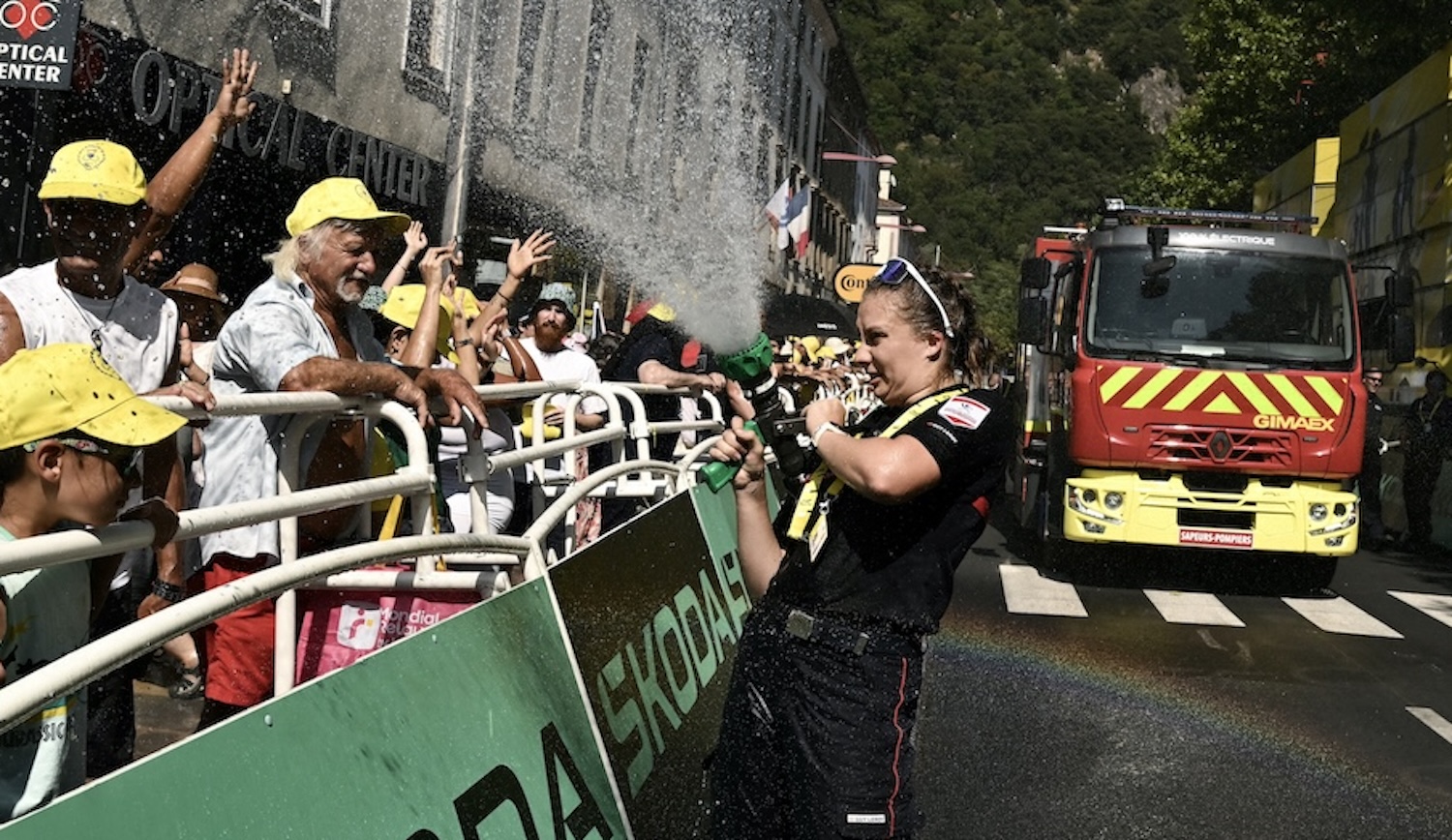
It was clear this year's race would be affected by the brutal heat before Stage 1 even started. NetCompany-Ineos set up tubs of ice for their riders to dunk their arms in ahead of the time trial, while Alpecin had their riders go to town on frozen carbohydrate gels. That was in Barcelona, when it was in the relatively balmy low 90s. Rumors flew through the press room about the truncation or cancelation of the stages to come, but the Tour went on untouched. By Tuesday, with the race rolling through the Pyrenean foothills, it was pushing 100 degrees, where it will stay through the weekend. Fans were blasted with a firehose at the finish line in Foix. NBC measured the pavement temperature north of 140°F. EF sports director Charly Wegelius told me he hasn't worn socks since the race started. Most riders are barely poking their heads out of air-conditioned team buses in the mornings, while the AC on Visma's bus broke.
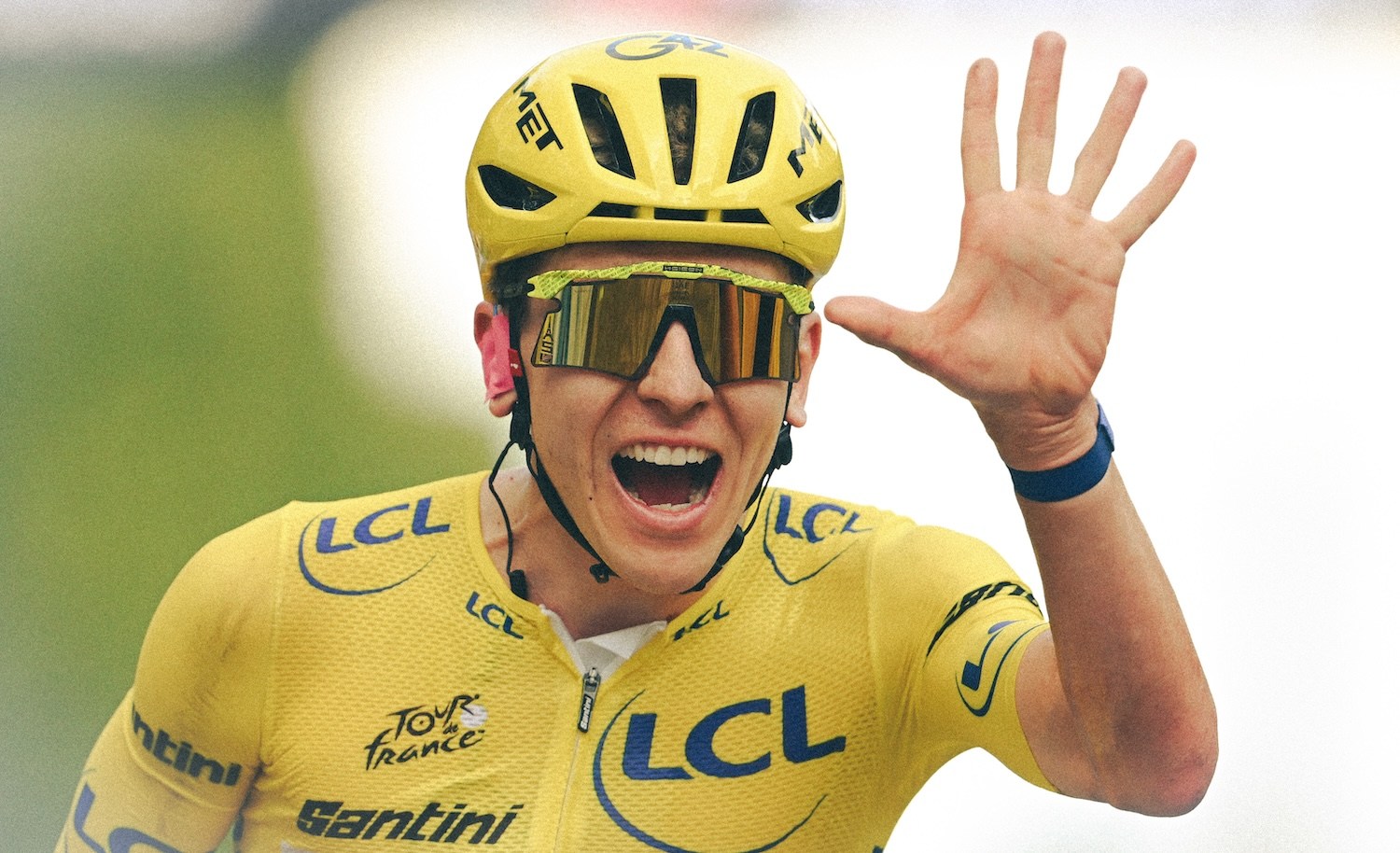
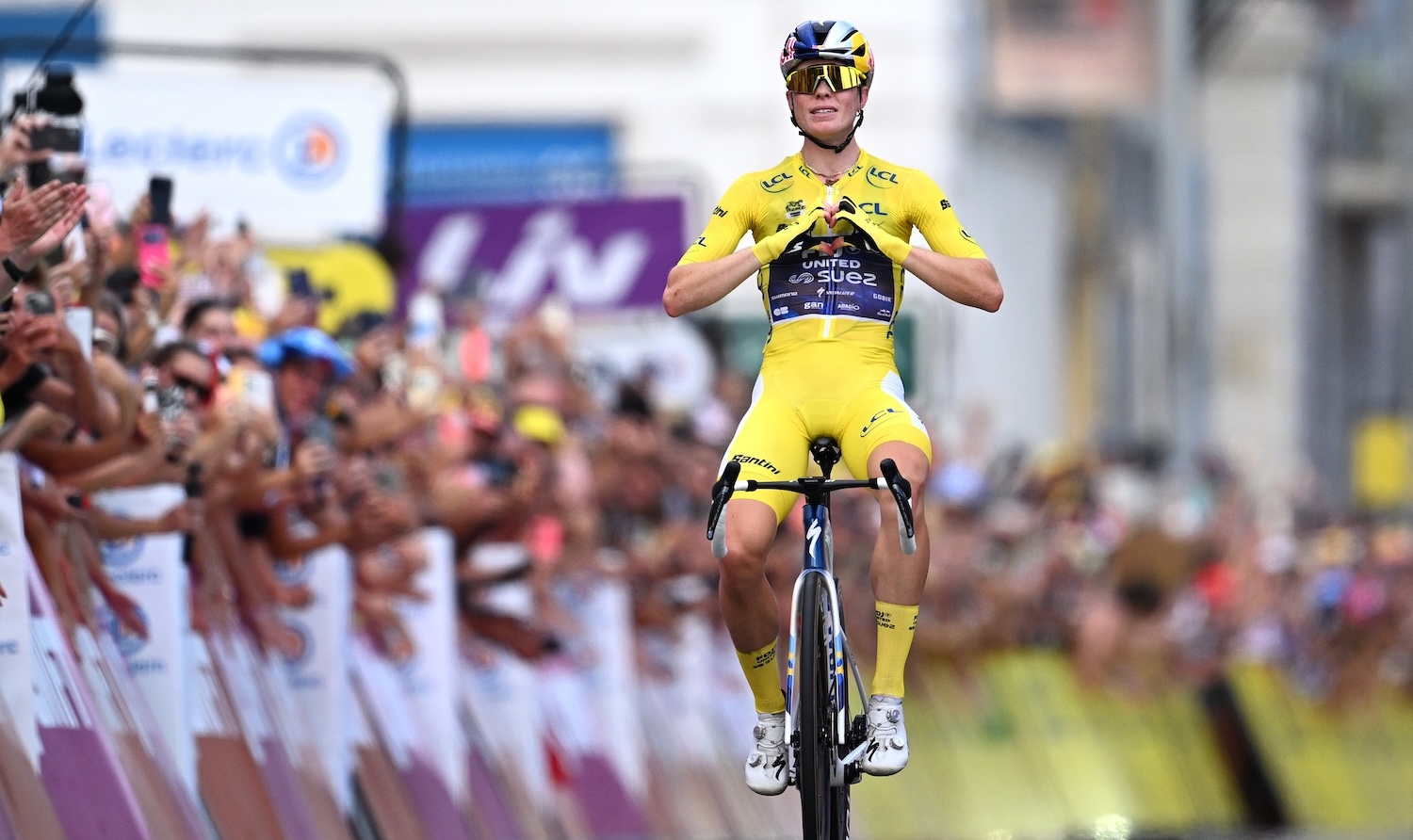
I can't blame them. Not only is core temperature management critical for performance, riding in the heat is dangerous. Elisa Longo Borghini suffered heatstroke during the recent Tour de Suisse, and riders at the Tour are beginning to grumble. "Five years ago, it was definitely totally different than what we have now," Tadej Pogacar said at his yellow jersey presser on Monday, when asked about the heat. His mom came to watch the stage that day, but she had to stay away. The next day, he had a "full headache" and willingly surrendered the yellow jersey. "I don't know if it's safe, but it's not healthy at all,” said Tudor's Matteo Trentin. Is it responsible to race in conditions like this? "No, it's not," he said when asked. "If I was just a normal guy, I wouldn't go out at this time of day."
I am a normal guy, and I was there in Foix after the finish of the supposed hottest-ever stage. The heat had an odd purity to it, as if the sun were straining through the cloudless French sky to get closer to the surface of the Earth. Shirtless leatherette old French guys sprawled on benches with expressions of placid acceptance, and dozens ignored the signs next to the Ariege River, reading "IL EST DANGEREUX!" Paramedics stretchered an elderly fan off to an ambulance after an apparent collapse.
Everyone was sweating. In the greenhouse-like press room, glazed expressions flitted behind quickly gulped cans of Orangina. I misspelled the word "heat" three times while trying to enter it into the tags box under this post, then misspelled the word "misspelled" in this sentence the first time around. I can't imagine the mental strain it takes to focus on bike racing in a France-sized oven like this.
After watching the finish at the team buses on a British journalist's phone, which was skillet-hot and which he was barely triaging with a handheld fan, I snooped around to see what teams were doing to cool their guys down. At the QuickStep bus, staffers strapped Jasper Stuyven into not one but two ice vests. He'd had a rugged day out in the day's breakaway, and he was totally wrung out when he arrived, though his grimace softened as he was handed a popsicle. Stuyven's team director watched, grinning, as a soigneur doused him in three bottles of ice water, taking care not to damage the popsicle.
Over at Jayco, the strategy was ice towels. Michael Matthews also suffered in the breakaway all day, and I watched as his team director unsheathed four soaking towels and mummified his heartbroken sprinter. Matthews is one of the most experienced riders at this race, someone who's won four stages and a green jersey. He's seen a lot, though it took him several minutes to physically and psychically level out after the stage, as the upper 30 percent of his body remained encrusted.
The ideal way to cool a bike boy down is to dip him in an ice bath. Several teams had vans dedicated to ice baths, and the most significant innovation of the form was FDJ's two-man unit. I spoke to an Astana staffer who estimated the team was churning through about 200 kilograms (440 pounds) of ice every day for baths, bottles, and ice socks, which are Dachshund-sized plastic bags of ice typically tucked into the top of a jersey along a rider's neck. The UCI banned ice socks ahead of the start of the race, on the logic that they illegally alter a rider's aero profile. You can't be aerodynamic if you're dead, so every team in the race is flouting the ban; I'd estimate two-thirds of the riders rolling into Foix had an ice sock on their neck. The ice-sock rule hasn't been formally revoked, though the UCI did lighten up its extremely harsh rules about where and when riders can eat and drink during the race.
I spoke to a Bahrain-Victorious staffer next to his team's ice van who wasn't too concerned. At least it wasn't humid, he noted. Yes, it's hot, but teams have ways to manage the heat. This point isn't entirely without merit. No riders collapsed on Tuesday, and as he pointed out, the essence of the sport is the act of suffering. Riding through conditions like this may be different in degree than what usually happens at the Tour de France, but not in kind. Suffering is the raw material forged, through the process of racing, into the finished product of glory. There is no victory without pain, no yellow jersey or stage win that doesn't come at a cost. That direct exchange is what I love about the sport.
This explains the UCI's attitude toward ice socks and heat management in general: They don't want to make cycling easy. But there's a force of denial here, and the larger-order concern has less to do with the ease or difficulty of cycling and more to do with its possibility.
Almost everyone still resorts to the concept of heatwaves when discussing the brutality of the European summer climate, though I find that a misleading way to understand what's happening. "Heatwaves" is a little optimistic, supposing a distinction between aberrant pulses of heat and an acceptable baseline. Really, the dynamic is one defined by its instability, rendering the idea of a baseline obsolete. To the extent we can predict anything, it's that summers are certainly going to continue getting hotter. The glacier fields of the Alps that Europe relies on for water, power, and agriculture are taking their leave of the mountain range. Having already taken away the semi-sacred act of smoking inside a steaming-hot TV van at the Tour de France, climate change now threatens French viticulture. I think of heatwaves as glimpses of the accelerating future, pushing their way through, ahead of time, to show you what the world will be like soon. At a bike race in France in July, the border between present and future is more permeable.
More than anything, the Tour de France is a monument to the beauty of France. It's an act of mythmaking in the form of a bike race, selling the world on France as a place of refined cultural and aesthetic traditions, stately tuffeau limestone castles, kindly grandmothers drinking wine at lunch, and unsurpassed natural splendor. This idealized vision of France conveniently sidesteps all manner of contradictions—I am writing this story from a budget hotel encased so thickly in parking lots and big box stores that it would make even the most jaded suburban teenager in America feel a sense of stifled ennui—most notably for our purposes the fact that the natural environment is under an assault it can't win. On Monday, Caley Fretz and I took a ski lift up to the summit (well, "summit" finish) through stunning wildflower fields grown taller than they would have if this part of the Pyrenees had enjoyed a full snow year.
As Europe warms, the Alps go bald of their glaciers, and the more blanched-out forests burn, the Tour's work becomes significantly harder. You can't sell the world on televised images of France's unique natural beauty—in many ways, France's balance of mountain valleys, gently rolling wooded hills crisscrossed by lovely rivers, and variety of coastlines is the ideal against which Western ideals of natural beauty are judged—if the horrors of climate change are just out of frame, gathering their strength. The Tour can't cure this disease, and I don't expect it to. Until something truly breaks, its organizers will continue managing the symptoms with increasing skill.
The Tour is also special for its broad geographic span and intense logistic demands. These traits throw the race into perpetual conflict with the messy contradictions of the world as it exists. Sometimes a stage gets shortened because some local cows come down with nodular dermatitis. Sometimes so many people cram onto a mountain that the race leader has to get off his bike and run. Sometimes the planet starts cooking the very land you ride on, the land you sell to the world as a paradise. It won't be one forever. The race will roll on until it can't.