Figure skating is a fundamentally cruel sport. A full regular season or tournament structure gives top athletes a bulwark against variance. But a figure skater's biggest competition comes only every four years; over the course of a single year, they will, if they are fortunate, get six elite-level opportunities to prove what they can do. Factor in that program execution, especially for the quad-defined men's event, is inconsistent, and that skaters are fundamentally at the whims of a subjective judging panel, and the sport itself can start to feel like a cruel game of chance. Just take a glance at figure skating's visibly HTML-powered official scores site, and it's not difficult to find a men's free skate dogged by poor execution across the board. One mistake and, well, that's just unlucky. Wait for your next shot in a year or four.
So the absurdity of Ilia Malinin in this era of figure skating is not simply that he can perform elements that no one else can—a quad axel!—or string together a number of jumps that no one else can match—seven quads!—but that he is so technically gifted and so consistent that he appears immune to the terrible whims of chance that his competitors are subject to. The base difficulty of the programs is such that he doesn't need to nail every single one of his jumps to convincingly win over his next-closest competitors. Earlier this year, he squeezed seven quads into his U.S. Figure Skating Championships free skate, though he didn't skate it clean. But, hey, why not nail it too?
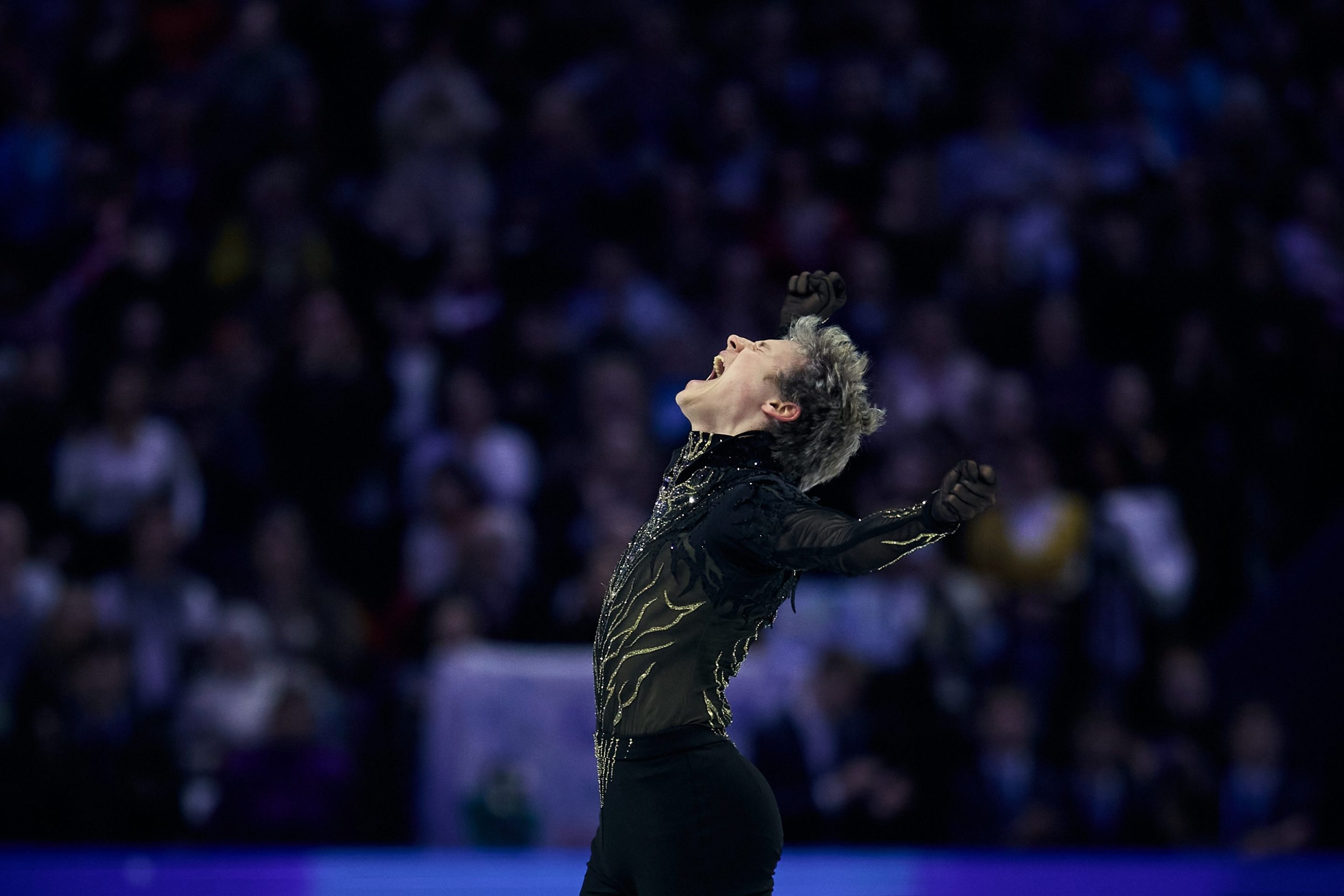
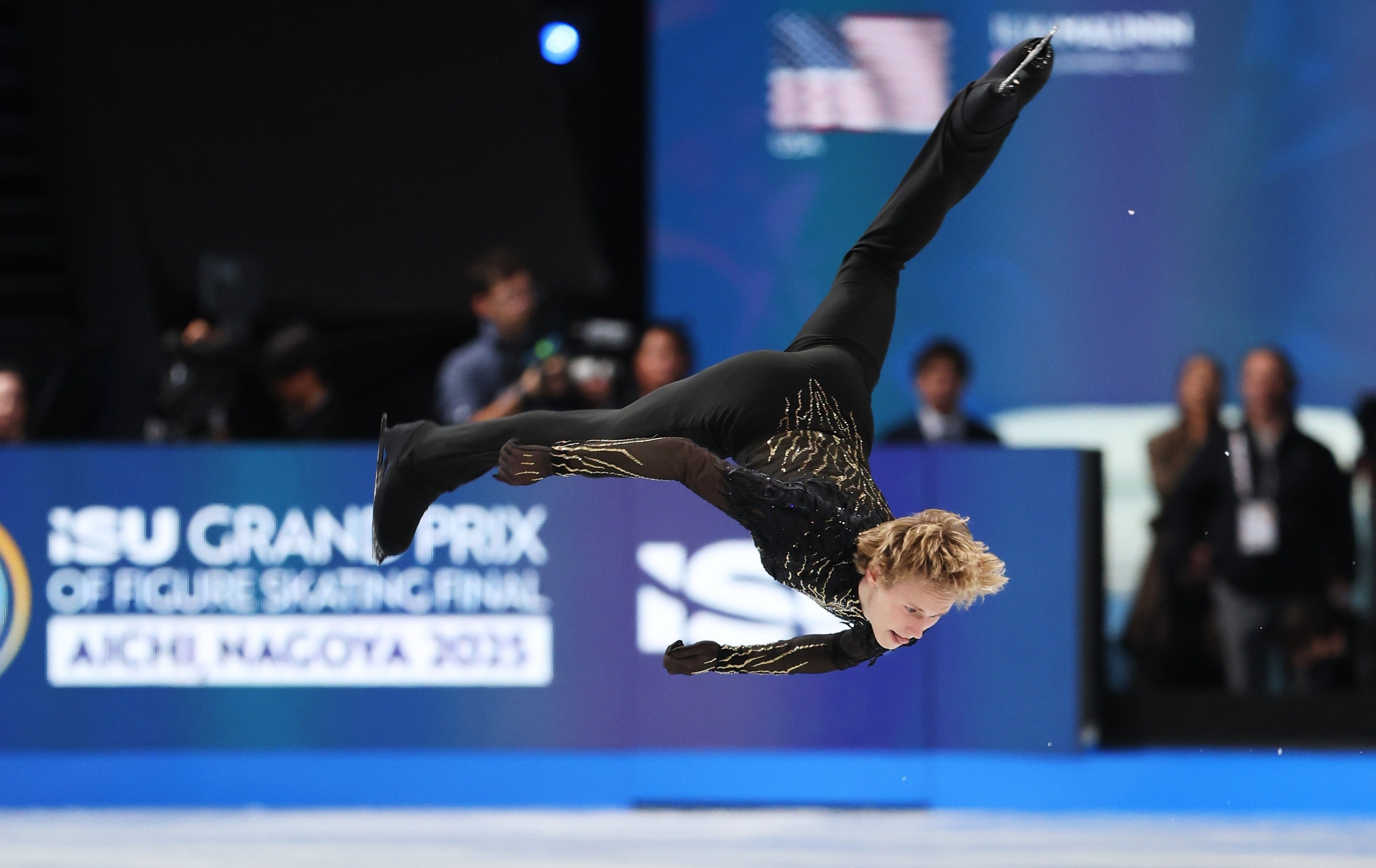
On Saturday, at the Grand Prix Final in Nagoya, Japan, he tried out a seven-quad program and he skated it clean, becoming the first man to do so and shattering the men's free program world record last set by, well, Ilia Malinin, the last time he stepped on ice. It's easy to forget that after failing to execute a quad axel combination that had never been done before in the short program, Malinin was in third, 14 points back from first place. After all, he immediately followed that up with a free skate in which he executed the Pokémon-esque maneuver of collecting every single possible quad jump, including the one only he can do.
But you don't need context to appreciate the athletic marvel of Ilia Malinin throwing himself into the air. Seeing it is enough.
The natural progression of any sport is one of generational improvement. Better, faster, stronger: The next era's athletes, with improved technology and groundwork laid out by their forebears, will supersede the previous in technical prowess. First, there was Yuzuru Hanyu, who became the first man to land a quad loop, and who could consistently land four quads in a program. Then, like any Chinese-American high schooler at the time, I followed Nathan Chen's ascension toward the latter part of Hanyu's career and still remember how huge it was when he landed five and then eventually, in his "fuck it we ball" 2018 Olympic free skate, six quads in a program.
But even by the expectations of constant evolution, Malinin appears to have skipped a few steps. Again: seven quads, one of each, one of them an axel, all the time. In the early days, when Malinin was only a teenager, consistency issues mitigated any potential development. But the version of Malinin now, newly 21, doesn't have such problems, and unlike the Hanyu-Chen era of competition, he doesn't have a competitive foil within spitting distance. For someone like Yuma Kagiyama, who came in second at the 2022 Olympics, the window of opportunity after Chen's retirement was alarmingly narrow. There was one year of breathing room, and then along came an even greater freak of nature who is just too good.
It's a cruel sport, but not for Malinin. Surely sometime, at some point in the future, someone else will reach and then surpass Malinin's level. But not now. With the Olympics as the ultimate goal of the season, the Grand Prix Final was, for Malinin, a simple proving ground. Well, whatever he came in to prove, the rest of us saw it: the sheer absurdity of a 21-year-old skating to his own voice, who can only lose to himself.