I wasn’t sure, at first, that I wanted to read Heated Rivalry, or the rest of the novels in Rachel Reid’s best-selling “Game Changers” series. I had thoroughly enjoyed the first of Reid’s two standalone hockey romances, Time to Shine, which takes place in an imaginary world where homophobia doesn’t meaningfully exist, and prominent male hockey players are out and unfussed about it. The conflict in the book revolves around the potential pitfalls of the main characters being teammates, and deeply unequal ones: one a wealthy star, and the other a backup goalie newly called up from the minors.
The “Game Changers” books, I knew, were set in a world more like ours—one where no NHL player, active or retired, has ever come out publicly as any flavor of queer. In 2021, Luke Prokop became the first out player under contract with an NHL team, and later the first out player to be active in the minor-league AHL. His NHL contract has since lapsed, and in August he was signed to a one-year contract with the Bakersfield Condors.
I was hesitant to spend that much time—six books’ worth!—wallowing around with sad boys in the closet. Still, I placed a library hold on the first book in the series, Game Changer (the events of which were covered in episodes three and five of the TV adaptation of Heated Rivalry). I read it quickly and didn’t wait around in any Libby lineups for the next one—instead, I bought the entire series immediately, and settled in to binge it all. A few months later, I re-read it, and a few months after that, I read it again. By the time the TV series began airing in late November, I owned a complete, signed-by-the-author set of paperbacks to supplement my e-books, and a limited edition Shane Hollander T-shirt.
My commitment to the books wasn’t just about their thoughtfully drawn characters, or their steaminess, or the fact that they made me laugh out loud more often than nearly anything else I’ve ever read. There was also something… healing (I’m sorry, there’s just no other way to say it) about them. At some point in the last decade or so, my relationship with hockey had been broken—by the game’s frequent ugliness and my own growing inability to ignore its costs and its harms. Heated Rivalry and its brethren made me feel like something better was possible.
I come from a hockey family in the ordinary way that many Canadians do. My grandfather had played in his youth. My dad and my uncle played when they were growing up, too, and my grandfather once coached a boys’ team that included future NHL referee Kerry Fraser. (“He didn’t know a damn thing about hockey,” Grandpa used to say, “but he sure could skate.”) In the ’90s, my dad started playing again, for the first time since he graduated from high school. Now in his mid-70s, he still plays in an old-timers league.
By the time I was a teenager, I was regularly staying up late on Saturday nights to watch the full Hockey Night in Canada double-header. I’d been an Oilers fan since the Gretzky era, but as the Senators (my hometown team) finally dug themselves out of the mire of their early years, I became interested in them too. I watched everything I could—regular-season games, all of the playoffs, the all-star weekend, even the draft—and when I was 16, I finally got the chance to play the game myself: two seasons of girls’ house league, using gear on long-term loan from an older cousin. In my twenties I couldn’t wrangle the money or time to keep playing, but I did keep watching.
All of which is to say that when I stopped watching hockey almost entirely, when I stopped even keeping track of who had won the Stanley Cup each year, it was a rupture in my life. A loss, even if it was my choice to walk away.
There had always been things I had to ignore to be a devoted hockey fan. The man who pulled over at my team’s roadside car wash, where we were fundraising to go to the Ontario provincial championships, and rolled down his window specifically to tell us that girls had “no business” playing hockey. The first-round NHL draft pick who sat behind me in high school English during his final season of junior hockey, and who was always nice enough to me but who described another one of our schoolmates, who hung around his team a lot, as “the town bike.” Or, later, the online commenter on one of the first hockey stories I ever published, who posted that I wrote like “a dumb skank in a sports bar trying to sound like I know what I’m talking about.”
There was Sean Avery and his “sloppy seconds” remarks. There was head injury after head injury, suicide after overdose after suicide. By the time the news emerged that Hockey Canada maintained an obscure fund that it used to quietly settle sexual assault cases against prominent players, I had long since checked out. I followed the news from a distance, feeling sick to my stomach and glad that I had already effectively washed my hands of the game. I was done.
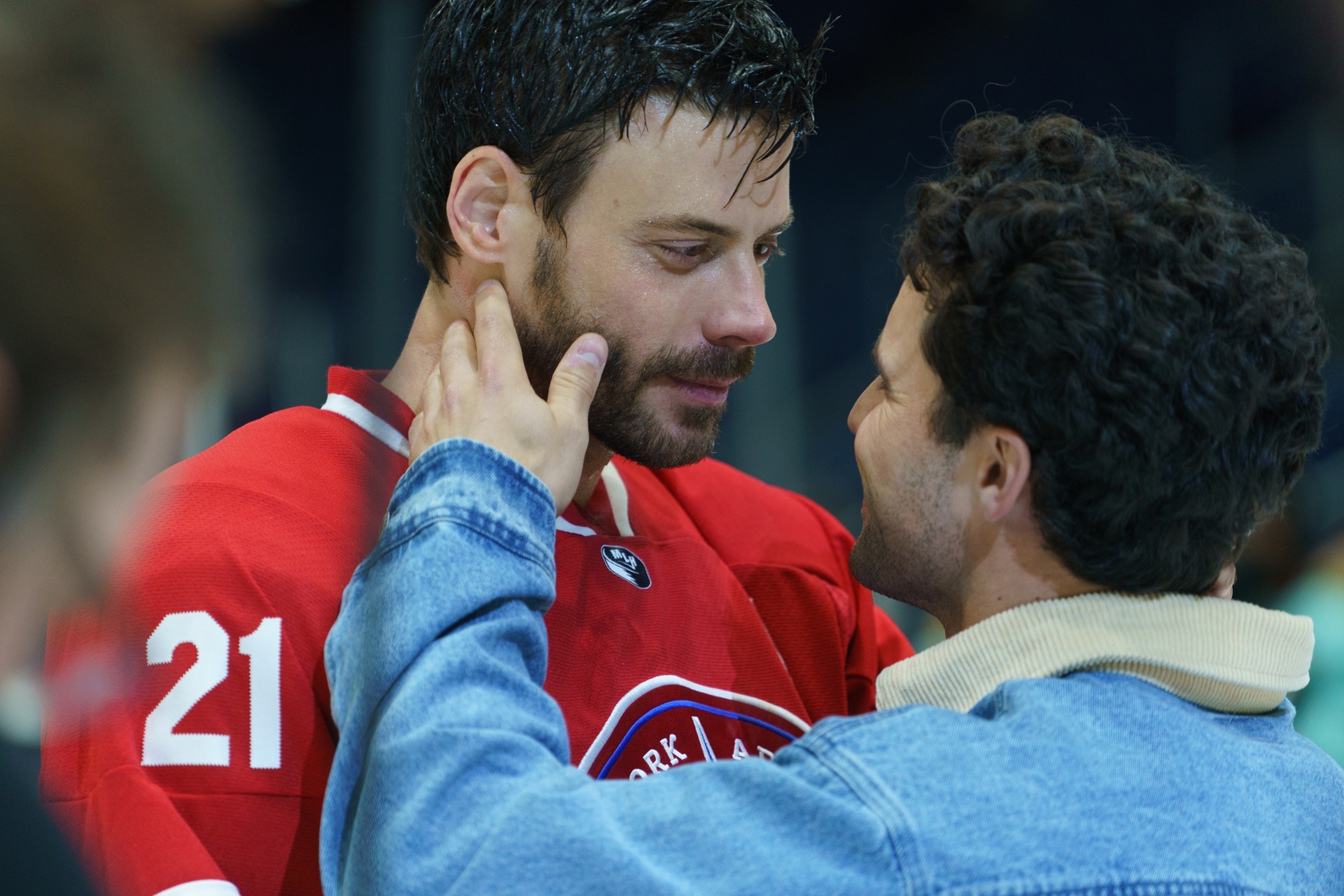
Heated Rivalry, the TV show, is officially an adaptation of the second book in Reid’s romance series. It follows Shane Hollander (Hudson Williams) and Ilya Rozanov (Connor Storrie), rival Canadian and Russian superstars who have been pitted against each other at every juncture of their careers, from an international junior tournament to their draft day, when they went one-two, and beyond. They have also been hooking up secretly since they were teenagers, and gradually, over the course of a decade, falling in love. Heated Rivalry is about whether or not they’ll be able to admit their feelings to each other, and if so, what on earth they’re going to do after that.
The show has been an unexpected sensation. Made partly with support from the Canadian government, and initially set to air exclusively on Crave, a Canadian streamer, it was picked up just days before its premiere by HBO Max in the United States and Australia, with additional deals for Spain, New Zealand, and elsewhere. Now it’s inarguably the show of the season. Its fifth episode, “I’ll Believe in Anything,” is currently tied with Breaking Bad’s “Ozymandias” for the highest-rated TV episode of all time on IMDb, seemingly every outlet wants a piece of the clicks its mention brings (The Cut recently uploaded a 20-minute reel about co-star Hudson Williams’ skincare regimen), and even normie hockey podcasters are talking about Ilya's beautiful bare ass.
There’s a reason why the fictional couple was burning up the internet even before the show came along to make all our mental images come to vivid, GIF-able life. Shane is endearingly earnest, awkward, and set in his ways, chasing perfection with obsessive discipline. Ilya is a wilder type, running his mouth on the ice and partying off it. Thrown together, and seemingly helpless against their mutual attraction, they’re often hilarious—much of the dialogue in the show, written and directed by Jacob Tierney (of Shoresy and Letterkenny), is lifted directly from Reid’s books.
Their story continues in the last title in the series, The Long Game, which is likely to form the backbone of a just-announced Season 2 of the show. But Shane and Ilya are the beating heart of the series, and Rozanov in particular is a presence in every book. The series itself is interconnected, with the characters in each novel influencing the events in later books. The first book, Game Changer, is the story of Scott Hunter: an all-American superstar, captain of his NHL team as well as Team USA, and a lonely and paranoid, deeply closeted gay man. Spoiler alert: He comes out in dramatic fashion at the end of the book (and, in the TV version, Episode 5), earning himself a happy ending.
In Reid’s universe, Hunter’s coming-out is seismic, and the subsequent five books in the series all take place in the wake of the change he made. Shane and Ilya’s relationship is rocked by the revelation. Months later, Ryan Price, the shy, anxious enforcer featured in the third book, Tough Guy, muses: “Hunter had been brave enough to come out first, and now being a queer NHL player was barely interesting. One of Vancouver’s goaltenders married his longtime boyfriend over the summer… And a Swedish guy who played for Los Angeles had started posting photos on Instagram of him and his boyfriend.”
It's not quite that simple for our heroes, of course. Hollander and Rozanov are still trapped in a lie. Price struggles with clinical anxiety and a fundamental problem with his role: He doesn’t want to have to beat guys up for a living. With his body deteriorating, he also worries about his growing reliance on pain meds. Hockey is using him up, as it’s used up and discarded so many marginal players and tough guys.
Meanwhile, Troy Barrett, the protagonist of the fifth book, Role Model, has just been perfunctorily traded after confronting his mega-star teammate about a series of sexual assault allegations. Barrett believes the women who came forward, and he struggles with the culpability he feels for all the times he partied with his former friend: all the signs he must have missed or willfully ignored.
These sorts of issues will be unpleasantly familiar to anyone who’s followed the men’s pro game. But instead of being a bummer, the engagement with hockey’s dark side(s) in Reid’s romances offered me a kind of unexpected solace. There’s something soothing and hopeful about watching Reid’s characters struggle to create space to be themselves. To take care of themselves and each other, to break down barriers and demand acceptance, and to hold their teammates to account. The series is a specific sort of wish fulfillment—that there could be a better NHL, a better reality for hockey players and fans—but in granting that wish, Reid’s books helped remind me why I had it in the first place.
Tierney’s show continues that good work. It imagines a world where “it gets better” can apply to closeted jocks just as well as to, say, theater kids who finally escape their high schools and blossom elsewhere. It’s put queer sex and queer joy on a major platform at a time when our stories are being hounded out of libraries and classrooms. For me and many others, it’s been a bright, blinking, gay light in this long, dark winter.
I still don’t watch that much hockey; I’m sure I’ll never again follow it as closely as I used to. But I’ve let it back into my life in small ways: I’ll follow the Olympic tournament this year, and I never let a Connor McDavid clip pass me by. I like to think that Luke Prokop or someone like him will skate in an NHL game in my lifetime, that Pride nights will no longer be a source of rancor, that NHL locker rooms might become safer and less toxic places in all sorts of ways. I’d like the league to deserve fans like me. Heated Rivalry lets me imagine that we might get there, someday.