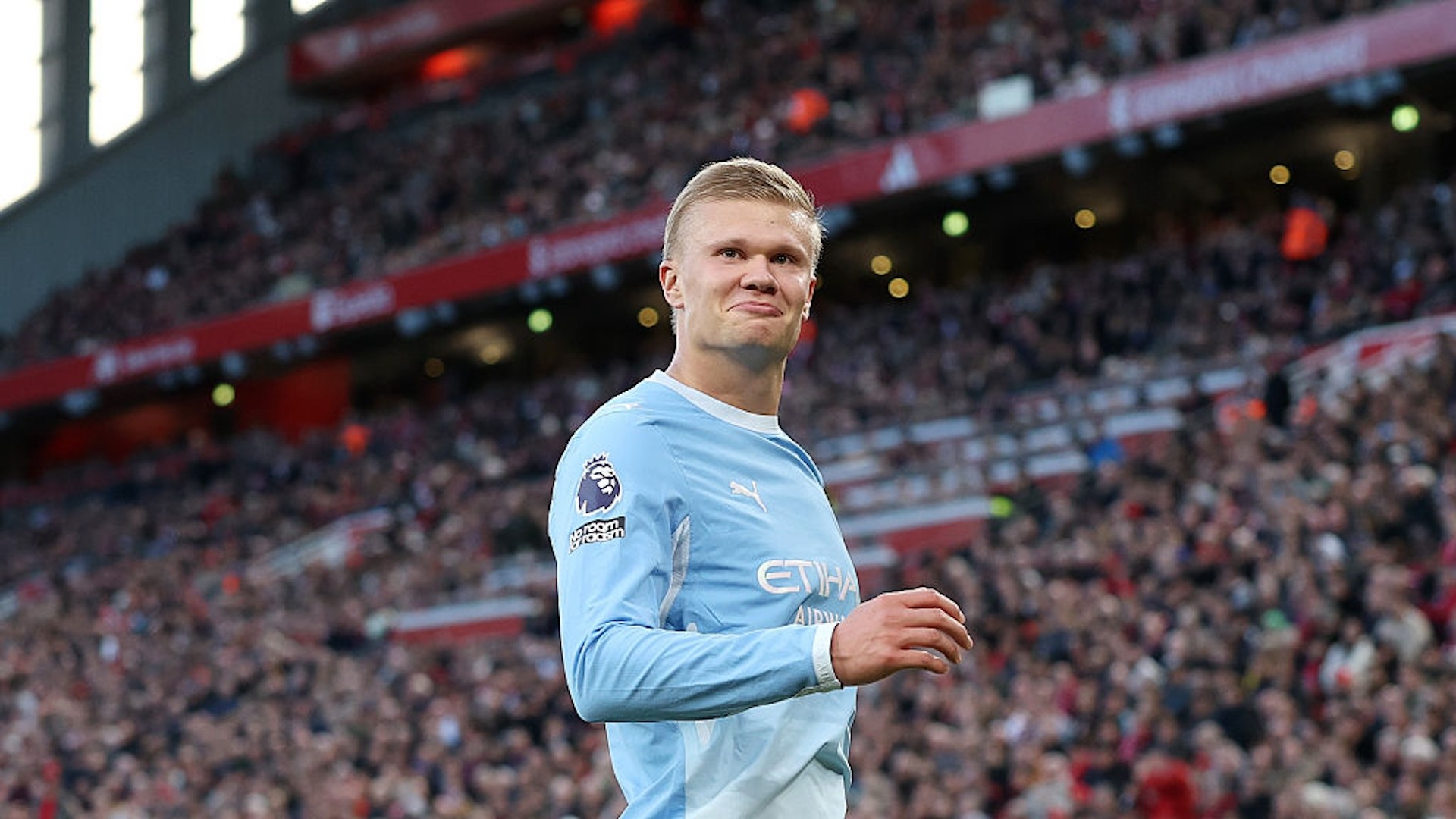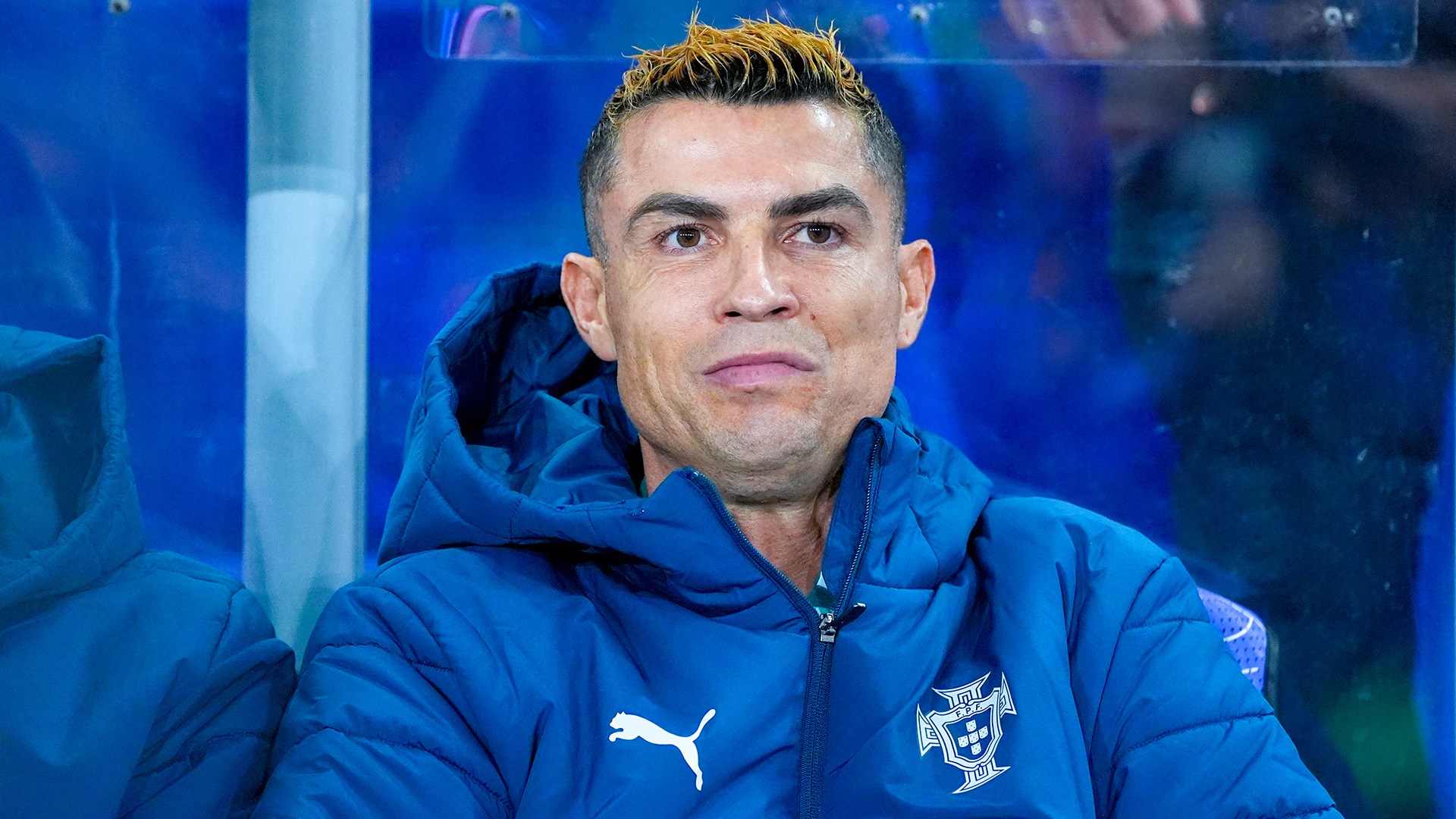
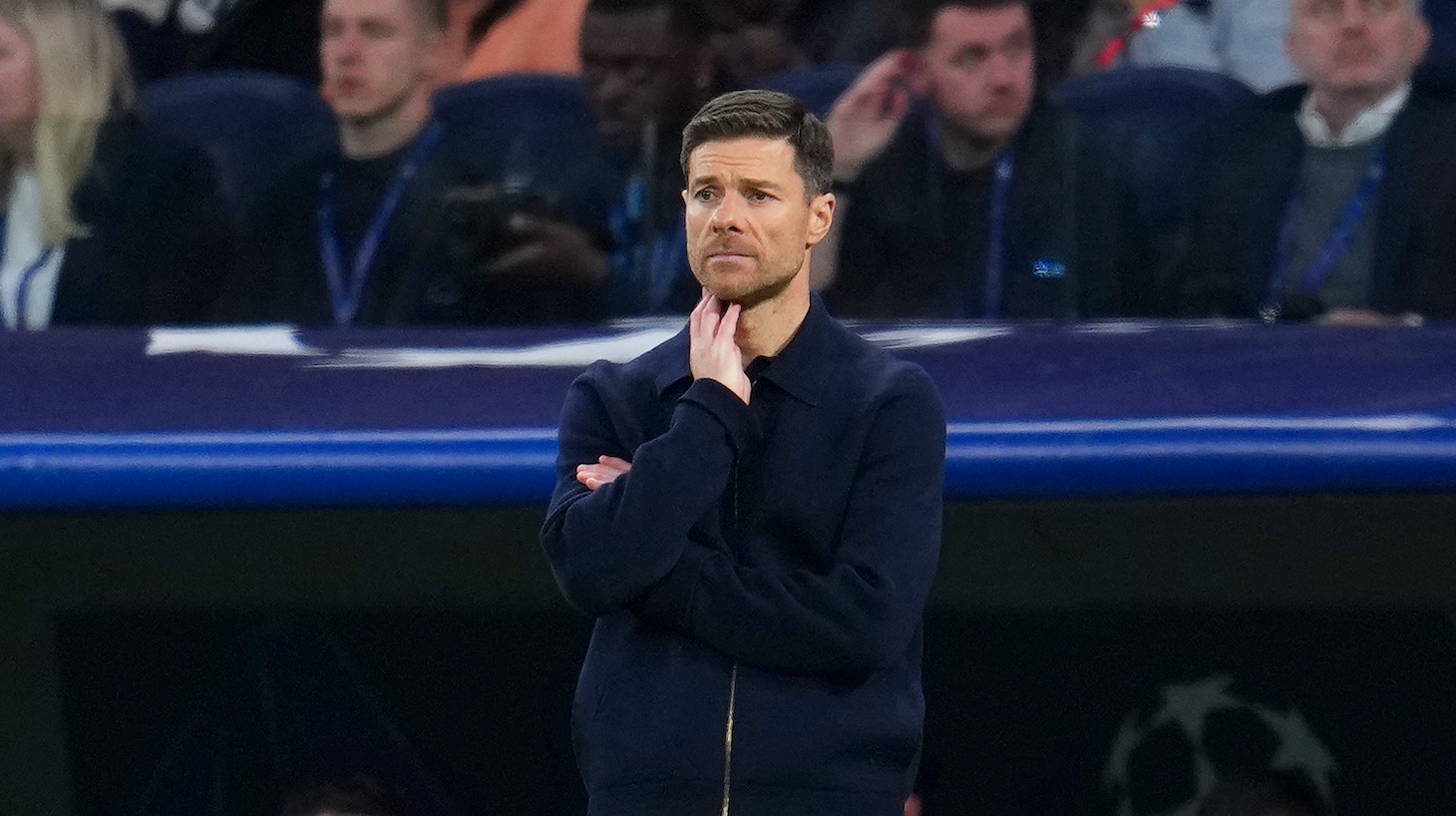
On Wednesday, Real Madrid hosted Manchester City in a portentous Champions League showdown that, for the home team, promised or threatened to mark a definitive before and after. Win, and Madrid could credibly claim the result as a turning point, when a devastatingly talented roster, helmed by one of the game's most exciting young managers, put aside its shaky beginnings and started to become the superteam it was meant to be. Lose, especially if the loss was a bad one, and you could assume that the club would take it as the final sign that things simply weren't working, and that the time had come for drastic change, starting with the firing of the aforementioned exciting young manager Xabi Alonso.
But reality didn't prove quite so neat. The Blancos played neither great nor horribly, and though they did lose, 2-1, the defeat was neither encouragingly narrow nor embarrassingly lopsided. In the end, in spite of the match's weighty stakes, Real is right were it was before, which is nowhere.
As is often the case for these mega clubs, where a mere width of a goalpost can separate resounding success from abject failure, you probably wouldn't be able to tell just how close Real has come to the brink of chaos if you were to only look at the facts of the season. Even after Wednesday's loss, Madrid still sits in a comfortable seventh place in the UCL's league-stage table, well positioned to qualify automatically for the round of 16. In domestic play, Madrid is in second, four points behind Barcelona—not exactly a disgrace, being within touching distance of La Liga's reigning champions, who were for stretches last year the best team in Europe. If part of the job of the Madrid manager is to help superstars produce Ballon d'Or–level figures, then Alonso could point with pride to the form of Kylian Mbappé, whose 26 goals in domestic and continental play put him firmly in the lead for the Golden Boot. Granted, none of the above, nor all of them together, would indicate that Alonso's Real has gotten off to a flying start, but absent any additional context it hardly looks like some disaster either. Yet it is within that invisible context where you'll find the true, grim face of Real Madrid's season.
Xabi's Real was supposed to be different. After years of near-perfect management from Carlo Ancelotti, Real stupidly came to the understanding that one of the most celebrated and decorated coaches of all time had become a dinosaur whom time had passed by; in place of his subtle, hands-off, player-friendly and -focused managing style, the club decided it needed a younger, energetic, tactically sophisticated dictator type to crack the whip. This "back-patter to whip-cracker" cycle is a common one in sports, and in particular at Real; it is also rarely effective in sports, in particular at Real, a club that has always defined itself first and foremost as a player's paradise. Club president Florentino Pérez may talk himself into handing the whip to a new manager every few years, but in the end he always sides with the players when they inevitably wrest the thing away and turn it on the coach.
Where Ancelotti's Real was deemed tactically old-fashioned, defensively porous, offensively shapeless, and generally sluggish, Alonso's was to be tactically cutting edge, defensively anchored—as all "serious," "modern" teams are "supposed" to be—by a relentless high press, as ordered in attack as a Swiss watch, and rabidly intense in general. Where Ancelotti's Real was deemed acquiescent to big-name players who'd grown complacent under the Italian's laxity, Alonso's was meant to be ruthlessly demanding. The players would either get on board with his hard-running style or get ready to sign somewhere else.
The rationale for these sweeping changes, leaving aside the question of Alonso's ability to enact them, might've sounded convincing in the abstract, but it overlooked the sport's only fundamental truth: Soccer is about the players—what they are capable of, how they fit together, and what they respond to. Absent significant changes to the squad—the kinds of changes that did not come—the Real roster was going to play how it was going to play, no matter who stood on the sidelines.
Unsurprisingly, the Alonso revolution has failed to materialize. All the flaws from last season's team are still present. The defense, the one line that saw significant investment over the offseason, is once again butter soft, in large part due to another plague of injuries. The midfield still suffers from a lack of a tempo-setting passer, which makes for stodgy, aimless possessions that do no favors to either the attack or defense. The forward line is replete with scintillating attackers who unfortunately appear to be entirely incompatible with each other and with the style of play Alonso has tried to implement. The team can't press high with any real consistency because the forwards have no interest in or aptitude for it. The team struggles to defend deep because it doesn't have many defenders who are actually good at defending, and the few exceptions have often been hurt. As any team with Mbappé, Vinícius, and Jude Bellingham would expect to be, Real is a hurricane on the counterattack, which is how Mbappé has scored so many goals and the team has pulled off its respectable results. But the Blancos almost never seem in control of any game, only really play well when the other team takes the initiative, and cannot for the life of them find a way for their three stars to look comfortable when they're all on the field together.
The lack of synergy between Mbappé, Vinícius, and Bellingham is the most worrying thing about the state of the team as presently constituted. It was always obvious that the Frenchman and the Brazilian were going to make for a tough circle to square. In their ideal world, both players play in almost the exact same position, if not quite the same role. Mbappé and Vinícius are most at home when playing in the inside-left channel, where they can take advantage of the space on the wing to flex their scorching speed and the little gaps in more interior zones to hit shots or play passes. The two play the position differently—Mbappé as a second striker, always on the hunt for spaces through which he can carry the ball into the box and smash in a shot, and Vini as more of a playmaker, feeling strongest when he has partners nearby to collaborate with—but their favored area on the field is the same. That overlap, combined with the poor fit between their natural styles—Vini, the associative one, looks for someone to play with, while Mbappé, the soloist, prefers teammates who play for him—means it's difficult to get the pair on the same page.
When you throw Bellingham in the mix, the team's incoherence only gets worse. If Vini and Mbappé play the same position but different roles, then Bellingham and Mbappé play different positions but more or less the same role. Though he burst onto the scene at Borussia Dortmund as an all-action box-to-box midfielder, the Englishman was fully unleashed in his first season in Spain as an out-and-out forward. It's true that he usually starts games from a deeper position, but he is most deadly when playing ahead of the ball, between the lines, always looking to launch himself into the penalty box to get on the end of chances. This makes him pretty much the mirror inversion of Mbappé, who starts as a center forward but spends almost no time in the 9 zone, instead floating backward or wide to make runs. It's no coincidence that the only great partnership to emerge in Madrid this season has been the one between Mbappé and Arda Guler: The Turk is the squad's best player of the kinds of incisive passes that Mbappé feasts on. The problem is that duo only really flourished while Bellingham was out injured.
While Mbappé and Bellingham are redundant, Vinícius and Bellingham just don't mix. The best Vinícius came alongside Toni Kroos, a midfielder who could act as both launchpad and flight controller to Vini's rocket ship, the tandem charting paths together that the German would then set the Brazilian off on with a pass. In contrast, Bellingham, like Mbappé, is a player who really only plays for himself.
The combination makes everyone a little worse off. Mbappé has to play as a lone, nominal No. 9, which robs both him and the team of a more traditional striker to distract the center backs and camp out in the box for crosses. Vinícius can't take advantage of his collaborative talents in more central zones, and instead is shunted out wider where he is isolated and far less effective. Bellingham either gets in Mbappé's way when trying to play between the lines, or has to drop deeper to perform a woeful Kroos impression, helping nobody. Guler is either forced to the bench or out to the wing, where he struggles to get into the game the way he can when he features in the center. Federico Valverde then has to try to play orchestrator in midfield, a role he's not cut out for and which diminishes his world-class impact in a box-to-box role. The knock-on effects continue from there, until you wind up with an entire team of great players where nobody can play where or how they are best.
None of this is really Alonso's fault. The concessions he has made as the season has gone on—mostly abandoning the high press, settling of late on a fairly staid 4-4-2 formation that gives clear but relatively limited roles to the players involved—are ones most any sane manager would make when handed this roster. You can tell this is true because Ancelotti himself came to basically all the same conclusions last year, the very conclusions that the short-sighted fans and board sought deliverance from when they let Ancelotti walk and brought Alonso in his stead.
Granted, Alonso hasn't been faultless. To the extent that he has tried to comply with his remit by cracking the whip, it has come at the expense of Vinícius's playing time and role, which have fluctuated all season. What should've been a galvanizing, steadying win in the season's first Clásico was instead marred when Alonso subbed Vini off and Vini made clear his frustration while coming off the pitch. That dust-up—and Vinícius's public statement of regret in which he apologized to everyone involved, with the glaring exception of Alonso himself—made evident the interpersonal issues that continue roiling underneath the surface. As Thierry Henry explained on Wednesday, the Real job more than any other is first and foremost about managing personalities, and Alonso does not seem to have done a good enough job there.
Of course, even in the Vini case Alonso is not solely at fault. The larger context there is about Vinícius and the club's concerningly protracted contract negotiations, which are also about where exactly Vini fits in the new hierarchy with Mbappé and Bellingham. But Ancelotti, even above his wildly underrated abilities at coaching great, winning, gorgeously free-flowing soccer, is arguably the best man-manager the game has ever seen. Keeping a squad of superstars happy amid all its internal vying for position and prominence, especially when that squad doesn't quite fit together perfectly, may be the hardest job in sports, but it is the job Alonso is tasked with, and he doesn't seem to be fulfilling it.
The promise of Alonso as a manager was the chance that he just might be the literal perfect man for the Real Madrid job. He entered the gig as a legendary player himself, who starred at Real in the recent past, and who, due to his tutelage under both Pep Guardiola and Ancelotti, had experienced the best of what each pole of the tactics coach–people manager spectrum had to offer. The dream was that he could put together all he had learned over his career and synthesize that spectrum, becoming the best possible manager. It would be fair to say that so far he's failed to live up to that admittedly impossible standard. Because of that failure, nobody will be surprised when he finds himself fired after the next disappointing result.
What Real's season reveals isn't that Alonso is a bad coach—and in fact I feel confident that his impressive stint at Bayer Leverkusen is closer to his true level and therefore that he remains an exceptional manager—but that the only "coaching" that really matters is having the right players. Madrid built the most powerful force the Champions League has ever seen with a team full of stars who, most crucially, complimented each other to perfection. As those older pieces fell away—especially with the retirement of Kroos, the lynchpin—Madrid kept looking for new stars without concerning itself with how those stars might fit together. The result is a team that looks amazing in the context of a video game but can't actually click in real life. Alonso hasn't helped things, and so it will be no travesty if and when he loses his job. But until the club brings in the right players who can make this team something greater than the sum of its parts, it won't matter who's in the dugout with them.