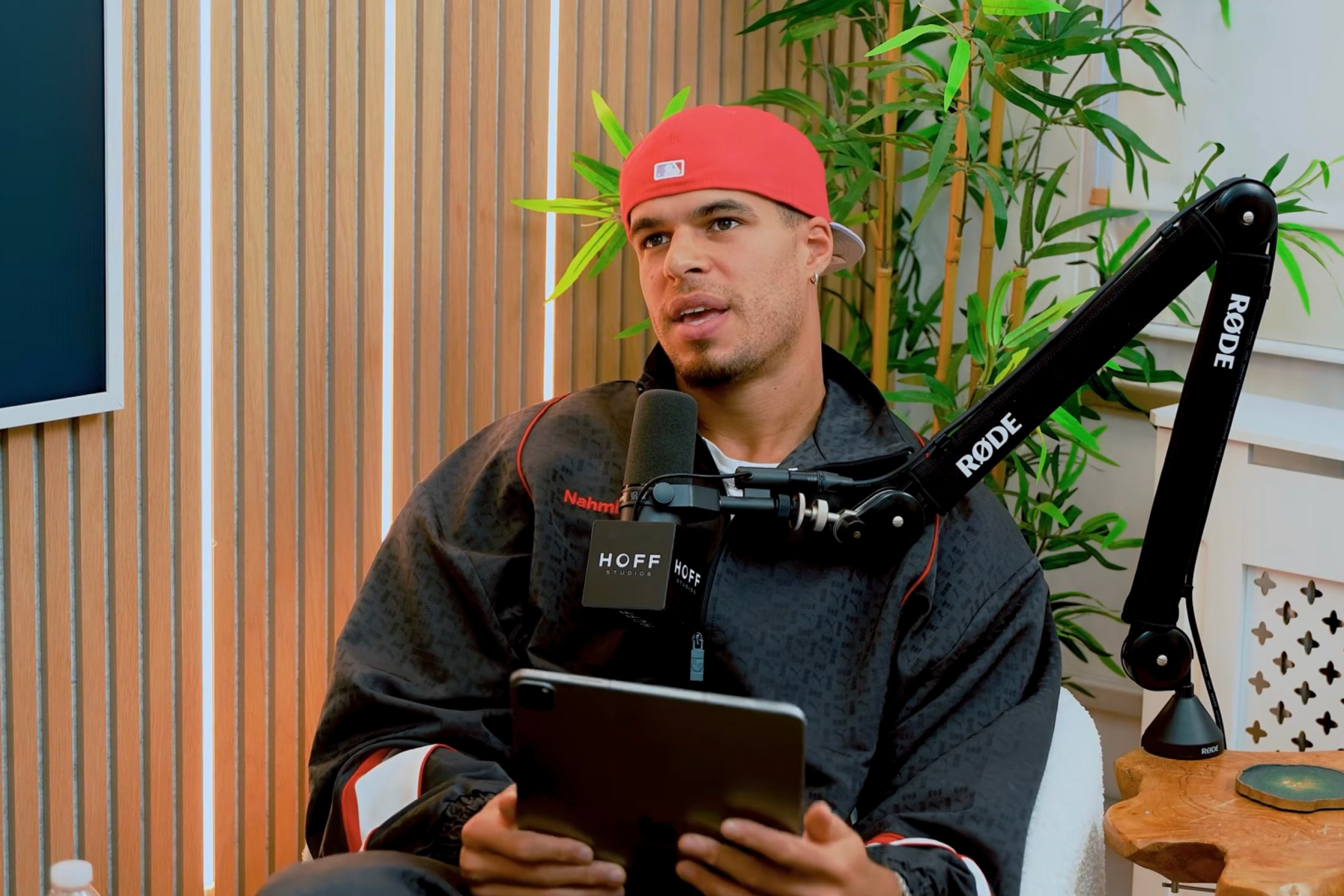

Halfway through the second quarter of a Dec. 1 game between the Phoenix Suns and the hosting Los Angeles Lakers, the Peacock streaming network broadcast returned from commercial and threw to Robbie Hummel for an update. Hummel, a Purdue University legend who briefly played in the NBA before turning to broadcasting, reported from the Suns bench that coach Jordan Ott had spent the previous huddle telling Mark Williams to continue to "win the race" against his man every time. Hummel delivered his report while wedged next to the actor Austin Butler, whom play-by-play man Noah Eagle razzed Hummel for not knowing about before checking in with Derek Fisher from the Lakers bench.
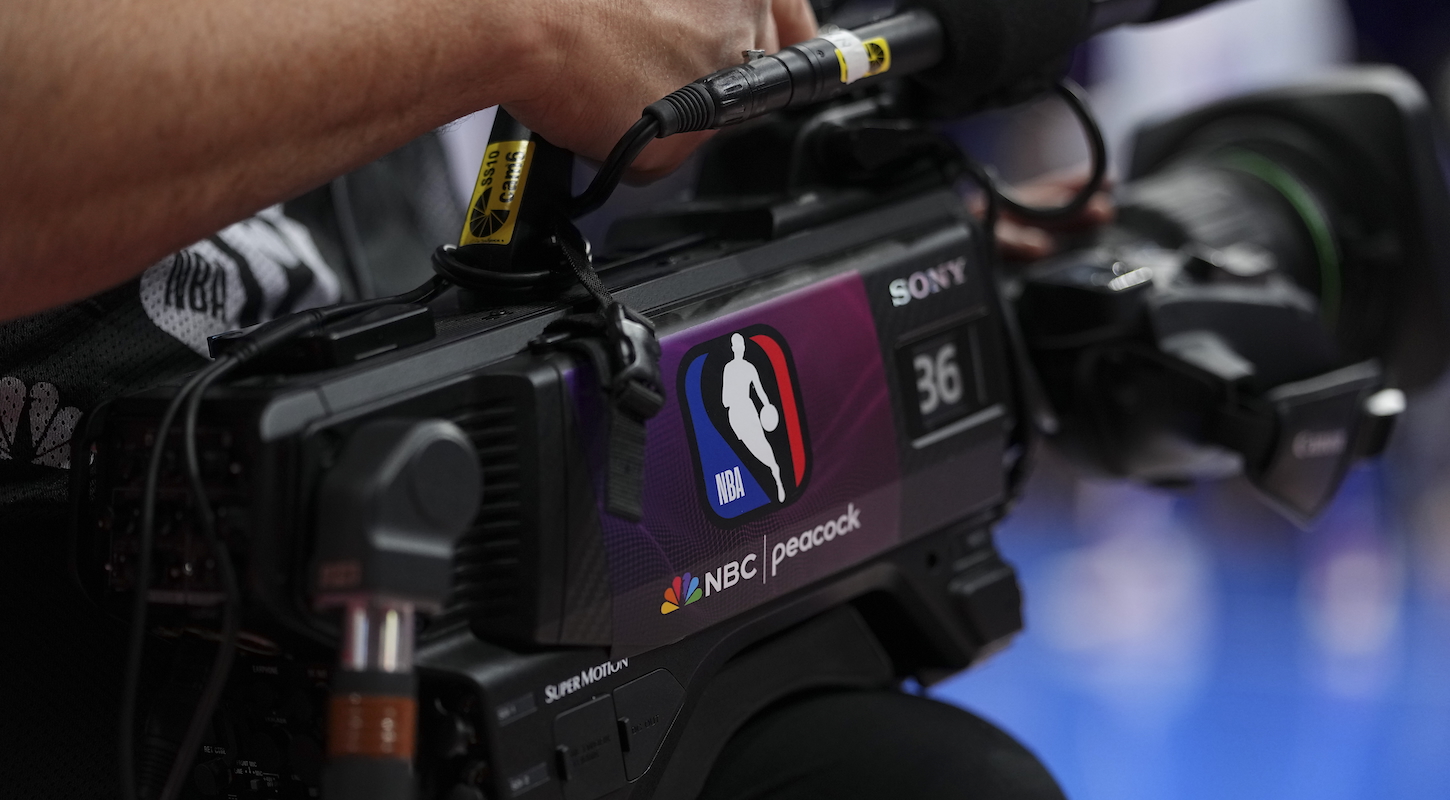
Reporters on the bench, "Roundball Rock," and the sonorous stylings of play-by-play guy Michael Grady are all new to the NBA's national broadcasts this season, the first campaign under the league's new TV contract. The 11-year deal represents the biggest change to national NBA broadcasts since 2002, when ESPN replaced NBC. For 22 seasons, national games were carried by ESPN and TNT, or, to put it in corporate conglomerate terms, networks under the Disney and Time Warner umbrellas.
Under the new deal, NBC is back, ESPN and partner network ABC are still around, and Amazon is making its NBA broadcasting debut. The latter, the fifth-most valuable company in the world, succeeded in entering into the business only after TNT's parent company, now known as Warner Bros. Discovery (after four name changes in the intervening period), filed suit against the NBA and reached a settlement. WBD's desperation to claw its way back into the deal, which is three times bigger than its predecessor and runs for two years longer, indicates that despite eternal crowing about ratings and worries about cord-cutting, live sports are still incredibly important to any company in the broadcasting business. Every major media company is trying to buy up more live sports rights.
To the basketball fan, the pressing matter in this season of change isn't corporate intrigue, but rather the aesthetic experience on offer from the new broadcasters. How do the games feel on Amazon and Peacock, and what are these networks doing differently? What is happening over at ESPN, which ended the last TV deal with a whimper? In other words, what is the state of the NBA on TV?
I began this story with a clip from Peacock because NBC has the most games this year, and because NBC's broadcasts are breaking the most new ground. They are also retracing a lot of old ground. The network's broadcasts are chiefly associated with the NBA's Michael Jordan-era glory days, which the network often seeks to remind the viewer. That has taken the form of MJ: Insights to Excellence, interviews—rather, an interview, singular, stretched across multiple broadcasts—with Jordan himself, conducted by Mike Tirico, in which the Hall of Famer and Charlotte Hornets minority owner offers his perspectives on the love of the game (it's important), what he owes to the future of the sport ("to be able to pass on messages of success and dedication"), and load management (not a fan). Jordan isn't a particularly magnetic interview subject, and it's quite funny that NBC is stretching out one interview (they say they'll do more) to this extent, but his involvement does feel pretty cool.
As for the new ground, the clip from the Suns–Lakers game that opened this story shows what Peacock is cooking and why it's cool. The broadcast was technically a three-man booth, though only Noah Eagle was sitting in the traditional spot along center court doing familiar play-by-play commentary. Fisher, in his first season as a broadcaster and coming along, and Hummel, in his eighth and really good at this, filled out the booth with reports from each team's bench as well as running color commentary. The dynamic totally works. The bench reporters offer the sort of unique insights you can only get from inside a huddle, and they also play a critical role in making the game feel more alive to the viewer.
There is a substantive difference between a color commentator telling you about a conversation they had with an assistant coach before the game and someone talking to you while sitting courtside, often right next to their subjects. Lakers games feel different in part because people as famous as Austin Butler are sitting courtside at them and not in, say, Charlotte. Conveying that on a broadcast—in this case, from a seat beside the celebrity—shows you something unique.
NBC shows player introductions from within the arena, usually while the players introduce themselves directly to the camera. That stuff is cool, as are Jamal Crawford on the call; Maria Taylor and a trio of Real Hoopers on the pregame and halftime desk; and NBC's 1080p HDR picture quality, the result of a six-year transition over from SDR. Less cool are the baked-in gambling graphics on Peacock and the 11 p.m. Eastern start times for certain West Coast games. As a West Coaster myself, I actually like being able to watch basketball well past 10 p.m., though I understand that being asked to stay up past 1 a.m. is a totally different prospect, one that will undoubtedly prevent non-freaks from catching many second halves. Your mileage will undoubtedly vary on Reggie Miller.
The biggest innovation Amazon has made, in turn, is its outrageously spacious studio. It's 13,000 square feet, two stories high, and it features a full-LRED regulation-size halfcourt where analysts can draw up plays and explain the sinews of the game. Former TNT host Taylor Rooks leads a desk composed of several former players, an ensemble which isn't yet all that magnetic but is starting to hit its stride in the coverage I've watched. They aren't going for an Inside the NBA–style comedy troupe thing, which is to their credit, because what Blake Griffin, Udonis Haslem, Steve Nash, and Dirk Nowitzki are collectively good at is explaining basketball. It's refreshing to see a studio show that can not only tell you about pindown actions but also, on the halfcourt, show how they work.
As befits the size of the studio and five-person desk, Amazon also has a huge group of contributors, including the great Zach Lowe and Tyrese Haliburton, moonlighting while he recovers from a torn Achilles tendon. The chemistry of the main desk hosts is still coming along, though hopefully that will improve the longer they work together.
On the court, Prime Video games feel like spruced-up TNT broadcasts. That's not necessarily a bad thing, and although Kevin Harlan has lost a step as a play-by-play commentator, he still has the best voice in the business. An interesting thing Prime Video does is rotate its play-by-play announcers and color commentators, opting for variety over the traditional system of fixed pairings. Dwyane Wade's work in the booth is super impressive, as viewers of Olympic basketball would have noticed last summer, and it's great to have Brent Barry back in broadcasting after years in various league front offices and coaching staffs.
Prime Video's big showcase is currently underway, as it holds broadcast rights for the NBA Cup. Eric Collins and Dell Curry, who work together on local Charlotte Hornets broadcasts, called Tuesday's Miami Heat–Orlando Magic game. While I am not personally a fan of Collins's histrionics or his tendency to mispronounce names—e.g.: calling Goga Bitadze "Gogo"—he certainly does bring a level of energy to the games that nobody else can match. But neither he nor Harlan are my favorite broadcaster working right now. That would be Michael Grady.
A friend who is a diehard Minnesota Timberwolves fan put me on to Grady last spring, insisting we watch the Wolves' first-round playoff games on the local broadcast instead of the national because he needed to hear Grady on the call. After some initial grousing (I wanted to listen to Mark Jones), I ended up grateful for it. Grady makes every game better. After spending some time working the sideline for the Brooklyn Nets, Grady joined the Minnesota broadcast booth just three years ago; under the new deal, he is the only person who calls games for both NBC and Prime, a sign of how quickly his star has risen.
The first thing that pops is Grady's smooth baritone. The second is that he never over-talks, instead letting the game attest to itself in the right moments and seeking to supplement the viewer's eyes rather than replace them. The third is his signature call: "CASH!" Grady is a good contrast with Collins, whom people like for his histrionic style. If Collins makes the game better it is through exaggeration, which is not necessarily a bad thing: You want performers to perform, though this style's effectiveness is in how it adds to the game experience. Grady, on the other hand, does not add so much as enhance. The shape of the basketball game remains the same in his hands, only polished to its finest sheen. To me, Grady is the best announcer working in the business.
Amazon has had a lot of help along the way from ESPN. Prime Video has two huge game trucks ("Magic" for the West Coast, "Bird" for the East) that assist in its broadcasts, and ESPN often shares them with Amazon. Per Sports Video Group, "ESPN has weekly meetings with NBA technical, the NBA, and Amazon to share notes, work through venue and team idiosyncrasies, and decipher plans for sharing mobile units and/or generators."
ESPN has caught a lot of shit, including from us, for its NBA broadcast work over the past few years. The network shook up its lead broadcast booth this year, replacing Doris Burke with Tim Legler, who knows ball and is generally good at communicating it. The problem with that booth was third man Richard Jefferson, who's still there, and who remains a rough watch and listen. Aside from him, though, ESPN still knows how to broadcast a game. Mercifully, atrocious analyst Bob Myers has left the company, and the crew of veterans still around (Ryan Ruocco, Dave Pasch) are solid and mostly worth listening to. Sadly, Jones is slipping out of this category.
There's a strain of discourse that contrasts Steve Nash drawing up—and acting out!—pick-and-roll coverages on Prime Video against Stephen A. Smith hawking an allegedly rigged Israeli solitaire casino game on ESPN, and concludes that ESPN does not care about basketball, unlike these other guys. Not to defend the Worldwide Leader's honor, but I think that diagnosis is overcooked. ESPN's Finals coverage was disastrous, but also very different in feel from its bread-and-butter NBA broadcasts. There's a lot of good stuff in there still, and Legler is one of the best at triangulating the ex-player experience with the trajectory of the modern game. It is striking, however, how barren ESPN's roster is. With Grady excelling at NBC and Amazon, ESPN no longer has the premier booth in the game, nor does it have an obvious rising star. Instead it has Richard Jefferson. That's the bigger problem, not the malignant omnipresence of Smith.
For the fan, the hope here is that the three broadcast partners can push each other, borrowing the best stuff along the way. As much as I like hearing "Roundball Rock," the best part of what has been a great national broadcast experience so far is its variety. To be clear, I mean "great national broadcast situation" only in a strict televisual sense, as dealing with three separate streaming apparatuses is a huge pain in the ass, tracking which of them has the games on a given night is annoying, and having to learn their respective quirks—e.g.: Amazon's volume button does not mute when you click it; ESPN's iPhone app will pop up the settings page asking you to turn alerts on literally every time you open it—is tedious. But the basketball experience has been great. And we made it through this story without once talking about ratings!