

WASHINGTON — Kansas City wanted blood. Knowing the Washington Spirit would look to dazzle home fans with pretty football, and knowing those fans—desperate for a championship after two consecutive final defeats—would be loud and temperamental, the Current set out to disrupt, disrupt, disrupt.
Laney Rouse, the Current’s only starting rookie, took the first kill. Washington was coming off an early attacking sequence when the ball bounced over toward the sideline. Trinity Rodman set herself up for the trap, but Rouse had already gathered her momentum and crashed into Rodman’s back like a wrecking ball. The face of the Washington Spirit tumbled, hard. Rouse got away without seeing a card, and the home fans were apoplectic. Rodman didn’t get up for minutes.
Rodman’s health was key to the Spirit’s success this year. In 2025, she missed months while struggling with a back injury and only appeared for 35 total minutes in the postseason. But after an offseason in which she chose Washington and the power of her stardom changed the league itself, she found her groove. A deserving MVP nominee, Rodman notched 13 goals and 8 assists in the regular season and didn’t miss a match. The sight of Rodman floundering about on the ground was nightmarish for fans at Audi Field.
“As a team, you always want to put the first tackle out; you’re taught to make the first hit,” Rodman said after the match. “So credit to that, because I wish I was the one that put her on the ground.”
Minutes after the tackle, Rodman very gingerly re-entered the game. But she wasn’t the same, not for a while. She repeatedly winced at her hurt shoulder and hunched over in pain. She shied away from hard runs, and contact.
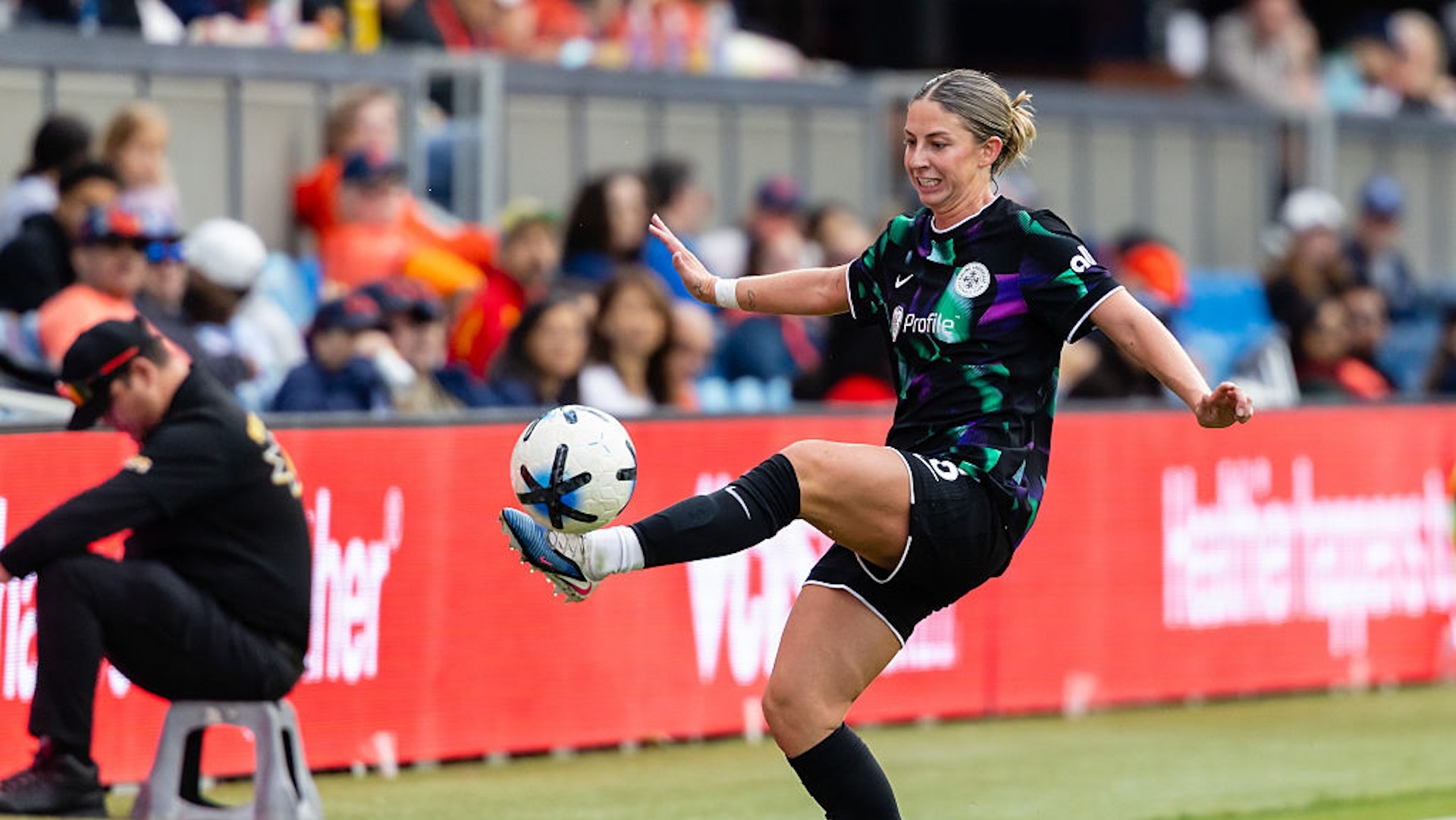
There was enough contact to go around, anyway. Michelle Cooper was the architect of much of it, using her considerable strength to strike fear in the Spirit, and their fans. After tackling Leicy Santos, she earned a rare yellow card, a cost she was happy to incur for making sure her team could play the game on their terms.
Rodman engaged with the game in fits and spurts. Sometimes, she’d take a few hard steps in an effort to get to the ball. But if she succeeded, her touch was all off. While she and Sofia Cantore, the Spirit’s other winger, tried out each other’s side, she took a terrible touch on a simple pass. Awaiting her was none other than Temwa Chawinga, the best player this league has ever seen—the player who, with her unbelievable speed, ball control, and work rate, makes possible Kansas City’s transitional, defense-minded style. Chawinga and veteran midfielder Lo’eau LaBonta performed a nifty give-and-go; LaBonta’s pass was masterfully weighted so that only Chawinga could reach it. Easily past Lucia Di Guglielmo, Chawinga was forced into a quick shot by charging keeper Sandy MacIver, who blocked it. The ball may not have gone in, but Kansas City demonstrated what they were capable of.
Washington likes to play with the ball, and Kansas City prefers to watch their opponents dance in front of them then strike on the counter. So that’s exactly what happened. Washington dominated in possession, anchored by an ever-calm Andi Sullivan, the captain who returned midseason from simultaneous maternity leave and an ACL tear. Sullivan’s staunch defending in front of the back line allowed Santos to work on turning the key going forward. Were Rodman to be at full power, they may have made something happen. But a sufficiently stunted Rodman didn’t provide much trouble for the defense, who could focus more of their efforts in quieting Clara Luvanga. Luvanga may have lit the path for the Spirit’s postseason run up to the final, but Kansas City’s centerbacks, Kayla Sharples and Gabrielle Robinson, were up to the challenge of containing her. The newcomer had chances, but not quite enough good ones. Strings of passes Washington put together were interrupted over and over by whistles from center referee Joshua Encarnación. Kansas City’s night was going exactly as planned.
When Kansas City’s attack wasn’t defending, they were considerably more organized than Washington’s. Croix Bethune, who was the motor of Washington’s midfield for the last two years before joining the Current in a shock transfer in the offseason, stepped up her physicality and combined well with Haley Hopkins, the forward whose late season form has been a revelation for the Current.
About 30 minutes into the match, Rodman started to get her mojo back. Washington began to be more organized going forward, too. But the Current were still under their skin—at one point, after Cooper fell to the ground from a light touch from Gabrielle Carle convincingly enough to earn a whistle, Rodman mimed a dive. The crowd only got more riled up. At the end of the half, Carle got her payback when she made a perfect, lights-out stop on Bethune who had eyes for a transitional attack. The halftime whistle blew, allowing Audi to take a breath for the first time in too long.
When the refs walked back onto the pitch after the break, the crowd gave them a nice long jeer. Still, brave souls they are, they began the match again. The Spirit played much more patiently upon the restart, and it looked like it could be the dawn of a new game.
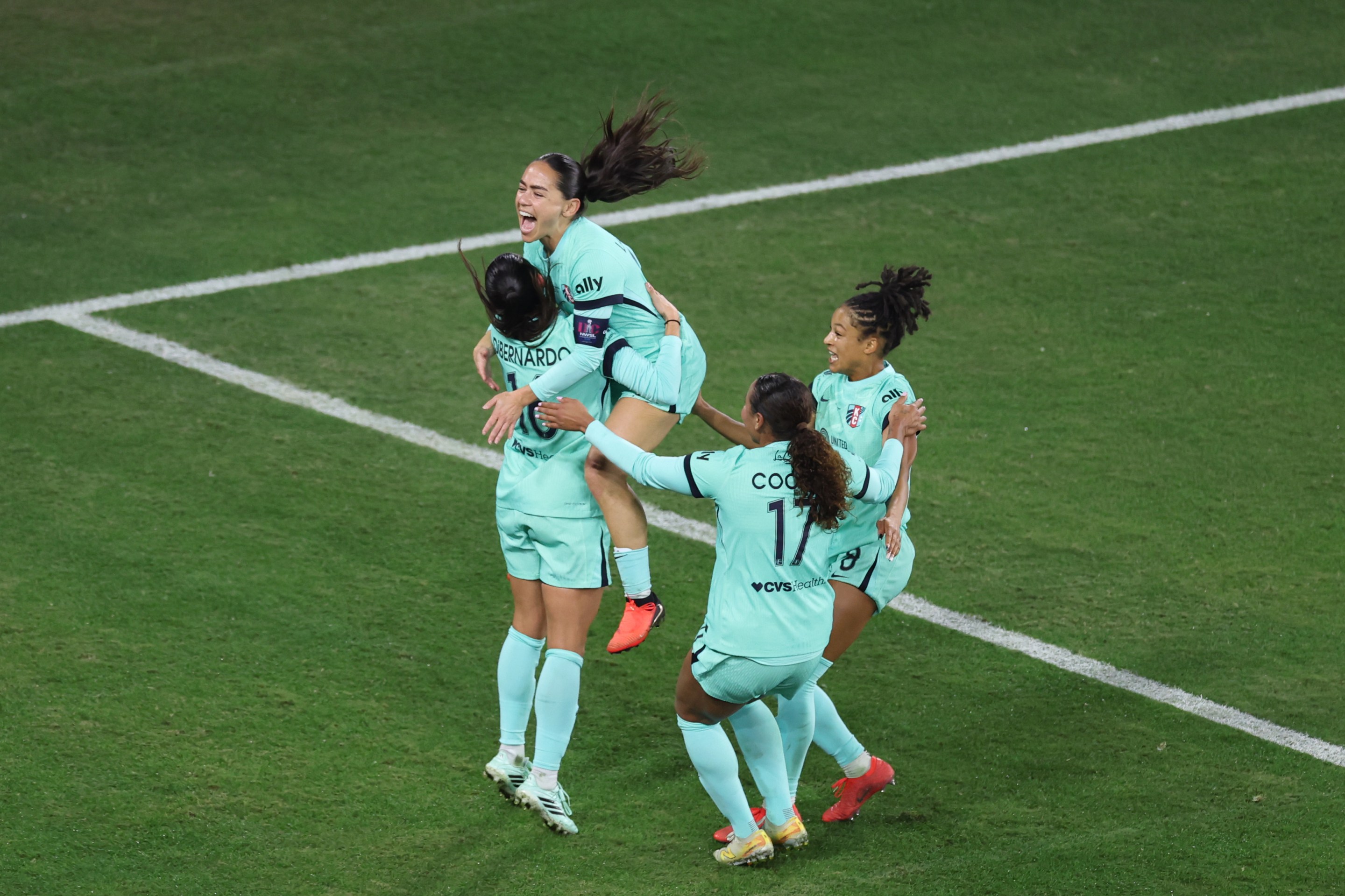
Vanessa DiBernardo had other ideas. The oldest starter on the pitch, she’d been having an impressive but not flashy game shoring up the midfield. Indeed, that’s what she’d done since she returned from maternity leave in July—her defensive bonafides were key to steadying Kansas City’s inconsistent season. In that intangible way that great players can catalyze pressure into calm, she took a corner kick that sweetly curled into the far top corner. MacIver jumped for it, but she was being marked closely by Sharples, who is a monster in the air. In the end, it only made sense that the match—so full of uncomfortable friction—required simple perfection to get a breakthrough. The crowd was stunned, and I could hear myself think for the first time in eons.
On Thursday, injured Spirit player Deborah Abiodun told me what to expect of the match. “I’m telling you, it’s going to be beautiful,” she said. “Might be a little bit brutal, but it’s going to be beautiful.” Beautiful and brutal, indeed.
A run from Rodman brought some life back to the crowd and her teammates. She charged way up the pitch and got the ball to Luvanga, who touched it up ahead to Tamara Bolt, a substitute. But Bolt couldn’t quite reach it, and the scoreline remained unchanged.
On the other side of the pitch, directly under the press box, came a moment from Chawinga that I will not soon forget. DiBernardo sent a long ball up the pitch that looked bound to go out of bounds, but Chawainga being Chawinga, she reached the ball and trapped it. Washington recovered nicely, with Di Guglielmo pressuring her with Bolt just behind. Chawinga, pinned against the sideline, kicked it into the window between them with such texture that Bolt couldn’t control it, and Chawinga darted past Di Guglielmo, stripped Bolt of the ball, and went on to take a shot that went just wide. It was an exhibition of Chawinga’s absolutely ridiculous talents which make her such an x-factor for the Current. Throw anything up to her, and she’ll find a way to make it work, and with aplomb.
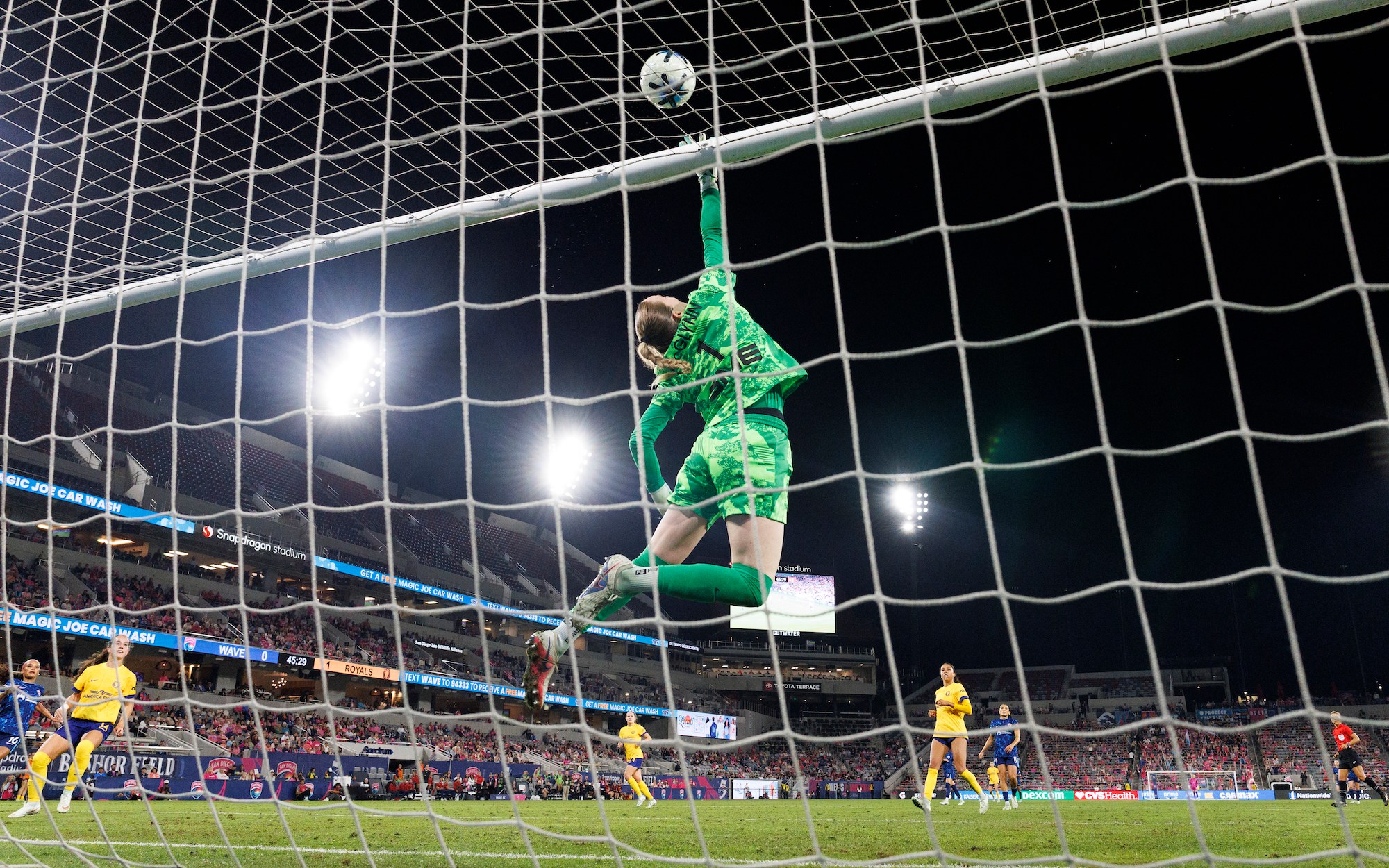
Soon after, MacIver had a jaw-dropping moment of her own. A progressive header by substitute Debinha had beat Washington’s defense and Chawinga was running onto it, straight toward net. MacIver read the play perfectly, and came out of the box to block Chawinga’s dribble with her body. She popped up from the ground immediately, and it’s a good thing she did. The ball had fallen to Debinha, who looped it up and over MacIver. But MacIver ran into its path, in front of Chawinga, and scooped it up. For a player who told me on Thursday she is “mentally fatigued, to put it nicely” after playing every minute this year—longtime starter Aubrey Kingsbury is out on maternity leave—it was a wide-awake moment that the Spirit needed if they were going to have any kind of chance.
The bodies kept falling; Lorena and Rodman went down in a nasty collision on the other end. Washington kept pushing, but when nine minutes of stoppage time began, they hadn’t scored. They grew impatient, and made silly, wasteful decisions. It came back to bite them.
Near Kansas City’s box, Rodman got the ball, but instead of turning outside, where two teammates were open, she turned inward. She was promptly stripped of the ball and soon, Debinha was off. She carried her small frame at warp speed toward the goal. Beside her, ever on her horse, was Chawinga. No defender was close by the time they reached the box. Terror for MacIver. She had to commit to something, but Debinha had too many options to fall victim to MacIver’s attempt. With a shimmy toward Chawinga, Debinha took it for herself, and twisted the knife, 2-0.
It was now clear: Washington had let this golden chance to finally, finally put a second trophy in their case go by, unseized. The headline was all but written, but Rodman was determined to add an addendum. Out of absolutely nowhere, while dispirited fans began to leave the stadium, Rudd sent a high cross and Rodman got a head to it. The ball found the back of the net, and Spirit players sprinted back for the kickoff. A flicker of hope, and thirty seconds left on the clock. There was mayhem, and then the whistle.
“This is going to be entertaining because it’s going to require everything of both teams,” Sullivan had said in a press conference on Friday. She was right, and you could see it out there. Washington might have lost, I thought at the time, but the fans who watched it happen did not go home thinking the team didn’t fight for it.
Losing in your third championship game in as many years—this time, in front of your home fans—is the kind of failure that isn’t processed easily. A Spirit fan yelled angrily at the Kansas City radio broadcasters next to me in the press box. As the press walked through the tunnel on the way to the mixed zone, we passed several Spirit players who were crumpled on the stairs, crying. Another was standing by the wall, back turned toward us.
Zooming out from the humiliation, however, it’s deeply impressive that Washington has appeared in four of the last six championships. Much can and will be said about why they’ve repeatedly stumbled at the mountaintop, but the truth is that at that altitude, the margins are so thin. On another day, this result could definitely have gone Washington’s way. Kansas City experienced the other side of the tightrope just last year—they had the best regular season in league history, but had a slew of injured key players by season’s end and were knocked out in the quarterfinals.
The Current had a head coaching change in the offseason, and more staffing switches midseason. Several players told me this was tough for the team. But they stuck together as a group and shook off the losses that dotted their results in the first half of the season. In trading away Ally Sentnor, whose strengths never quite materialized in Kansas City, and seeing Hopkins reach her potential, the attack clicked into place.
On Thursday, DiBernardo told me about all the phases the midfield had gone through this year. From adjusting to the absence of Claire Hutton, incorporating Bethune, reincorporating herself, and enduring injuries, they learned to lean on their strengths.
“We have such a good midfield group, from Rocky [Rodríguez], Bayley [Feist], Lo’eau, myself, Croix, Deb. Like, come on!,” she said with a laugh. “So I think it challenges us to push each other to be better, and I think that’s super amazing. I think we kind of just had to really figure out what our new strengths were going to be in that midfield. We all read the game super well, and I think that is our biggest strength and allows us to be successful.”
The Current’s early form was confused, and undeniably a let-down from last season’s dominance. By the time they went on an eight-game win streak heading into the playoffs, they’d simplified things. On Saturday, the simplicity of the plan was clear: get stuck in on defense up and down the pitch, push the Spirit wide, and be relentless on the counter. Not for nothing, that’s how Vlatko Andonovski had built the team. New coach Chris Armas figured things out when he let the team revert back towards it.
In Washington to witness the Current’s belated championship were a couple small but mighty blocks of teal-clad supporters. As heartening as it was to see the traveling fans, their placement in the stadium was an illustration of tensions that have been simmering between supporters and the league in recent months. Once the final was set, it took the league way too long to let Washington and Kansas City’s supporters’ groups know where they’d be sitting, and how many seats they’d have. This headache appeared to have been somewhat resolved, but upon the opening of the stadium, a new problem was obvious: the home supporters’ section had a sizable splotch of teal, with no buffer between the groups. This is a clear faux pas in soccer; supporter sections are the nucleus of the passion of the stadium, and having them up against each other can cause problems. The image was a perfect picture of league mismanagement.
A far more serious tension between the league and supporters, though, is the league’s refusal to take a stand against anti-trans agitators. In a couple matches at the end of the regular season, supporters’ sections were infiltrated by small groups of hateful bigots. While supporters covered their messaging with trans pride flags, the intimidation was done. Some supporters got doxxed. In conversations I had with supporters on Friday, it seems there is a very real distrust growing between some of them and the league. Commissioner Jessica Berman said in a press conference on Thursday, “The supporters’ groups are the lifeblood of this league,” but her actions haven’t matched that. Just before the match, I saw a truck with screens advertising the anti-trans clothing brand XX-XY driving near the stadium. In refusing to pick a public side, the league is letting bigots be part of the narrative.
It’s clear that the league is prioritizing growth above all else. This year, they welcomed in two more very expensive expansion teams. One of those teams is owned by the scandal-plagued Haslam family, who also own the Cleveland Browns. More and more, it seems like the league is taking for granted the people, and the culture, that built it.
And team owners aren’t being all that generous with all the new money that’s coming in, either. It took Trinity Rodman, the league’s biggest star, threatening to leave in order to raise the salary cap, and even then it was with a convoluted rule that was successfully challenged by the NWSL Players Association. The added money is still not enough to retain its stars—Chawinga is the only 2025 MVP nominee still playing in the league.
“One of the things we always say about this league is how it’s so competitive and that there’s so much parity. But we do see some of the less wealthy teams falling off,” former player Sam Mewis told me on Thursday in a conversation about the pros and cons of the salary cap. Indeed, second-to-last place Racing Louisville has been allowed to wither under a stingy owner, and now a fanbase is staring down relocation.
The PA is chipping away at some of these tension points, most recently marked by an agreement that settled six grievances with the league. One was about the salary cap rule, and another was about the league’s attempt to strong-arm players away from existing sponsorships with footwear brands that the league itself does not have a deal with. Getting that deal through, PA President Hopkins told me on Thursday,
“was very much a collective effort, and every single person really committed themselves to getting this over the line and seeing it through. Again, not standing down in any of our positions either because we know our worth. We know what we're fighting for is so incredibly important. We have such a strong foothold in that as well. And moving forward, setting a precedent too from here on out that we will fight tooth and nail.”
“These things were basic necessities that we needed,” PA player representative Kaylie Collins told me. “And moving forward, it allows us to put our energy into how the sport is changing and to be able to adapt to that and continue to make every player's experience what it should be.”
I heard bits here and there of what those things might be. Mewis—who no longer plays, but is nonetheless very in touch with active players—told me that charter flights would do a lot to help things. “Charter flights would make the players’ lives better, easier, safer, happier,” she said. “Charter flights feels like something maybe not everybody's talking about, but the players want it.”
Nobody was happy about the stadium playoff fiasco, which saw Gotham and Seattle play on a field that Laura Harvey described as “shit,” then Gotham having to host Kansas City at a small, alternate stadium the following weekend. Washington’s home field, too, was compromised, bearing lines for an American football game during the semifinal.
Ultimately, as the league continues to lust after profit, the players are going to want their fair share. When I asked PA Executive Director what things might be on the table in the next CBA negotiations, she said, “It's not lost on me that when you look at expansion fees, club valuations, the growth in the sponsorship business—wanting to see external investment in the league—we need to see internal investment in the players to really unlock our potential.” In other words: a revenue share system.
“You look at what the WNBA just accomplished, and it's really monumental. So we're watching, you know, we're looking to see what the next few years look like in terms of the economics of compensation and trying to see if that makes us competitive, not only in a global labor market, but in the American pro sports landscape,” Burke said.
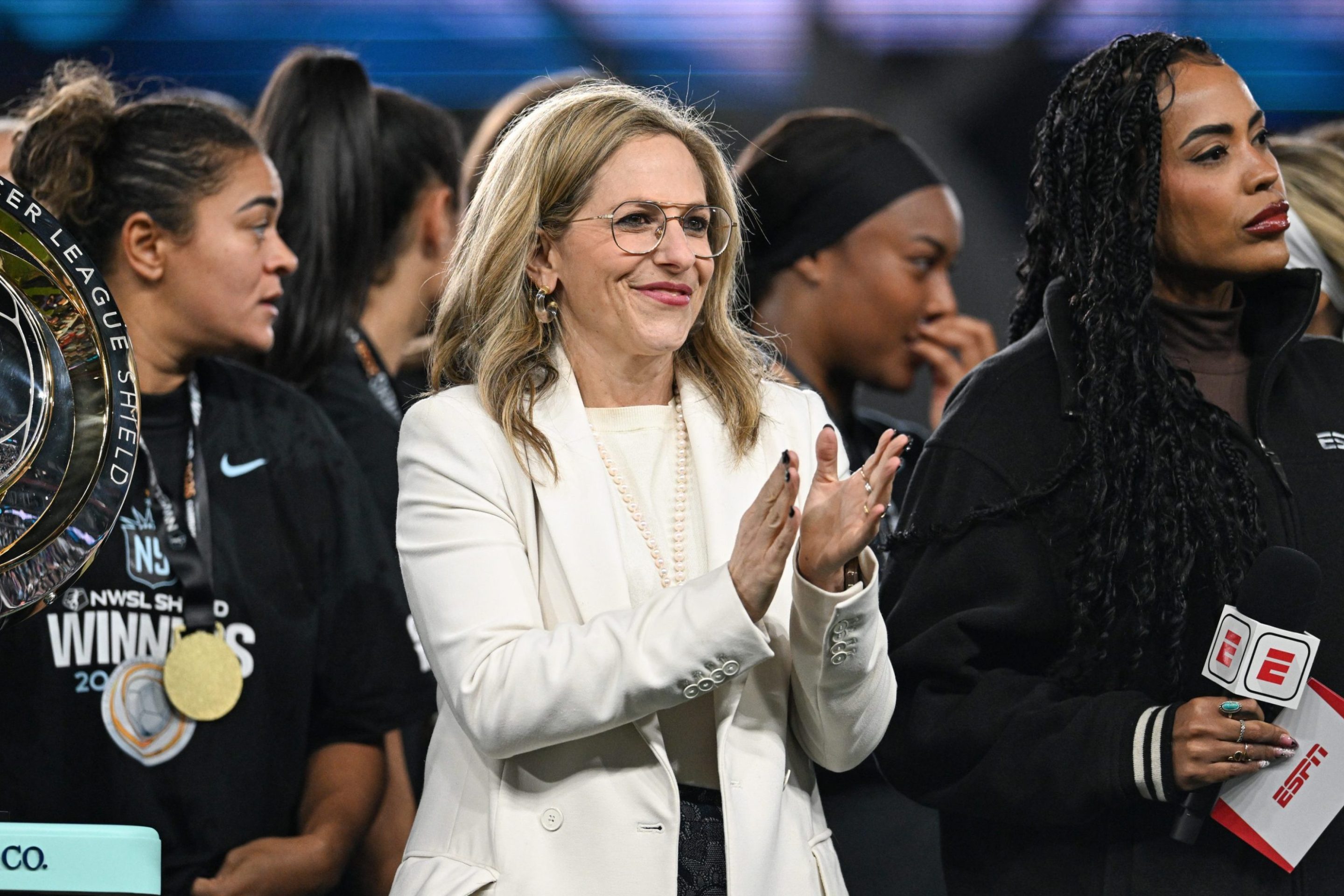
The championship game saw players with all kinds of direct involvements in these tensions take the pitch. Chawinga has been the target of racist, transphobic abuse. Rodman’s career pushed the league to open the pocketbooks just the littlest bit more. LaBonta has spoken about having been paid dirt in this league until a couple years ago, and, after Andonovski left the Current abruptly, she spoke about how trust with staff is hard to build in the women’s game, an allusion to the league’s history of abuse. DiBernardo, the Championship MVP, is a mother, having taken advantage of maternity affordances in the CBA. And Hopkins, of course, leads the players’ charge to improve their circumstance as PA President. In the NWSL, the battle on the pitch is never the only one.