

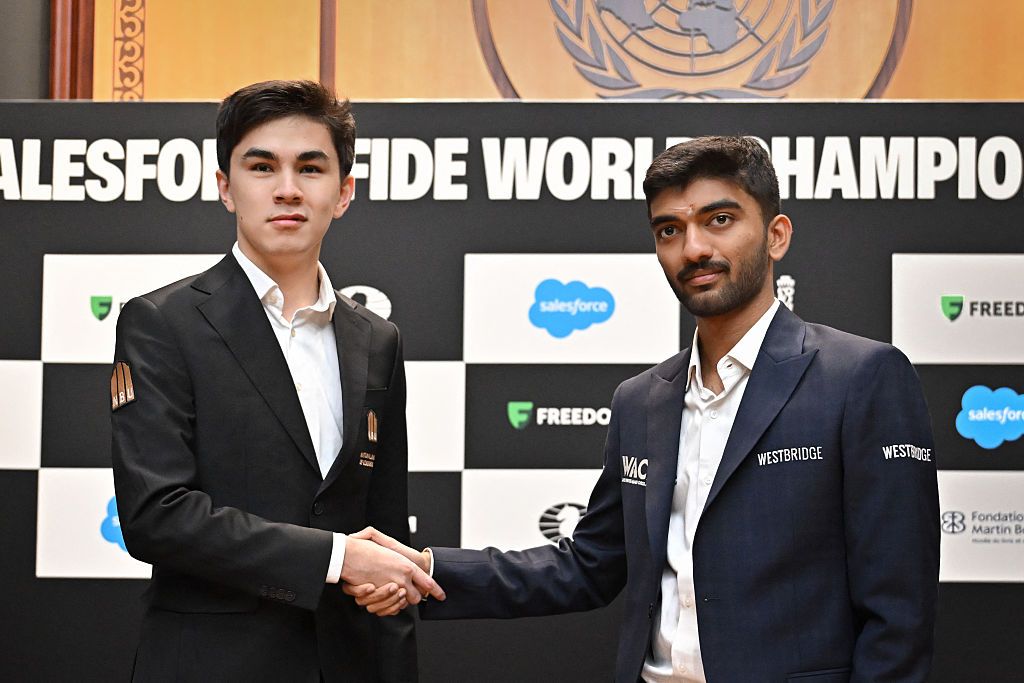
The chess is back!
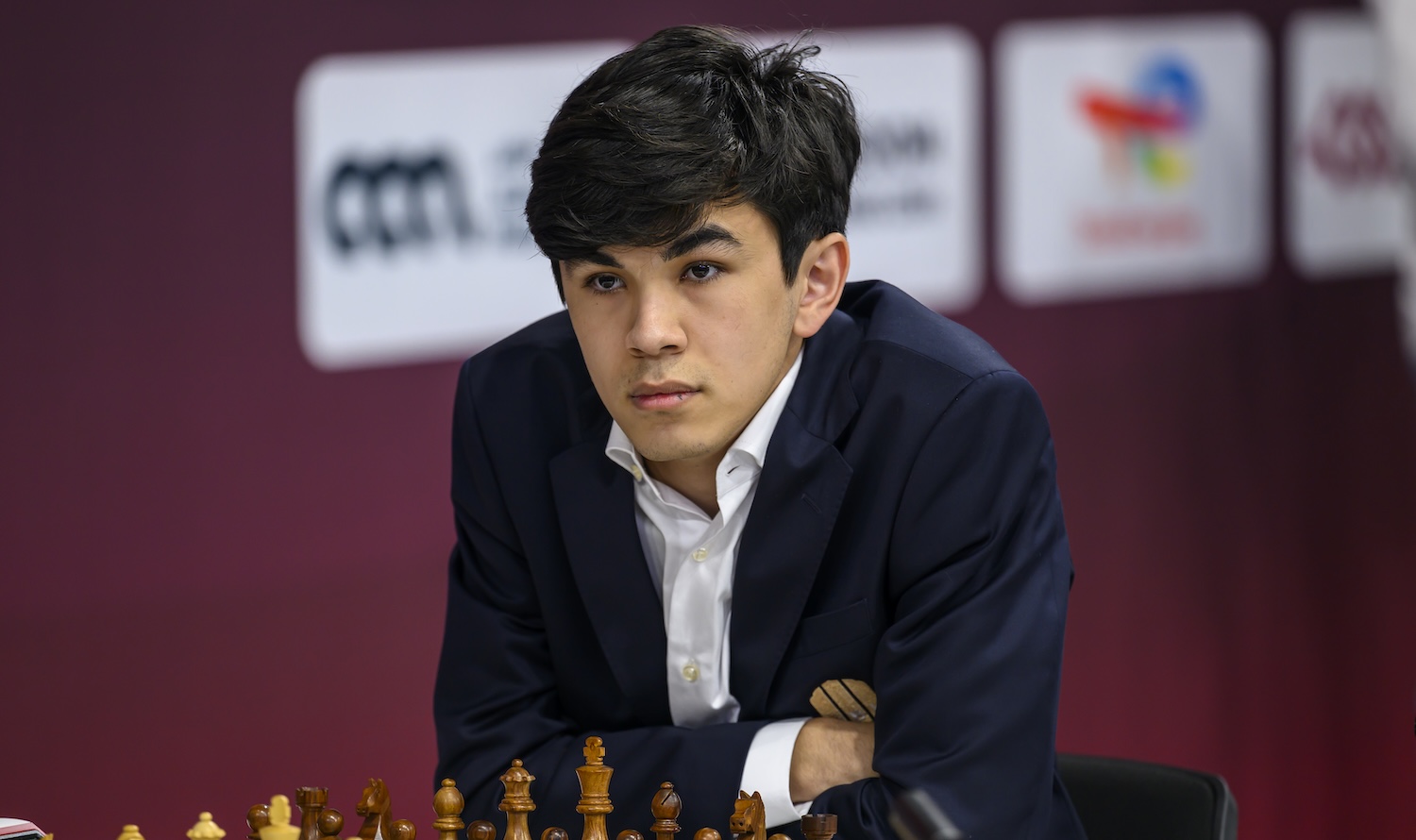
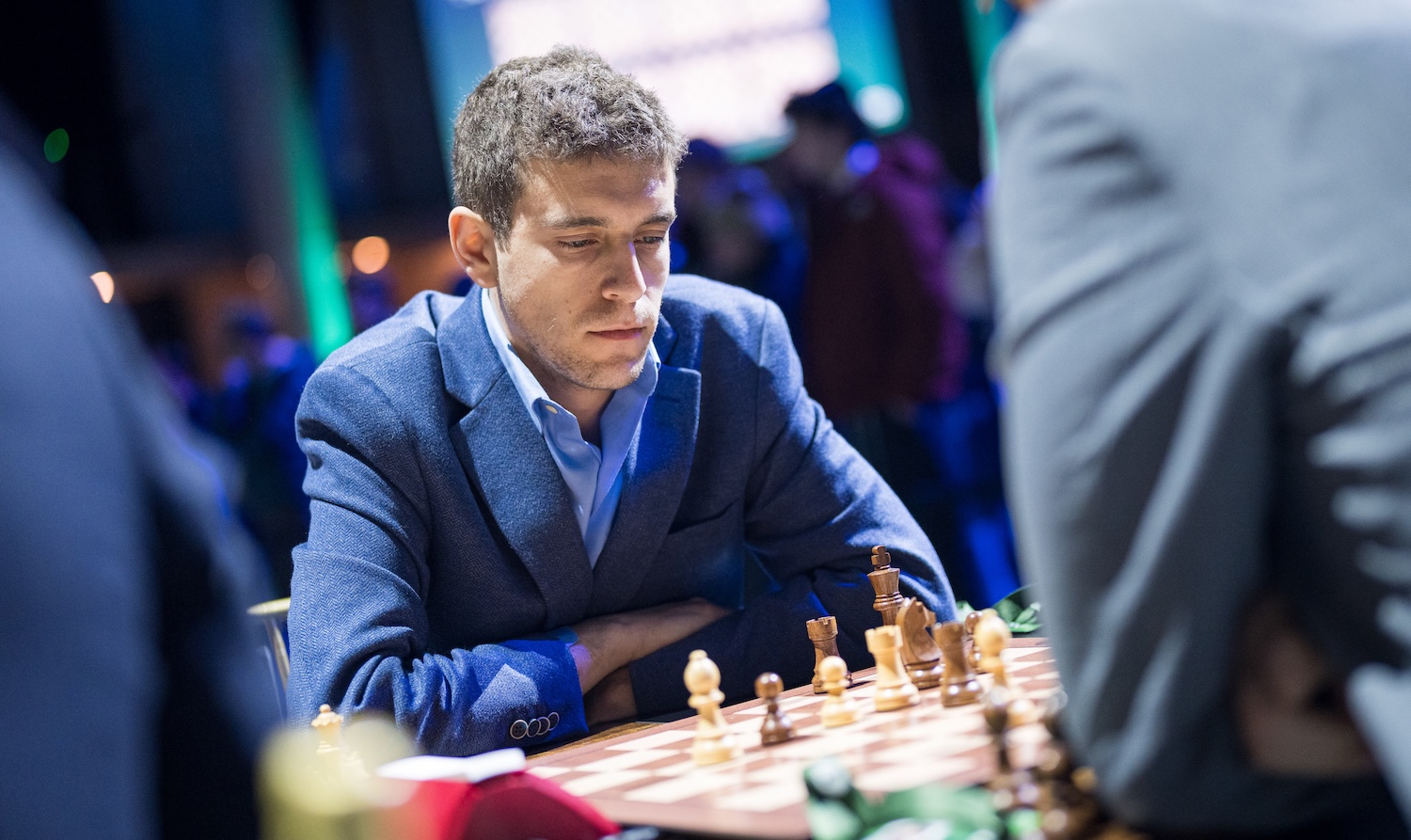
Reigning world chess champion Gukesh Dommaraju will take on Javokhir Sindarov for chess’s most coveted title in a 14-game head-to-head match in Geneva, Switzerland over the next two-and-a-half weeks. The new chess generation’s two most exciting superstars are set to do battle in what could be the start of a rivalry that defines the next era of our beautiful game.
We’ll be covering the match right here on Defector. Let’s go!
Last Time We Checked In
Previously on Chessfector, we witnessed Indian superstar Gukesh win the 2024 World Championship match against then-champ Ding Liren in a rollercoaster fight in Singapore where one careless endgame blunder by Ding in the dying moments of the 14th and final game saw Gukesh steal an incredible victory. It was an amazing story, the full realization of a half-decade-long meteoric rise through world chess’s ranks. At 18 years old, Gukesh became the youngest world champion ever and looked poised to hold sway over the chess world for the years to come.
Alas, it hasn’t been a dominant reign as World Champion for Gukesh so far. It’s been a tough two years at board for our man, as his form has cratered back to mere upper-elite levels: after going bungee-jumping to blow off some steam before being mobbed like he was a world champion cricketer at Chennai airport upon his triumphant return to his chess-mad homeland, Gukesh has said that he hasn’t been handling the pressure that comes with being world champion, and a dreadful 2026 started with dead-last finishes at the Norway Chess, Prague Chess Masters, and Chennai Grand Masters supertournaments.
The champ has fallen to a rating of 2710, with 84 points of ullage between his current rating and his peak, and at world No. 26 he will have the lowest-ever rank of a participant in a world championship match since the ranking system began in 1971. At the end of March Gukesh dropped out of the Grand Chess Tour due to his poor form, stating that it was “in my best interest to skip long events away from home to allow for more dedicated training time.” It was a proactive step toward finding the right conditions in which he might thrive, which can only be lauded.
The modern chess world championship privileges incumbency: the title belongs to the reigning champ until somebody can knock them off the top perch. The world championship cycle lasts for two years, and only the winner of the famed Candidates’ Tournament, an eight-player round-robin, is given the opportunity to do one-on-one battle for the title.
In contrast to his opponent, Javokhir Sindarov has been going nowhere but up in 2026. The Uzbekistani phenom has been on an absolute tear, winning the World Cup last November in Goa before booking his ticket to this World Championship match in awesome style with a near-omnicide of the field in the Candidates, finishing with six wins and zero losses for a 10/14 score, the best performance in modern Candidates history. His first half of that tournament is one of the strongest sequences of chess ever played, as he found a successful piece sacrifice against Praggnanandhaa, caught Fabiano Caruana in a Queen's Gambit Declined opening sideline, locked Hikaru Nakamura in the freezer for an hour-plus think resulting in a game-losing blunder, and better understood a complicated position against Wei Yi in successive games to set the stage for a 2908 total performance rating and an unambiguous announcement that he is ready to become world champion. Sindarov started the year as world No. 21, and has shot all the way up to No. 4. He could reach as high as world No. 2 if all goes to his plan in Geneva.
Chess In 2026
Over the past two years, chess has continued its transmogrification from a game historically dominated by classical chess to one where the short-format versions take up much of the elite calendar. This, of course, parallels trends in many areas of sport and commerce, but the most telling feature of chess's transition, I think, is the shift in not only the time control of the chess being played, but the setting for those games. More and more chess is played as an e-sport rather than over-the-board. Chess’s straddling of the physical and digital worlds provides wonderful opportunities for amazing action in both arenas, and the lack of any barrier to entry to playing online chess means that untold numbers of new players have found their way to the chess community in this Silicozoic Age of human civilization that may have never otherwise given our game a chance. Nobody wants the traditional game to go extinct, though, and those in power should pay attention as over-the-board chess—never mind the long-form classical version thereof—cedes ground to its e-sibling at a rapid rate. Many new players have never known a Staunton set, and the world’s top players are increasingly choosing to spend much of their time online, for convenience and content creation purposes.
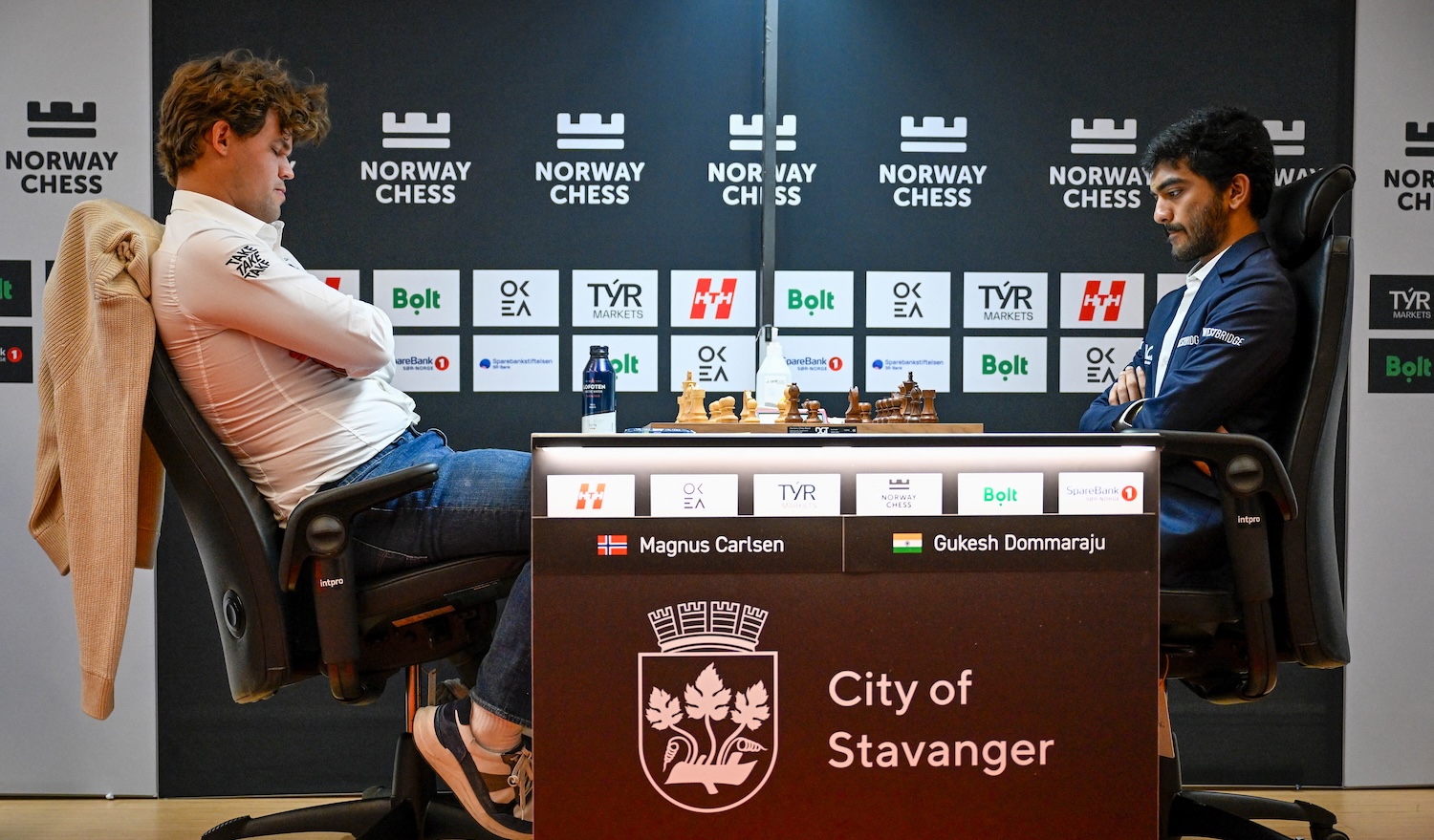
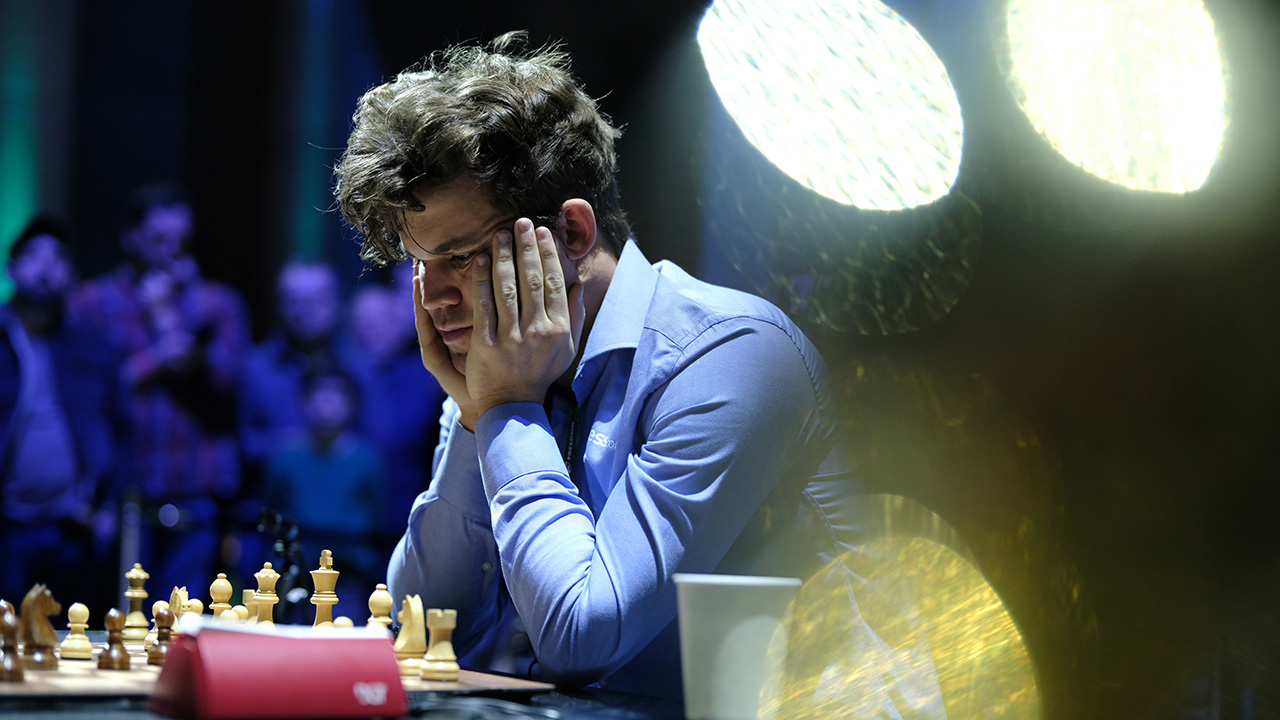
The one player that non-chess fans can name, Magnus Carlsen, is emblematic of this trend: while still classical World No. 1 and the best overall chess player on the planet, the new father prefers these days to focus on shorter-format tournaments, and barely plays classical chess at all. We still get some great moments out of him at the tournaments he does play, though, including his world-famous table-slam, which happened to take place against our old friend Gukesh.
In an effort to respond to the changing chess ecosystem, this November’s Total Chess World Championship Tour Pilot was exactly what the name suggests: a trial run for a mooted new all-format world championship, a tournament where the competitors would combine fast-classical, rapid, and blitz chess. As intriguing as that idea is, however, the first edition ended on a sour note, as Carlsen, having lost classical rating points in 10 games in a row, spit the dummy and didn’t show up for five of his last six games, leading to an Ethics Committee referral from FIDE and some strong words from his colleagues, such as “crybaby”.
(I’ve got a prediction: in the same way that it was Anaïs Gallagher cajoling her father that led to the long-awaited Oasis reunion, I can picture in the future Magnus’s son needling his Dad about why somebody else has the world title if he’s supposed to be the GOAT, inspiring Magnus to storm back to once again become champion after a 15-year hiatus.)
The Tale Of The Tape
Even within a game known for fetishizing young success, our two competitors were both special as youngsters—despite Sindarov losing all eight games in his first-ever tournament. 2018-2019 was a banner period for chess prodigies, as no fewer than four youngsters had their sights set on breaking Sergey Karjakin’s record as the youngest in history to achieve the Grandmaster title. None did, but they somehow each managed to become the second-youngest GM ever, as Uzbek wizard Nodirbek Abdusattorov just missed out, before Indian genius Praggnananandhaa, then Sindarov, and then Gukesh in succession got a little closer (but not close enough), to each slot in second on the all-time list. (American wunderkind Abhimanyu Mishra later took the mantle of superlative youth in 2021.) It's therefore fitting that this will be the youngest world championship matchup ever: both will enter Game 1 at 20 years of age, with Sindarov due to turn 21 on the day of the 12th game.
Sindarov leads the head-to-head classical chess matchup 2-0: with wins at the 2018 Moscow Open (where Gukesh underestimated Sindarov’s black-pieces grip over the center of the board) and the 2022 Sharjah Masters (where Gukesh’s tardiness in getting his king to safety resulted in Sindarov swarming his defenses to earn a full point). They played a thrilling game this past January at the Tata Steel Masters, where Gukesh correctly sacrificed his queen with half a minute on his clock for a winning mating attack, only to run low on time and permit the Tashkenti superstar to find a saving perpetual check, as the game ended in an epic 78-move draw in what was hopefully a harbinger of a wild match to come.
While Sindarov has form on his side heading into the match, Gukesh has many positives to bring with him: he knows that a few bad tournament results don’t mean that he’s lost his generational ability; he made the right decision to cut back his travel and tournament play in order to get himself right in the second half of this year; he started to gather some momentum with a solid comeback at the Chess Olympiad in September, winning the silver medal on Board 4 and helping India to a silver medal (though a far cry from his back-to-back golds on Board 1 in the previous two editions); and he’s got the experiential edge of having been through the rigors of a 14-game match already.
At the pre-match press conference at the UN’s Palais des Nations, Gukesh was indeed upbeat and talking like a winner: “I have prepared the best way that I can and I’m very enthusiastic for this match—to test myself against such a strong player and to see what I’m capable of.”
The players will each be assisted in southwest Switzerland by a team of seconds—the term comes from the name given to an assistant to a duelist—who spend months before the match, and all day and night during it, exploring all branches of the opening tree to put together files of potential opening move sequences for the players to memorize. Sindarov will have assistance from compatriots Abdusattarov and Mukhiddin Madaminov, as well as Nikita Vitiugov, and Ukrainian coach Roman Vidonyak, who has been with Sindarov since January 2025 (and sounds like an absolute weapon of a coach, despite not being a Grandmaster himself). It’s thought that Gukesh will keep largely the same team as from his Singapore win, and though he’s only confirmed that coach Grzegorz Gajewski is back, he may well call on previous collaborators Radosław Wojtaszek, Jan-Krzysztof Duda, Martin Keymer, or Pentala Harikrishna.
The Secret Is National Pride
How best to create a national chess legacy? Proudly extol those standing on the shoulders of self-made giants? Or invest in an infrastructure designed to produce sustained and widespread excellence?
India produced its first-ever Grandmaster in 1988, and that player just so happened to go on and become a five-time world champ and one of the greatest ever to play. Viswanathan Anand inspired a generation of his compatriots to sit down at the board, many of whom now train at Anand’s high-performance academy in Chennai. India's current golden generation (Gukesh, Praggnanandhaa, Arjun Erigaisi, Vaishali Rameshbabu, Divya Deshmukh) lead the charge at the tippy-top of both open and women's chess. Narendra Modi frequently releases public statements praising his players’ achievements, but players must largely rely on private sponsorship, and direct state-sponsored support is fickle: puzzlingly, the government removed the cash bonus given to players who earn titles shortly after Gukesh’s world championship victory.
By contrast, Uzbekistan has actively cultivated its current success. It's not like it didn't already have chess history: the oldest known chess pieces in the world were discovered outside Samarkand, and Rustam Kasimdzhanov, winner of the non-linear FIDE world championship in 2004 and supercoach to the world's elite thereafter, is the godfather of the Uzbek chess.
Shavkat Mirziyoyev has been President of Uzbekistan since 2016—after Sindarov and others first pushed a pawn, to be sure—and has worked to catalyze the explosion of chess and to nurture his country's talent. The chess-loving leader really has tried to attack the metaphorical opening, middlegame, and endgame of chess development: chess education has been expanded in the nation’s elementary schools by Presidential decree; the state announced it would cover half of the tuition fees at private chess clubs for players with a FIDE rating above 1,500; and elite players are paid handsomely—the government awarded the members of the winning 2026 Chess Olympiad team $200,000, a car, an apartment, and the nation’s Medal of Courage. Its top players are celebrities in the 39-million-strong nation, and its chess fortunes must only be on the rise. With two players in the world top 10, victories in two of the past three Olympiads, and record numbers of amateur players and fans, there's no reason Uzbekistan can’t emulate the old Soviet system and become the predominant global chess powerhouse.
Practical Information
The match will be held at the Fondation Martin Bodmer, a heritage library that contains fragments of a 2nd century papyrus of Homer’s Odyssey, a Gutenberg Bible, and a first-edition print of the Ninety-Five Theses, overlooking Lac Léman on the eastern banks of Geneva.
Switzerland twice hosted world championship matches during chess’s split era, first in 1998 as Anatoly Karpov defeated Viswanathan Anand in Lausanne for the FIDE Title, and then in 2004 as Vladimir Kramnik retained the PCA (and linear) title in Brissago with a 7-7 match draw against Peter Leko (winning the final game to equalize the score, in one of the great attacking games in chess history).
Starting today, our competitors will duke it out in a best-of-14-games match (they play an equal number of games with white and black, to neutralize white’s first-mover advantage), plus a day of rapid and blitz tiebreaks, if required. There’s one game per day, with rest days after every third game.
The games start at 3:00 p.m. GMT, or 9:00 a.m. EST—a perfect hour to load the game at work and check back in periodically throughout the day.
The players have 120 minutes to make their first 40 moves, and thereafter receive an additional 30 minutes plus an increment of 30 seconds per move. The total prize fund is $2.5 million, with the players receiving a cool $200,000 for each game they win, and splitting the rest (or, if the match goes to tiebreaks, the winner receives $1.3 million and the runner-up $1.2 million).
With the saturation of chess media there’s no shortage of options to watch live commentary on the games: e.g. the Peters Leko and Svidler on the official FIDE broadcast or Judit Polgar and David Howell for Chess.com, and likewise for post-game analysis videos: you’ll get great content from the likes of world No. 2 Hikaru Nakamura, YouTuber Agadmator, and my perennial favorite ChessNetwork.
Stay tuned right here at Defector, where we’ll have recaps of the games coming at the halfway point and at the conclusion of the match. This will be the fifth world championship we’ve covered across this and the old site, and I couldn’t be more honored and excited as we once more kick the doors open on another chess world championship. Get on board!