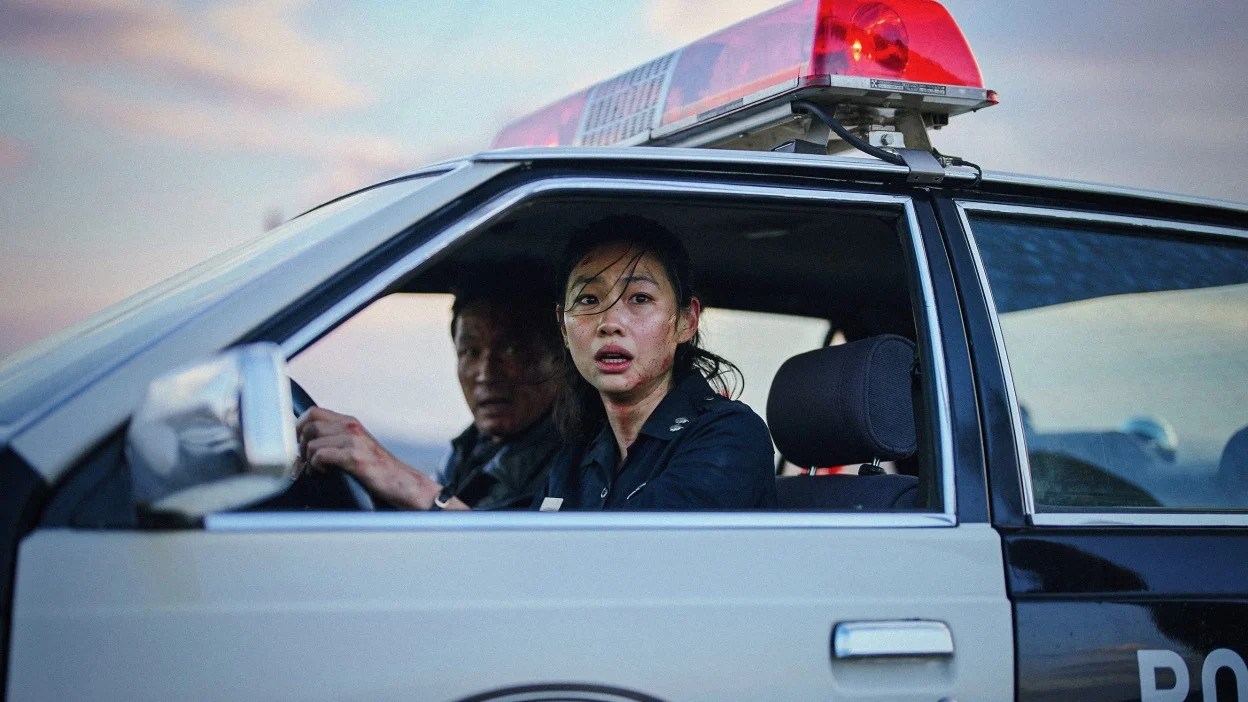
Earlier this year, Curry Barker and Kane Parsons became young Hollywood phenoms in quick succession. An actor and sketch comedian, the 26-year-old Barker wrote, edited, and directed Obsession, which is the story of a meek romantic who uses a magical novelty toy to make his crush fall in love with him with predictably disastrous results. Parsons, at 21, directed Backrooms, a feature-length adaptation of his own creepypasta-inspired web series about a labyrinthine extradimensional space that serves as a bizarre simulacrum of the real world.
Both films were released two weeks apart in May and broke multiple commercial records. Having made half a billion dollars, Obsession is not just one of the highest-grossing movies of the year but one of the most successful horror films of all time. While Backrooms might trail Obsession as merely the second-highest grossing horror feature of 2026, it’s also the fifth-most profitable independent feature in history; Parsons became the youngest director ever to helm a studio-backed film, besting even Orson Welles.
Baker and Parsons got their start with popular YouTube channels, which has led agents and producers to scour the internet for the next young, digital-native filmmaker with a built-in following and an original story that might become an enormously profitable feature. That search is ongoing, but another twenty-something filmmaker with roots in the internet has recently released his debut feature, It Ends, a horror-ish film with a distinctly existentialist bent. His name is Alexander Ullom.
Since its premiere at SXSW last year, It Ends has had a curious path to theaters. It traveled the festival circuit for most of 2025 before being featured as one of the launch titles on Letterboxd’s VOD platform last December. A week later, Neon bought the rights to the film, as well as Ullom’s next feature, 4 X 4: The Event. On Aug. 21, It Ends hit theaters, and Neon has done everything it can to help it ride the Zoomer horror wave. They have highlighted a shared producer with Backrooms on the poster and introduced a Hands on a Hardbody-style challenge in which teams of four will compete to remain inside the theater for a 36-hour marathon screening of the film, complete with cash incentives to remain in the theater. (It’s unclear whether anyone at Neon considered how paying people to watch their film might reflect upon its perceived quality.)
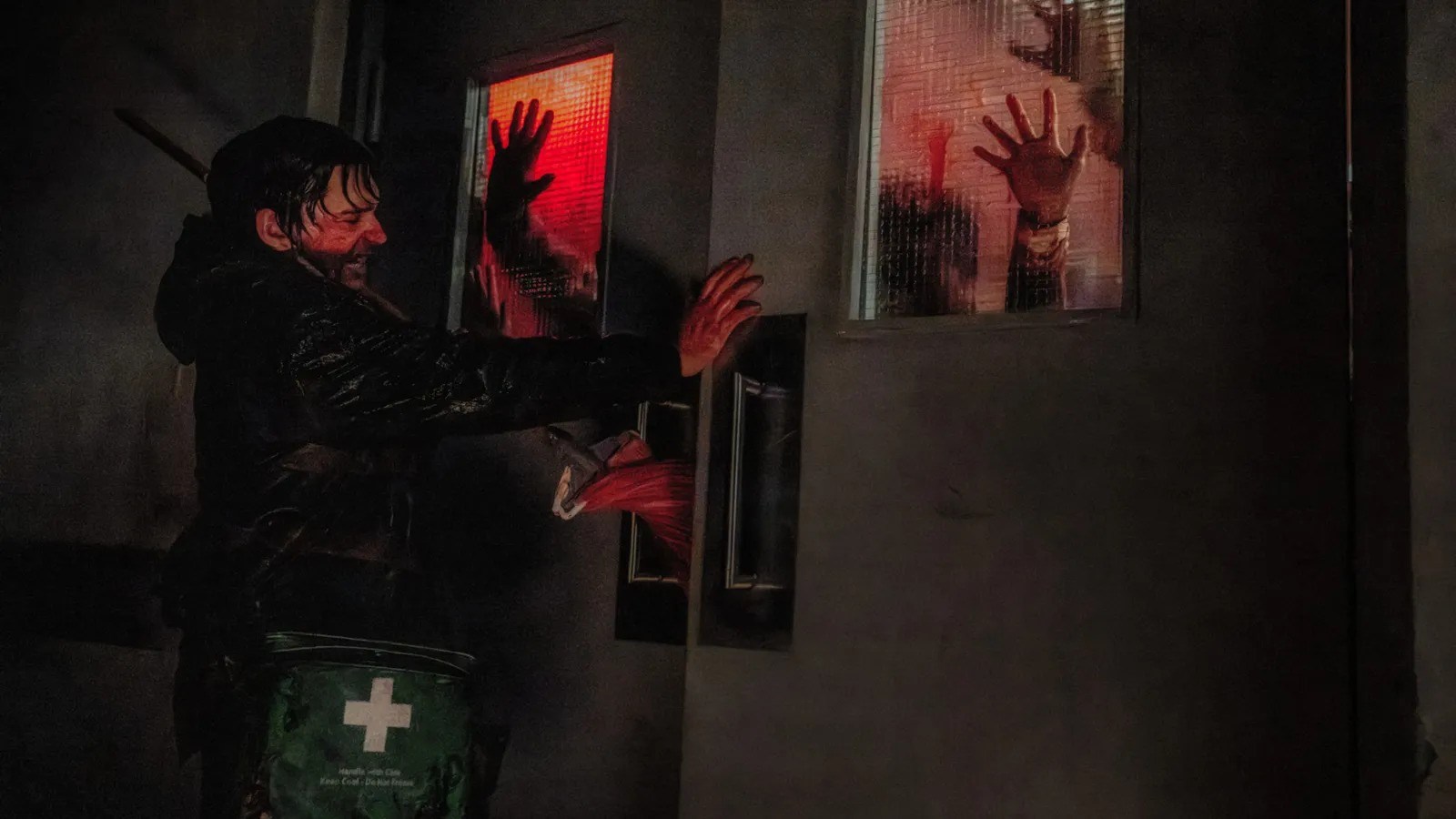
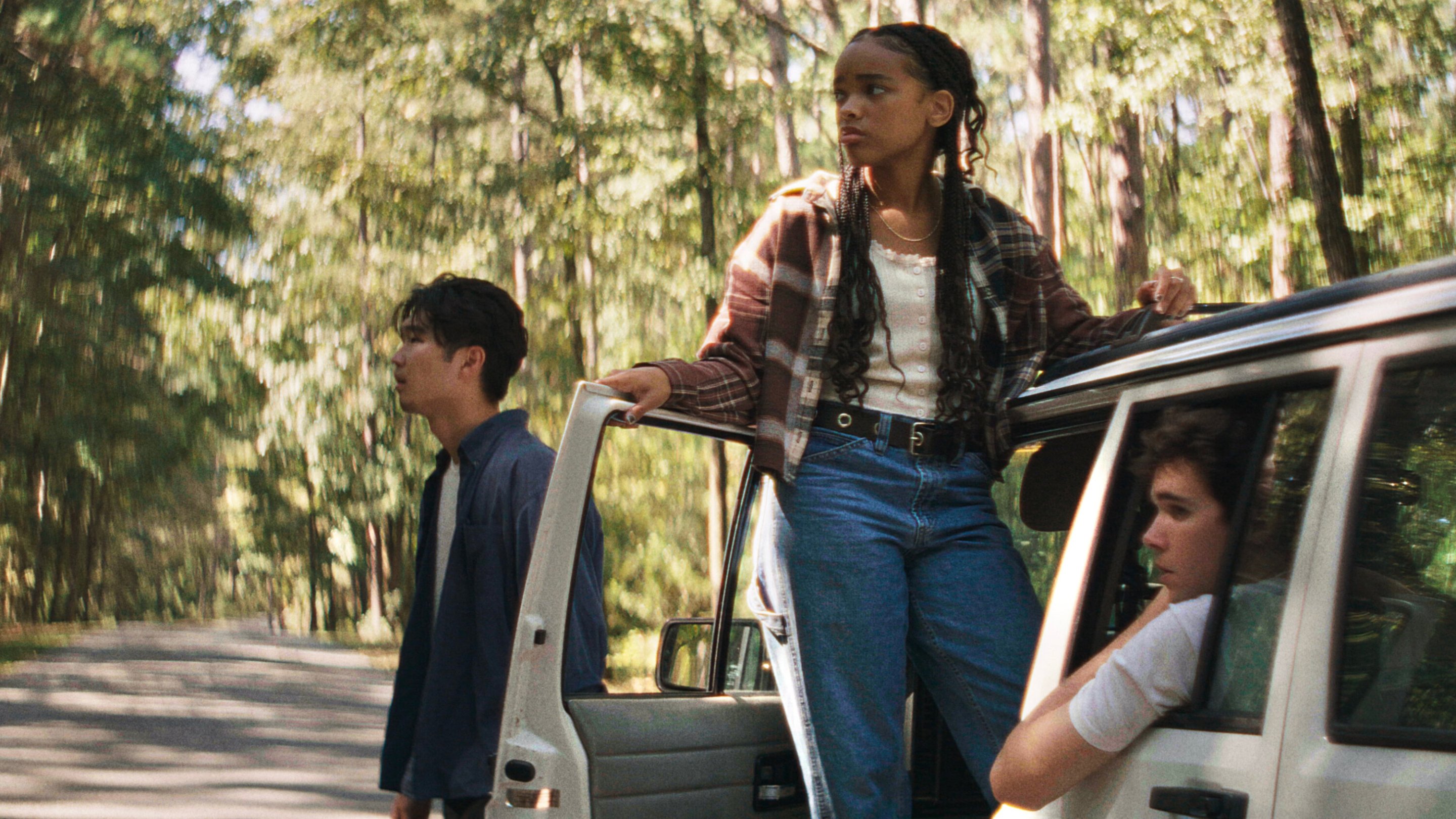
It Ends boasts a simple, Twilight Zone-esque premise: Three recent post-grads reconnect with an old friend on a late-night drive, only for them to take a wrong turn and end up on a never-ending road surrounded by woods. When they stop the car, a rabid mob swarms their vehicle, attacking them while also begging for help. As they continue driving, the group slowly learns more about their circumstances. They discover they can safely stop the car for 90 seconds before the mob returns; during that period, they not only can stretch their legs but search their surroundings for clues. They idly wonder why they’re trapped on the road in the first place. Is it the afterlife? Are they being punished? They feel neither hunger nor fatigue as they rack up miles in their old Jeep Cherokee, which never runs out of gas and whose engine functions longer than it should. Eventually, they decide never to turn off the ignition and adjust to life on the endless road. That is, until they don’t.
Before It Ends ramps up its creeping dread and introduces its brief, pulse-racing jump scares courtesy of the zombie-like horde, it luxuriates in a familiar rhythm of old friends bullshitting with each other. Fisher (Noah Toth) poses a meme-inspired question to the car: Between 10,000 rats, 50 hawks, five gorillas, and a man with a gun, which two would you pick to defend yourself against the other two? Tyler (Mitchell Cole), the ex-military HVAC repairman driving the car, disapproves of the inane conversation, but Day (Akira Jackson) and James (Phinehas Yoon) entertain the question. Can you train gorillas to use the gun? How easy is it to kill a hawk with your bare hands? Who is the supposed “normal adult” with the gun anyway? (“A Chinese guy in a coal mine,” James sarcastically reasons.)
The discussion then veers into talks about life plans and stalled relationships until they register that no off-ramp awaits them. The lengthy conversation, complete with overlapping dialogue and ping-pong banter, serves transparent functions, establishing character and an eerily cozy tone; it’s the false calm before the proverbial storm. But Ullom tips his hand towards It Ends’ ultimate intentions with its opening scene, which productively embodies certain generational anxieties while offering an exit from those fears.
Ullom’s journey towards It Ends features as many convoluted turns as his film’s winding road. After graduating from Florida State University film school into the pandemic, Ullom, like many members of his generation, spent a lot of time online hustling for money, including writing screenplays for hire and getting paid to make memes during the GameStop short squeeze, all while making comedy sketches with his friends. During this time, he and his collaborators Carrie Carusone and Evan Barber were also trying to get funding for what would be their first independent feature.
He helped pull together the initial $35,000 through an impressively random collection of investors, among them a professional magician, a rich gambler Ullom met in a VR poker lobby, and a random fan who left a comment on one of his YouTube videos. (To hear the full story of how he acquired the money, watch the first ten minutes of this filmed Q&A where Ullom speaks in an uncomfortably relatable rapid-fire manner, occasionally pausing to apologize for his verbosity.) After casting the principals from Instagram, he took advantage of an LED Volume screen in a virtual production facility that his alma mater had acquired from a “former Allman Brothers Band studio they had bought in Tallahassee, Florida.” There, Ullom and his team shot all the car interiors in 2022 after plasma-cutting the aforementioned Jeep Cherokee and reassembling it inside the space.
Ullom concluded that the initial footage they shot was structurally and emotionally insufficient, an inevitable byproduct of shooting a feature on a short-film budget. He eventually acquired funds for pickups and post-production from former FSU alumni and then garnered the attention of production company Snoot Entertainment, which facilitated necessary reshoots to finally complete the project.
The stop-start scrappiness of It Ends’ production is hardly unique; Obsession also underwent reshoots to plug certain holes and utilized a similar VP facility for their car scenes. But Ullom and company’s tenacious spirit shines through the polish of the finished film, which confidently embraces its minimalist trappings without sacrificing tone or thematic depth. Given its formal restraints, It Ends heavily invests in both Ullom’s funny, trenchant writing and its largely unknown performers, who look and sound like an organic friend group with years of history.
Inspired by Richard Linklater’s Slacker, Ullom always intended to shift It Ends away from horror toward being a hangout film, with the characters trying to constantly sort through the terror of their eternal situation—which he wisely never explains—or otherwise pass the time. But their chemistry is constantly being recontextualized by the different ways they process the eeriness of their unchanging environment, epitomized by the repetitive, hypnotic footage of the road itself. “I’ve always been more interested in what happens way after the horror,” Ullom said in an interview with Filmmaker. “It’s less about fighting and overcoming the threat, and more about trying to sort it, because it exists forever in your life at all times.”
The more traditional scares in the beginning eventually transform into an underlying hum of sorrow that infects the characters like a virus at different rates. The film’s first major turn arrives in the form of a title card that reads “Tyler” followed by a mileage number, which signals the character’s refusal to return to the car following one of their designated breaks. The most mature and self-possessed of the group, Tyler privately tells James that he can’t continue to live the rest of his life in 90-second intervals. Ullom doesn’t treat Tyler’s decision as an admission of defeat but rather a hard-won acceptance of his reality. He understands what the audience instinctually recognizes while watching the film: From certain angles, the interior of a car in motion looks like it’s standing still.
Danish writer Solvej Balle’s seven-volume speculative fiction series On the Calculation of Volume chronicles the movements and thoughts of antique book dealer Tara Selter, who finds herself stuck endlessly in a single day. Bound by time but not by space, Tara can begin each day wherever she pleases, but it will always be November 18. After determining the rules of her world by the end of the first volume, she begins to take control of her environment at the start of the second by traveling around Europe chasing different seasons to force a sense of temporal passage.
“I don’t know how one can grow used to a situation like this,” wonders Tara, “but that’s what is happening. Perhaps it is the case that you can accept a lot as long as you are spared most of life’s worries…I am safe, I have nothing to fear, none of the things one has learned to fear: the calamities and catastrophes of real life…”
Ullom dramatizes the feeling that Balle describes with sly humor and understated melancholy in It Ends. After an indeterminate amount of time passes following Tyler’s departure—“Way Later” is how a title card describes it—the three remaining passengers have concocted a series of routines to mark their days. They play music, they decorate the car with various tchotchkes found in other abandoned vehicles, and they air out their grievances on a schedule. Day and Fisher especially have adjusted to their unexpected life, mainly by making memes mocking their situation and learning dance moves on their breaks outside the car.
Conceived during the pandemic, It Ends is in active conversation with the isolation and unoccupied mental space that emerged during the early days of COVID. But the metaphorical suggestions in its premise extend far beyond lockdown behavior. As Ullom points out in that same Filmmaker interview, the idea of being stuck in a confined space on an endless road anticipating rigidly proscribed breaks basically conforms to what the group would experience in the current job market. Before they get on the road, all four characters discuss their professional prospects with quiet resignation. An entry-level engineer, James outlines his future, which entails settling down with his best-option of a partner in a bland Midwestern city on a six-figure salary, with jaded boredom. He understands it as a fate that’s already been planned for him, and mentions that he would prefer to be in a medically induced coma.
While the popularity of Obsession and Backrooms can’t entirely be reduced to generational sectarianism, the two films clearly scratch an itch among Gen Z audiences. Obsession broadly addresses nice-guy entitlement toward female affection and how seemingly positive intentions can easily warp into controlling abuse. The eponymous Backrooms, which resemble Jorge Luis Borges’s Library of Babel if it was an uncannily vast fluorescent-lit office building, evokes a 20th-century world of relative safety and abundance that now only exists in faded photographs or on VHS tape. Fraught heteropessimism and the inability to revive an idealized past are both on trend.
But Barker and Parsons both leave something to be desired in the execution. Thematically blunt, Obsession’s attempt to critique misogyny while playing up “crazy girlfriend” clichés for shocks or laughs depending on the scene can feel like Barker wants to have his cake and eat it, too. Backrooms fares slightly better with regards to subtext, but its obliquely creepy vibes run headfirst into a trite pop-psychology framework and some insipidly unreal monsters.
In sharp contrast, It Ends’ allegorical surface allows for multiple universal and generation-specific interpretations. It charts post-grad malaise and the struggle to find meaning in aimlessness in a way that will be familiar to anyone who has ever left college wondering, “What’s next?” Of course, it also speaks to this cohort of young people, many of whom are similarly stuck in neutral while their environment either turns to attack them or simply wears them down. In his 25 New Faces of Film profile, Ullom invokes “Gen Z graduating into a dying republic where there’s no set moral system or ideas of values” as a latent attitude driving his film. “The promise of a future or nuclear family is dead,” he continues, “so enter the world and form your own moral system, and good luck.”
If It Ends has a main character in its ensemble, it’s the sardonic, analytical James, whose cold exterior masks his refusal to acknowledge that the road they’re on has no inherent meaning. He treats each new piece of information they come across like a potential skeleton key for escaping their nightmare, treating their situation like a puzzle to be solved. When Day and Fisher remove the keys from the ignition to force James to accept their new normal, he lashes out at them and prays to the road for the car to turn back on, like it’s a deity with its own quirks and caprices. The universe’s lack of answers eventually forces even the most rational person in the group to flirt with a belief in things unseen.
Ullom says that It Ends emerged from a tumultuous mental-health period in his young life that he has described as “ego death” and “a prolonged state of dissociative depression.” Though he sought out answers in books and movies to fix his brain, it was a juvenile argument with his friends when he was 18 years old that snapped everything into focus. “I needed a reason to stick around,” he explains, “and in that moment, it was just like, ‘I’m gonna stick around to talk to people.’ Conversation is the only time that I’m actually present.”
In a brilliantly anticlimactic, retrospectively obvious punchline, James eventually does find out where the road leads. The answer is less relevant than the emotional clarity it inspires. Obsession and Backrooms end on downbeat notes befitting the primal darkness of their narratives, but for all of its bone-deep unease, It Ends proposes something within spitting distance of a happy ending that neatly falls in line with Ullom’s own epiphany. It Ends has been compared to Jean-Paul Sartre’s No Exit, but the film doesn’t claim that hell is other people. It’s the opposite: Hell is when you have no one to shoot the shit with while the world falls apart.