
I had over a year to prepare for Hiroshi Tanahashi's retirement, yet during his final match on Sunday, I couldn't get myself to believe that his career was about to be over.
It's not that I'm unfamiliar with the concept of the big wrestling retirement show. In fact, the last few years have given fans a larger number than usual of these spectacular, supposedly definitive conclusions to legendary careers. Keiji Muto, Sting, and John Cena all starred in the exact kind of show that Tanahashi headlined in front of a sold-out Tokyo Dome this weekend. But Tanahashi was different, even at the end. And rather than write a permanent conclusion to his pro-wrestling tale, he stepped out of the ring at the Dome and right into the toughest challenge yet of his life in the business.
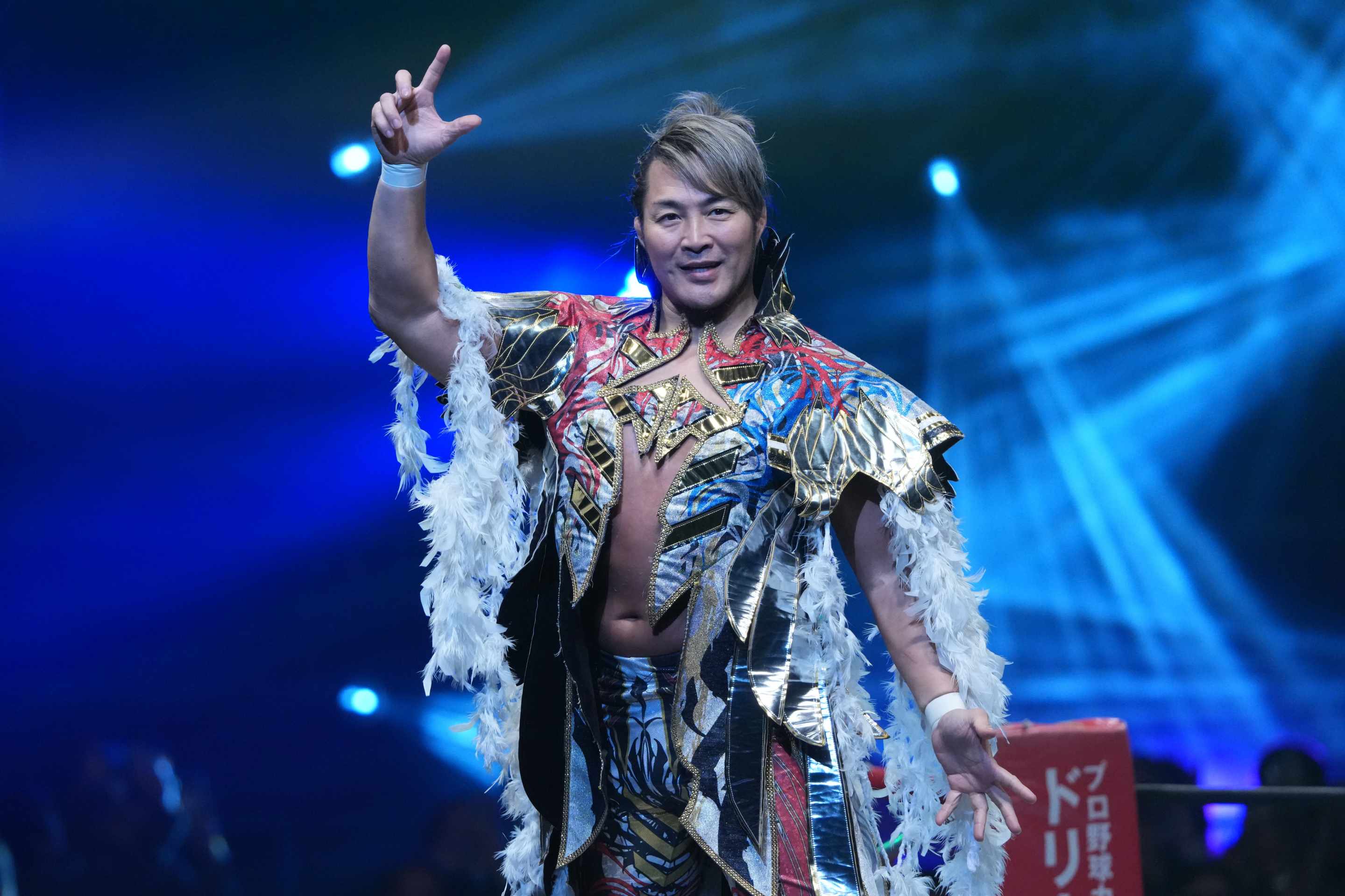
Now 49 years old, Tanahashi debuted for New Japan Pro Wrestling in 1999 and grew into a headliner a few years later, never relinquishing his main-eventer role in the company for any kind of extended hiatus. Rising through the ranks during a downturn for NJPW's business, Tanahashi helped usher in a new era of international growth for the promotion by turning himself into basically the ideal wrestling superstar. With his long locks, colorful outfits, and air guitar celebration, Tanahashi projected infinite amounts of power and confidence while appealing to kids, parents, and anyone in between. He was the center of the universe in NJPW's 2010s boom; even the company's more idiosyncratic, gritty, or sinister performers took definition from how much they contrasted with the franchise player. Tanahashi was such a consistent, week-in and week-out entertainer that he became synonymous with the wrestling term "Ace"—the person judged to be most important to their promotion, even if they're not the champion. In the same way that some sports franchises only have one historical player known as "the captain," Tanahashi defines "Ace" for NJPW.
What I liked about him was the way he epitomized the grand myth-making of the Japanese wrestling scene. In America, most wrestlers call attention to the performance of their character by changing their alignment from hero to villain and back again on a dime. In Japan, however, they're usually a lot more judicious about those turns, allowing you to invest in a wrestler and imagine you're watching the natural progression of a career over several years. Even by those standards, it felt like Tanahashi took so much pride in performing a timelessly wholesome heroism for his adoring fans. He carried the banner for this idealized warrior ethos that says good things come to honorable people who work hard. He resisted (though he avoided hard-headed rejection) the incursions of MMA-influenced styles and American gimmicks into his pure-hearted performance. Over the years, he convinced an entire fanbase that he was both a great athlete and a great man. I know absolutely nothing about what Tanahashi is like as a real person, but his presentation through a screen (and a couple lucky times live) made me want to buy into the divine persona he so carefully cultivated.
Before this weekend, Tanahashi's last main event at NJPW's annual Jan. 4 show at the Tokyo Dome was 2019—his final time winning the company's world title. The years since cannot be referred to as anything but his career's twilight. Still a name, still a genius in the ring, and still someone who could captivate you with his storytelling on a good night, Tanahashi nevertheless wore all the bruises and scars from what ended up tallying to almost 3,000 official matches in the business. He walked with obvious stiffness and pain in every step. His younger opponents noticeably slowed themselves when they paired off with him. His matches became much more about aura than action. And he took a new job as NJPW's president, embracing a more difficult assignment than anything he ever faced in storyline: How does a company in full-on rebuild mode, still trying to recover from the COVID era and unable to compete with America for top talent, recapture its old glory?
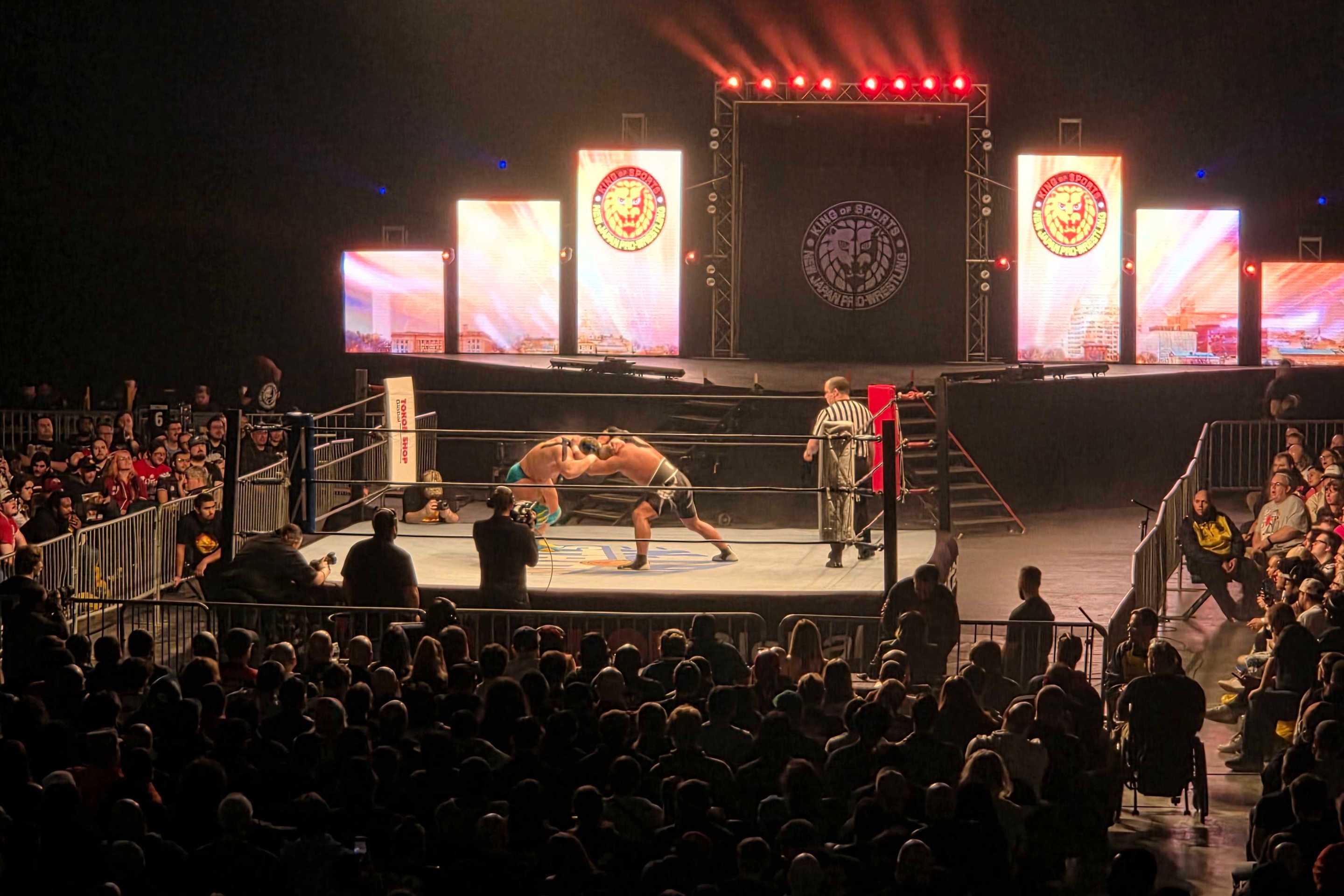
Well, Tanahashi's retirement might well have been their best shot. Spurring lucrative ticket sales far beyond anything Japanese wrestling has seen in a long time, this advertised last chance to see the Ace wrestle was the one sure thing that would draw plenty of eyes to the inevitable dawning of a new era. I would like to be optimistic, but Wrestle Kingdom 20 ultimately highlighted a lot of long-festering threats to NJPW's future. All the names I associate with the phrase "Tokyo Dome main eventer" are no longer wrestling for New Japan. The company is reliant on its business relationship with AEW to fill top spots on the card. And it forced its current generation of talents to pay their dues for too long, meaning the roster floundered upon its transition out of last decade's golden era. This night didn't tee up New Japan for a momentous year to come. It was all about the Ace.
Something that makes Tanahashi so different from the guys who've had the big retirement shows of late is that, despite distancing himself from the world title and wrestling less physically demanding matches, he never "wound down" his appearance schedule, nor did he give anyone a chance to imagine what NJPW would be like without him. Unlike Cena, he never put wrestling on hold to pursue an acting career. Unlike Sting or Bryan Danielson, his injuries were never such that fans thought his retirement had already happened before he returned for another act. Unlike Flair or Muto, he never embarrassed himself by clinging to the spotlight for too long, until fans were begging for finality. For a quarter century, Tanahashi just showed up to work, again and again, and even though his role changed over time, nobody watching New Japan could be blind to his value. The earnest, old-school philosophy guiding his wrestling character manifested an iconic status in his field.
And on Sunday, Tanahashi went to work one more time. In a match that saved almost all of the fanfare for after the final bell, he faced off against his longest-running career rival in the brash, imperious Kazuchika Okada—the Ace's heir apparent until he signed with AEW—who was making his return to Tokyo for the first time in two years. Tanahashi's entrance was Tokyo-Dome big but not particularly sentimental or extravagant. The in-ring story told by the two performers eschewed the kind of maximalist melodrama that often defines these wrestling moments and went, correctly I think, for something simpler: an aging athlete, very much an underdog, giving it his best shot. Tana certainly wrung everything he could out of that beautiful deteriorating body of his.
For a long time, this match felt like Tanahashi and Okada having a really good Tokyo Dome main event, and that's all. While a lot of fans hoped to see another old rival in Shinsuke Nakamura somehow escape WWE's grasp for this show, Okada was clearly the perfect choice as a final opponent—someone who's very comfortable working a slow pace and can use his regal arrogance to get a lot of response from just a little movement. Okada's dropkick has long been praised for its ability to change the dynamic of a room when he hits it, and the way he sucked all the air out of the Dome when he did one on Sunday was just a masterful example of crowd manipulation.
It was the familiarity of all this—Tana-Okada clashing at the Dome in front of a big crowd—that kept me from accepting that we had arrived at the end. Yes, obviously, Tanahashi's whole retirement tour led to this moment, and if you saw him trying to walk back in the summer, you wouldn't have wanted it any other way. But this showdown was such a callback to peak NJPW that I could almost believe we were in 2018 again, and that the sun was just now starting to go down on Tanahashi's run.
I can't read the minds of an audience of 50,000, almost entirely obscured by dark lighting, but near the end of the match I decided we all had the same realization at once. Okada had gotten his knees up on a Tanahashi dive from the ropes, so both men laid on the mat performing pain and exhaustion. It was that break, and the understanding of where we should be in the match's story, where it sunk in that the finale was about to come, and the crowd locked in for the final stretch. It was like a retiring baseball player coming to bat in the bottom of the eighth. You're aware that this is the final chance to see this performance that you've long cherished watching, so you know you better focus, commit every detail to memory, and voice your final cheers. Tanahashi and Okada rose to face each other and slug out the final chapter. A few minutes later, Okada had drained Tanahashi completely, and he got the pinfall victory.
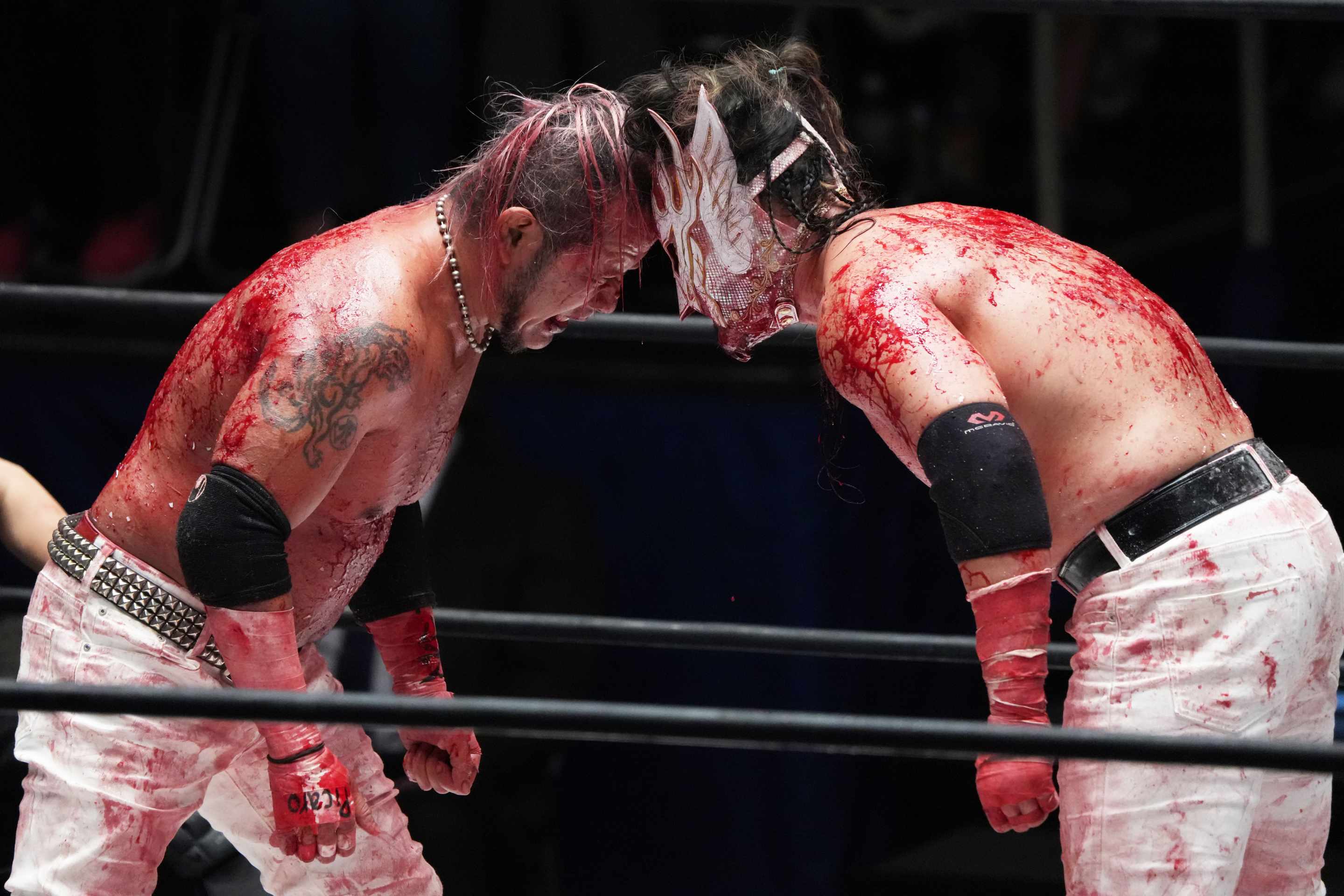
The post-match was where all the pomp and circumstance finally broke loose. Tanahashi stayed in the ring to welcome a long succession of well-wishers—including a hilariously drawn-out entrance from the magnetic, slippery old-timer Tetsuya Naito—and then got wheeled around the whole stadium in a kind of Tanahashi-mobile. My favorite moment was this heartfelt interaction with Katsuyori Shibata—someone whose often-gruesome interest in "real" toughness put him at stylistic odds with Tanahashi's lighter-touch showmanship. Their emotional connection reinforced this idea I had that Tanahashi's enduring popularity, selflessness, and mandate to build a better future for NJPW eventually erased the dividing lines between him and his artistic foils. Even if you wanted to do things differently from him, you can't help but love (or at least respect) the work he's accomplished.
When Muto retired in 2023, I carried with me a lot of excitement for what Japanese wrestling could recapture after years of COVID restrictions. But this week, after all the smiles and hugs, the waves and the thank-yous, I'm left with this: Hiroshi Tanahashi is irreplaceable. There is no one in their prime currently wrestling in Japan whom I can imagine headlining this kind of send-off show within the next decade, or even two. The success of Wrestle Kingdom 20 covers up a genuine crisis for NJPW, who will have to take drastic and inspired measures to avoid a crowd less than half its size at the Dome next Jan. 4. I have a very bad feeling about what will continue to happen when this scene falls further and further behind the vast resources of the rich American promotions. But this is also a moment where the wrestling myth-making still holds some sway with me, because the man tasked with solving this imposing problem is NJPW's President Tanahashi. Maybe he's still got a little more magic left.