

For the duration of my childhood, it felt like all of the romantic-comedy heroines were journalists. They worked at newspapers in Kissing Jessica Stein, Sleepless In Seattle, The Holiday, Never Been Kissed and When Harry Met Sally. If they didn't work at newspapers, they worked at glossy magazines like in How To Lose A Guy In 10 Days and 13 Going On 30. In Hitch, she's a gossip columnist, but that counts. Or maybe she could work in publishing like in Bridget Jones's Diary. But they were writers in big cities, and they cared deeply and seriously about their jobs.
The real plot of all of these movies, though, was the love line. Who would the protagonist fall in love with? Would it be that man (or woman) whom she hated initially? Usually, it would be.
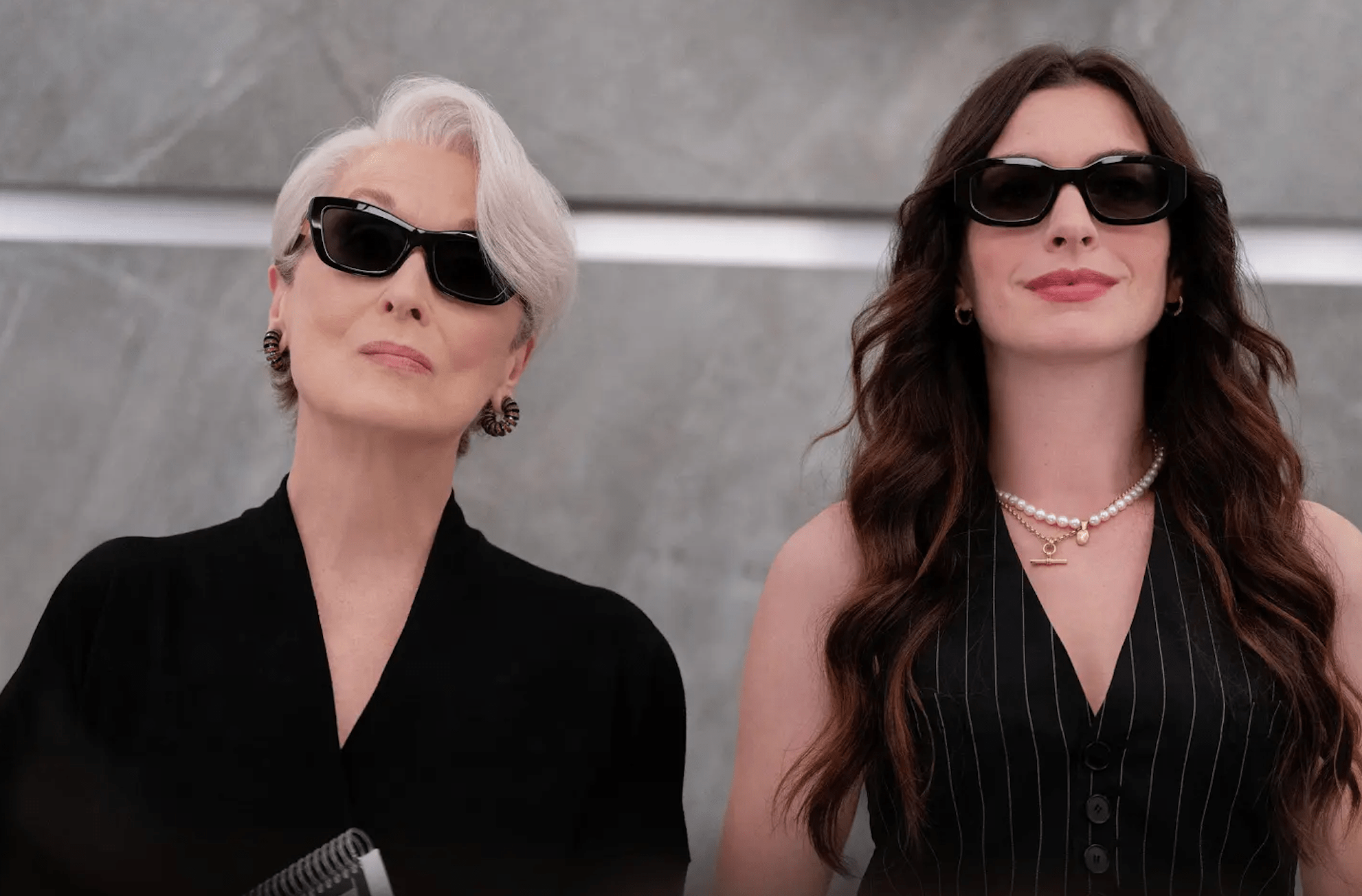
The Devil Wears Prada was different. Those other movies were all about falling in love with a romantic partner. The Devil Wears Prada is a movie about falling in love with work. Andy (Anne Hathaway) is a recent graduate from Northwestern who wants to be a serious journalist, but the only job she can find is one as assistant to the editor-in-chief of Runway. Unlike the other heroines, Andy starts the movie with a boyfriend, Nate, who lived with her but was otherwise pretty unsupportive of her career. He was supposed to function as a kind of moral compass for the film in 2006. The Andy he knew at Northwestern didn't care about Paris Fashion Week, what designer someone wore, or whether her hair was right. The Andy he knew cared about journalism, about reporting, about trying to change the world.
But what Nate didn't understand is that The Devil Wears Prada is a romantic comedy about a girl and her career. Andy has to become the assistant to the evil Miranda Priestly (Meryl Streep) and succeed in her terrible job at Runway by sacrificing her morals, because she knows that she needs the connections. The movie ends with Andy getting a job at the Mirror, a newspaper, on Miranda's recommendation. One year of hell as someone's assistant for the job you want doesn't seem like that bad of a trade, because the core of the movie is Andy's optimistic belief in the power of journalism, and her commitment to the job.
The Devil Wears Prada 2, now in theaters, does not ignore that the stakes of journalism have changed. The movie is no longer about whether Andy will compromise her morals for a job she doesn't even really want. No, The Devil Wears Prada 2 is about whether or not journalism, even in its weakest, most consumerist form of glossy fashion magazines, can survive at all—and if so, how.
In the opening scene, Andy—older, longer hair, same little trotting gait across a New York City street—arrives late to a mid-day journalism awards ceremony where she has been nominated for a piece of serious reporting. She sits around a table with her colleagues, and just as her category is being announced, everyone's phones buzz. They've been laid off, via text. When Andy wins the award, she takes the moment to tearily say that she and her colleagues deserve better.
Almost everyone who has tried to work in digital media in the past decade has been laid off at least once. For one of my layoffs, I wasn't even texted. They just kicked me out of Slack; hours later, someone deigned to call me. It's a bad day in journalism that everyone has had, so it makes some sense for the movie to begin there. It's also an immediate example of the tonal change in the movie. There is a darkness to The Devil Wears Prada 2 which didn't exist in 2006. The bleak undertone of the movie is the same misery that exists in a movie like Marriage Story. The optimism of early love has vanished. Andy's relationship with journalism has been destroyed by forces completely outside of her control.
In Andy's case, she is offered a new job almost immediately. Runway is in the midst of a PR crisis, because they ran a fawning article about a company with terrible human rights violations. The CEO of Runway's parent company, along with his idiot son, decide that Andy is the solution to this problem, because the video of her speech about the importance of journalism is going kind of viral. They hire her as features editor of the magazine. This is an irrational choice that, to me, falls squarely in the realm of things that rich men in positions of power decide on a whim in the real world. So Andy ends up back where she started: in the Runway office against her will, reporting to Miranda, assisted by Nigel (Stanley Tucci), and trying desperately to keep her head above water in a space she doesn't fully understand.
There are plenty of nits that journalists can pick with the depiction of Andy's work, but a romantic comedy is not meant to hew so closely to reality that every single thing makes sense to experts in the field. What The Devil Wears Prada 2 really nails is the hopelessness that exists when you are forced to watch all of your friends and colleagues lose their dream jobs, one after another, for decades. What a punch to the gut it is for Andy, who has spent 20 years as a journalist reporting on stories around the world, to be returned to Runway in a position where she is treated like shit and walked all over—a regression not because she has failed, but because the industry has failed her. The movie tells us the umbrella company that owns Runway is "the last piece of wood floating next to the Titanic." The industry, Andy's industry, is decimated.
"You are a CEO's latest whim," Miranda tells Andy, and she's right. But even Miranda Priestly, who was all-powerful in the first movie, has been completely defanged in the second. When the CEO is suddenly replaced by his idiot son (B.J. Novak), who wears performance athletic clothing and skulks around miserably, things become even more dire. The only thing keeping Runway afloat and funded was a sense of nostalgia and passion. Now, even the title brand is in danger.
The second half of the movie is a fight to try to save Runway. Its first threat appears in a cabal of McKinsey consultants, gathered in the cafeteria by the new CEO, to strip the magazine and sell it for parts. Then, the villain becomes billionaire tech idiot Benji Barnes (Justin Theroux). Even the Miranda Priestlys of the world stand no chance against the truly, ridiculously rich. Sure, she still has some cutting remarks, but we lose the villainy of Miranda because the villains in 2026 are bigger, scarier and more evil now. This isn't to say the movie isn't funny. The script is full of jokes, cutting lines, and moments of levity. But its heart is a dark one. The enemy for Andy is no longer a bad boss with a bad temper and impossible standards. Her enemy is society. It's billionaires. It's the idea of having hope in the future of her career.
In the final act of the movie, Andy's only option, as realistic as it is depressing, is another billionaire. Will that billionaire stay out of the business of Runway? Both Miranda and Andy doubt it, but it's the best they can hope for: a life raft that might give them a few more years to do the thing they love.
As embarrassing as it is to admit in 2026, I too love my career, love my job, love to work. That love between woman and job is what made The Devil Wears Prada such a fun and special romp that has been able to find a whole new generation of fans years later. "Boy, I love working," Miranda says in a car with Andy. "I just love it. Don't you?" But that's what's so hard about The Devil Wears Prada 2: No amount of loving your job can save it from destruction by people who hate it, or recklessly destroy it, or both. Not even in the movies.