I was an adult when I encountered Dolly Parton’s “I Will Always Love You” for the first time. I grew up thinking Whitney Houston’s 1992 cover was the original; I can’t say exactly when my ignorance was rectified, but Twitter was almost certainly where. There was a type of tweet that would, and maybe still does, reliably go viral about the origins of the song, usually referring either to the fact that Parton wrote it and “Jolene” in the same day, or to the fact that she did all that only to be outsung, and in some quarters, almost entirely eclipsed by Houston’s cover. I know that I saw a variation on that tweet a couple of times before I actually sought out Parton’s original recording. I remember finding it a bit boring.
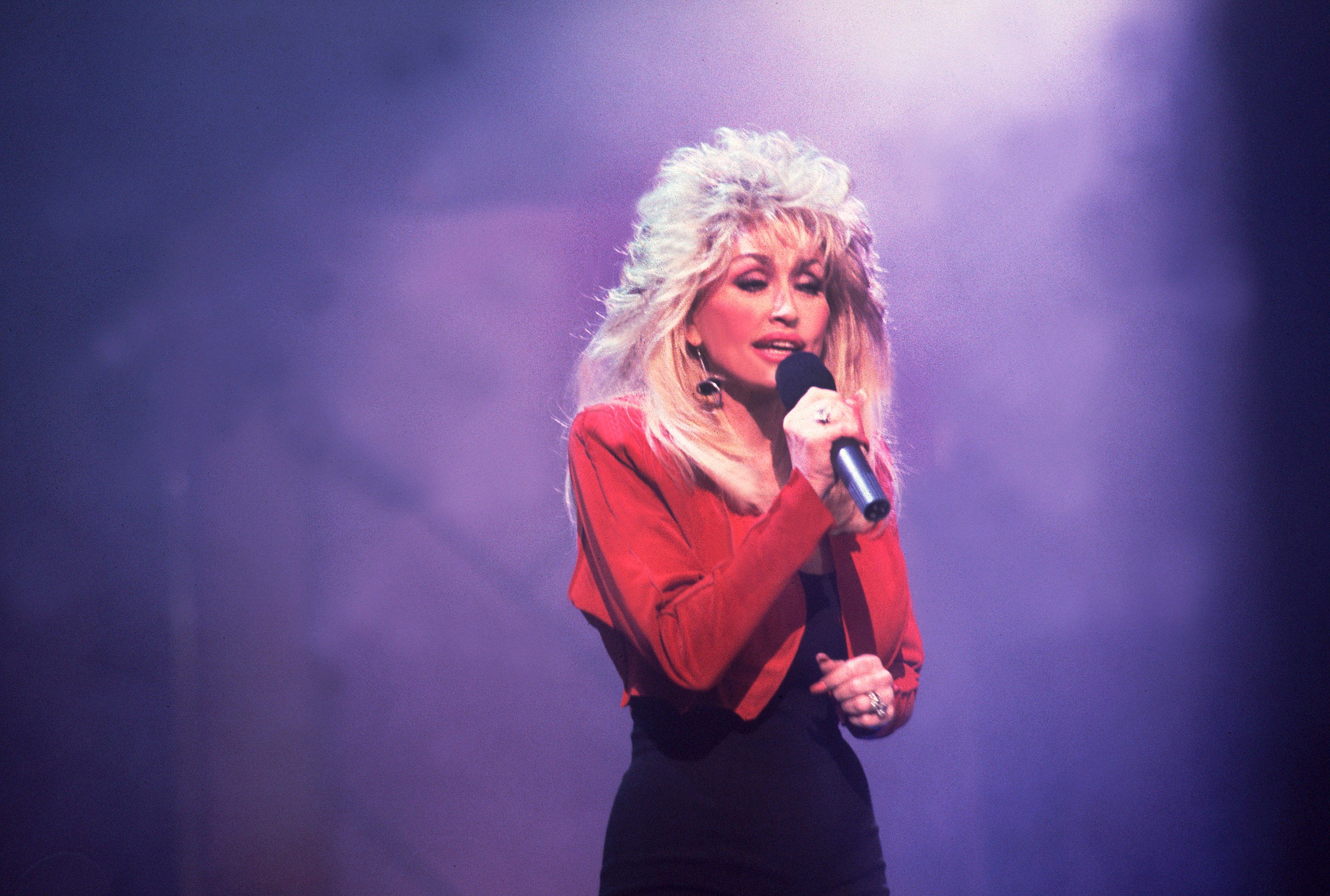
The story goes that “I Will Always Love You” was written as a sort of parting gift to Parton’s mentor Porter Wagoner, who introduced Parton to the world in the ’60s on his long-running nationally syndicated musical variety show The Porter Wagoner Show. The two worked together through the late ’60s and early ’70s before Parton decided to do what she came to Nashville to do: become her own star. In a stripped-down 2009 performance, Parton recounts how Wagoner took the news:
“When I started working with Porter, I told him I had come to Nashville to be my own star and to have my own group. But the money was so good, I told Porter I would stay for five years. And he agreed to that. Well, five years came and … I told him I wanted to go out on my own. He was just having a fit about it. We argued a lot and I thought, He’s never going to listen to me. He’s not hearing a word I’m saying … So, I went home, wrote a song about it, came back the next day and I said, ‘Porter, just sit down, let me sing you something, then you’ll know how I feel.’”
In Houston’s version of “I Will Always Love You,” it always felt clear to me that the end Houston was encountering wasn’t one of her own design. I’ve always heard an unspoken “and I really wish I could stop” after Houston finishes her final “And I will always love you.” There’s an anger, and a feeling of being held hostage, that was easier for me to understand than the clear-eyed agency that underscores Parton’s rendition. Until relatively recently, life felt like something being done to me; I’d find myself in places without necessarily knowing how I got there. Every ending felt like a surprise, or like a hidden landmine whose detonation would fundamentally reconfigure everything that came before it.
In “I Will Always Love You,” Parton offers a vision for a different kind of ending, one chosen and enacted with love. In place of anger, there’s an almost clarified grief that ultimately had its intended effect. When Parton sang Wagoner the song, he finally relented. “You can go,” he told Parton. “Providing I can produce that record.”
Despite some early tabloid rumors that Houston’s cover set off a feud between her and Parton, the two always spoke glowingly of each other. Parton credited Houston with cementing her legacy as a songwriter and said that Houston’s cover of her “little sad country song” was “one of the greatest experiences of my life.” And for good reason: It would take too long to list out the various chart records and accolades deservedly heaped upon Houston’s rendition. And while I’m sure the royalty checks ultimately helped soothe whatever heartache might have lingered decades after Parton and Wagoner went their separate ways, I wonder if the memories they took with each other ever stopped tasting bittersweet. It’s much easier to move on when you hate someone; there’s a real comfort in a definitive breaking point. But still, as I get older, it’s Parton’s version that I find myself returning to, maybe because hers is one that ultimately made way for a new beginning.