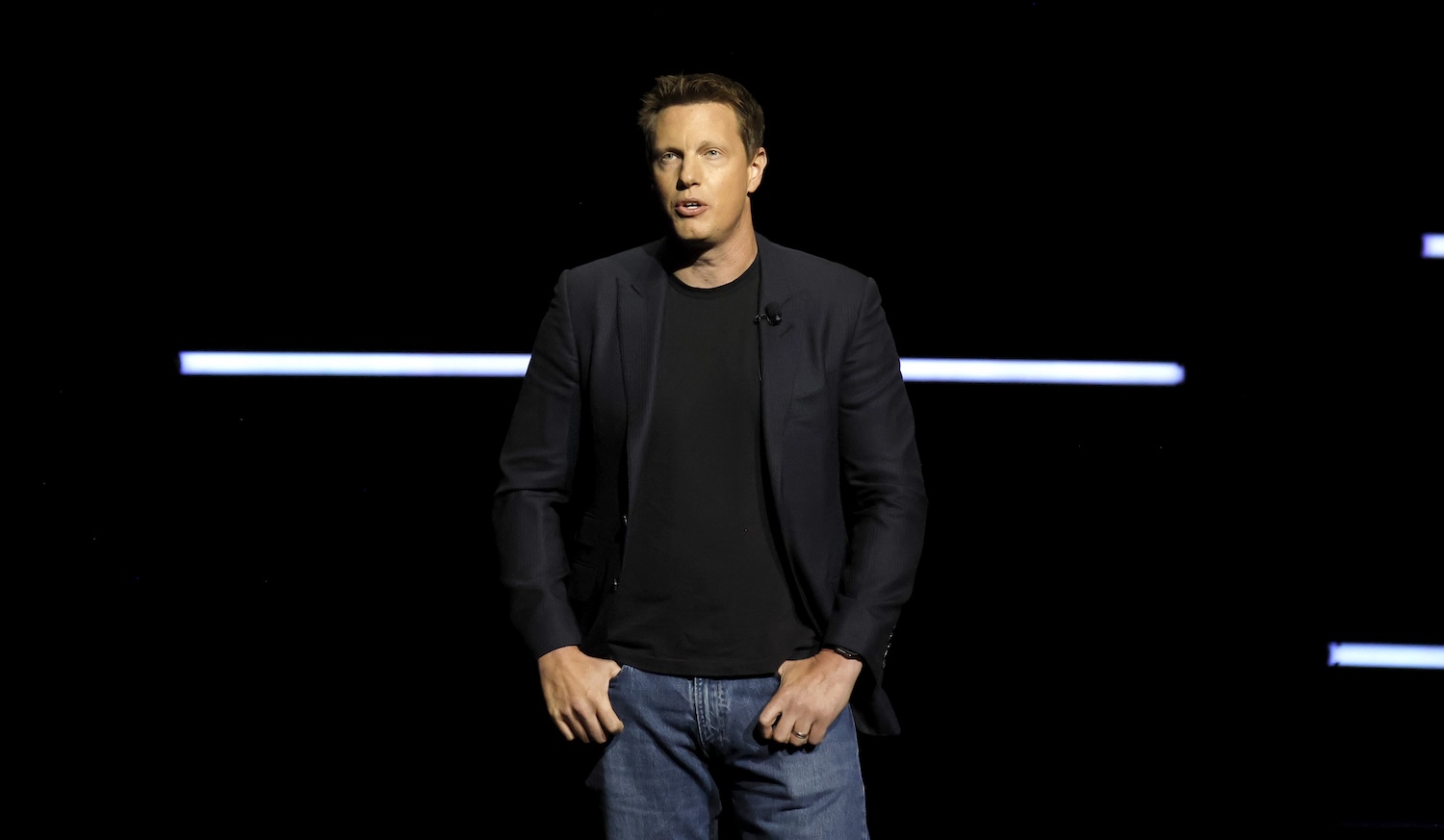
Until a month ago, everything was going great for David Ellison and his plan to control American cultural production. He'd successfully made Paramount an outer arm of the Trump administration, with all the lucrative sinecures and harrowing moral and journalistic compromises that come with such an arrangement. Ellison's smooth ascent to power took a little bump when he lost the initial bidding war for Warner Bros. Discovery, but his father is Larry Ellison, one of the richest men in the world, and he's a close ally of Donald Trump, so he threatened and bought his way into a hostile takeover that WBD shareholders approved in February and the U.S. Justice Department approved in June. Congratulations, David Ellison, nobody will make a good movie or say anything faintly critical about Israel on CNN ever again.
Or so he thought. Even before the DOJ rubber-stamped the deal, Bloomberg reported that several states were looking into mounting a joint legal challenge. On July 13, California Attorney General Rob Bonta filed suit in Sacramento after getting 11 other states including New York to join him in the legal effort. In a column for Variety (which, balls and strikes, needed a little editing) that dropped alongside the suit, Bonta wrote that the merger would create a super-entity immune from competition, one that could exert the directed force of monopoly control.
"By combining two of the five largest film distributors and two of the five largest basic cable channel owners, the resulting media behemoth would control nearly one-third of theatrical movie distribution and nearly one-third of basic cable channels," Bonta wrote. "It would control more than 30 percent of the blockbuster release distribution that buoys the movie theater business and 50 of the most popular cable TV channels, spanning an unrivaled slate of news, sports, entertainment, kids, family, factual, and lifestyle content." The result? "That’s a death knell for the film and TV industry—and for our democracy."
That last bit is a crucial one. The inclusion of CNN in the deal is a particularly spiky one, as it would allow the Ellisons to go Bari Weiss Mode on the network. For his part, Ellison wrote a New York Times op-ed on Tuesday centered on the CNN issue, arguing that he's a regular guy who just wants to restore trust in the news media. Ellison, as every media baron and their appointed lackeys love to do, cites a poll claiming that "28 percent of Americans trust the news," and then pretends like that number has something to do with "journalists [who] haven't always helped their case by refusing to engage with critiques," and not with members of his cohort turning the networks they own into propaganda machines. Roger Ailes and the Murdoch family turned Fox News into an assembly line for right-wing hysteria, and Ellison's proposed solution to that problem is to purge CBS and CNN of journalists who would rather not pretend that vaccine denialism is a valid political position.
An interesting recent case that's somewhat similar is the Live Nation-Ticketmaster lawsuit. Trump's DOJ settled that case out of nowhere and for basically nothing, allowing Live Nation to keep on degrading the state of live entertainment and making it impossible to buy a concert ticket. But a coalition of 30 states stayed in the case and pushed the suit forward until a federal jury ruled in April that there was monopoly stuff going on. The cases are different here, though the dynamic of states coordinating joint legal challenges in the place of a bought-off federal government abdicating its regulatory powers is roughly analogous. (For more on this, please see the inevitable dozens of comments from Defector-reading lawyers sure to bloom below.)
A somewhat surprising opponent of the lawsuit is California Governor Gavin Newsom. The loathsome and breathtakingly driven governor will be term-limited out of office in January 2027, and is clearly posturing to run for president in 2028 on the logic that in order to defeat a Republican, one must first become a Republican. Newsom has treated the lame-duck segment of his governorship as an extended, futile effort to appease people who will always consider him a traitor and a freak by showing them that, like them, he too wants to make Californians' lives worse. In between trying to undercut his own party's progressive tax legislation and opening up more oil drilling, Newsom found time to express his concerns about the Warner Bros. lawsuit. His case is that blocking the merger will block thousands of jobs, which is curious given that mergers like this almost always entail massive job cuts.
Despite the governor's tut-tutting, the case progresses. On July 24, Paramount announced that it wouldn't absorb WBD until either June 2027 or until the antitrust trial concluded. While Paramount surely hoped at one time that it could simply settle its way out of the legal challenge, its leaders seem now to understand that this case is probably going to trial.
In a joint filing last Friday, the states and Paramount asked Judge Araceli Martinez-Olguin for two very different trial dates: The states asked for the trial to begin on April 5, 2027, while Paramount asked for a Nov. 4 start date. Paramount's supposed argument is that a longer delay makes it harder for the people whose jobs it wants to eliminate to do their jobs. "Deciding what projects to commit to, and when, is already difficult for creative professionals trying to find the right opportunities in a dynamic industry; doing so in an atmosphere of intense business uncertainty is even harder," they wrote.
Paramount's real argument is that it is beginning to face some time pressure. As part of the initial merger agreement, Paramount will have to pay WBD a $7 billion fee if it hasn't closed the deal by June 4, 2027. The company is also subject to a "ticking fee" that kicks in on Sept. 30, of roughly $7 million every day the companies remain unmerged. That's neither the states' nor the judge's problem, and though an April trial is theoretically well clear of the June cliff, nothing we've seen from this case so far has been straightforward.