

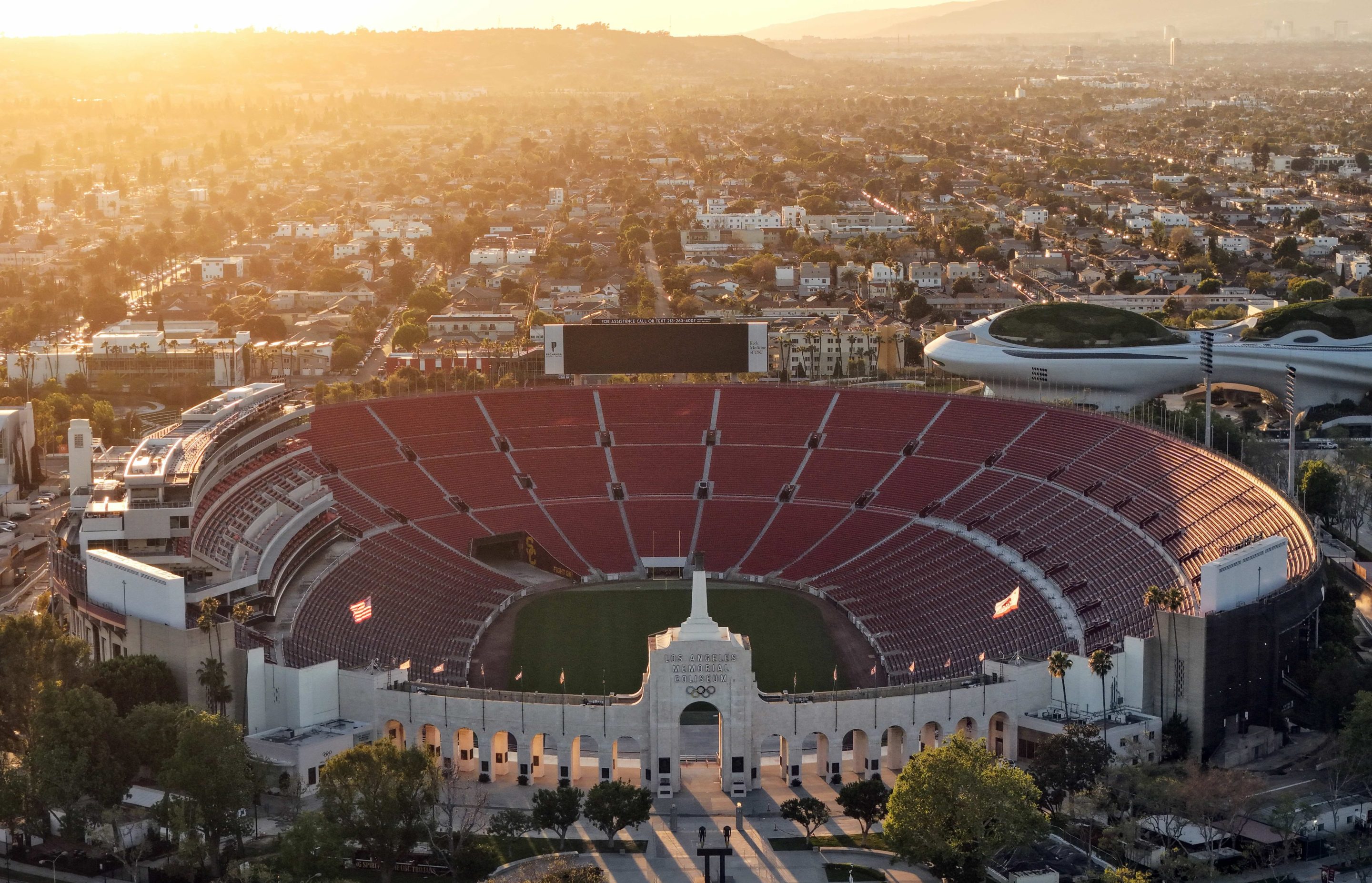
I had not felt this nervous since buying BTS concert tickets. Like many other Southern California residents, I had dutifully signed up for the presale of tickets to the 2028 Olympic Games. These tickets, we were told, would be available exclusively for us. Well, for us and also residents of Oklahoma City, where softball and canoe slalom will be contested. The arrangement seemed something like a reward for our city hosting one of the largest, most popular, and most outrageously logistically challenging sporting events in the world. It's certainly more than residents are getting for hosting several World Cup games. The advertisements even told us that more than 1 million tickets would be available for the low price of $28. (Get it? Because it's 2028!) So I signed up through LA28's very neon-pink website, and so did my husband. So did many others. LA28's press update said we were joined in the digital line by more than 5 million people from around the world.
Beyond that, nobody in Los Angeles really knew what to expect until, suddenly, the emails began arriving. Some of us were chosen—and some of us were not.
The ticket draw for locals was scheduled to start on April 2, but word began popping up in various corners of the internet that some people were already getting emails at random saying they had not been selected. A decent portion of the city turned to incessantly refreshing its email, which did not make anyone happier or saner. Conversations with other adult Angelenos hoping for Olympics tickets took on the tenor of high school kids applying to college: Did you get in? How are you feeling about the process? And why won't anyone tell us anything?
Those who didn't get randomly selected for the presale were told in the emails they received that they would be entered for a chance at tickets during a later presale, not exclusive to Angelenos and Oklahoma City. Or, in academic admissions parlance, they had been deferred. As in that world, nobody got a detailed reason as to why. You were just not chosen. So sorry.
I—luckily, I surmised—got no such message, and so my waiting continued. After a few days far outpacing the healthy allotment of glancing at the Gmail app, the news arrived in my inbox with no fanfare beyond a familiar little bzzzzz from my phone. Email subject line: "You've got a time slot to purchase LA28 Olympics tickets!" This arrived, no kidding, on April Fool's Day, which meant I spent 30 minutes doing my best to verify the email was real and not someone pranking me. Thankfully, it checked out. My assigned time slot was 1 p.m. on April 3. I had two days to prepare.
If you've bought tickets to any stadium-sized event lately, you know what I mean by "prepare." Getting tickets has become an event in its own way. Yes, there always has been a culture around getting into big events; before our social lives were digitized, camping out for tickets was normal. But digital hustle culture is stressful in a wholly different way.
With camping out, a lot of the work was in the act of showing up and the problems that followed from there were mostly physical: Do I have food? Cover if it starts raining? Where am I using the bathroom? In the case of being forced to line up away from the ticket window, there also were the logistics of figuring out how not to get hurt during the stampede of people running up to said window when go time arrived. This is how my glasses got broken during my freshman year of college, but I wasn't physically hurt, and I got a great ticket to see Florida vs. Tennessee. What happened to my glasses means that, to this day, I cannot explain how I got near the front of that line; everything more than a few feet in front of my face was a blur. I strongly suspect that people let me near the front because I had broken glasses.
And yet, even with broken glasses, that process felt less stressful to me than every digital battle with technology I've waged in recent years. Buying tickets this way is physically safer—that's inarguable, your body can't get crushed online—but mentally it is a far more tortuous affair. Technology cannot break your glasses, but it also has no feelings, no compassion, no actual human demeanor. It's just you versus a string of zeros and ones.
So I needed a digital battle plan.
The first step was making calendar reminders, with three separate alerts telling me when I was 60 minutes out, 30 minutes out, and 10 minutes out. Next up was making sure my entire Friday schedule was set up such that, by at least 30 minutes before go time, I had nothing else to do but focus on getting these tickets. Third came research, which would be critical to the success of my mission—and yes, by this point I was describing this in terms like "mission." I'm not gonna defend that, but when you've been told you have just 48 hours to purchase tickets and just 30 minutes from the time you add one ticket to your cart to check out—or else the screen refreshes and you lose everything—things get pretty dramatic in your mind.
The good thing about not getting slotted for the very first day was that my social feeds quickly filled up with advice videos. LA28 had put out explainers, but, to no surprise, ones from LA residents going through the system and talking about it ended up being far more helpful. Two key pieces of advice emerged. First, know which specific sports and dates you want tickets to ahead of time so you can search by event code; this will be faster than using the general search, and every second counts in missions like this.
Secondly, when your online cart was full with tickets, you wouldn't be able to scroll down to see the "check out" button. To resolve this, you would have to zoom out on the screen, making everything smaller until the button reappeared. I sent all the explainers to Mr. Diana, whom I put in charge of figuring out how we could see the maximum number of sports we each wanted to see. (I had no reason for this maneuver, other than Mr. Diana really loves making itineraries, almost as much as he loves being known as Mr. Diana.)
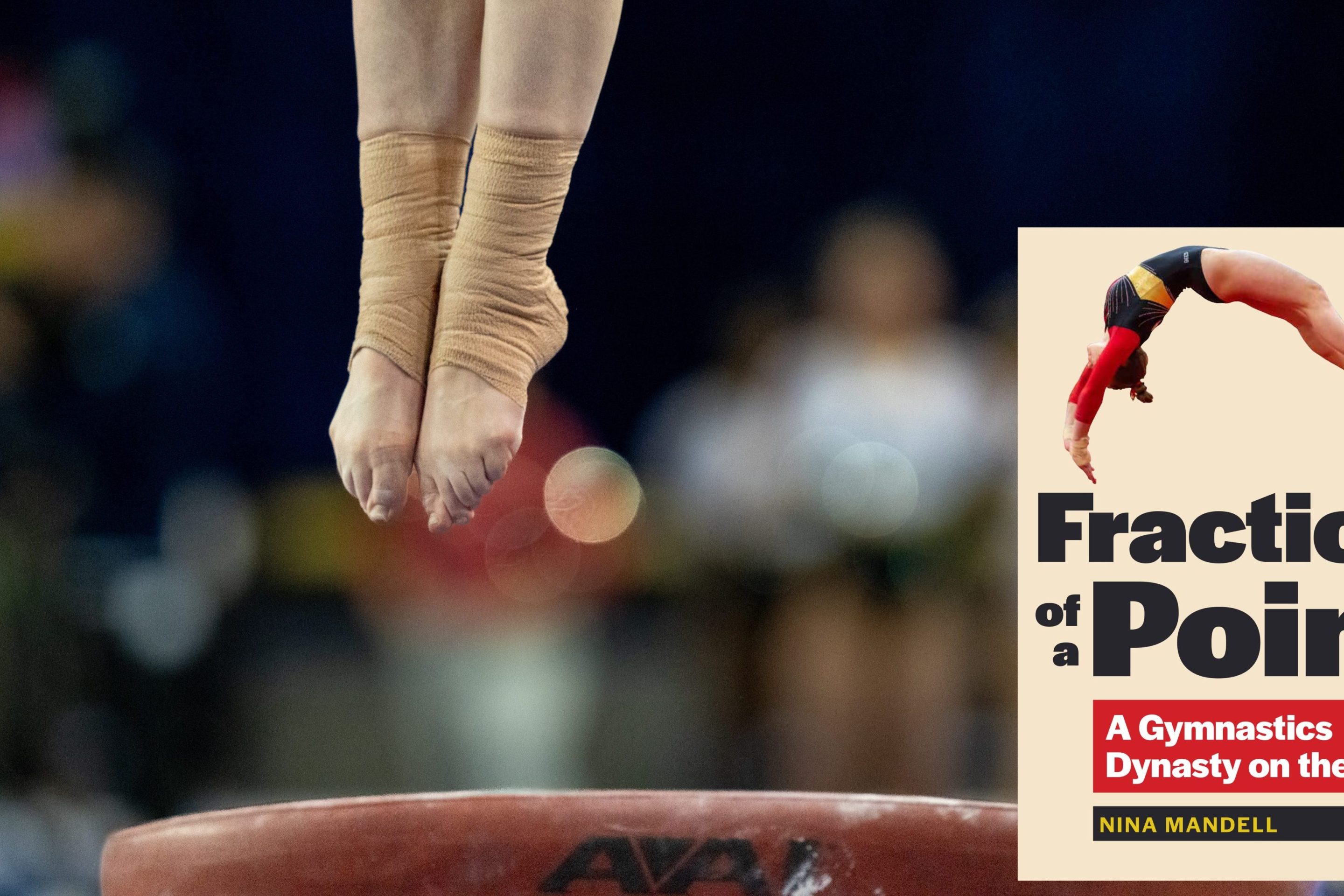
Even before our time slot arrived, critical news started trickling in via social media. People searching for the highest-profile events—gymnastics, swimming, track and field, the opening and closing ceremonies—were reporting back that the $28 tickets, and cheaper tickets in general, were already gone. Did I want to see women's artistic gymnastics? Yes, very much. Did I want to see the sport live for $2,000 a pop? Well, no. Because I also have to pay my bills and eat food to live.
On a rational level, this did not surprise me. Track and field, swimming, and especially women's gymnastics are the prestige events of the Summer Games, and millions of people signed up for these ticket drops. Of course these limited number of tickets went quickly. If you aren't a veteran of the Olympics or high-profile event ticket buying, I can understand the surprise—it's startling to do everything right, sign up ahead of time, patiently wait your turn, have that Visa ready, and still be told, Nope. If you have had the contemporary online experience of buying tickets, though, you will necessarily be more used to your phone telling you, "We sold out of the tickets for plebes, please return when you have entered a higher income tax bracket." You get so used to the giant neon sign blinking "You are not rich enough" that you barely notice it after a while.
And yet, as a plebe and like a noob, I held onto hope for gymnastics as the day of my ticket slot arrived. Maybe there would be one ticket left? Maybe for men's gymnastics, or the newly created mixed-gender competition?
With about 30 minutes to go, I set up my laptop battle station. Plugged into an outlet? Check. One new window open solely to focus on Olympic tickets? Check. Was I already logged into my LA28 account? Absolutely. Visa in my hands? Yes. Email open with the special link to get to the ticketing website? Check. Mr. Diana on standby with a detailed list of every sport we desired, with the accompanying event code? There he was. I rubbed the cats for good luck and stared at the clock on my phone.
When my time slot arrived at 1 p.m. I clicked the link from my email and entered the ticketing website. First up—GAR09, the women's gymnastics team final. No luck, with just the most expensive tickets left. So I tried other events: the preliminaries for the women (nope), then the men's gymnastics events (wildly popular too, same answer). Finally I thought, well, maybe I'm one of the few people who knows about the new mixed-gender event; it turns out that I definitely was not. Still, I did not have time to be dejected. I was competing against countless other people for tickets, on a website. Emotions would have to wait.
I started to have some success after moving on to other events. I wanted to see flag football, mostly just as a reporter wondering what that would look like in the Olympics, and I got one of the $28 tickets. Mr. Diana scored a $28 ticket to 3x3 basketball; he's been a fan ever since he saw it in Paris. Tickets to the women's golf preliminaries also ran us $28 a pop. We got seats for one fencing semifinal and one final; it's a sport I finally came around on thanks to the excellent K-drama Twenty Five Twenty One. That one took a fair bit of digital hunting to find tickets at our price points, though we did land ones for $28 for the semifinals and $60 for the finals. We also got tickets to a mixed badminton preliminary for $28, because what's more Olympic than watching a sport you know very little about, but is wildly popular among billions of people.
I paid more than $100 each for just three tickets—a pair to see a women's soccer semifinal at the Rose Bowl (the finals were way too expensive) and one ticket for myself to see a swimming final. But a sense of dread loomed over the process the entire time, thanks to that 30-minute window. Once one ticket went in, in this case for the soccer semifinal, the clock started ticking on my online cart. I had seen posts on social media from people warning they had lost all their tickets after taking too long. Mostly what I remember is a constant, low-volume voice muttering in my head: "You gotta move. Just keep moving. Go, go, go."
When I hit the limit (12 tickets, with an extra two allowed for soccer), I moved to check out and learned, indeed, that my screen would not continue to scroll down to show me the check out button. While I handled this in my expected way, which is by cursing, Mr. Diana calmly reminded me that we knew about this going in and tapped command-dash on my keyboard a few times until the screen had shrunk such that the glorious button appeared. We checked out with about 10 minutes to spare, and celebrated afterward like a pair of athletes who had nailed their big routine.
Because we'd had so much good fortune the first time around, we innocently thought things would go as smoothly when we got the email a day later that Mr. Diana also had been selected in the ticket lottery. His slot was Monday at 4 p.m., three days and three hours after mine. OK, we figured, at this point the biggest events would be gone, but surely there would be tickets left for, well, say another round of badminton. We even talked about going to archery or volleyball, which were being held far from where we live. Maybe we would make a day out of it.
Oh, how naive we were. Just three days later—and five days into the limited, locals-only sale—every single search delivered a brusque nope. We prepared the same way, laptop ready, list of sports codes at hand, cats vigorously rubbed, but it was too late. A lot of sports that were pricey when I was on the clock were now completely sold out; others that had been affordable now started at $1,000. Volleyball? Nope. Volleyball of the beach variety? That was a hard nope. Maybe more 3x3 hoops? That was gonna be $150 apiece at minimum for preliminaries. We got a few more tickets—to golf and archery; please leave any recommendations for the greater Carson metro in the comments—and called it a day.
We were among the fortunate ones; as a couple, we each entered the draw and thankfully got my early slot. We had copious experience purchasing tickets to large-scale events, too, even those that used the dreaded dynamic pricing, and so we knew what to expect and how to prepare. We are unfortunately used to seeing a ticket to a concert or a sporting event priced at $5,000. A lot of our fellow Angelenos were less lucky or just less used to how this specific process sucks, and they were understandably angry, especially with how much time LA28 leadership has spent touting these as affordable games that would be accessible to locals, just like those hosted by the city in 1984. Even people living in locations with stadiums that will host events and bear the brunt of the impacts, like Inglewood, got shut out. It turns out "affordable" and "accessible" meant something more akin to affordable and accessible for a lucky few and those who have been chosen at random, and we hope the rest of you have a trust fund or a plan to sell off all your material belongings in the near future.
It's not completely over for the people who have been unlucky up to this point. Perhaps they will be selected for future draws, or will be able to buy some tickets on resale—although the details of this system have been murky and might not match the no-selling-above-face-value approach of Paris 2024 (in which case, get ready for a World Cup repeat). If all locked-out Angelenos who signed up do get some shot at going to the Games, perhaps some of that negative sentiment will dissipate. Any live event is inherently exclusionary, at least it is if demand is high; there aren't plenty of seats available at Pittsburgh Pirates games because the baseball team is so damn egalitarian.
But we live in a world where this instinct to cater to wealth—events, parks, and locations built for the rich, with a few lucky working people granted entry up top—has been creeping into our lives for awhile now. It's in that "dynamic pricing," a roundabout phrase for prices that fluctuate, generally up, based on demand; that's now used for concerts, sporting events, and even golf tee times, and it is even creeping into less optional stuff like groceries. It's in the explosion of luxury boxes in stadiums, at the expense of the cheap seats. It's even at Disney World, which, like many businesses, has reacted to the decline of our country's middle class by catering to the very rich, adding various passes and fees onto rides that make it harder for working-class families to experience the park in full. As if that divide weren't stark enough, you can also go online and find that, actually, some people can afford $5,000 tickets to the Olympics; it's in their Instagram stories.
Inequality is not new, of course, but it wasn't always so obvious and overbearing. And while the internet has gotten us out of those tents and stampedes for tickets, it has decidedly not granted us easier entry; convenience only really feels like convenience when it actually gives you what you want. In place of that, it gives us relentless reminders of, well, everything we cannot have. All I can do is count myself lucky for being chosen by the Olympic lottery gods, and hope that everyone on the outside looking in gets their shot to at least experience handball or field hockey or BMX or baseball.
In the meantime, there are still some BTS tickets available. Those aren't $28, either.