

If you listen to a certain subset of the media—not necessarily the sports media—the state of the WNBA is dire. A generational talent is being squandered. Weak leadership has failed a league on the cusp of great opportunity. Something must be done. Once we figure out what exactly that something is, it's going to get so done.
USA Today columnist Christine Brennan, who has written a book about Caitlin Clark, belongs to this subset, and has committed to viewing an entire sports league through the lens of one All-Star guard on the Indiana Fever. Clark is certainly a popular and exciting basketball player to watch, but adherence to a religiously Clarkcentric worldview can warp one's commentary over time. Eventually you come off like someone who doesn't know or care about anything else happening in the WNBA. Clark's Indiana Fever lost their first-round playoff series to the Las Vegas Aces last week, leaving Brennan to select some strained reporting angles as her book subject spun out of the postseason.
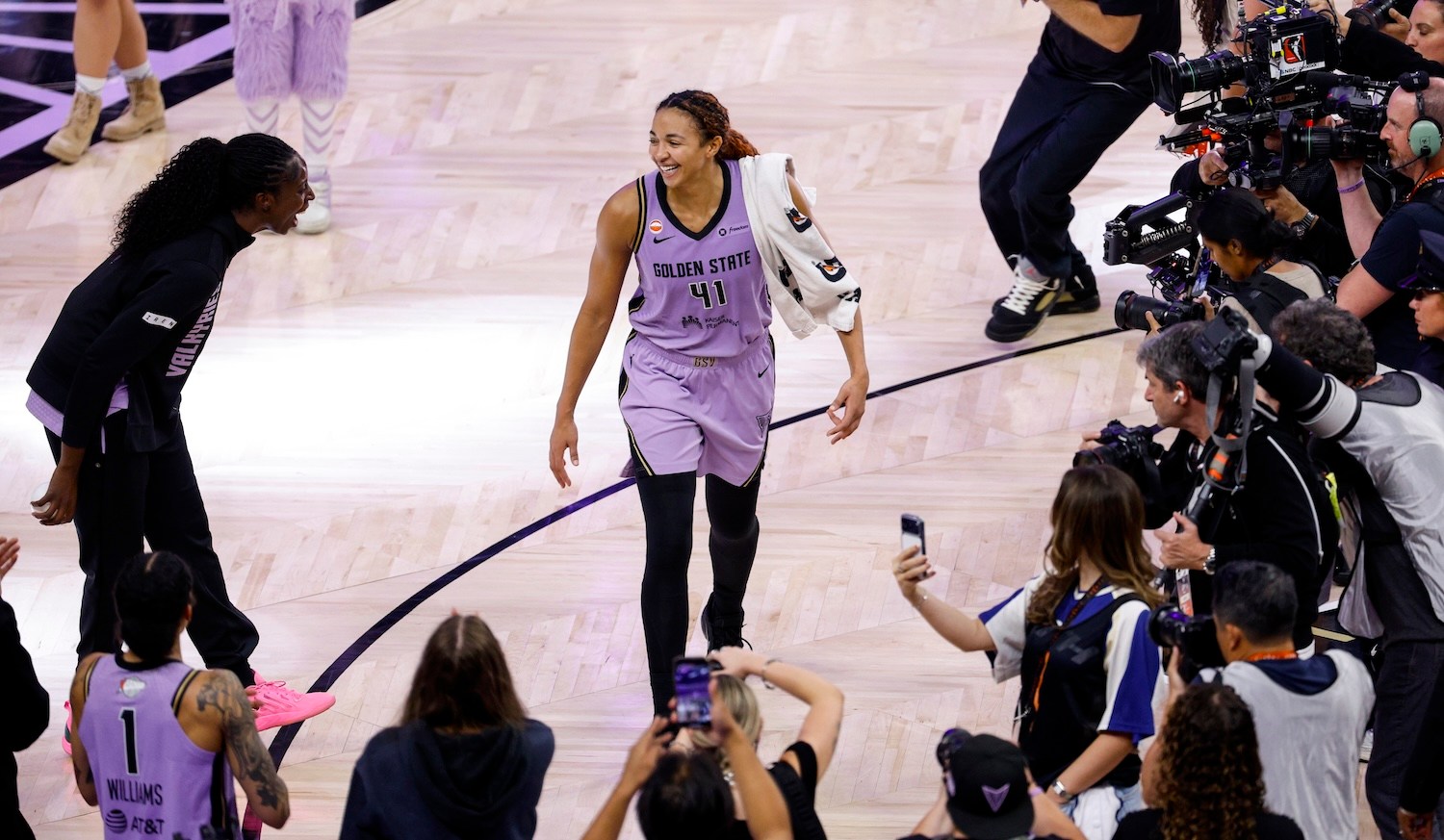
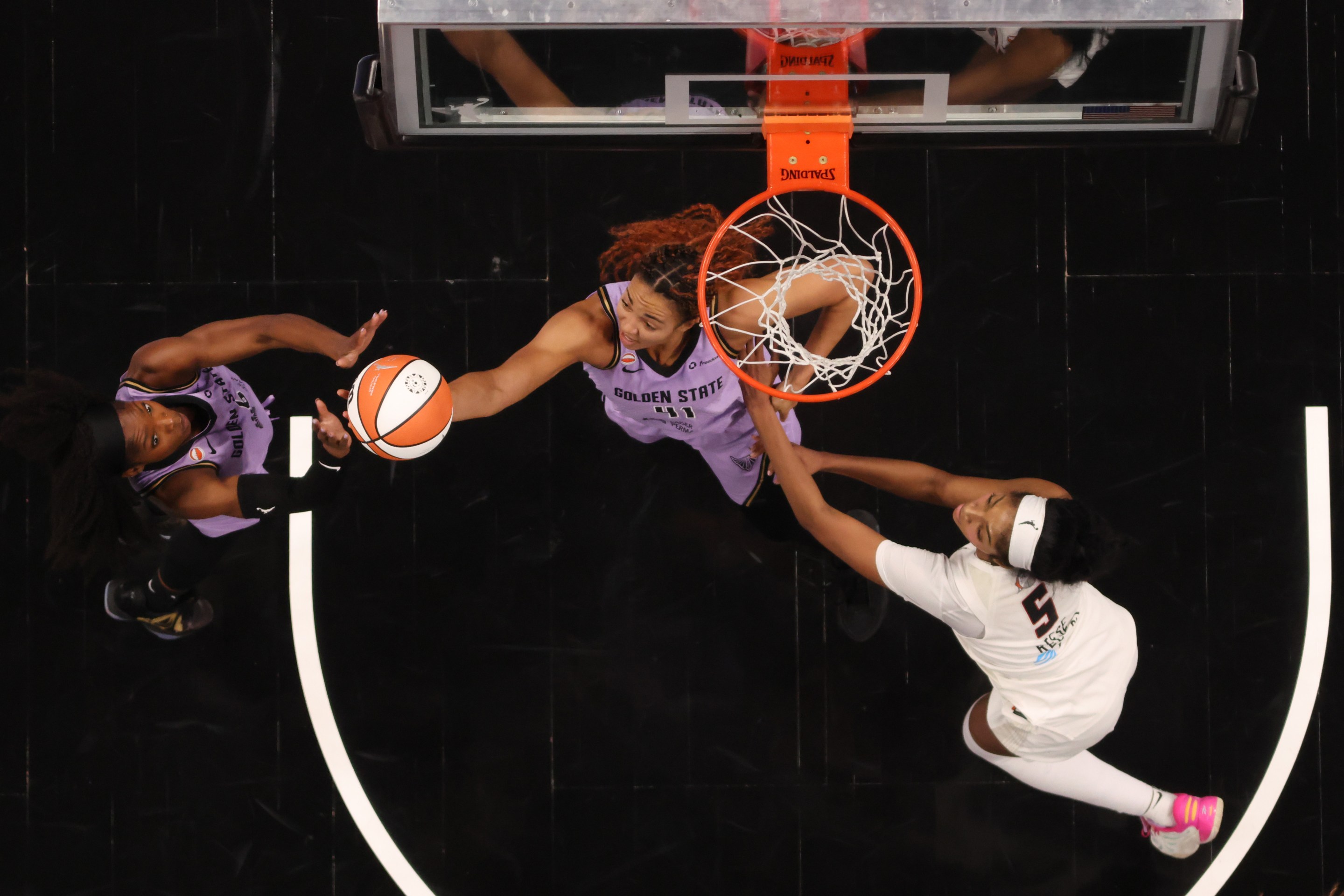
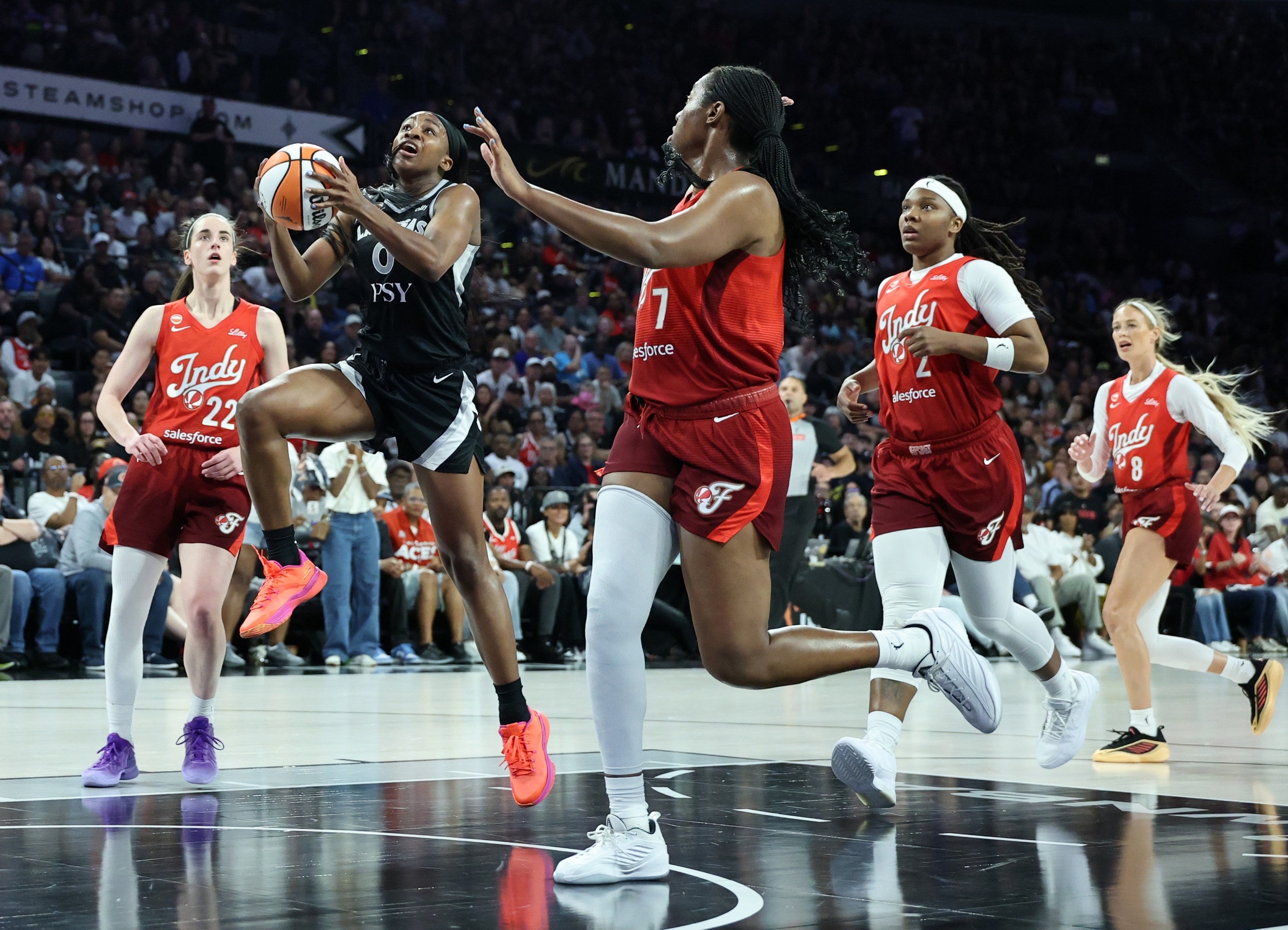
Late in Game 2 of that series, Aces star forward A'ja Wilson confronted a courtside Fever fan who she felt had "disrespected" her. "If I see a man come at me, taking steps towards me and pointing at me, I don’t give a damn what you said. I don’t give a damn how you said it, the tone. That is unacceptable," Wilson told press after the game. Brennan sought comment from the WNBA and, 36 hours later, was disappointed not to have heard back. According to her, the WNBA's slow response to queries about Wilson reflects its "leadership vacuum," and a league source's bog-standard obfuscatory description of the event is somehow a "PR nightmare."
Days later, while circulating a Sophie Cunningham podcast clip about the Wilson incident, Brennan noted that her reporting afterward led her to believe that "there is a palpable realization (finally) that Cathy Engelbert's WNBA looks ridiculous pushing away/not wanting new fans." Who exactly is pushed away by a sports league's reluctance to punish a four-time MVP for barking at a fan? Would Brennan have cared at all about the league's response if it were not a Fever fan?
Much of Brennan's WNBA commentary takes as a given that league leadership is deliberately deterring hordes of Clark-sympathetic fans, and, for some reason, rejecting their business. This is a pretty strong assumption. I'm skeptical that there's any person out there who was on the path to becoming a sincere WNBA fan but was dismayed by the WNBA's insufficient punishment for A'ja Wilson, and then gave up on the league. If one such person exists, I could accept Brennan's framing that this was a "nightmare," but in the meantime I'm going to assume that the slow movement of a sports bureaucracy is a "nightmare" only in the eyes of unwell culture-war participants who do not watch the WNBA and were never going to engage meaningfully with the sport in the first place.
It's hard to understand why such a group of people should be painstakingly accommodated, or why a respected veteran sports columnist would deputize herself as the spokesperson for these people. Surely the answer can't only be that she has books to sell. It's also worth wondering why her most persistent reporting angles lend credence to the notion, popular among this cohort—which, again, does not follow the WNBA outside of whatever viral clips flicker before their glazed-over eyes—that black colleagues' racialized jealousy of Clark is holding the white superstar back.
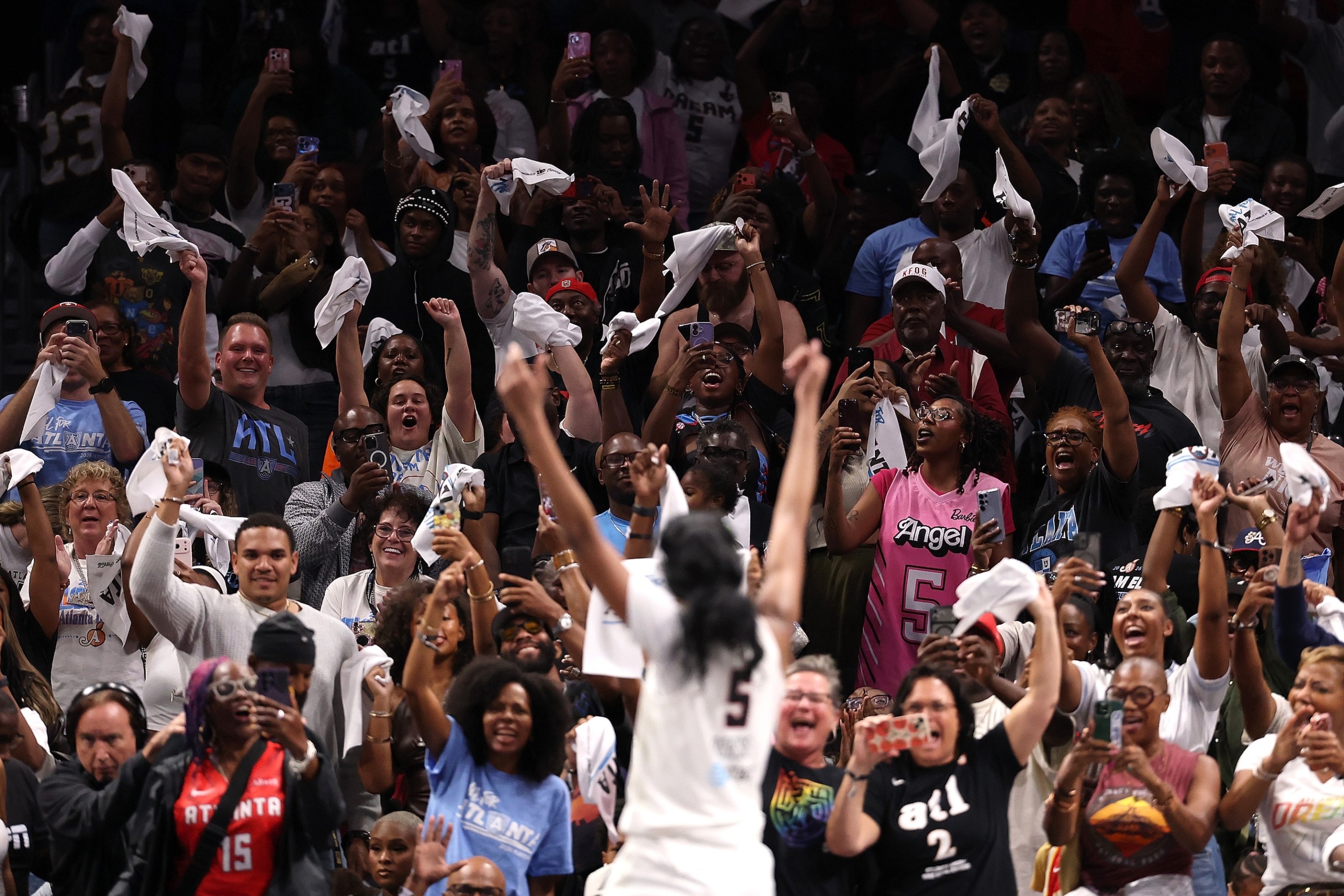
Last weekend, Brennan wrote that "the WNBA has mismanaged the greatest thing to ever happen to it," referring to Clark. On Sunday, the columnist criticized the league for not following the advice of civil rights activist and sociologist Harry Edwards, who in 2024 proposed that the league organize a "series of seminars" for all WNBA teams in the preseason ahead of Clark's rookie campaign, to head off any resentment. Brennan also castigated outgoing WNBA commissioner Cathy Engelbert for her "ridiculous minimization of Clark's impact," and sounded a rare note of optimism while reporting that the search for Englebert's successor will be led by the executive search arm of Clark's agency, Excel Sports Management. Brennan even used the turnout for an Atlanta Dream home playoff game versus the New York Liberty—nominally a Caitlin Clark-free event—to slam Engelbert for insufficiently appreciating Clark's "drawing power." (A spokesperson for the Dream told Front Office Sports that the upper level of the arena was closed due to uncertainty about which of two venues would be chosen, and a "short turnaround" between playoff series. The Dream will be playing all their 2027 home games at the larger arena.) To clarify, every comment in this paragraph was made in the past week. This is Brennan's most pressing journalistic concern.
Much of Brennan's commentary reads as if it is aimed at a hypothetical WNBA executive who refuses to accept that Caitlin Clark is a popular basketball player, and is making poor business decisions as a result. Indeed, if there's a single throughline in her writing these days, it's that the WNBA, on an institutional level, has failed to sufficiently respect Caitlin Clark. I'm not sure what it would look like to do so, but I would welcome a 10-point plan from Brennan about how to apply the precise right amount of respect to Caitlin Clark. At least then we'd have some specifics to debate. Until then, her quest to fast-track Clark into the single, totalizing source of value for an entire league remains delusional and embarrassing.