

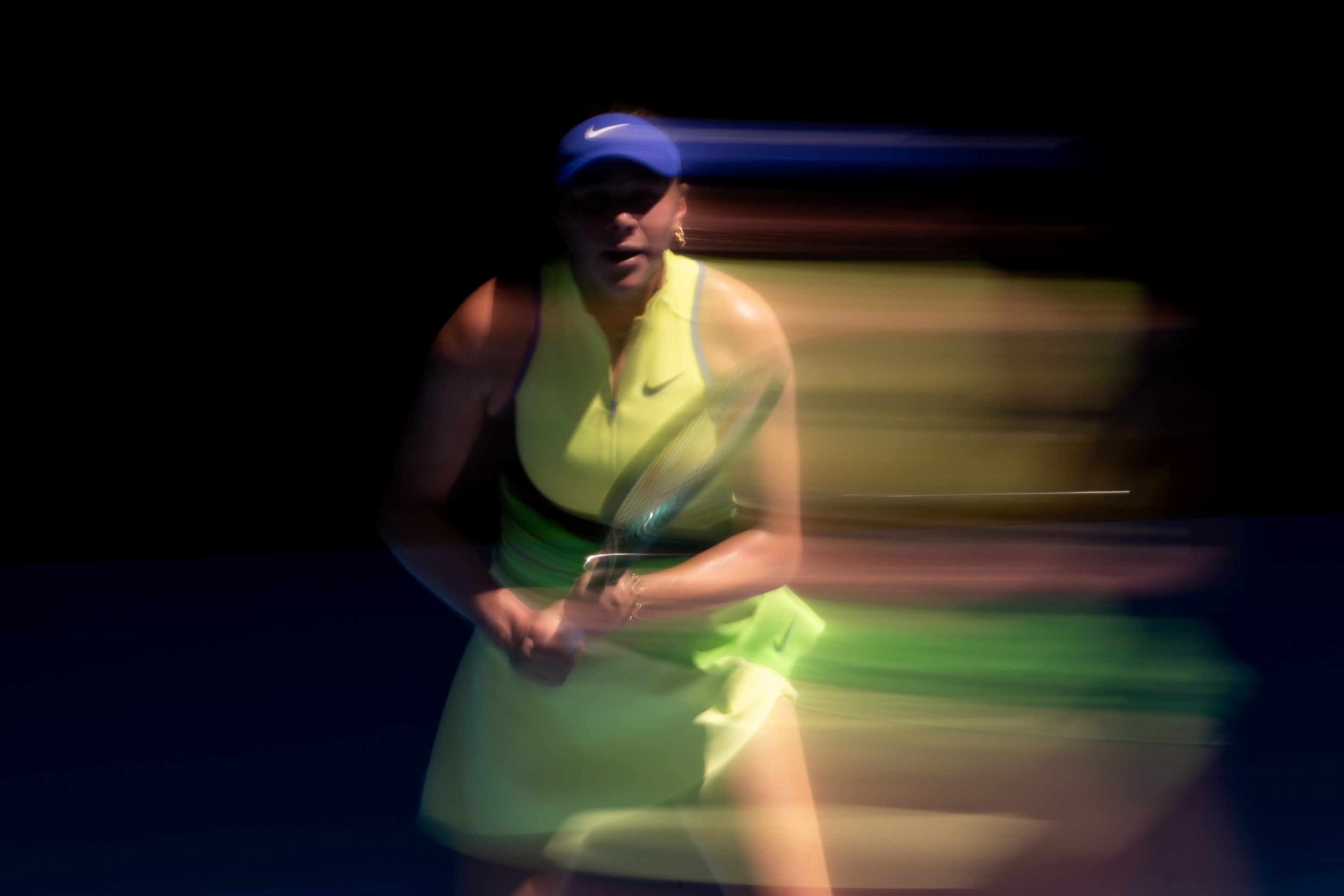
Because tennis is thinly disguised psychological torture, it is not a surprise when a tennis player looks like they are having a bad time. Even by those standards, Amanda Anisimova, while on court, wears her emotions on her sleeve; she can also look like she is wrangling with a very bad time and come out of the match with a win anyway. In Sunday's fourth-round match against Wang Xinyu, this came out to somewhat exaggerated effect: At no point did Anisimova seem in real danger in losing, and yet there was a palpable frustration that she had not, partway through the first set, already convincingly won.
Throughout the match, Wang looked totally outclassed on, to borrow a baseball term, the raw stuff. Most of the rallies, particularly on Anisimova's serve, were over before they could get started. Anisimova has the sort of pure ball-striking that makes "30 Minutes Of Amanda Anisimova Backhands"–style videos extraordinarily satisfying to watch. When she is on, her game has a terrifying geometric purity. When she is not quite calibrated, it looks like she is playing herself out of matches, and for the latter reason, nobody would characterize Anisimova as a robot, or a machine.
Visibly struggling to handle Anisimova's groundstrokes, Wang tried to serve herself out of difficulty in her own service games. This was where Anisimova experienced the most frustration. While Anisimova's own serves went unreturned 40 percent of the time, Wang still had 35 percent of her serves unreturned, which is absurdly high in the context of women's tennis. (It would be nice to have tournament-wide context for unreturned serve percentage. Alas, after landing the Australian Open's CourtVision tab, I only found this gem of syntax: "All the match winning players are considered while calculating the average per match per player in the tournament for match winner and all the match losing players are considered while calculating the average per match per player in the tournament for match loser." At least the stat pages are functional!)
Wang benefited, no doubt, from Anisimova's errors, which compounded as her frustration grew. Rennae Stubbs provided analysis from her place courtside, suggesting ("As you know, Jill…") that Anisimova's team should pick a keyword to tell her, and that keyword should be to "finish." That is, to finish out her returns so they wouldn't keep sailing long on her. In the game where Anisimova finally broke, she timed two critical backhand-down-the-line return winners. Wang would immediately break back, but with an eventual medical timeout and her movement compromised, the match was Anisimova's, even if you couldn't quite tell until she served it out. Even up a set and a break, Anisimova was visibly frustrated with her own return. Then she won the match and smiled as though it were never a concern to begin with.
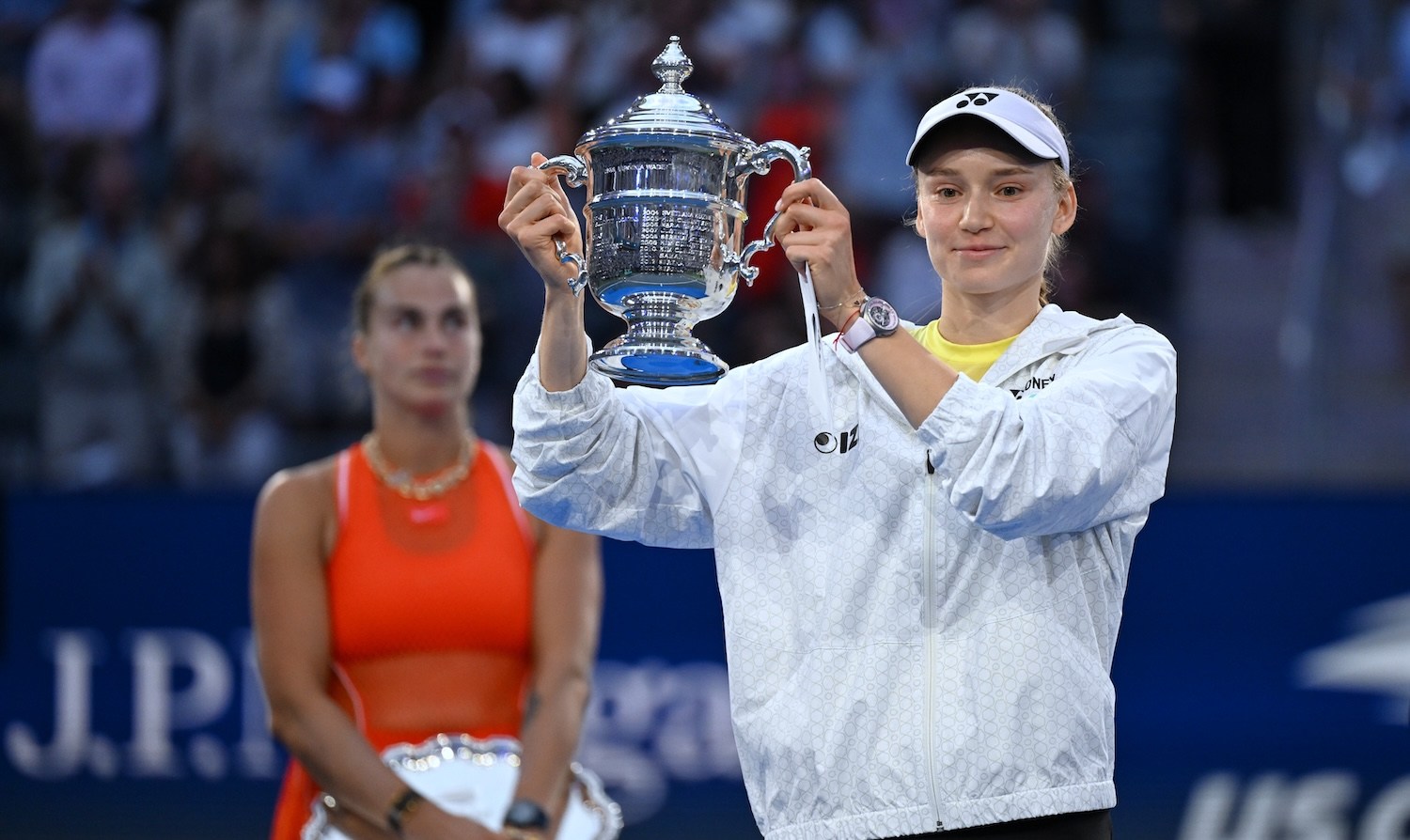
There is a tennis concept I find intriguing, which is the idea of a game being on a player's racket. That is, win or lose, the responsibility for the outcome would fall primarily on one player. In this scheme of games and upon whose racket they sit, Anisimova's always seems particularly involved. Through a set she can seem so out of it, both emotionally and with her playing level, and yet find her form again to win in the third (e.g. much of Anisimova's run to eventually win her second-ever Masters 1000 title at the 2025 China Open). At the same time, that is how Aryna Sabalenka won the U.S. Open primarily by keeping the ball between the lines.
In some ways, it must be a blessing to know that you have the tools and the level to always be able to dictate the outcome of a match. In others, the style of play must be a terrible burden. This is partially why Anisimova can be so fascinating to watch, especially as the open frustration seems less a sign of mental softness—beating Iga Swiatek at the U.S. Open should give her a lot of goodwill on the mental gruel front—than just a straightforward display of the machinations of the tennis mind. Anisimova's next match is against Jessica Pegula, who currently leads 3-0 in the head-to-head and whose consistency has made her into a stalwart of the WTA top 10. It'll be a great opportunity to see whether cooler heads prevail.


![USA's Ben Shelton celebrates his win against Spain's Carlos Alcaraz during the men's singles quarter-final tennis match on day ten of the US Open tennis tournament at the USTA Billie Jean King National Tennis Center in New York City on September 9, 2026. (Photo by Leonardo MUNOZ / AFP) / “The erroneous mention[s] appearing in the metadata of this photo by Leonardo MUNOZ has been modified in AFP systems in the following manner: [USA's Ben Shelton] instead of [Spain's Carlos Alcaraz]. Please immediately remove the erroneous mention[s] from all your online services and delete it (them) from your servers. If you have been authorized by AFP to distribute it (them) to third parties, please ensure that the same actions are carried out by them. Failure to promptly comply with these instructions will entail liability on your part for any continued or post notification usage. Therefore we thank you very much for all your attention and prompt action. We are sorry for the inconvenience this notification may cause and remain at your disposal for any further information you may require.”](https://lede-admin.defector.com/wp-content/uploads/sites/28/2026/09/GettyImages-2293730421.jpg?resize=2880%2C1920)