
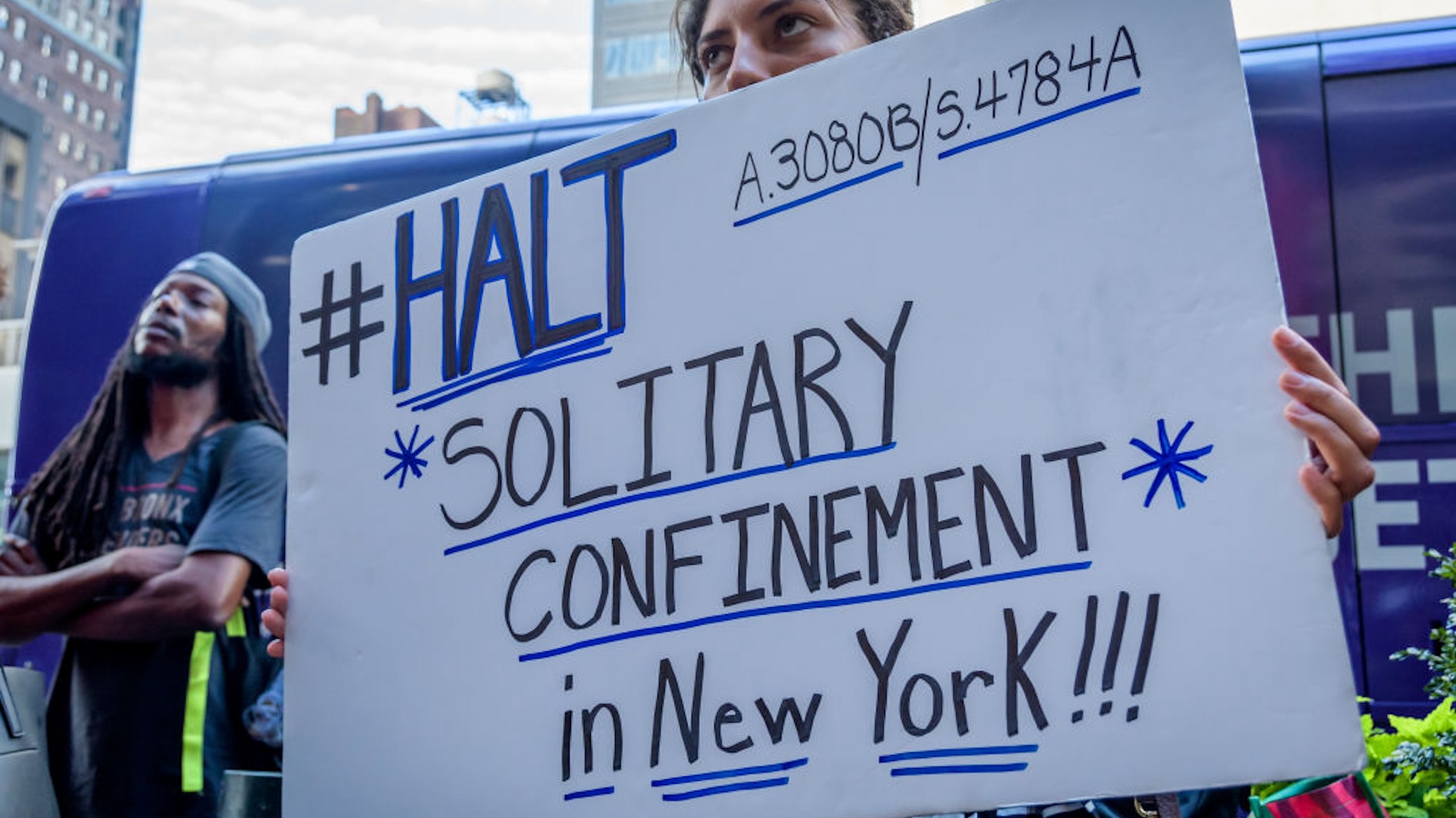
In February of 2025, New York State correctional staff began an illegal work stoppage to challenge recent changes to the state’s carceral system. Their primary objective was to force the repeal of the Humane Alternatives to Longterm Solitary Confinement Act (also known as the HALT Act), a bill that is part of a larger initiative prioritizing the health of the imprisoned and our successful reentry into society. This bill mandates prisoners receive seven hours of congregate time outside our cells each day and otherwise limits “excessive” use of solitary confinement. In response to the strike, Governor Kathy Hochul suspended the HALT Act for 90 days and pursued a mediation, which ultimately ended with many officers returning to work and those who refused being fired—some 2,000 officers. The HALT Act’s policies should have been reinstated by May 21, 2025. However, it has been over 13 months since the work stoppage ended, and prisoners like myself are still living without access to recreation, programs, and the visits we are entitled to.
I currently reside at Elmira Correctional Facility, which in my experience did not adhere to most of the rules that benefited the imprisoned population even prior to the work stoppage. The administration has gone months at a time without operating most programs, including ones that must be completed before our release, even though we are entitled to consistent program access. Local visiting practices prevented spouses from sitting near their incarcerated partners, despite directives explicitly stating that our visitors should be permitted to rest their heads on our shoulders. Our mail, packages, and electronic mail content were almost never processed in a timely manner, and the systems in place to remedy these institutional failures have always been inherently flawed.
Since the work stoppage, things have gotten even worse. Recreation has been reduced to less than an hour per day. Most prisoners have not been afforded the opportunity to participate in any programs in over a year. Prisoners aren’t even permitted to walk to the cafeteria for lunch. Instead, our lunch—usually a bag with sandwiches—is brought to our cells every afternoon, denying us both the brief respite from the isolation of our cells and whatever warm food we would have been given for lunch that day. With less than an hour of recreation, no opportunity to program, and only two opportunities to go to the cafeteria, prisoners are forced to stay in our cells more than 22 hours each day.
In addition to subjecting prisoners to this unjust long-term solitary confinement, the state is also restricting access to our families. Regular visits, which normally operate seven days a week in maximum facilities, have been reduced to one or two days a week. Family festivals—visits occurring two or three times a year, allowing families to walk around and interact more casually—have not happened in nearly two years. These restrictions severely reduce the amount of time we have with our families and the quality of time, undoubtedly straining our family ties.
Much of what I’ve been experiencing was detailed in a report released in January by State Senator Julia Salazar, the Chair for the New York State Senate Committee for Crime and Corrections. One of the report’s key findings was that the HALT Act has still yet to be fully implemented despite the strike ending in March of 2025. Salazar’s report found that “the majority of people incarcerated in New York’s prisons are living under conditions that meet the definition of segregated confinement, routinely left in their cells for 23 hours per day.”
Prisoners who experience extended periods in isolation, lack of access to productive programming, and reduced access to family, are more likely to suffer from health issues, struggle to find legitimate employment, and lose their support systems. Releasing prisoners in this condition is inhumane and antithetical to the idea of rehabilitation and increases the risk of recidivism. When the imprisoned are released in better health with our support systems intact and credentials that translate to employment, everyone benefits—especially those within the societies we are returning to. Although this basic understanding animated the passing of the HALT Act and other prison reforms, my prison is still functioning as if this legislation and other directives are indefinitely suspended.
Prison administrations have attempted to excuse their disregard for the directives and laws that dictate what we are entitled by claiming prisons do not have enough officers to operate at full capacity. In May of 2025, the DOCCS commissioner circulated a memo to the incarcerated population stating that facilities were being reviewed at 30-day intervals to determine if programming could be restored. Since then, we have been repeatedly told by local facility lieutenants and sergeants that the staff shortage is still preventing programming from being offered. The state has implemented different measures to compensate for staff shortages, including extending the deployment of the national guard to understaffed facilities, rehiring most of the officers who were initially fired, lowering the minimum age of correctional officers from 21 to 18, and adjusting facility operations to reduce the amount of staff required on the evening and overnight shifts. Yet, somehow, despite all these adjustments, prisoners are still not receiving the treatment we are entitled to under law.
Governor Hochul took a strong, forward-facing stance against corrections officers during initial media coverage of the work stoppage. But unfortunately, post-stoppage, she has failed to ensure our rights were restored. Not only has the governor allowed the HALT Act to remain functionally suspended for over nine months longer than agreed upon at early public negotiations, she also facilitated the reemployment of many officers who openly oppose its passing. The decision to informally suspend the law and rehire the officers who objected to it both function to enable corrections officers by indirectly conceding their demands. In her report, Salazar acknowledges correctional staff are not being held accountable, and she urges the governor and legislators to take action. After reading these reports and realizing advocates and legislators were aware of how unjustly we were being treated, I became hopeful things would change.
As the months continue to pass, though, that hope erodes. I am not sure that any legislation benefitting the incarcerated will ever be enforced. I don’t know if we will ever receive the time outside of cells and programs we are legally entitled to, or if our if visits will ever run the way they are supposed to. However, I do know this: The officers who participated in the work stoppage over 13 months ago got exactly what they wanted.