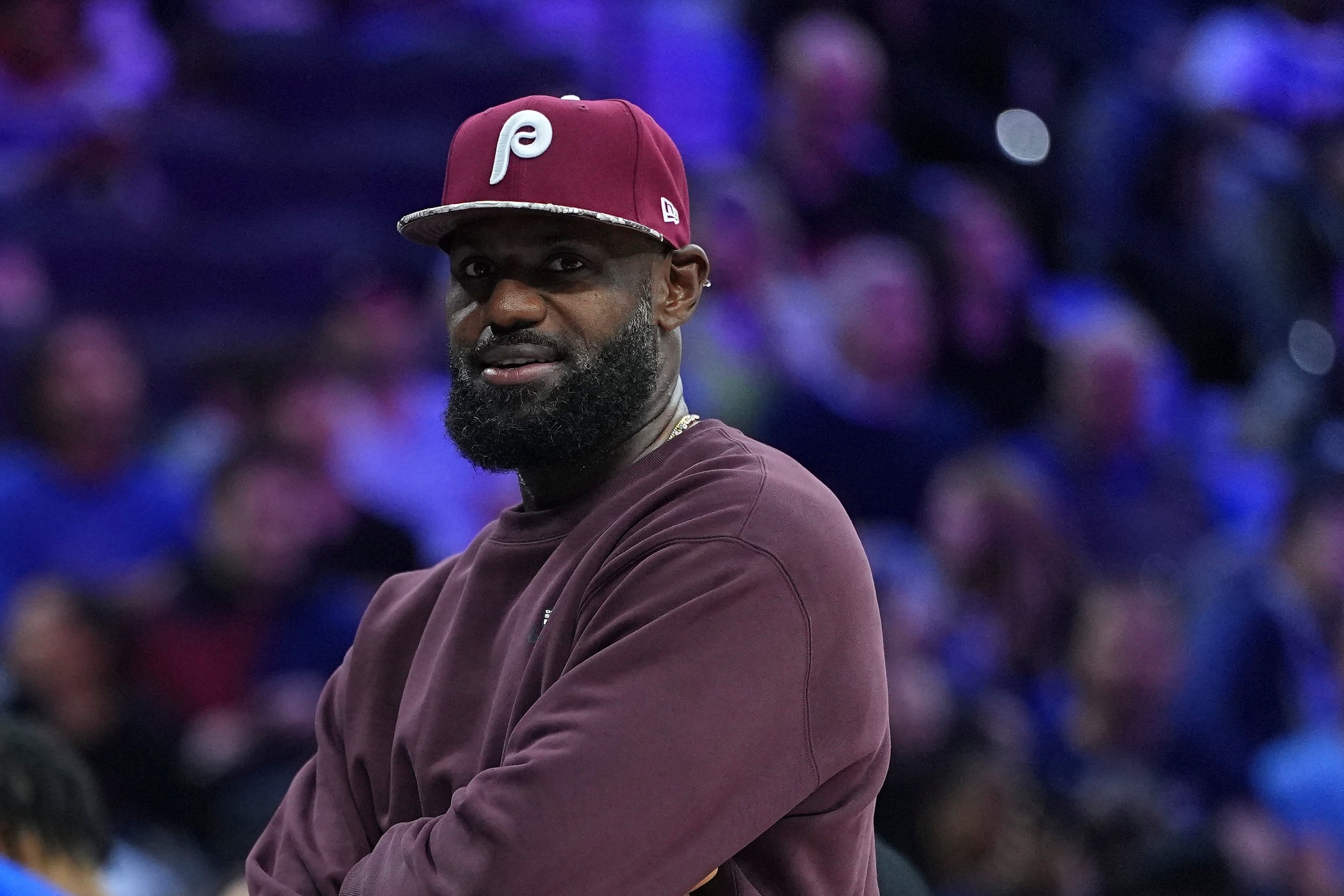


In late July, before a game against the Boston Red Sox, Bryce Harper sat slumped in a chair in the Philadelphia Phillies clubhouse, a baseball bat in hand. Philadelphia was the latest stop on Rob Manfred’s leaguewide speaking tour; ahead of a CBA negotiation that virtually everyone in baseball expects to involve a 2027 work stoppage, the MLB commissioner spent the summer visiting all 30 teams, trying to get players on board with his plans to restructure the league’s economics. When the subject of a salary cap came up late in the meeting, Harper rose from his seat. He walked closer to Manfred until their noses almost touched, and told the commissioner that if Manfred wanted to talk salary cap, he could “get the fuck out of our clubhouse.”
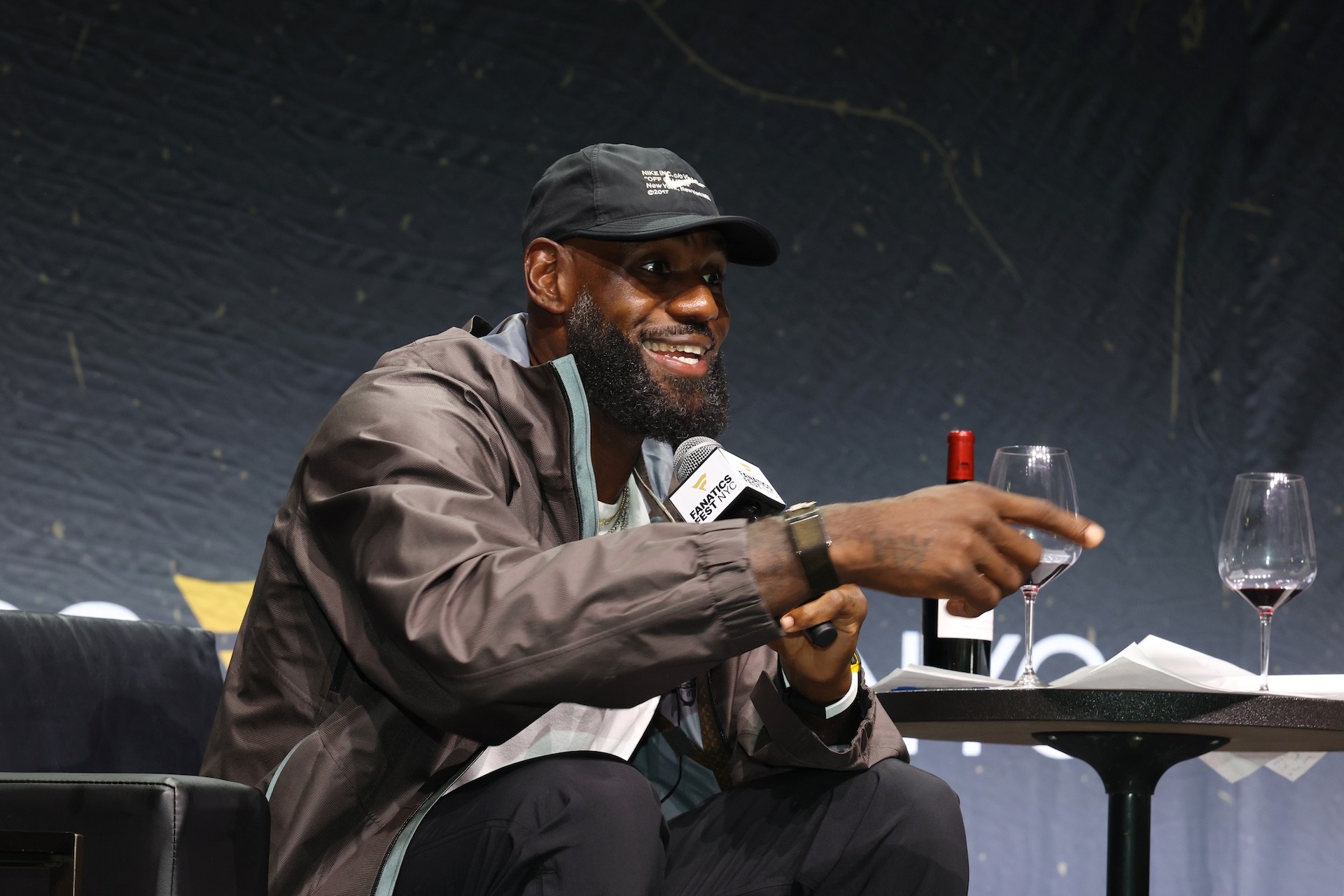
A couple months later, at the Minnesota Lynx’s end-of-season press conference, Napheesa Collier had some words for her league’s commissioner, too. The WNBA is in the thick of labor talks these days: The league and players’ union recently agreed to extend their collective bargaining negotiating period through January. Collier’s sport is undergoing its own economic transformation. Amid a women’s basketball boom, WNBA team prices have skyrocketed, and the league’s new media rights deal is valued at a figure six times the old one. Today’s labor fight pits players who feel they’ve driven this growth against the owners who feel they’re owed for years of losses. In Collier’s telling, commissioner Cathy Engelbert is a poor steward for the moment, a leader who takes the WNBA’s talent for granted. “The league believes it succeeds despite its players, not because of them,” Collier said, adding later that “the best players in the world” had “the worst leadership in the world.” The measure she took was public and not so lurid a confrontation as Harper’s—no baseball bats involved. But the basic idea was the same: to establish whose clubhouse it really is.
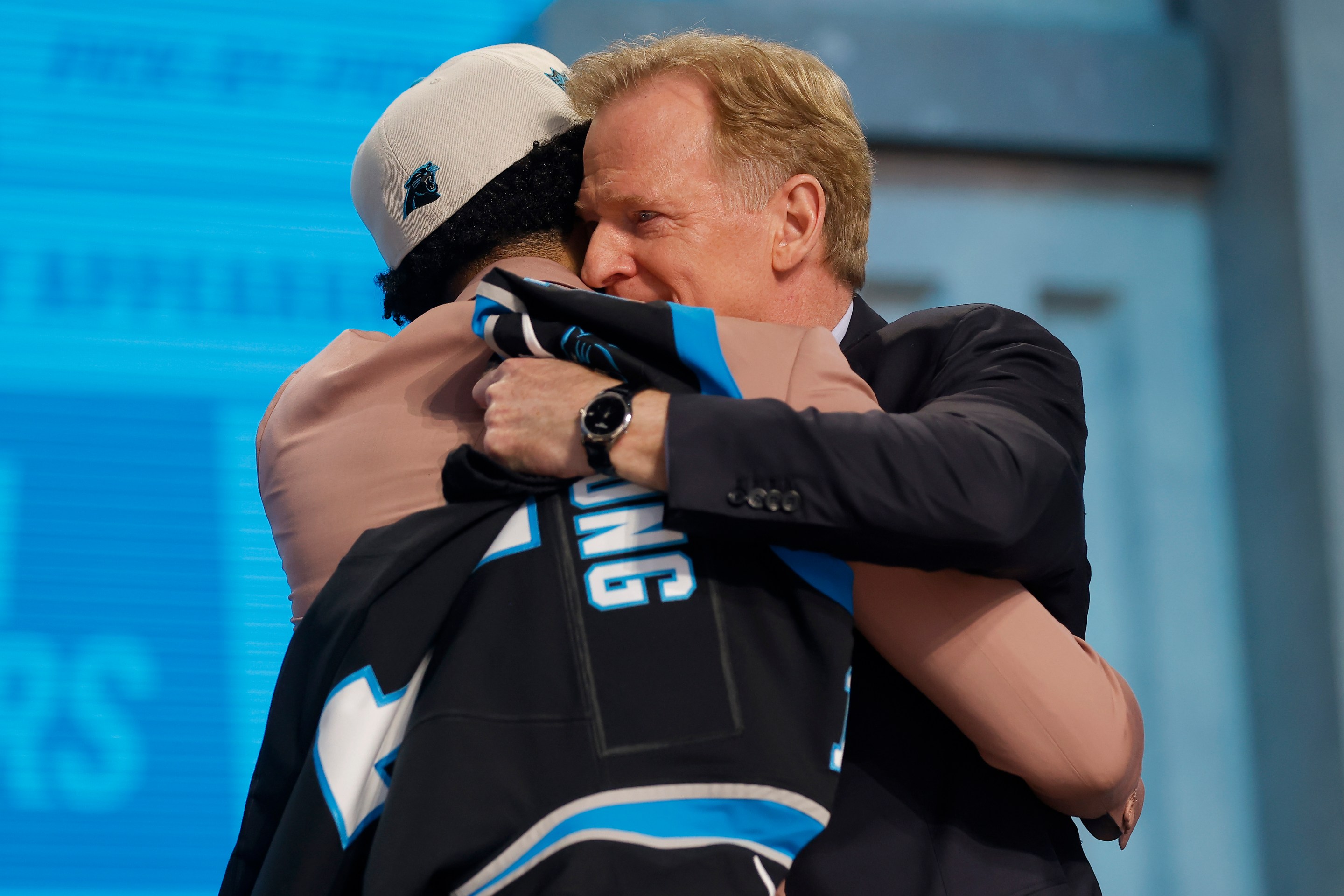
For an emblem of player-commissioner relations in the NFL today, the New York Times reporter Ken Belson writes, look to the “Roger Goodell Bro Hug.” Every spring, the newest first-round picks bound across the NFL draft stage and wrap their arms around the commissioner. Sometimes they lift him off his feet. A hug Goodell shared with Baltimore Ravens draftee Malaki Starks this past April lasted 21 seconds. Speaking to Belson, an agent laments the annual show of affection for management, though he can’t help but admire the bleak triumph it signals: “You have to give kudos to the NFL for making it that way.”
Belson’s new book, Every Day Is Sunday: How Jerry Jones, Robert Kraft, and Roger Goodell Turned the NFL into a Cultural & Economic Juggernaut, is a sobering account of how the NFL made the world this way, its way, totally in its image. Today, the football fan wakes to kickoffs in London and Berlin; she dozes off to the drawl of Cris Collinsworth, whose network pays $2 billion a year for the rights to Sunday Night Football. In 2024, NFL games accounted for 72 of the 100 highest-rated broadcasts on American TV. The year before, without the election and Olympics to account for, that number was 93.
NFL revenues have more than tripled since Belson began covering the league's inner workings in 2013. Since then, the NFL has glided through obstacles: damning concussion research, increased attention on players arrested for domestic violence, high-profile player protests, tawdry owner scandals, the rise of streaming services, and overtures from private equity. In the book’s acknowledgements, Belson recalls his Times editor’s early mandate to cover the NFL “as a really, really big business.” Off the field were the real stories. “I don’t care if you’re not at whatever folks consider to be the ‘big game’ of the week.”
The Goodell presented in Every Day Is Sunday might be flattered by that kind of attention. At a 2010 meeting, he presented owners with a then-unthinkable financial target, to grow league revenue from $8 billion to $25 billion by 2027. In doing so, Goodell set his sights far beyond the little Sports Tuesday section on B8. “Roger doesn’t view the other leagues as competition,” an NFL staffer tells Belson. “He wants to be mentioned with Disney and the Vatican, these massive institutions.” Now in his 20th season as commissioner, Goodell has won his bosses gobs of money with what Belson paints as both political savvy and quiet ambition. The $25 billion vision will indeed come to pass in a couple of years, but the prophet won’t be satisfied. When a friend emailed him the stat about 93 of 100 broadcasts, Goodell replied, “We have a couple of more spots to fill!”
There’s a story to read in the book’s negative space: If Goodell, Kraft, and Jones have built the NFL as we know it now, it’s been built almost entirely on ownership’s terms. When they are drawn at all, the lines between labor and management are quickly smudged by a slick league PR apparatus. Rarely these days are the lines drawn by the sport’s most prominent players. (Per the book’s index, Magary, Drew is mentioned once, the same number of times as Mahomes, Patrick.)
Goodell became commissioner in 2006, months after the NFL signed a CBA granting players 52 percent of league revenue after deductions. Owners quickly soured on the split. (“A mean mother,” Dallas Cowboys owner Jerry Jones called it.) In 2008, they exercised an opt-out clause to shorten the deal by a year. The 2011 lockout that followed marked the start of a prolonged—and maybe still active—period of backlash. For enduring labor’s brief edge, the billionaires were owed reparations. As then-Carolina Panthers owner Jerry Richardson put it at a 2010 owners meeting, “We’re going to stick together and take back our league.” That phrase, “our league,” confirms a suspicion voiced in the book by Jeff Saturday, a lead NFLPA player rep at the time: “I feel like at times Jerry [Richardson] felt like the owners had created this thing as opposed to the other way around.” The eventual 2011 deal reduced players' share of league revenue to 47 percent. Saturday and Kraft, owner of the New England Patriots, christened the end of the lockout with a hug.
Every Day Is Sunday brought to mind John Helyar’s 1994 classic Lords of the Realm, a dishy history of labor wins in baseball. (Come back! It’s interesting! I swear!) Helyar finds an easy hero in the union boss Marvin Miller, whose gift for “consciousness-raising” made the MLBPA the gold standard. Miller turned “compliant peons to budding rebels” with a message so simple and eternal that today a raw milk-drinking, de-blooded, re-blooded red-ass superstar slugger getting Wobbly just scans as basic gene expression. “You are the game,” Miller told the players. “Without you there is no game.” That spirit won MLB players free agency, better pensions, and the right to salary arbitration. Bit by bit, they clawed power away from “the Lords.”
To some extent, these two books tell opposite stories, but it might be truer to call them different parts of the same story. In Belson’s sequel—spoiler!—the Lords strike back. A chapter on the 2017 player protests is both instructive and nauseating as a peek into the NFL's corporate machinery. After players knelt during the national anthem in protest of police brutality, Goodell arranged a meeting between players and owners. One of the players was Anquan Boldin, whose goals here were not particularly lofty. Before the meeting, he told Goodell he wanted the owners to join the players in calling for legislative reform. “If an owner or the commissioner goes into a meeting with me, the conversation changes from a photo op to talking about true issues,” he said.
Boldin repeated this wish to owners in the meeting, a recording of which was sent to Belson:
Later in the meeting, Boldin was more direct. “It’s ‘players are being militant,’ we’re looked at as villains,” he said. “If we can have owners come and say, nationally, that no, they aren’t, they’re Americans, they care about the cities they’re in, they care about these issues, we care about these issues, we’re behind them, we’re gonna educate ourselves about these issues, and we’re gonna, we’re gonna push forward. That changes us as a nation.”
Any genuine desires Boldin and the players voiced in that meeting would re-emerge from a Park Avenue boardroom as the Inspire Change initiative. Everyone was allowed to write “End Racism” on their cleats. Tension bubbled up again the next year, when owners pushed to officially mandate standing for the anthem. But that story ends tidily, with Kraft recruiting Jay-Z to produce the Super Bowl halftime show. It ends also with an amendment to the NFL game operations manual: “All teams and league personnel on the field shall stand and show respect for the flag and anthem.” Earlier this year, the “End Racism” messaging was quietly scrapped.
Interviewed for Ben Lindbergh’s Lords of the Realm retrospective at The Ringer in 2019, Helyar noted a recent “creep toward owners” in baseball. Belson’s book warns that labor peace only means it’s time to get back on defense. That can be hard in sports, where the labor force is trained to take things one game at a time. Owners like to leverage the brevity of most athletic careers to paint the real fight as one among labor, imagined between stars and scrubs. In an Atlanta Braves investor call this past June, Manfred copped to the clubhouse tour strategy: “I usually try to avoid the high-earning guy at this point and find a younger player and say, ‘Look, if you’re one of the 10 percent, it’s a great deal. But if you’re the other 90, it ain’t so good.’” Collier, an MVP candidate who co-founded the offseason league Unrivaled, has been charged with having a conflict of interest that would make her less sensitive to (or even the beneficiary of) a WNBA lockout.
Why do Kraft, Jones, and Goodell win so much? One trait they share is a stubborn belief in their own permanence. If Jones should ever die, visitors to the Dallas Cowboys' stadium may see him live on in hologram form; AI Jerry pops up at the end of the “Owners Experience Tour.” Kraft and Jones both star in multi-part docu-hagiographies, available to stream. Even in their eighties, neither owner speaks much of succession, and friends of Goodell’s say they have never heard him mention retirement either. Every day is Sunday, and it will be forever.
Miller asked players to think on exactly these terms, to remember that their cause transcends any one life or contract. “This could be my last year in baseball, and if the strike lasts the entire season and I’ve played my last game, well, it will be painful,” Giants player rep Willie Mays tells his fellow reps in a union meeting in Lords of the Realm, during the 1972 strike. “But if we don’t hang together, everything we’ve worked for will be lost.” There’s another means of immortality, not the hologram or the docuseries, just the simple vow to keep an eye out for someone else so they can one day do the same. When he signed a record contract with the New York Yankees in 2019, ace Gerrit Cole thanked Curt Flood and Miller, labor heroes he’d first learned about from a veteran teammate in Pittsburgh. Of particular concern to Collier, she said in her press conference, were the underpaid stars coming up in the league, the ones four or five years younger. Harper has already signed the last big contract he will ever sign. We’ll all die one day, but there’s still some part to play, some piece of the fight to wage. You can hug it out, or you can pick up a bat.