

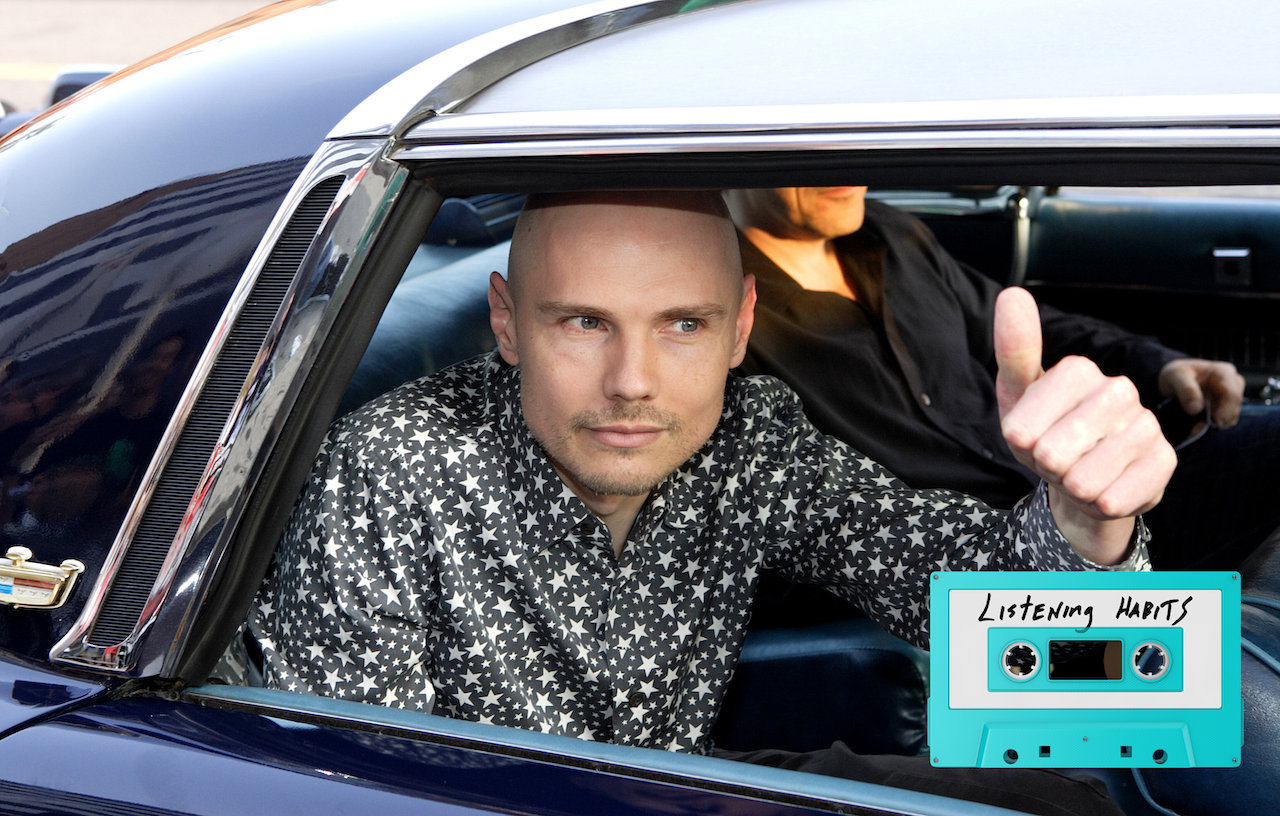
Welcome to Listening Habits, a column where I share the music I’ve been fixated on recently.
The year 1996 marked a major shift in music. An era-defining rap beef seemed to pit the entire city of Los Angeles against the entire city of New York. Rap as a whole saw its position in the industry skyrocket, as its biggest artists were becoming true pop stars, a phenomenon lead by Bad Boy Records and a certain producer who had completely overtaken rap radio. Even the genre's regional scenes, like in Atlanta and Houston, were blowing up and opening the door to even more overlooked markets to break through. Elsewhere, the boy-band movement was getting revved up in Florida. Alternative rock, which had exploded with bands like Nirvana and Alice in Chains, was running on fumes—concerns over which heaped pressure on Pavement, fresh off 1995's Wowee Zowee (still their best album, idc), whom legions of unkempt white guys hoped would become the next big thing for the MTV Generation. Rock would soon undergo its own change to close out the '90s, getting more aggro, more hyper-masculine, more hip hop; this was in part a response by the labels to the changing landscape of popular music, and also a reflection that rock's rising stars were just as influenced by Public Enemy and the Wu-Tang Clan as by Metallica and Led Zeppelin.
But if you don't find that talk about the naturally changing times and tastes convincing as an explanation for rock's fall, you can listen to Billy Corgan explain what really happened, man, on a recent episode of his podcast The Magnificent Others, where he discussed the state of rock music:
“I think, and I will say it overtly, I think that rock has been purposely dialed down in the culture. Again, this gets ‘wizard behind the curtain,’ right? Somebody’s gonna say, ‘Well, how do you know who was the wizard behind the curtain?’ All I know is I saw the gravity shift. If you were at MTV or around MTV in 1997 or 1998, suddenly they decided rock was out when rock was still very, very high up in the thing. And it was replaced by rap … Their standards and practices immediately shifted, so now that things that weren’t allowed were suddenly allowed. People were waving guns. Some people assert that the CIA was involved in all that. Again, above my pay grade, but I saw it happen. I did witness it happen.”
Beyond the both covert and overt racism here, I have to admit that I am tickled that a white man has come up with his own COINTELPRO theory, and it involves secret agents telling radio jockeys to knock it off with all those guitars. Thanks to the internet and maybe a little COVID-related brain fog, society has become way too conspiracy-pilled, constantly seeking to overstand the big picture behind the big picture. Nobody's woke, yet everyone is awake. The world is a vampire, indeed.
Corgan isn't wrong about this much: Rock music did (sort of) start to decline around 1997, after (sort of) being the popular genre for much of the decade. What happened? Was it rap's natural ascendence, which had been building since the '80s? Was it the deaths of Kurt Cobain and Layne Staley, which robbed the alt-rock scene of its two biggest stars and created a void it could never quite fill? Was it the fact that alt rock itself was a reaction to the more radio-friendly stadium rock, and that an alternative scene was never likely to maintain that level of popularity in the long run? Was it just a new generation of kids being into different music? Was it the Telecommunications Act of 1996, which undermined underground and college radio as influential cultural outposts? No. To hear Corgan tell it, it must be a conspiracy.
Now, I'm not categorically opposed to Corgan's conspiracy. Lord knows music is full of shady executives and nefarious mandates, and The Man can talk himself into doing anything in the pursuit of profits. What makes Corgan's wizard behind the curtain necessarily impossible? But even supposing there were any truth to his line of thinking, it is very interesting that Corgan singles out rap as the big villain. For one, rap—which was every bit as alternative and underground as the scene Corgan and his band, the Smashing Pumpkins, came out of—was already really popular when all of this was happening. Rap just didn't have the same priority on MTV or in mainstream music publications. For two, even in 1997 and 1998, where Corgan locates the shift, rap still wasn't the priority at MTV. The channel was instead busy pushing Britney Spears, N'Sync, the Backstreet Boys, and Christina Aguilera.
And though the moody, introspective alt rock of the Smashing Pumpkins had fallen to the wayside by the turn of the millennium, pop rock experienced an explosion during this time, with bands like Blink 182 and Third Eye Blind. Then there were the more pop-friendly, or maybe just hip-hop friendly, metal bands like Korn and Limp Bizkit. These were the things that ruled MTV's TRL era. Rap, despite being incredibly popular, didn't truly take over the network until the 2000s proper.
To be charitable to Corgan, as rap became more popular, it certainly did amass more importance and focus at the major labels, which wanted to get their hands on the new golden goose. But Corgan's emphasis on MTV feels like it has more to do with his own grievances about being left behind than anything else. Even his "proof," that rock acts today are selling out shows all over the country while new rap and pop acts struggle to fill venues, is intellectually dishonest. For one thing, he is walking about legacy rock acts, and legacy anything has an easier time selling tickets, though not always full tours. New artists of all genres are having trouble selling tickets, even artists who've scaled high atop the streaming charts. That fact does say a lot about the limits of the streaming economy, but that's not what where Corgan is going with his argument.
But that's the attraction of conspiracy: It allows us to explain our frustrations and issues in a way that replaces the irreducibly complex real world with a neat little story we can articulate, understand, and, in doing so, gain a modicum of closure over. It is true that the entire music infrastructure gradually moved away from rock music as the center, but what's also true is that a not-insignificant number of influential sources in music have tried hard to reverse this. It feels like every decade some new, hip rock band is pedestaled too soon in some misguided attempt to make it 1991 again. This is currently taking place with Geese, a band I really like but nevertheless seems to have more people crowning them than actually listening to them.
There's an attitude toward rap right now from a specific segment of the conspiracy-pilled internet that continues to treat the genre as the source of society's ills. That all this "black babble" about ghetto life and violence and crime has directly influenced the direction of American culture. In this framing, rock music is held up as a potential antidote. But that's just more RETVRN fantasy-making, the poison of nostalgia mining in the hopes of reliving some imagined version of a better past. Rap, even at its most stale and redundant (at least on a mainstream level), is still highly popular and influential. And the genre as a whole is still minting inventive new ideas and stars.
But I get it. Rock music is great. There's a charm to live instrumentation that makes music a lot of fun. Nobody knows this more than black people. In "Ripping Off Black Music," by Margo Jefferson, she shares her own conspiracy theory of sorts:
The night Jimi died I dreamed this was the latest step in a plot being designed to eliminate blacks from rock music so that it may be recorded in history as a creation of whites. Future generations, my dream ran, will be taught that while rock may have had its beginnings among blacks, it had its true flowering among whites. The best black artists will thus be studied as remarkable primitives who unconsciously foreshadowed future developments.
— Margo Jefferson, "Ripping Off Black Music"
The difference here is that Jefferson turned out mostly right. Most of rock music's legacy as a black genre has been erased to the point where someone like Corgan can go and spout theories about being replaced by a lesser black music, dog-whistling to redpilled white bros online who cannot imagine why the shit they like isn't more popular with everyone. It's a beautiful irony, but again I can't be totally mad at Corgan. His conspiracy theories don't sound too dissimilar from the conspiracy theories that have long propagated inside the black community itself, giving clandestine explanations for the rise of gangster rap and Southern rap and trap music. It seems nobody can believe that black people from the streets and gang territory can be successful on their own merits. It's always fun to find out we are more alike than different after all.
The Rap Song Of The Moment
If you would like to contribute something or ask a question for future installments, email me at israel@defector.com.