
One Defector intern explains baseball to another.
Sohini: When I used to call it boring, my dad used to tell me that baseball is a game of immense strategy. I didn’t doubt him, exactly, but it did carry the vibe of “Dad saying stuff to fit in with other dads.” I never took the time to familiarize myself with that strategy, and have instead treated the handful of baseball games I’ve been to as loud, fun, kitschy bars. So when it came time to fact-check a baseball blog in the process of obtaining this internship, I had to first familiarize myself with obscure concepts like “dingers,” “extra-base hits,” and “Mookie Betts.”
Sarah, this is My Fair Slugger. I am Eliza Doolittle, and you are Henry Higgins. By the end of this blog, I hope you will transform me from someone who doesn’t know the top of a bat from its bottom into a tobacco-chewing baseball savant.
Sarah: OK, first things first: The most important thing you need to know about baseball is that it is incredibly stupid. Second things second: I personally think the term dinger is stupid and fratty and I refuse to use it.
Sohini: Say more? I love that lesson one is “Intro to Baseball Gender Studies.” I’m ready.
Sarah: I don’t have any reason, except the fact that I associate it with the guys on my high school’s baseball team who were very bro-y and also were the only other people I knew my age who didn’t find baseball boring. Believe it or not, I did not talk to these men.
I grew up watching baseball and playing catch with my dad and brother. It’s a sport with lore that has been built almost entirely around fathers and sons playing catch in the yard in order to bond (despite their complex relationships with each other and their masculinity). But what got me into baseball in the first place was A League of Their Own, and the scene of Madonna dancing in the dance hall. All that to say, gender studies is central to how I watch the game.
Sohini: Do you remember your earliest lessons in baseball? Where did your dad direct your attention?
Sarah: When my family and neighbors would play our own version of baseball in the yard, it always devolved into a game of tag, so that’s how I grew up thinking about baserunning. These are men in their 20s and 30s, and they are playing tag. Or, they are hitting a ball really far and essentially saying “Yippee! I hit that ball really far, let me do a lap about it!” And there is so much strategy and technique that goes into it. It’s beautiful, really. I remember my dad telling me to look at the fielders to know if a ball was going to be a base hit, a home run, a foul, or an out. He also taught me how to tell where a pitch was going by watching where the catcher’s glove was. But that stuff’s not as fun as tag.
Sohini: Something that I do appreciate about baseball and its cousins are all the versions of backyard stick ball that people play as kids, literally everywhere. People love to wax poetic about all the lessons they learned from playing organized sports—teamwork, dedication, a no-quit attitude. It always sounds like the stuff you should say in a college admissions essay and then maybe never again, but I love people’s backyard stick ball stories.
Sarah: Unfortunately, the only lessons I learned from playing organized sports was that I actually really enjoy quitting things, and that teenage girls can be really mean.
Sohini: In soccer, there’s that quote that’s like, “If you watch the game, you don’t see Busquets. But if you watch Busquets, you’ll see the whole game.” What’s the baseball version of that?
Sarah: Watching the players instead of the ball is honestly pretty good advice for most sports. The difference for baseball is that no one player really affects the game in the same way. So I like to think of it in different parts. The central drama is between the batter and the pitcher (and the catcher is like the pitcher’s sidekick, saying “Get him buddy!”). If you focus on the ball’s movement out of the pitcher’s hand and the batter’s swing, you can tell a good deal about how the at-bat is going. Is the batter chasing, or waiting for a specific pitch? Is he swinging hard and whiffing, or just looking to make contact? Is he crowding the plate, or does he seem relaxed? The pitcher is looking to throw something just good enough that the batter likes its look, but also bad enough that he won’t be able to hit it square.
Sohini: OK, wait wait wait. Chasing? Whiffing? Crowding the plate?
Sarah: Sorry, sorry. Baseball is a sport with endless lingo (hence the term “inside baseball,” I presume). Chasing the ball is when a batter swings at pitches that are outside the strike zone. Whiffing is when a batter swings and misses on a pitch. Sometimes batters whiff so badly that they fall to their knees and it’s really embarrassing. Crowding the plate is when a batter is right at the edge of the batter's box and leaning into the strike zone, which gives the pitcher less space to throw the ball to and makes it more likely that they’ll hit the batter. Pitchers, understandably, get pissed off by this.
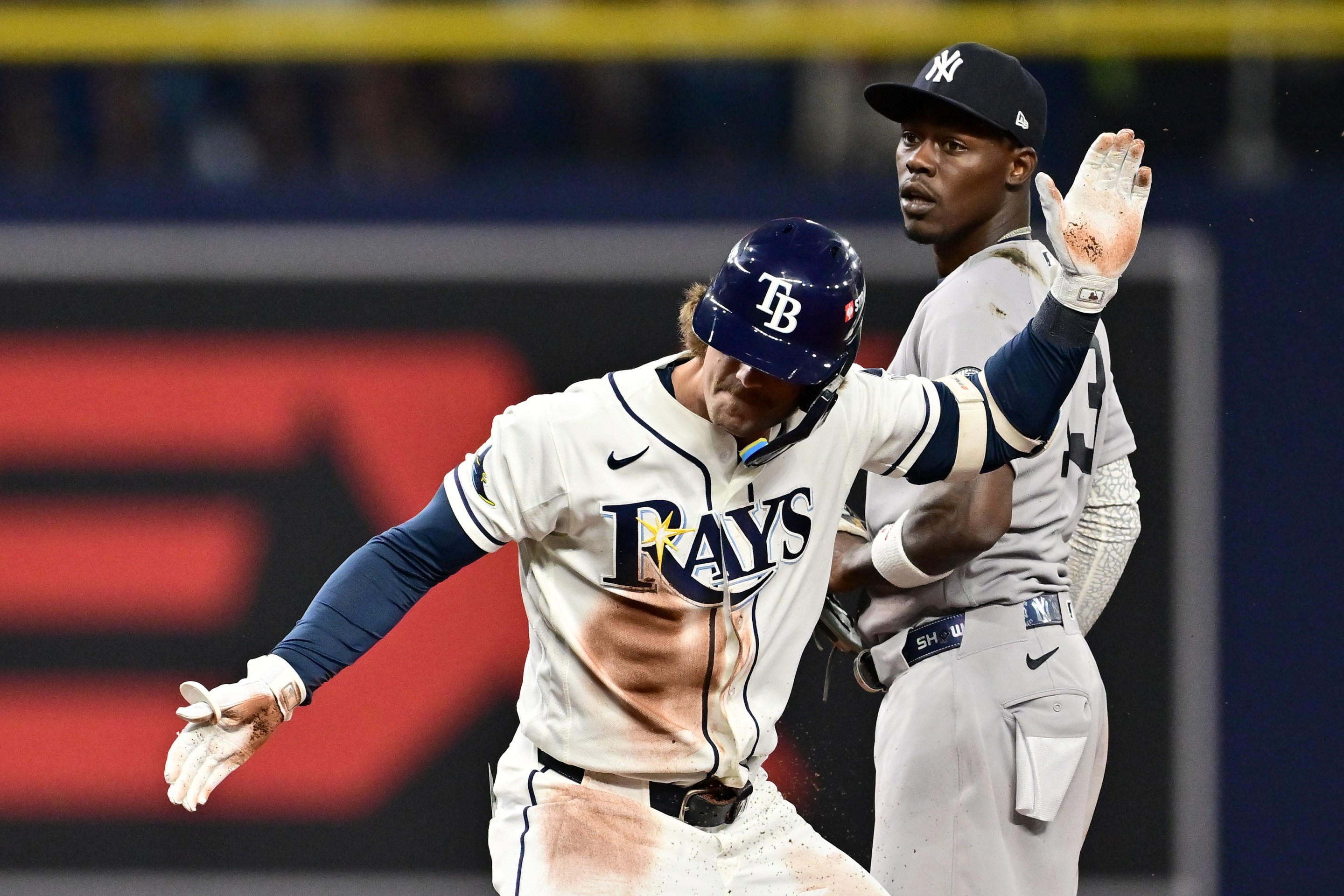
Then there’s the infield, which is my favorite part to pay attention to because I like good baserunning and infield plays. There’s something about a double play that really gets me to my feet, so I like to watch how the infield sets up for each hit and how they move once the ball is in play. Unfortunately, as a Mets fan, this rarely goes well for me.
In the outfield, most of the time it’s just a lot of standing around, but once the ball is in the air, you can tell where it’s going to land by watching the outfielders. You don’t see the whole game by watching the outfield, but sometimes you get moments like The Catch or Endy Chavez robbing a home run in the 2006 NLCS.
Sohini: And then what makes for a good outfielder? Shouldn’t all of them be able to catch a ball that’s hit really high in the air?
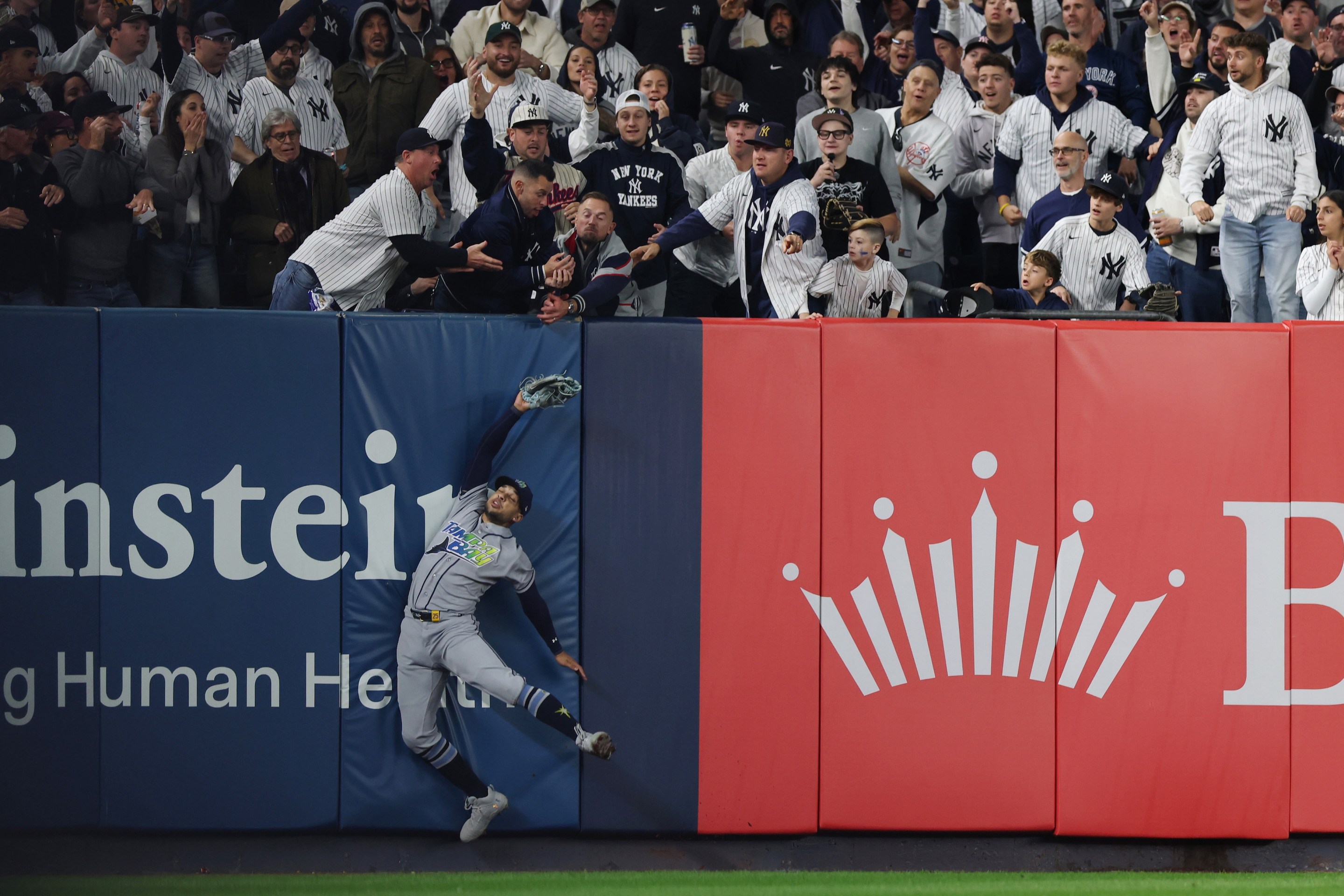
Sarah: Most of the time, yes. But the outfield is also pretty huge, and there are only three guys covering the vast majority of it, so you have to be able to run and get yourself in position to catch the ball. Many of the catches they have to make are relatively easy, where they just stand beneath the arc of a ball they know is going to them, but then there are catches they really have to work for. Sometimes it’s running and diving, or jumping up onto the wall to rob a home run.
Sohini: What are the most important stats to pay attention to?
Sarah: There are about a billion stats. Math nerds really latched onto baseball, and nowadays there are all of these stats that sound like your homophobic uncle making fun of the LGBT acronym. I personally love baseball stats—that is the only time you will ever hear me say that I like numbers—but I think it’s a bit much to get into stuff like xwOBAcon.
I once partied hard with the band Yo La Tengo, as in I happened to be sitting next to them in the 400s section at a Mets game, and we had a brief discussion about a hyperspecific stat displayed on the board. I don’t remember what it was, but our consensus was no common fan knew what it was. The point being, stats paint a picture of the game, and they are fascinating to parse through, but there are only a few you really need to have a basic understanding. For pitchers, there’s ERA, which is the average number of earned runs (runs scored on fielding errors don’t count) that a pitcher allows per nine innings. Typically, anything below 3.00 is considered pretty exceptional.
For hitters, batting average tracks a player's hits divided by their at-bats. The average is typically around .250, and anything above .275 is considered very good. And a stat for both pitchers and hitters that can be helpful is Wins Above Replacement (WAR). It’s an advanced stat, so I won’t get into all of the calculations, but basically it’s a catch-all number that measures a player’s total value to his team.
Sohini: OK, let’s break down a play that isn’t just someone hitting a home run, and you can explain to me what’s genius about it.
Sarah: Take a look at this Endy Chavez catch.
Part of the reason this is such an amazing play is the context. It was Game 7 of the NLCS, with the winner going to the World Series. Had Endy Chavez missed the catch, the ball would have been a home run, and the Mets would be trailing by two runs with three innings left. But he exhibits this amazing feat of athleticism, jumping up at the wall without even using it to push himself higher. He just sees where the ball is going, jumps up, and grabs it to get the batter (Scott Rolen) out. Then upon landing, without any sort of hesitation or recovery, he throws the ball all the way to the infield (which at a minimum is 225 feet away). This traps the runner, who thought he was going to be able to run all the way home. The runner is out, and all of a sudden Endy Chavez has turned what could have been a breakthrough inning for the Cardinals into a double play that ends the inning. The Mets still lost the game, but that catch was cool as hell.
Sohini: “The Mets still lost”—that’s something I don’t need explained to me. What still surprises you about the game of baseball?
Sarah: For a sport so focused on stats and analysis, there is also so much uncertainty to it. With 162 games in a season, anything can happen, and everything probably will happen at least once. The length of the season and of the games can make the sport seem boring, but even as someone who loves baseball, I’m constantly surprised by how fun it can be when you just let it be fun. There's very much an old-white-man culture to it, with people who get angry when a player flips his bat after a home run or celebrates “too much” when he strikes someone out. Sometimes I get used to this tradition, but then I watch highlights from a Dominican Winter League game, and I learn once again that this sport fucking rocks.
Sohini: Thank you, maestro. Next time you’re in New York: Coney Island, Cyclones game. This class is going on a little minor league field trip.
Sarah: I have never been more excited about anything in my life. Just wait until you see the hot dog race.