

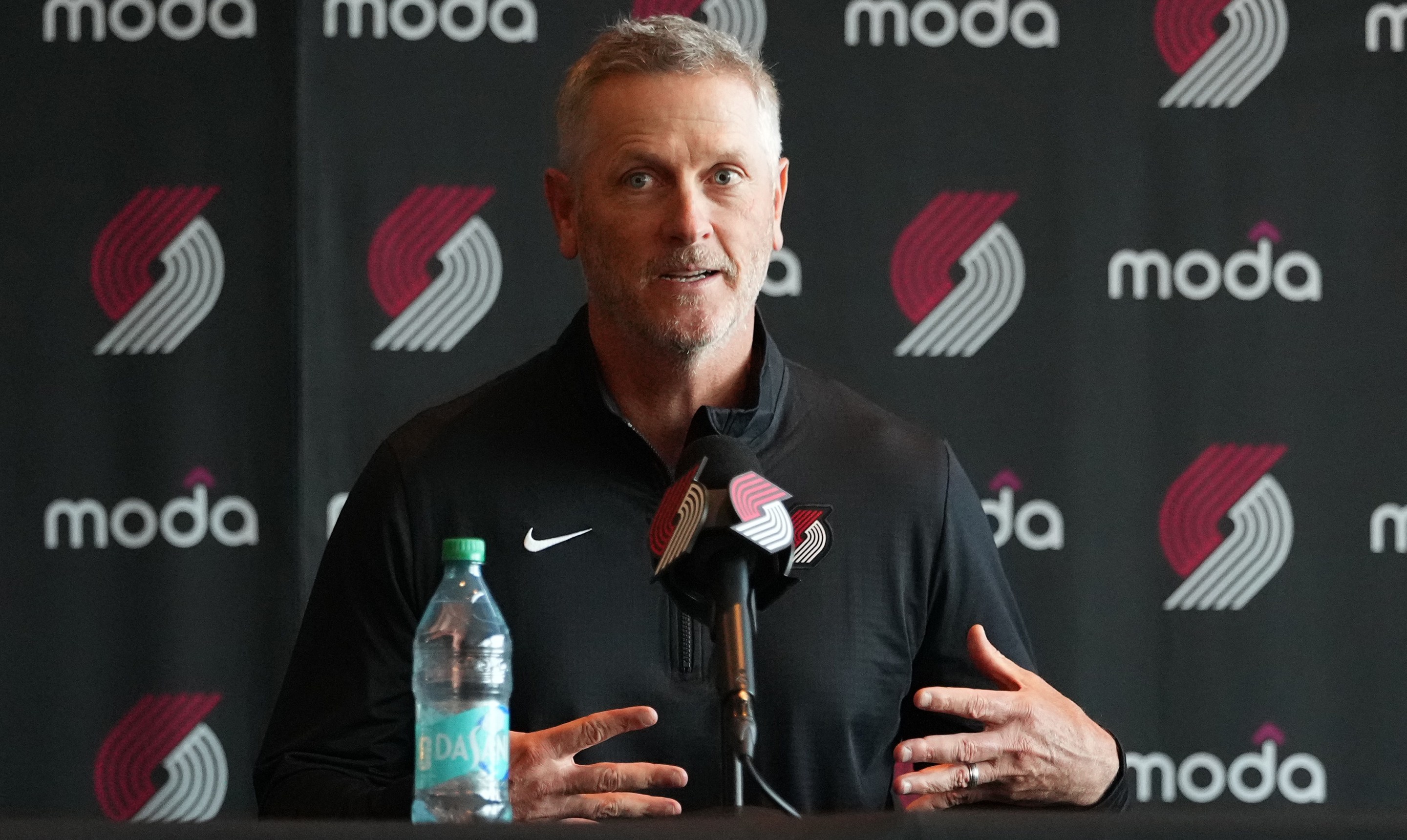
At the end of March, the NBA approved the sale of the Portland Trail Blazers to a group of investors led by Dallas billionaire Tom Dundon, at a valuation of about $4.25 billion. On paper, Dundon, who already owns the NHL's Carolina Hurricanes, certainly looks the part of an NBA owner. He built his career on subprime lending, led businesses that were recently investigated by the state of Oregon for predatory lending practices, and invests enthusiastically in professional pickleball. However, barely one month into officially owning the Blazers, Dundon has already developed a reputation for industry-leading stinginess.
When Blazers coach Chauncey Billups was arrested in October as part of a federal gambling investigation, that vacated the seat for interim coach Tiago Splitter. Though Dundon was hoping to hire for the role, he doesn't intend to spend more than $1.5 million annually on the head coach's annual salary, according to Jake Fischer, writing last week for the Stein Line. That would be well below market rate, even for Splitter, so good luck with that.
NBA head coach salary is at least a seven-figure annual expenditure, but Dundon has also looked to scrimp and save on much humbler line items. Blazers staffers were recently seen gathered in a hotel lobby because they'd been asked to check out to avoid late checkout fees, as Chris Mannix reported last week at Sports Illustrated. And while it is customary practice for fans at playoff games to get free T-shirts, the Blazers won't be doing that for this series, according to team president Dewayne Hankins. Another investor in the Blazers ownership group, Sheel Tyle, tweeted that the team will be doing "something else" instead. Sounds promising.
Another standard practice in the NBA is to let players on two-way contracts travel with the team during the playoffs, even though they're barred from actually playing in the games. But as Sean Highkin reported at the Rose Garden Report, the Blazers left their two-way guys in Portland. That includes guard Caleb Love, who played in 49 games—10th-most on the roster—and had several big scoring nights to power them through injury-riddled portions of the season. According to Highkin, all of the other road teams traveled with their two-way players on opening weekend of the playoffs.
When Dundon purchased the Hurricanes, he immediately made similar cost-cutting moves: laying off a radio broadcaster who had been with the team for 39 years; simulcasting the TV broadcast instead; lowballing prospective front-office hires on salary. But it would be difficult to argue with the results on the ice. After missing the playoffs for nine straight years, the Hurricanes have qualified every season after Dundon's purchase in 2018, with three appearances in the conference finals, and are among the most consistently high-performing teams in the NHL. Perhaps he feels emboldened by this track record.
And who am I to doubt the man who "took [the subprime auto lending] industry to a new level," according to a finance professor cited in a deep dive on Dundon's unsavory business history, by ProPublica and Oregon Public Broadcasting? Surely all these pinched pennies will be spent to improve the team in some other yet-to-be-discovered way that doesn't involve its coaches, staffers, fans, or players. Who will be laughing then?