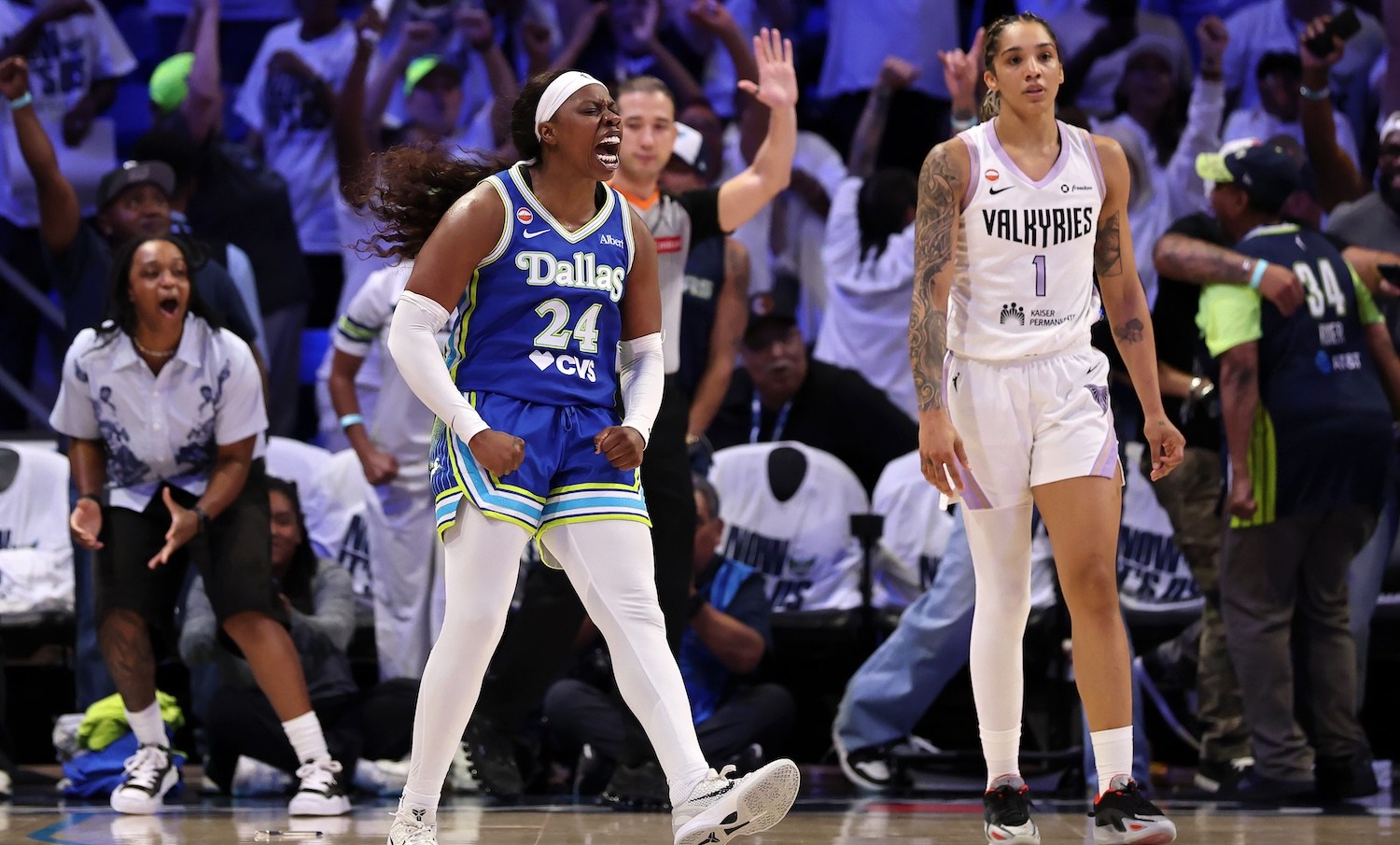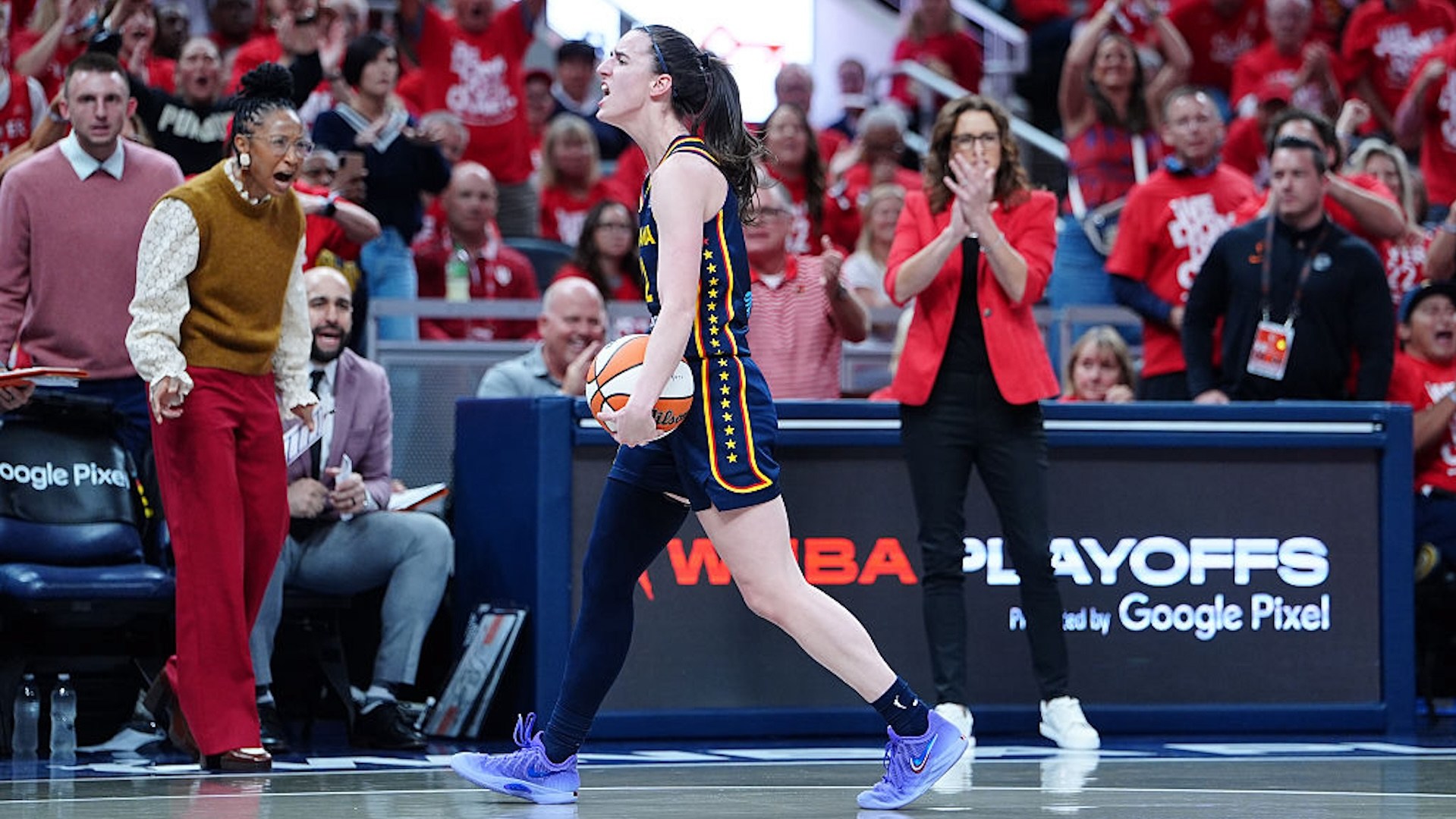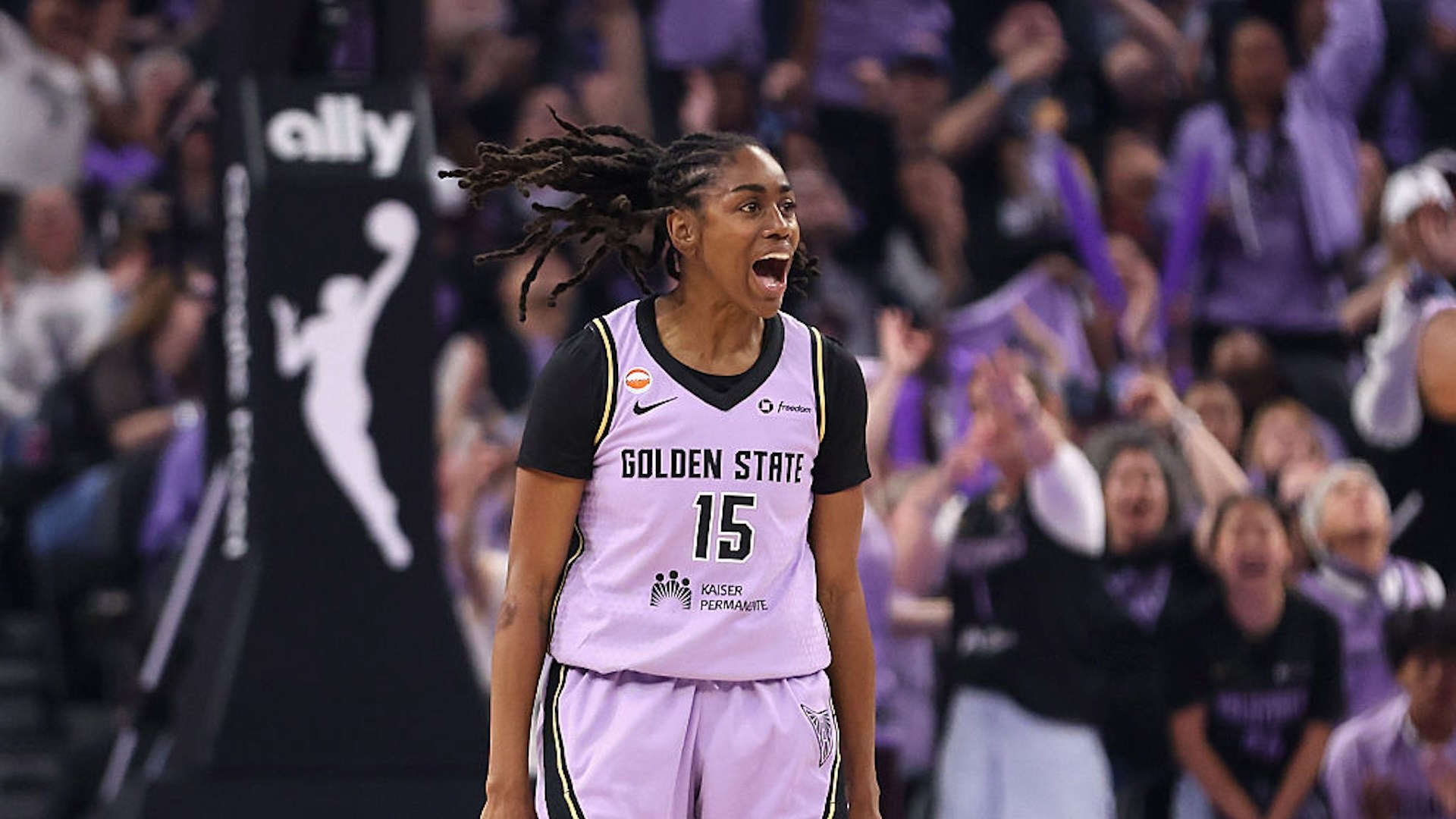
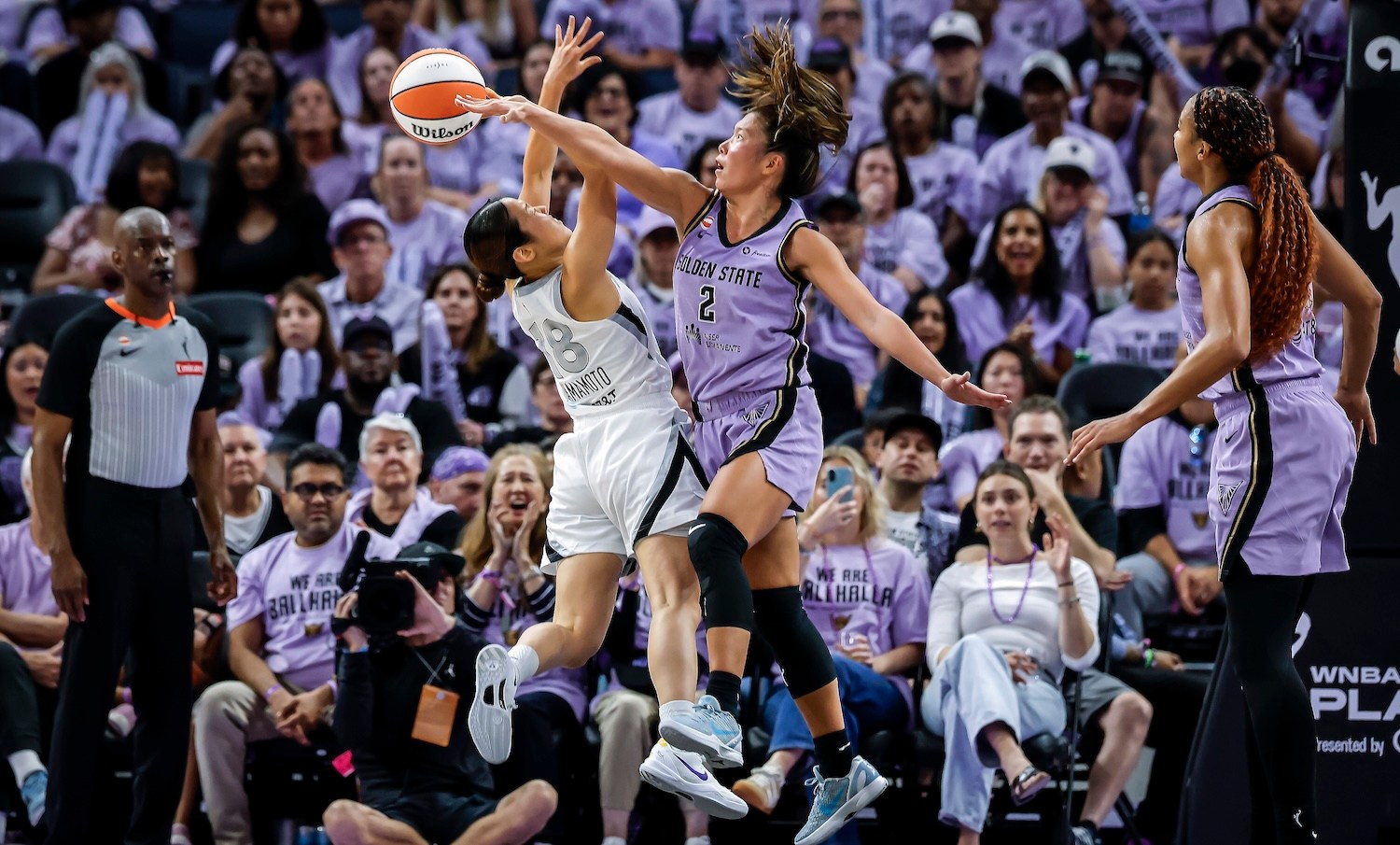
Before Sunday's semifinal Game 1 in Ballhalla, the Valkyries threw a little ceremony to honor Janelle Salaün for winning Sixth Player of the Year. Salaün's unanimous approval by voters is one indication of her team's tremendous depth; another, stronger one is that the Valkyries overwhelmed the Aces, 71-60, thanks primarily to their bench and even as Salaün missed both of her shots, scored two points, and played six anonymous minutes.
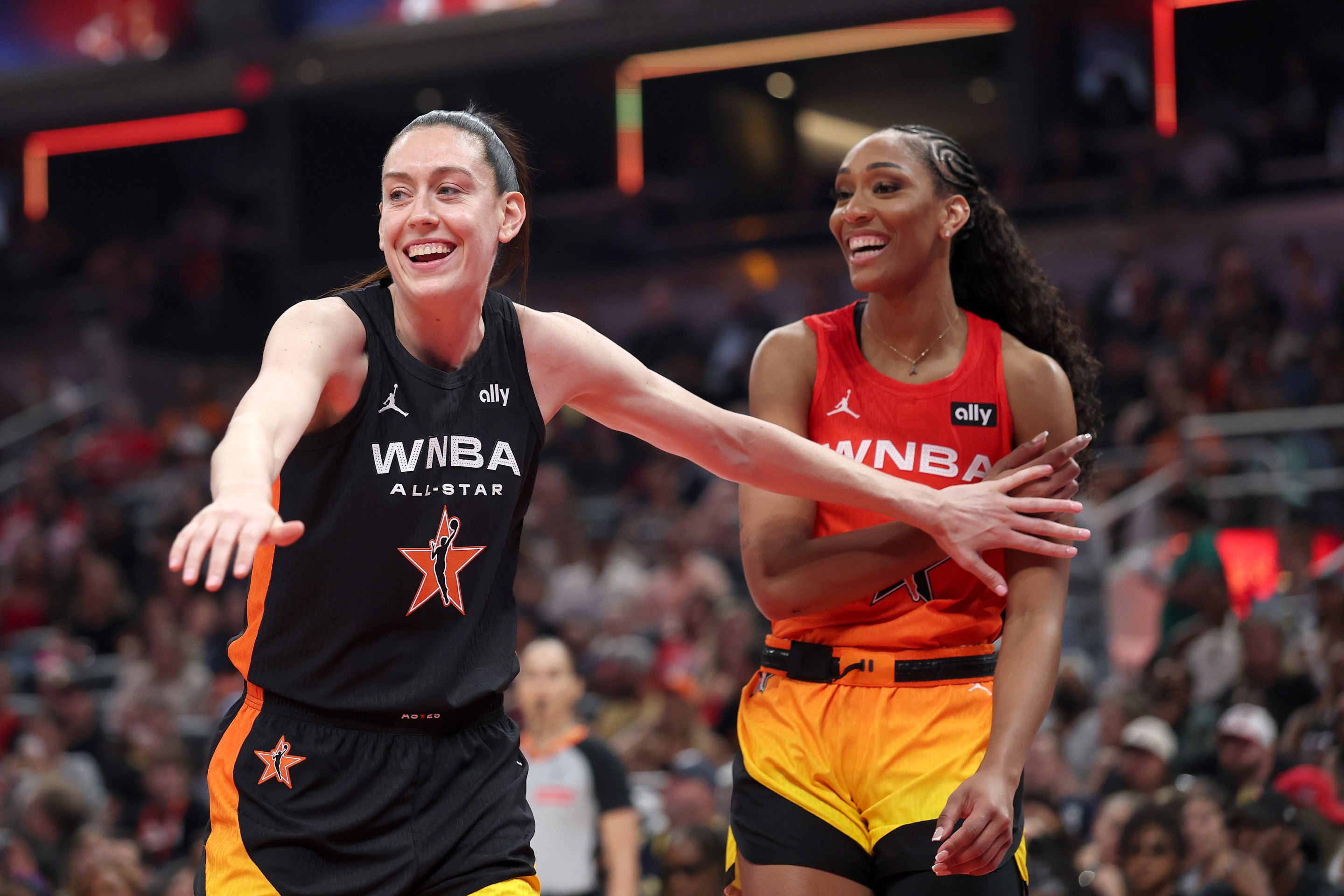
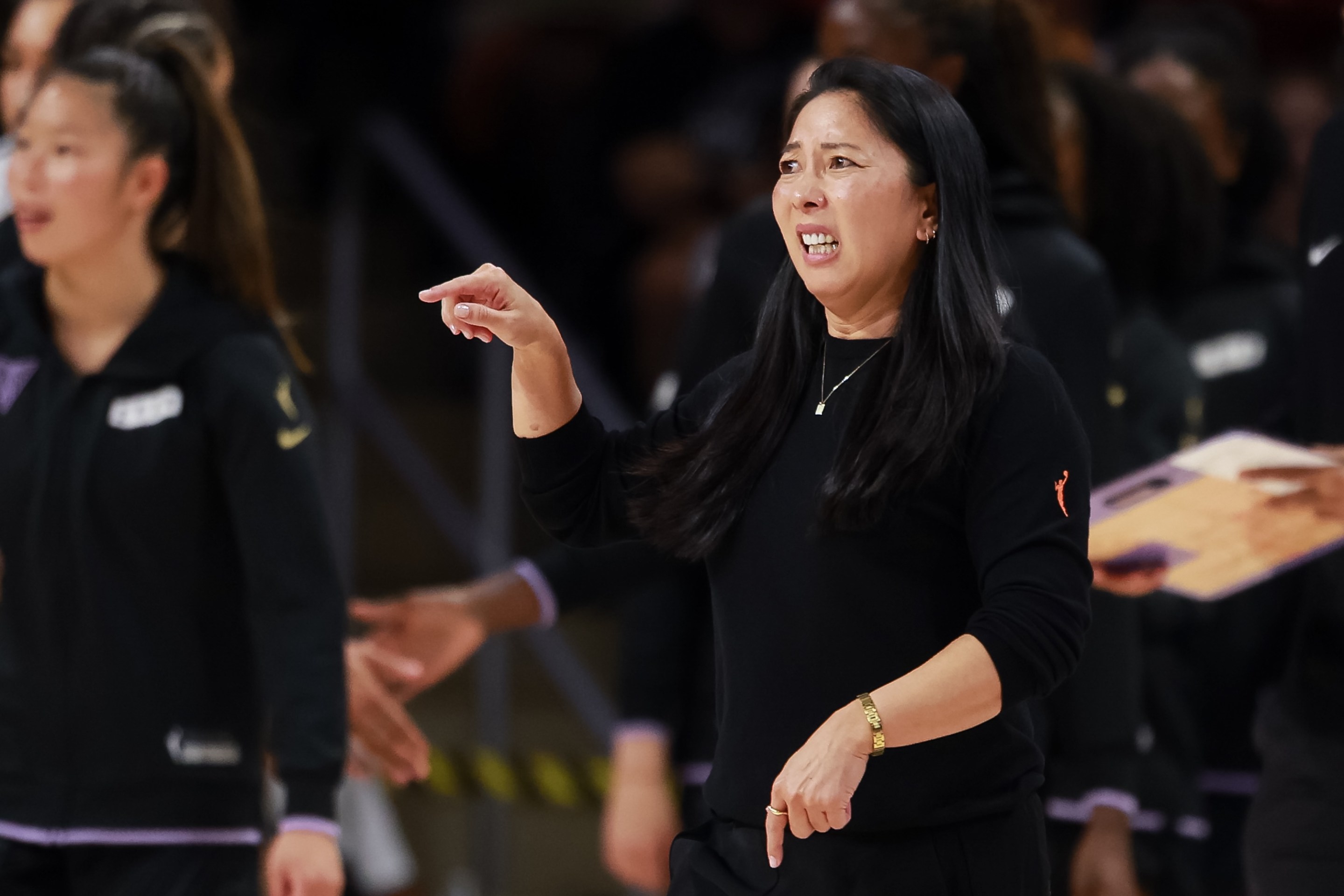
What makes the Valkyries special? Simply: there are so many of them. Sure, fine, also the defense, though the Valks' defense is in large part a function of their depth. Their bench scores more than anyone else's, and no other playoff team's starters get anywhere near as much rest as Golden State's. Not having to manage around the limits of, say, Breanna Stewart playing 33 minutes per game allows Natalie Nakase's team to operate at a higher intensity for a longer amount of time and mix up the looks they give opponents. However, the unfortunate predicament facing any team structured to play this way is that the playoffs are all about playing Breanna Stewart as much as possible, not having a bunch of overtalented eighth players buzzing around off the bench.
At least in theory. Game 1 showed how devastating Golden State's depth can be. You could see it in the way the Valkyries closed, with Kaitlyn Chen not only stepping in for Veronica Burton but running a form of crunch time offense built around her repeatedly cooking Mai Yamamoto. You could see it in Chelsea Gray and Jackie Young's combined 9-for-29 night, the product of being hounded for every inch of court by a rotating cast of good athletes. You could see it personified in Aminata Gueye, a backup center the team signed two weeks ago and trusted to play her first non-garbage time minutes in a crucial playoff game against the best player in the league. You could definitely see it in the gaudiest stat of the night: the Valkyries' 17 offensive boards and plus-27 rebounding margin. That was the subject of the first question Nakase fielded in her postgame presser, and she credited the rebounding masterclass to the team's depth.
Here we see the cruel tenets of Nakaseball applied to their extremes, and at the biggest moment of the Valkyries season. Dribbling is prohibited. The offensive glass is a hunting ground. Every Valkyrie is connected to each other, playing with a collective hyperactivity. The Aces, who were 3-0 against the Valkyries this season, looked cumbersome and creatively overmatched. NBA fans might see something faintly Thunder-like going on here in their application of pressure, especially on the defensive side of the ball, which is really only possible if everyone is connected.
The issue all season has been the team's halfcourt offense. If Salaün and Cecilia Zandalasini make their threes, Golden State is typically unbeatable, though when those shots aren't falling, good defenses can make life quite difficult for them. One might think Golden State's depth presents few great solutions to this issue. Attacking the basket harder, with more players, doesn't affect the game in the same way as, say, swarming A'ja Wilson with help all night does.
This is where the Thunder comp clarifies things yet again. OKC is all about driving at the hoop, and the Valks bench is built around that same idea. Nakase leverages Tip Hayes's slipperiness and Chen's athleticism for advantage creation off the bench, ideally made easier by motion and quick decision making. In an agonizing closeout win in Game 3 against Dallas, it was Hayes coming up with 18 huge points and closing the game, and in Game 1 it was Chen. Around those two, Nakase has Kaila Charles running around doing stuff, Salaün bombing away, and whichever backup big the situation calls for, either Gueye for more traditional size or Laeticia Amihere for more offensive punch. It doesn't really matter if Kayla Thornton is displaying concerning signs of washedness, or if Zandalasini doesn't have it going, there are always more people to throw at a given situation.
It's about more than depth, of course, as Gabby Williams has been at worst the third-best player of the playoffs and Kiah Stokes is producing some downright non-Euclidean (four blocks, seven of each kind of rebound, zero points) box scores holding down the paint. Perhaps the magic will run out at some point and either Becky Hammon or whoever makes it out of the other semifinal will scheme the Valks' strength in numbers out of existence. But I think Game 1 showed that's not really possible. Everyone is only going to get more exhausted as the playoffs go on, and there the Valkyries will be, with three demons at the scorer's table, ready to check in and cause pain.