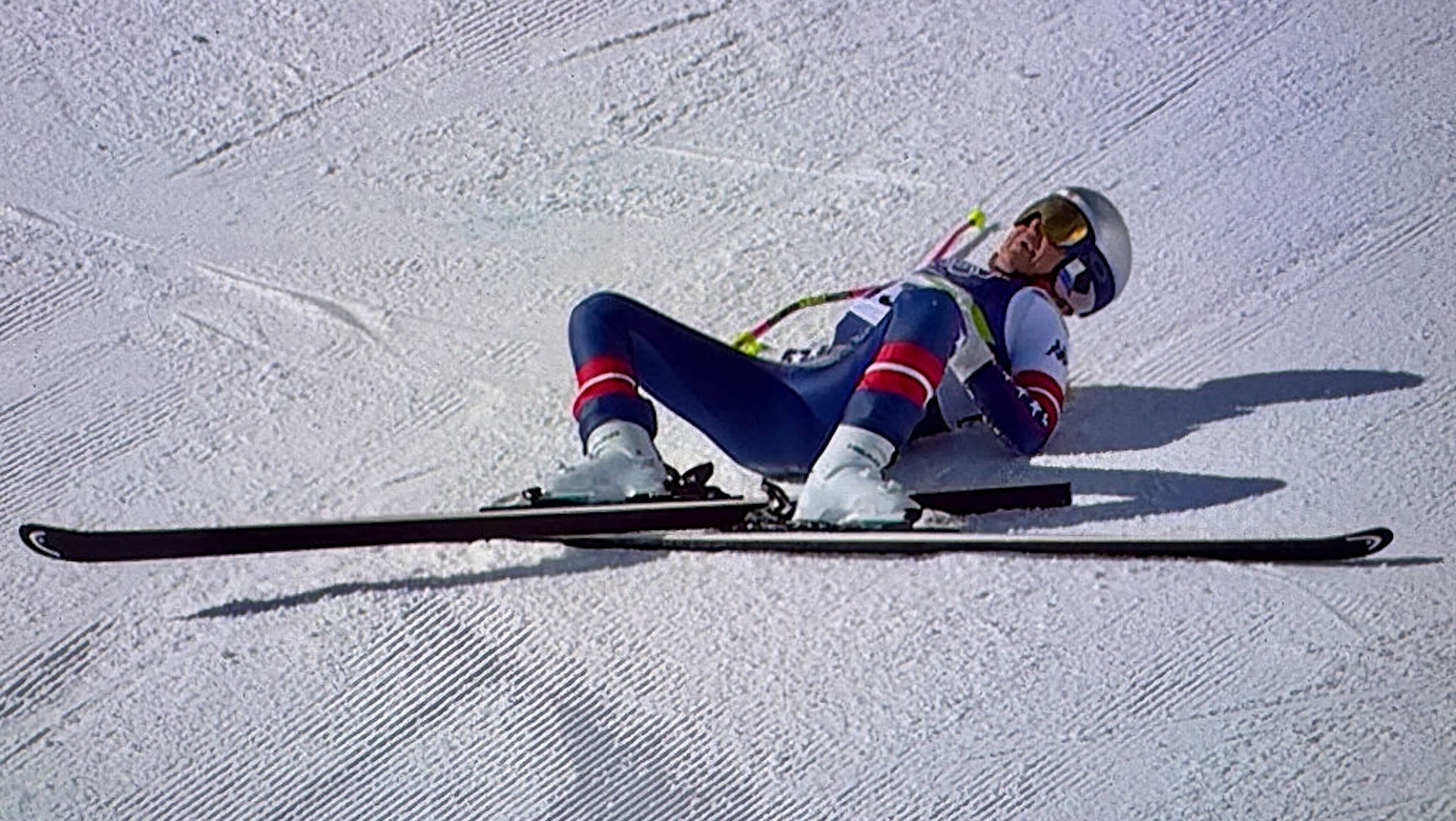
I woke to a flurry of notifications on my phone. Overnight in Cortino, Lindsey Vonn violently crashed in her Olympic downhill race and was airlifted from the mountain. My group chat, made up of college friends from a variety of athletic backgrounds, was filled with screenshots of heroic EMTs, unnaturally bent legs, a single arm hooked fatefully through a plastic gate. Nine days previous, she had torn her ACL during a race in Switzerland. In the time between these two crashes, her decision to continue competing in the Olympics, to ski down a hill at 80 miles per hour, as a 41-year-old without a major ligament in her knee, was the subject of intense scrutiny. My friends, like much of the world, had thoughts and feelings.
The question at the heart of their debate: Might it be more impressive, important, and sustainable to celebrate when an athlete listens to the requests of their body? When they respect its limits? When they choose to preserve and love it? The reasonable and resounding opinion: Yes.
The list of major injuries Vonn has suffered at the hands of her sport is long. Broken knee, broken ankle, broken leg, broken arm. Two torn ACLs, a torn LCL. She has fame, she’s had glory, she must have money. All of which cannot be said for plenty of athletes who have suffered even more. So, watching now, it is hard not to ask: Why?
As I read through the texts, I was supine on a heating pad. My pregnancy had aggravated a back injury that I sustained during my professional soccer career. Disc, spine, cartilage, compression. The pain, which recalls itself to me regularly, is one remnant of decisions I made many years ago when nothing mattered more to me than playing. I can recall the blur of medical professionals who tended to my knees, my feet, my spine. At a hospital in Seattle, a clinic in Melbourne, a doctor’s office in Seoul, they all asked me a version of the same question: Do you want to be able to pick up your grandchildren someday? I answered easily each time, not caring to consider these nonexistent progenies: No.
Still in bed, I pulled up the video of Vonn’s race while telling myself that I couldn’t watch. A muscle relaxant dissolved on my tongue. What was I looking for, exactly?
I have always sensed that there is something religious about sports. Was it the church-like devotion of the fans on Sunday in the football stadium? Was it the transcendent abilities of the individuals on the tennis court? I turned the volume up. My phone played the painful crash on repeat. In the background against the hush of the crowd, you can hear her screaming: “Oh my God.”
To mortify the flesh, in religious contexts, is to deprive the body of its pleasures. At its most extreme, practitioners are known for torturing themselves with starvation, lack of sleep, self-flagellation, abrasive headwear or clothing. For long stretches, St. Rose of Lima permitted herself only 2-3 hours of sleep. She wore metal barbs around her head, which were hidden beneath a crown of roses. She is reported to have spent her nights on a bed of glass and thorns.
This kind of castigation is considered a form of penance, a self-punishment for the original sin of man. But the saints who mortified in extremis also believed that living in imitation of Jesus Christ (sharing in his suffering and pain) would bring them closer to the ultimate gift—the ascent of their soul to God, the experience of mystical ecstasy.
St. Teresa of Avila, born in 1515, is most famous for a vision she had, which is immortalized in a sculpture by Bernini, The Ecstasy of Saint Teresa. In the vision, as in the sculpture, Teresa is stabbed by a golden, flaming spear which enters her abdomen and is drawn out, causing horrendous suffering. “The pain was so great,” she wrote of the mystical experience in her autobiography, “that it made me moan; and yet so surpassing was the sweetness of this excessive pain, that I could not wish to be rid of it.”
In the days following her crash, the highly scrutinized Vonn provided an update on her Instagram account. “While yesterday did not end the way I had hoped,” Vonn wrote in her first public statement, “and despite the intense physical pain it caused, I have no regrets.”
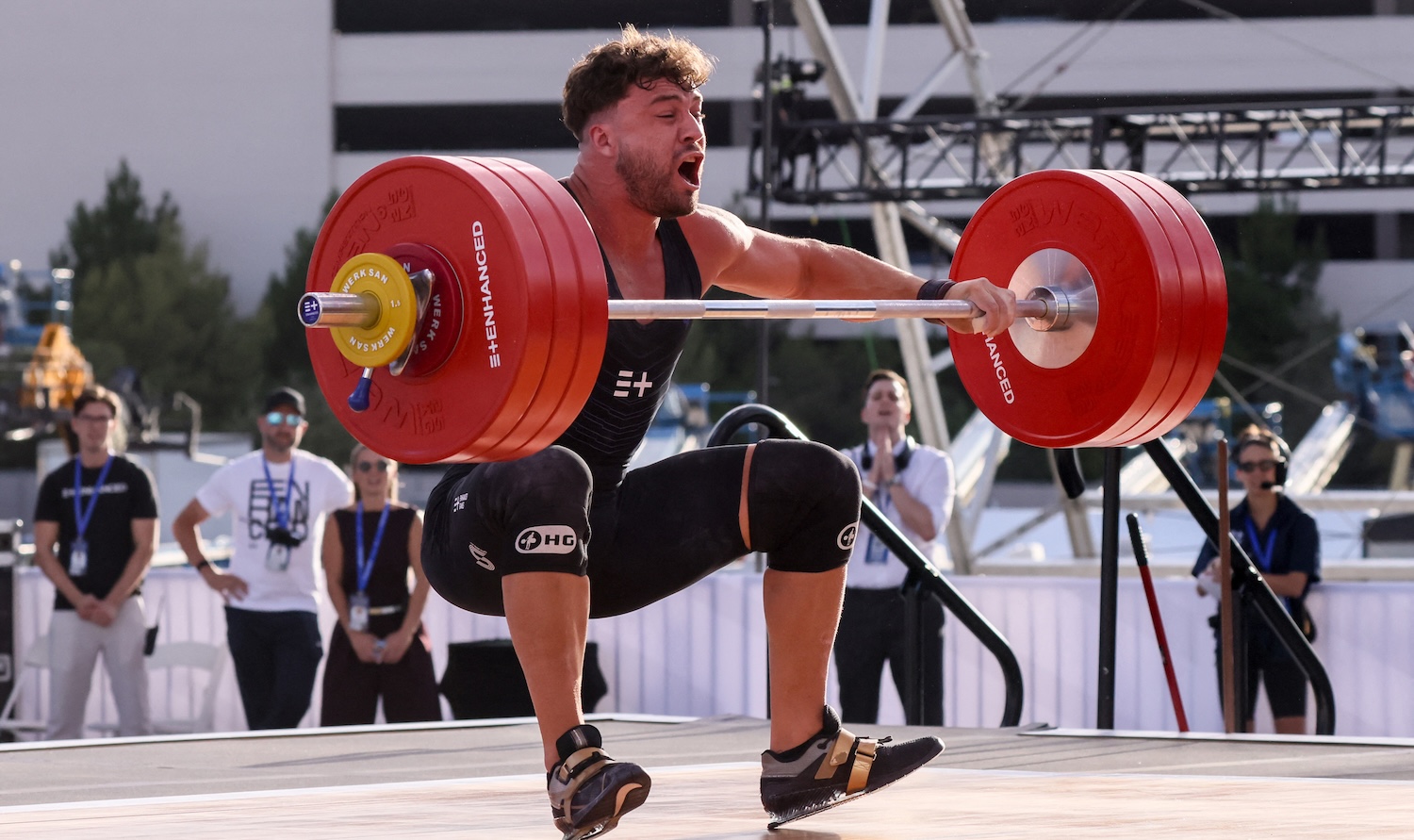
The more Olympic competitions I watch, the more violent the whole spectacle appears. Falls, contortions, abrasions, stretchers. I am drawn to the replays as to a car crash smoldering in the shoulder. Just after Vonn went down, another skier was airlifted from the same run. Days later, a female snowboarder laid unresponsive in the middle of a half pipe. And certainly there has been even more suffering endured off camera, cloistered and private, that we will never witness.
In the New York Times Magazine, journalist Sam Anderson once wrote that we are fascinated by moments of injury because they help us remember that the athlete is real, like us. An injury reminds us that their god-like efforts have stakes in the earthly world we share. But watching Vonn’s crash, I am reminded of the self-sacrifice of the saints, and I suddenly consider a different understanding of elite athletes. Perhaps the site of injury, the barrage of suffering and triumph we tune in to witness at an event like the Olympics, is proof not that these elite athletes have “come into contact with the real,” but that they are nearer than most to transcending it.
After an autopsy, it was discovered that St. Teresa had a scar over her heart, where the hallucinatory cherub had wounded her. Those who bore the mark of stigmata were known to incur miraculous wounds that often corresponded to Christ's crucifixion. These visible marks could be used as testimony to an experience others could not see or verify. But most stigmatics—an almost entirely female cohort—were considered hysterical, rather than holy.
I am not fluent in the spiritual lexicon of the saints. I do not believe in a Christian God. So it is easy for me, too, to dismiss these stories and the people in them as disturbed, insane, pitiable. But soccer games once left bruises all over my shins, thighs, and upper arms. I remember caressing them proudly, savoring the physical marks of effort as proof of something, though I did not know what. It is the same way I regard the scars on my face and my knees now, though they are almost invisible, and I privately lament their fading.
In an Instagram post, an Olympic snowboarder lifts up her jacket with one hand and holds her medal in the other. “Proof it wasn’t easy,” the caption reads. “Proof it was worth fighting for!” Across her ribcage: broad, red stripes of pain.
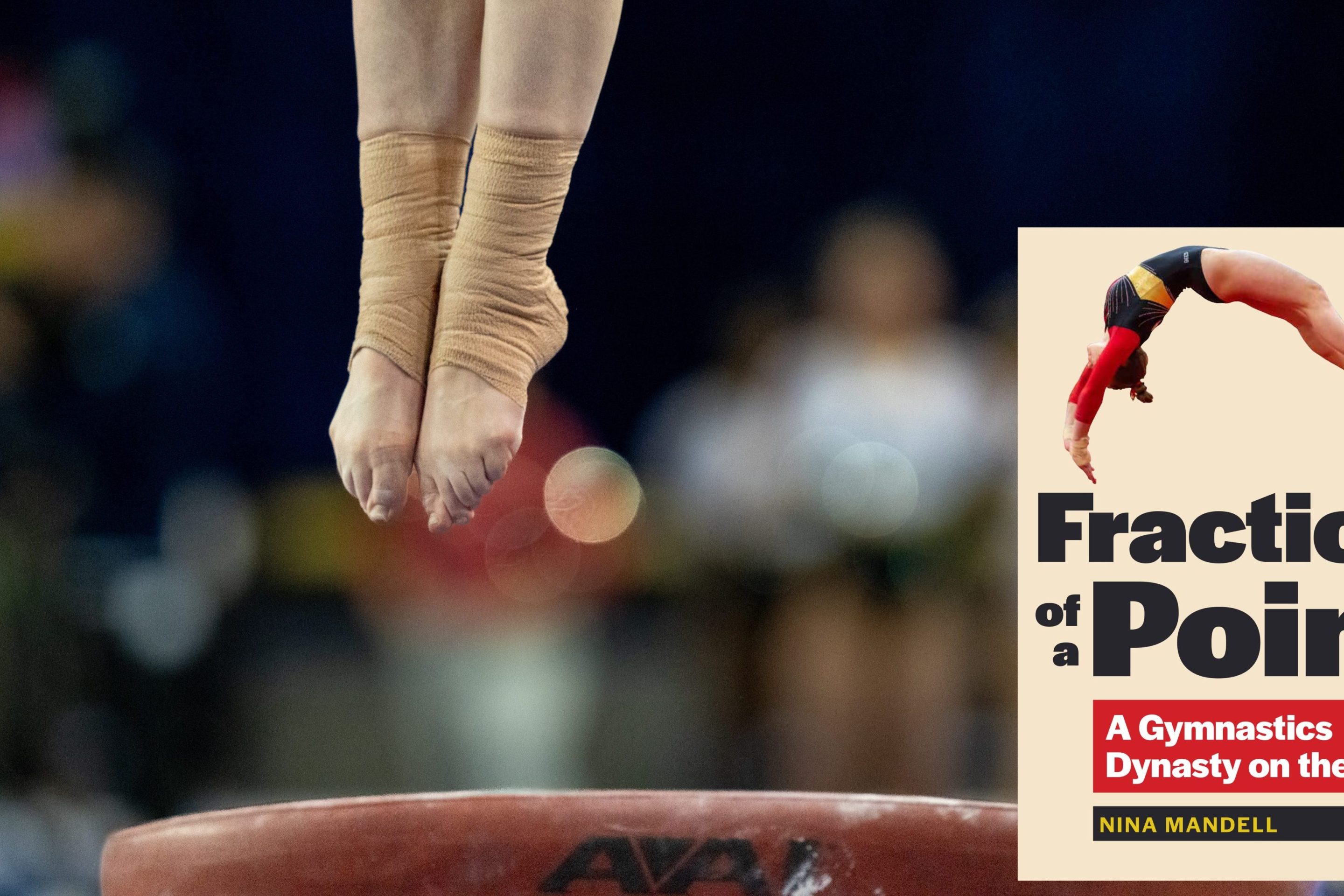
Women in sports have always been asked to endure danger and abuse, to prove in some way that they belong. They have been doubted when they are too fast, ridiculed when they are too slow. They have been told that they cannot survive, that they are too weak to compete. Their bodies are either too old or too young, too small or too big. For athletes, especially women, maybe there is no way out of these impossible dichotomies, this trap of doubt, except upwards.
“Let me suffer or let me die,” St. Teresa is reported to have said in response to her loved ones who had begun to worry that she was insane or, worse, diabolical.
As a coach I would never advise my players to endure through injury, to play when they are in pain, or to risk lifelong injury. I don’t imagine any mainstream religious authority would emphasize that religious devotion requires bodily injury.
The mistake that gets made—and that athletes repeat—is in attempts to translate the ecstatic experience into a lesson the general public might learn from: a universal truth, applicable to a more ordinary existence. “The only failure in life,” Vonn wrote, in her first social media post after her crash, “is not trying.” This kind of clichéd statement is meant to be inspiring. “I believe in you,” she continued, vaguely. And the headlines rang just as hollow: “Lindsey Vonn's Olympic crash was a brave act of vulnerability, not ego,” “Lindsey Vonn’s Olympic Crash was selfish and reckless - she should know better.” Such attempts to extract moral wisdom from Vonn’s experience, to bend her story into a neat narrative arc, foreclose on the possibility that sports exist in the realm of the unknowable, of the unsayable and sacred.
But the devotion of the saints, and their reward, have almost no relation to the worship of an everyday parishioner. And the sacrifices of an elite athlete have little relevance to an average competitor. Maybe rather than seeking inspiration, or worse, moralizing the athlete who sacrifices for their sport, we should be content with our awe—the same way we feel when we step back into our selves after gazing at beautiful art or listening to a piece of music that moves us.
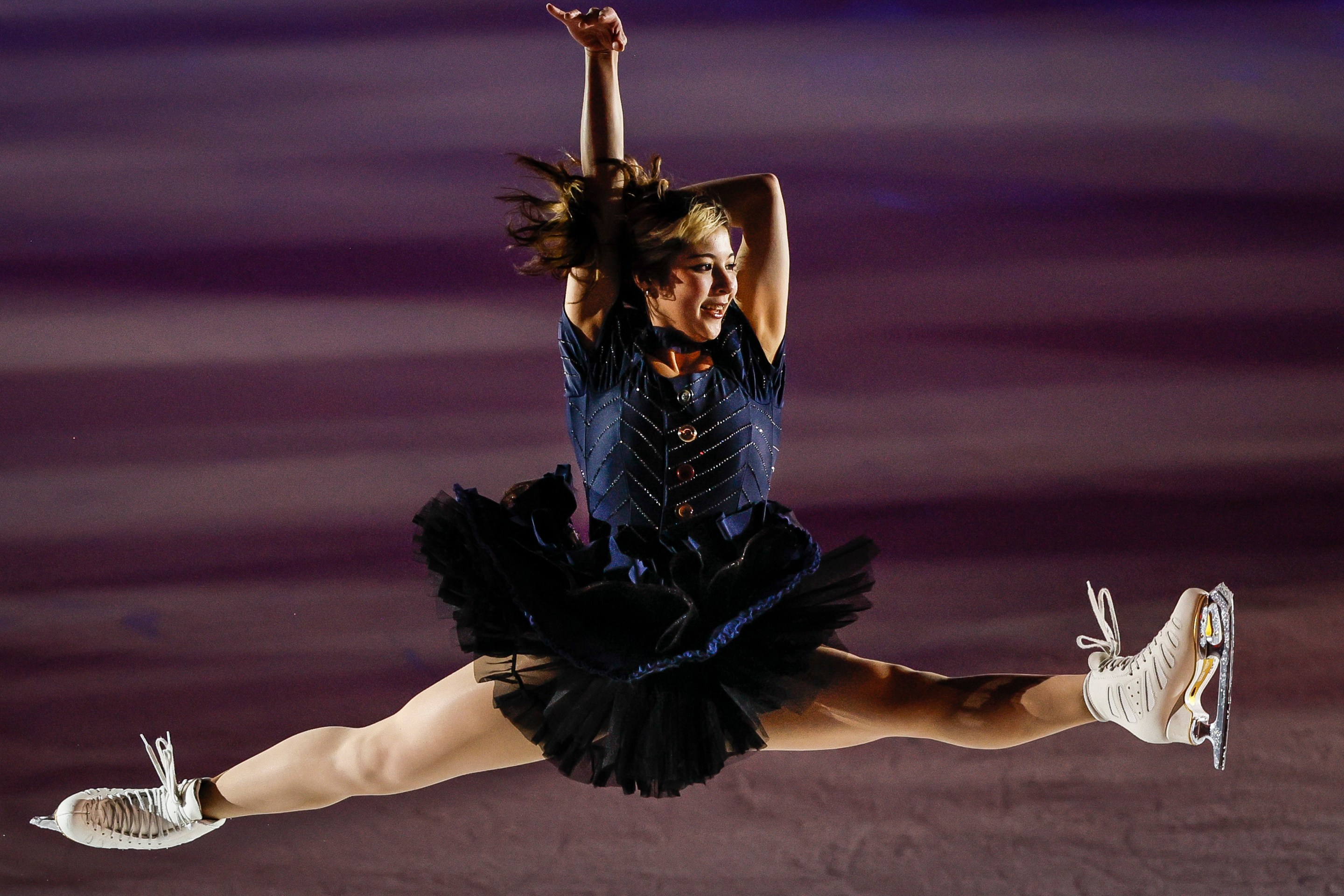
I do not know what it is like to ski so fast down a mountain, to control that speed and power around punishing turns with such grace. I cannot imagine rotating four times in the air only to land on the blade of a single ice skate. I cannot imagine what it feels like to throw myself headfirst down an icy concrete track. I can barely remember what it feels like to score a beautiful goal, since I am no longer in communion with the soccer gods at whose altar I laid so many years of my life. But I do believe, when I watch these athletes skate, leap, ski, and fall, that they are glimpsing something that most of us cannot. It is devotional, extreme, and perhaps incomprehensible to those outside of the calling.
So let them try to touch God. And don’t ask them to tell us what they see.