A little over three months from today, on June 13, the Boston metropolitan area is set to host the first of its seven 2026 World Cup matches, a group-stage clash between Scotland and Haiti. Despite kickoff being that close, local officials face an alarming number of unanswered logistics and funding questions, the sort no city should still be dealing with this close to such a big event. The case of Boston—well, Boston and Foxborough—is extreme, though not unique, making it a useful window into the busted logistics of the 2026 World Cup.
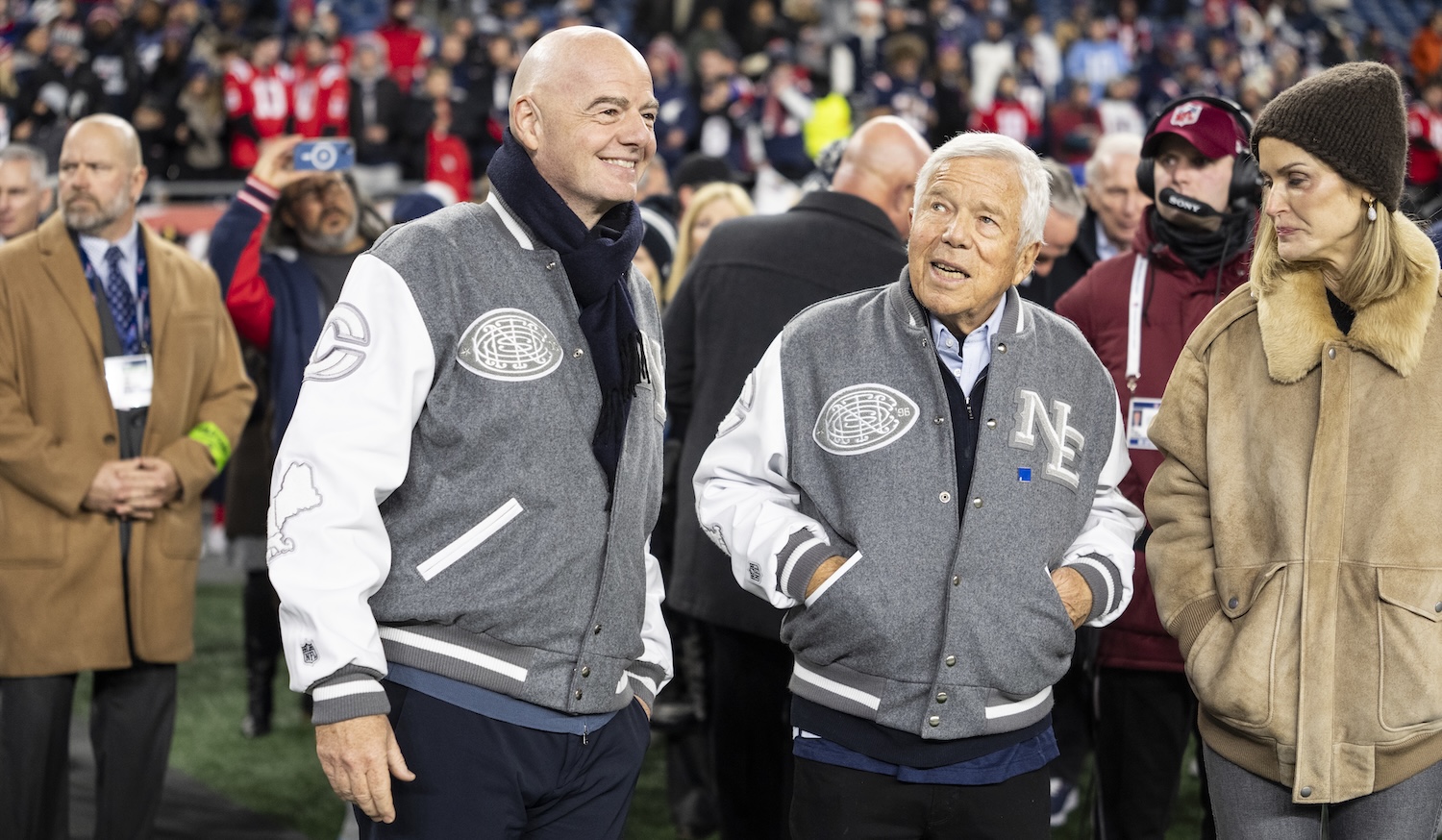
The trouble first came to light last week after a meeting of the Foxborough Select Board, the council representing the town where the games will be played. At the heart of the issue is a missing $7.8 million needed to cover security, and the town's withholding of permits for hosting the games over that money. Foxborough heard out a proposal from lawyers representing the Boston 2026 host committee, Boston Soccer 26, asking the town to cover the bill in exchange for a promise that it would be reimbursed by the host committee later. The committee lawyers also said that the Kraft Sports Group, which owns the stadium slated to host Boston's World Cup matches, would backstop any extra costs. Yet Foxborough officials were not happy: They want the issue sorted now, without having to either front the cost or wait forever for things to be resolved. Local cops and firefighters were annoyed with a June 1 procurement deadline—less than two weeks from that first match—which they said was way too late.
"We do not wait 'til the week before and then force the board and public safety to cancel an event because we can't settle the matters … when we should be settling now," Foxborough PD chief Michael Grace told the Boston Globe. "We are 99 or 100 days away from hosting the largest sporting event in the world, and we're deciding, or can't seem to find, necessary funding for necessary equipment that's been identified in over a year-and-a-half of planning with thousands of hours in 14 working groups throughout the Commonwealth of Massachusetts. The solution is very simple: Fund what we need funded and this issue is over tomorrow."
Two days after the meeting, select board chair Bill Yukna issued a stern statement in which he characterized Boston Soccer 26's proposal as "essentially an agreement with themselves." In a letter in response, Boston Soccer 26 said it only had $2 million in funding, but is on the verge of getting "at least an additional $30 million from state and federal funding and commercial activities." The committee also released a statement saying, "We are deeply disappointed that the town has seemingly reached a conclusion unilaterally without the platform of a public hearing." They noted that the public hearing in question is slated to take place on March 17.
A lengthy Tuesday Boston Globe story warns in its headline that "Boston's bold dream of hosting World Cup is on shaky ground," which seems a little overstated. This is more annoying than alarming. It's exceedingly unlikely Boston's hosting privileges are at any risk: If time is getting short for Boston and Foxborough to pull together the logistics for a smooth World Cup experience, it's far too short for the profoundly bigger job of finding new hosts for those seven matches. Nor is the money currently in limbo an egregious or existential amount for any of the parties involved. A more accurate characterization would be that Boston's bold dream of hosting seven World Cup games without logistical nightmares is on shaky ground.
The Globe notes that Boston Soccer 26 said a few years ago it would need $170 million to pull off the event, which is far more than what it's rocking with now: Of the $2 million in existing funding, plus the anticipated $30 million to come, the Globe writes:
That's a fraction of what was envisioned by the organizers two years ago, spawning concerns about what the World Cup will actually look like at kickoff on June 13. Concerns range from logistics to optics: Will there be enough security? Will fans have trouble getting from Boston to distant Foxborough? And what if an event meant to be a showcase for the Commonwealth, with glitzy parties and festivals, is something far more muted and pedestrian?
The money here comes from private donors and also the federal government. As to the former, FIFA, the World Cup's governing body, makes it significantly more difficult for local polities to pull in sponsors, as it already has cut huge deals with massive corporations that limit opportunities for local companies. Also, Robert Kraft—owner of the New England Patriots and founder, chairman, and CEO of the Kraft Group—is so rich that many reportedly wonder why they should "contribute to an event they see as orchestrated by the Krafts, who they assume will bail it out if money runs short, according to members of Boston’s business community," the Globe writes, adding, "And throw in 'donor fatigue': Boston is already hosting a series of lavish celebrations this summer to mark the nation's 250th birthday, all seeking corporate money."
As to the latter: The feds have not released any of the $625 million earmarked for the 11 U.S. World Cup host cities in legislation passed by Congress last July. The government is currently shut down, and the Federal Emergency Management Agency (FEMA), an arm of the Department of Homeland Security (DHS), is responsible for the disbursement of funds. "With only roughly [three] months to go, these cities still report they have not received this funding," U.S. congressperson Nellie Pou, whose New Jersey district includes the stadium where the World Cup final will be played, said in a statement. "This is completely unacceptable this close to kickoff. If DHS is going to play a role in this tournament, then DHS needs to be transparent, coordinated, and timely. The World Cup is a global stage. We need to act like we are ready for it. We're running out of time."
These sorts of logistics and funding issues are probably not unfamiliar to anyone who knows anything about FIFA, though they do highlight that a global event like the World Cup happening in the United States of 2026 means dealing with the associated political challenges therein. This specific issue probably gets resolved, likely to no one's satisfaction; this is very much the Donald Trump World Cup, with all the stupidity that entails.