Talk about regression candidates. Just over a month ago, football journalist Arif Hasan broke the news that analytics giant Pro Football Focus was purchased by Teamworks, an even larger analytics giant, for somewhere north of $130 million. According to Hasan, many employees working on the consumer side of PFF weren’t informed of the news by the company itself. It didn't take those poor souls very long to discover why that was. Shortly after the deal was consummated, many of those same employees were laid off. HOORAY FOR EFFICIENCY! From Front Office Sports:
PFF called employees to an all-hands meeting on Monday, during which it was announced that about half of them would be moving to the new company. PFF possessed both a content side and a data team—all 32 NFL teams subscribe to the company’s enterprise data set—and most of those who survived the layoffs were on the data side, a source said.
According to Hasan, many of those laid off weren’t informed of the news by the company itself. They found out through secondhand sources on the internet, which is a bit ruthless even for a company founded on cold-blooded football data.
The decline of PFF, especially its front-facing business, has been ongoing for some time now. Both Hasan and writer Matthew Coller have written about the company’s rise and fall in painstaking detail, and I strongly encourage you to read their work. PFF was founded by Neil Hornsby, a UK football fan. When he realized he couldn’t find any decent public scouting grades for NFL players, he decided to start grading players himself. In 2007, Hornsby formally launched PFF.com to make his evaluations available to the public. Success wasn’t instant, but PFF’s grades eventually took root stateside, allowing Hornsby to recruit a murderer’s row of analytic football minds: Sam Monson, Steve Palazzolo, Austin Gayle, Eric Eager, Zac Robinson, and more. For obsessive fans like myself, these people served as invaluable resources for proper NFL analysis. You know how inane most analysis is from major media outlets; PFF's team was a vital, alternative ecosystem for those of us eager to learn more about how the game works.
All of those people are now gone, Hornsby included. PFF's founder fled the company years ago, as did many of his shrewdest underlings. Monson and Palazzolo went to the 33rd Team before THAT company went underwater; Gayle went to The Ringer; and both Eager and Robinson got jobs with individual NFL franchises. Now the rest of PFF’s front-facing talent, including excellent draft analyst Trevor Sikkema, has been all but wiped out. What the fuck happened?
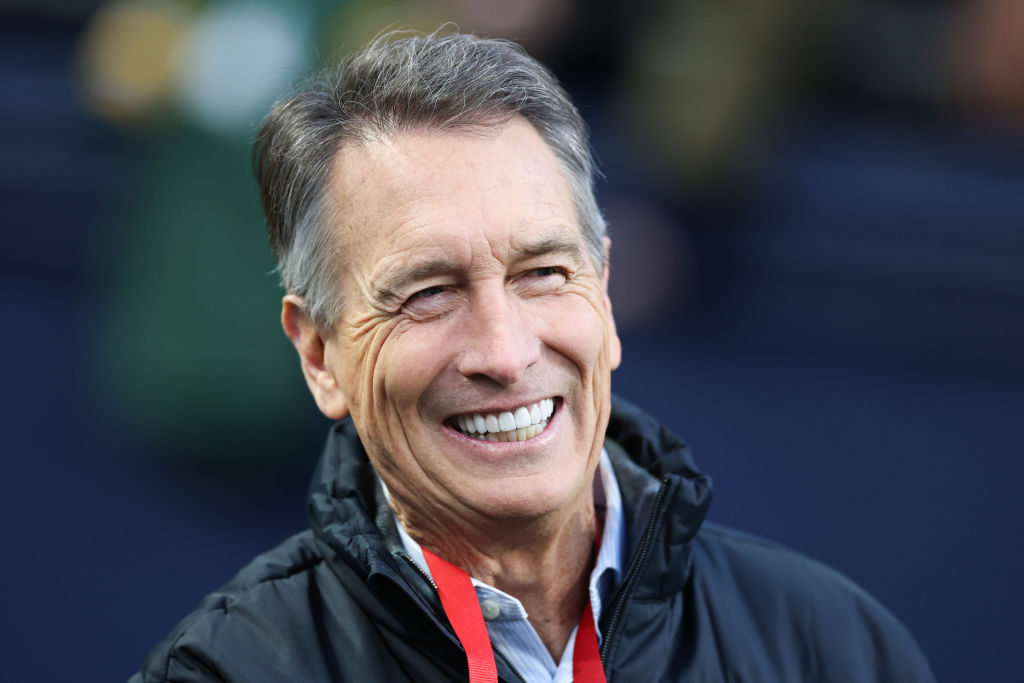
Former Cincinnati Bengals wideout and current Sunday Night Football commentator Cris Collinsworth purchased a stake in PFF way back in 2014 and assumed the title of CEO, which is how you and I ended up seeing the company’s rankings underneath every player during the SNF broadcast. Early PFF grades were somewhat tough to parse for customers, so the new head man mandated that the company switch over to a 1-100 scale for every player in the league, even if it meant potentially losing critical nuance in the process. Guess where Daddy got that idea from.
“My kids pushed me so hard to put it on a 1-100 grade,” Cris Collinsworth said in Coller’s book, Football Is a Numbers Game. “They know Madden. They know the Madden grades. They know what it means. I wasn’t very popular (internally) on that one.”
An NFL luminary being pushed around by his kids for Madden reasons? Where have I encountered a story like that in the past?
In this case, the nepobabies’ idea for PFF actually succeeded in making the content side of the company much more legible, and therefore popular, with the general public. Meanwhile, all 32 NFL teams adopted PFF’s data-side products to supplement their own internal scouting processes, and that's where the real money started to flow. Soon, major college programs began using PFF products, which is how the company grew to a market valuation in the nine figures. All of this happened under the supervision of Collinsworth, who was proving to be a very good steward for PFF and, by extension, the analytics movement as a whole.
But not every decision made by Collinsworth has been sterling. He installed his son Austin as COO, saying in Coller's book that he wanted his kids to inherit a business rather than mere money (his other son, Jac, is now a studio analyst at NBC). He took $50 million in funding from the private equity ghouls Silver Lake, which is never a good idea. Worst of all, he continually stood by a high-ranking internal executive named George Chahrouri, who was so abusive to PFF employees that, according to Coller's reporting, Chahrouri had to settle a lawsuit with one of them to the tune of $20,000. Chahrouri’s imperiousness compelled Gayle to bolt for The Ringer. And when Hornby attempted to fire Chahrouri in the early 2020s, Collinsworth took sides with the latter. A dejected Hornsby would retire from the company in 2022, part of an exodus of talent that never abated. From Hasan’s investigation into PFF two years ago:
“Everyone’s fucking leaving because people no longer believe in the leaders of the company,” said one (employee). Upon clarification, the source clarified that Chahrouri was one of those leaders. The other two were Cris Collinsworth, the CEO, and his son, Austin Collinsworth – the Chief Operating Officer.”
As of this writing, Austin Collinsworth is still in his position as COO of Pro Football Focus. Cris Collinsworth also remains as a “consultant,” but that sounds an awful lot like a "Mark Cuban will still get to have a say in the Mavericks after selling them!" kind of arrangement. It’s not entirely clear what Teamworks intends to do with PFF’s data infrastructure. But clearly, the data is all they care about. The old PFF was very good at walking the line of keeping that data proprietary—and therefore valuable to NFL franchises, all of whom prize secrecy to a fault—while also having a front-facing journalism arm that could interpret that data into insights that fans could understand. This was a company that brought everyone closer to the inner on-field workings of football. Pro Football Focus made the football world a better place.
New ownership seems unlikely to do the same. As with pretty much every other planet-eating conglomerate, Teamworks wants to be an everything company. It aims to sell grading data on referees, to sell comprehensive nutrition data to players and teams, to serve as a payroll provider for collegiate athletic departments, and probably to bring back NFTs or something. To that end, they’ve acquired a number of smaller, amusingly named companies like Telemetry Sports, Influencer, and (not making this up) Notemeal, and will fuse those assets with PFF into some sort of one-stop data-humping shop. Will all of this be powered by AI? Oh, you better believe it’s gonna. Companies like Teamworks never, ever pass the eye test.
This saga represents the dark side of analytics’ ascension into the sports mainstream. You can’t grow in both prosperity and relevance without the vultures catching onto your scent. In many ways, what’s happening to Pro Football Focus is depressingly similar to what happened to Football Outsiders, another pioneer in the field. Like PFF, Football Outsiders was started by a single person (Aaron Schatz) who turned his curiosity about the data underlying the game of football into a prosperous professional enterprise. Like PFF, the big-money types then snatched Schatz’s company up and gutted it clean. The URL for footballoutsiders.com now leads to a dead link. The same fate may befall PFF.com sooner rather than later. As with so many other things, I the customer am now forced to scrimp from this site and that one to find analysts whom I respect. And I never know when those analysts will get fucked over by whatever new asshole owns their workplace. It blows.
Because under better circumstances, companies like PFF and Football Outsiders wouldn't have merely profited from the analytics revolution, but grown even more intellectually robust in the process. Now all that’s left of them is the money, thanks to a group of people eager to make the coldest possible calculations.