For a seventh straight night, the WNBA and players' union left an all-day collective bargaining session Monday without a deal in place. The two sides have spent around 90 hours in in-person meetings since last Tuesday. Union president Nneka Ogwumike told reporters this past weekend that the big issue to resolve remains revenue sharing, namely how to divide the huge sums of money coming into the league from a new $2.2 billion media rights deal, an ongoing slate of expansion, and growing corporate sponsorship interest. Players have consistently sought a salary system tied to gross league revenue, akin to the NBA’s, which grants players 51 percent of all “basketball-related income.” The league’s proposals, meanwhile, have only offered players a share of “net revenue,” revenue after expenses.
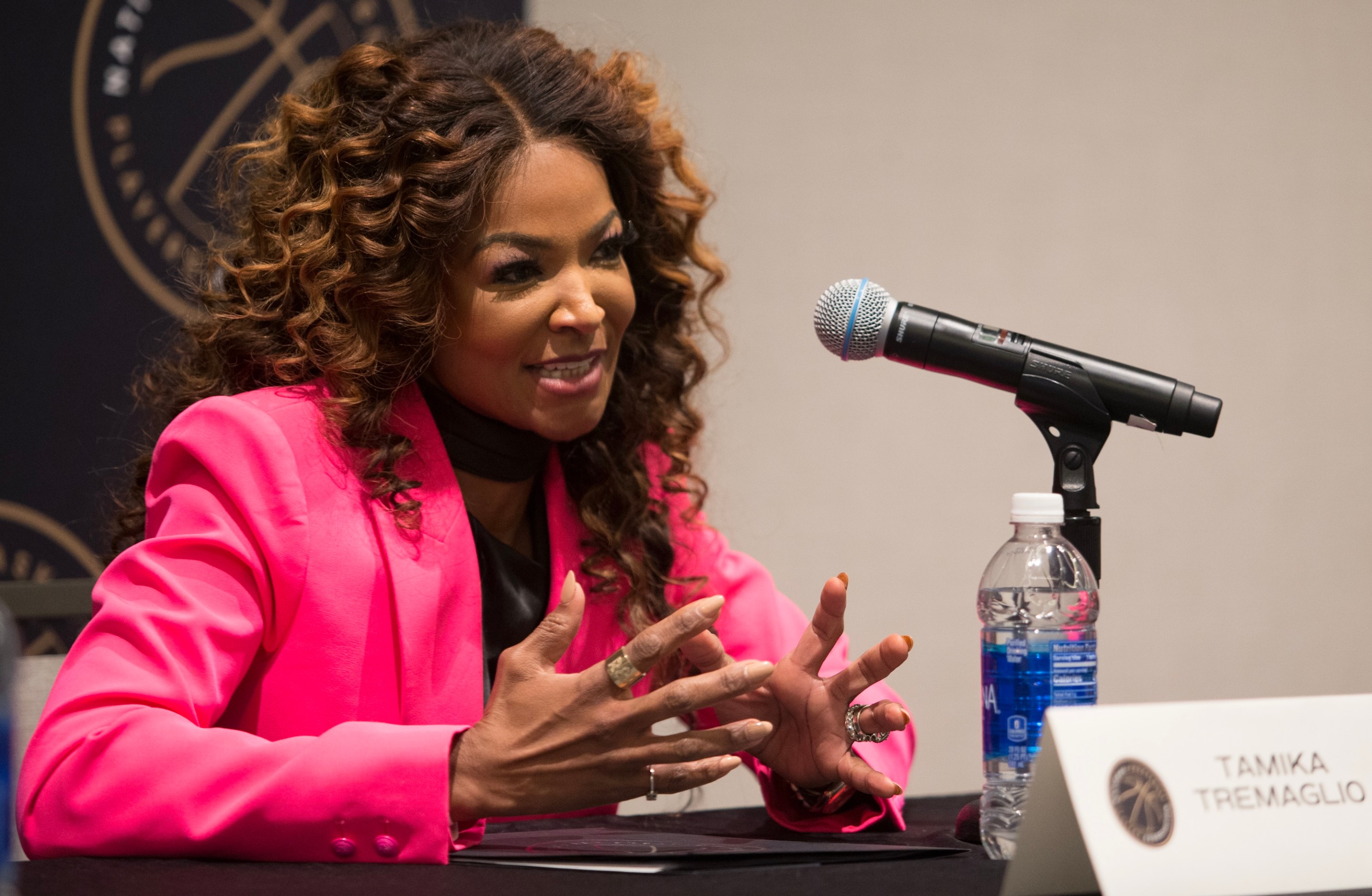
On Monday afternoon, I spoke with Tamika Tremaglio, who was an advisor to the WNBPA during the 2020 collective bargaining agreement negotiations and later served as executive director of the National Basketball Players Association from 2021 to 2023, leading the negotiation of their seven-year CBA finalized in 2023. We discussed the origins of today’s revenue-sharing fight, the role public opinion plays in labor negotiations, the value of all-day bargaining sessions, and the quirky accounting practices common in sports. Our conversation has been condensed and edited for clarity.
For the last week, there have been these marathon negotiating sessions lasting late into the night. Maybe that’s something that you dealt with in your negotiations.
Yes. When things are intense and you feel like you’ve gotten in a rhythm and you may get it done and you might get to conclude it, you want to keep going. You don’t want to lose the momentum, because the pause you take allows people to go into another dimension. They’ll go back home, or they’ll get into other meetings, and you don’t keep that momentum going. Absolutely, we had many nights like that. Many. But I will say that towards the end, we certainly didn’t go on, like—this has been a week, right?
I think we’re on Day 7 of the all-day sessions.
That’s a lot. We would definitely have all-day sessions. But especially if we knew we were coming back tomorrow anyway, we would stop at a normal hour. So it leads me to believe that they’re really close. Otherwise, you would just call it and come back the next day. I think it must be that they’re close or close on particular issues.
Brianna Turner, who’s on the executive committee, posted a photo of the hotel conference room where this is all happening. It’s got the big classic boardroom table and notepads and everything. It’s easy for me to understand the other day-to-day work of a player rep, taking the temperature of other players, being in locker rooms. But I wondered—now that we’re at the stage of lawyers typing stuff back and forth, what’s the role of players in these meetings? What voice do they have?
Now it’s more important than ever, because you really are coming down to where the final decisions are being made. Throughout the negotiations, there have been particular issues that you’ve addressed. They were sending a document back and forth, so you could go to the executive committee. They then go to the players, a player rep has a discussion with their respective team and then brings it back—you have time to talk through and walk through issues. Now we’re at the point where you don't have that time. You really need to have players present so you can make those final decisions. That’s precisely what happened with the men, and you’re seeing it now with the women as well. For us, we were down to one or two issues at the end and had the players on call so that they would all be there to be able to respond to stuff, because we were in the middle of the season. Now they’re all out of season. The fact that they can be there and be present, I think, is significant and helps a lot to get to the end of this.
It feels like the seeds of the rev share discussion were planted in the 2020 CBA, which says players could receive a portion of revenue above a certain threshold—money they unlocked for the first time this year, we learned recently. What do you remember about the discussion of revenue sharing at the 2020 negotiations and how it set up the current battle?
The real issue in all of this is the lack of transparency and the trust that the players have in the league. If you trust that when you get to net income, they’re going to take out the costs that they should be taking out, or the financials are going to be reported the way in which they really occurred—if that was really happening and you trusted that it would happen, we would not be here. That’s what this is about. It’s really the breakdown of trust. That’s why it’s taking so long, not just because we can’t come down to 40 percent or 26 percent of gross revenue. It’s because there's this lack of trust that they really have their best interest at heart. That’s what's causing the challenges here.
Ownership treating the players as partners in the growth rather than this cost that needs to be managed—that’s when you're in a position that the entire league benefits, not when you're treating them like they are an employee only. When you erode trust, you can’t get any of the other things done.
Because you brought up financial reporting, am I correct that your first role in sports union negotiations was forensic accounting?
That’s correct.
I’d love to learn a little more about that work. What information do players get, what don’t they get, and how do you help them make sense of it?
Forensic accounting is essentially looking behind the numbers to understand what they mean. When you’re thinking about audit, you’re sort of relying on management's representations. When a company is audited, you’re looking on the surface. As a forensic accountant, you’re looking behind the numbers so that you can truly understand why something happens the way in which it happens.
For example, in 2024, if you see that expenses have increased by $200 million, you want to understand why those numbers go up so much. Why was there this huge jump? We know that a lot of the expenses in that time period were to prepare for this media deal that will bring future revenue of significance to the players. You need to have somebody explain to you, That's why this occurred, or That's why this happened, or Oh, by the way, we decided to pay one of the coaches three times their salary last year, so that’s why this team took a loss. All of those things are critically important.
That stuff then kind of gets lost in translation. So many people think the WNBA is losing X amount of money every year, not understanding how creative accounting can get. But those numbers still drive the conversation. So often in these labor negotiations, I’ll hear things classified as “a PR win” or “media posturing.” The fact that the players were wearing those Pay Us What You Owe Us shirts at All-Star weekend suggests to me that they do see the PR battle as one worth fighting. But how much does public opinion actually matter? At the end of the day, these are people locked in a conference room. Do the billionaires care what the average Joe thinks about the WNBA or whether WNBA players should be paid more?
Absolutely matters. There is no question. Companies actually put value on that. Quite frankly, public opinion feels like the W is doing so exceptionally well. How could they not be making more money? And so if you tell someone in a sold-out arena—let’s say the person they’re coming to see is Caitlin Clark—that she’s making $77,000 a year, less than $2,000 for a game that just brought in millions of dollars, that’s a little hard to explain to most people. The fact that public opinion believes that’s not fair and not equitable, that absolutely is weighing on it.
On the flip side, public opinion also believes that they should actually have a deal done by now. That’s weighing on the PA side, on the women. They’re trying to respond to public opinion too, because it does seem like this has been a long time—are they just trying to be difficult? We know that’s not the case. They are setting a precedent. They have a lot of weight on their shoulders because this not only impacts how the W will be viewed out into the future, it’s going to impact how women's sports is viewed into the future.
It bothers me that people don’t understand the significance of gross vs. net, and that they’ve heard for years that the W is losing money because there are so many things from an accounting perspective that you can do. How many people come in under budget by millions of dollars? They just don’t, because when you get to the end of the month or you get to the end of the quarter, you find a way to spend that money. It’s no different when you’re working in a way in which you know that you’re going to have to give that money up or give it to players when you know that you have a capital expenditure or something like that that you could use the funds for.
That’s exactly what we hear from players, that they’re worried about what costs might suddenly turn up if they were to adopt the league’s proposed revenue sharing system based on revenue minus costs.
It costs [the NBA and NBPA] millions of dollars to do audits, every year, of BRI, on both sides. If you think about a league with a salary cap of even what the league proposed—of $6.2 million—and it’s going to cost you several million to do an audit, that just doesn’t make sense.
The reality is we probably wouldn’t have as much of an issue between gross and net if the players trusted the league to be fully transparent. That’s the first thing. The second is that it is incredibly costly to audit the teams and the league. You’re basically setting them up to not be successful. If the league actually set it up such that they would pay for the auditing to be done, even though it’s independent, I think that would play to show that they really do want to move in a place that allows for transparency, because right now they’re placing the burden solely on the players.
I’m an NBA fan, but I find the CBA a bit byzantine, so this may be oversimplified. But from my understanding, the big win of the NBA’s last CBA was getting the definition of BRI expanded so that other things, like licensing money, were included in the pool of “basketball-related income.” The actual pie got bigger, so to speak.
Making the pie bigger in terms of BRI—what happened there is that the definition has been more strictly applied. It now does apply to mixed-use development, for example. Is this restaurant open on a certain day, or is it closed other days? It’s only open when there are games? Well, then part of that becomes basketball-related income, because but for the players playing, you wouldn’t receive the income. So it's not a new rule. It’s just how it’s being applied.
The whole time, though, the issue of adjusting the BRI percentages wasn’t really on the table, right? The 51-49 player-owner split hasn’t changed in the last two CBAs now, so there were some different and interesting distributional questions. The new luxury tax system was basically both sides deciding to divide their pools differently among themselves, and it’s led to new team-building strategies, where certain contracts are more valued than others. This issue seems to come up every time I read about sports labor negotiations: "stars vs. role players." How do you balance everyone's interests? Should you balance everyone's interests? It’s true that LeBron James or Caitlin Clark are always going to be underpaid in a salary cap league.
The great thing about the players is they are team players. They recognize that the salary cap is not going to be enough for LeBron or Caitlin Clark, but they’re able to get additional funding from their own branding, their own licensing.
There was a story last year about MLB commissioner Rob Manfred at a Braves investor meeting, explaining his strategy of doing these clubhouse tours ahead of their CBA negotiations, and trying to find a “younger player” to pit against the “high-earning guy.” But I think something that’s less discussed is that owners aren’t always aligned either. Is a union hunting for those differences the way the other side clearly is?
That’s the art of negotiation. You’re looking for the weaknesses and where you can do that. But a committee is sitting at the collective bargaining table on behalf of the owners because they designate owners from the W teams to be on the CBA committee, just like they did for the men to be in that committee. And they usually have a united front. No matter what has happened in the background when they show up at these meetings, they’re all on the same page. I think the same is likely true when you’re dealing with the women, that they’re all on the same page, even though you can be aware that someone thinks I think it's OK that housing is X, Y, or Z, they’re probably not going to show up at the table and discuss it in that way. They're going to appear to be very united.
Are owners typically good at doing that?
Oh yes, they are especially good at doing that. I think the players are getting better at it, being on the same page and being united, but everyone does have different circumstances that they may talk about in a certain way when they’re being interviewed, which is why it's probably a little more that you can see where there may be differences.
We talked about public opinion, but I’ve wondered about the role of media and journalists specifically also. Commissioners like to say they don’t want to “negotiate through the media.” There was actually an incident the other day where an ESPN reporter copied and pasted some of the numbers from the WNBA’s latest proposal into a tweet, but forgot to delete the part of the message that said, “Just so you have on background-no attribution to me or the league.” They are doing some negotiating through the media. On the union side, what kind of relationship did you try to have with the media, or did you really feel the need to have one at all? Sports media is in an interesting place, too, where we’re all wondering if we even matter when Aliyah Boston or Draymond Green can just go talk to people directly on their own podcasts.
From a union perspective, the media was incredibly important to them and incredibly important to me as well. I fortunately had really good relationships with the media. I provided information to the extent that I could, I asked for their opinions on things to the extent that I could. I didn't know everything, and I had a pretty daunting task to get done in 18 months. I had to rely on media a lot for different things and they were always willing to help me, and in turn, I was always willing to help them. I think there was a mutual level of respect. I think this is not something that someone who is doing a podcast can replace, quite honestly. I think that there is still a huge need. I’m grateful, as I know many of the players were as well.
With the media, did you play offense or defense during a negotiation? Would you want to proactively send these texts out, or was it just responding to questions as they came in?
No, for me, I was being reactive. I didn't utilize the media in that way. In fact, I sort of learned at the PA that people do that: They leak information, but it's not really leaked. Somebody’s actually really told someone something that they knew could change a trajectory. That's not what I did. For me, it was: If someone asked a question and needed a response, I responded. I didn’t use them proactively. I don’t think that’s really what the initial intent is for media. It’s to inform, not to stir up a controversy, but to report on a controversy.