One of the best things about becoming older (as opposed to simply aging, which universally sucks) is the moment when the knowledge that there is nothing new under the sun becomes something more like instinct. Most notably, this comes through the realization that everything that is hailed as the next frontier of human development is actually just old ideas with newer and better special effects behind it, generally applied by people too young or disinterested to know better. In the case of our brand-new war, those effects come courtesy of people too old and lazy to think of other ways to distract the public. But only a fool would mistake any of this for anything new.
As an example, Floyd Mayweather Jr. is now 49 and is promoting a rematch of the 2015 welterweight title fight between him and Manny Pacquiao, who is now 47. Both need the attention and, it needn't be added, the money; most fights are made for those reasons, at least to some extent. But even the surface novelty is thin; young folks imagine that this is just them trying to get seats on the Jake Paul stunt-fight gravy train, when in fact what this is is just a gussied-up version of MTV's Celebrity Deathmatch, only with real people throwing slow punches instead of claymation figures. Clay, for you slack-jawed college-aged mutants out there, was the CGI of yesteryear.
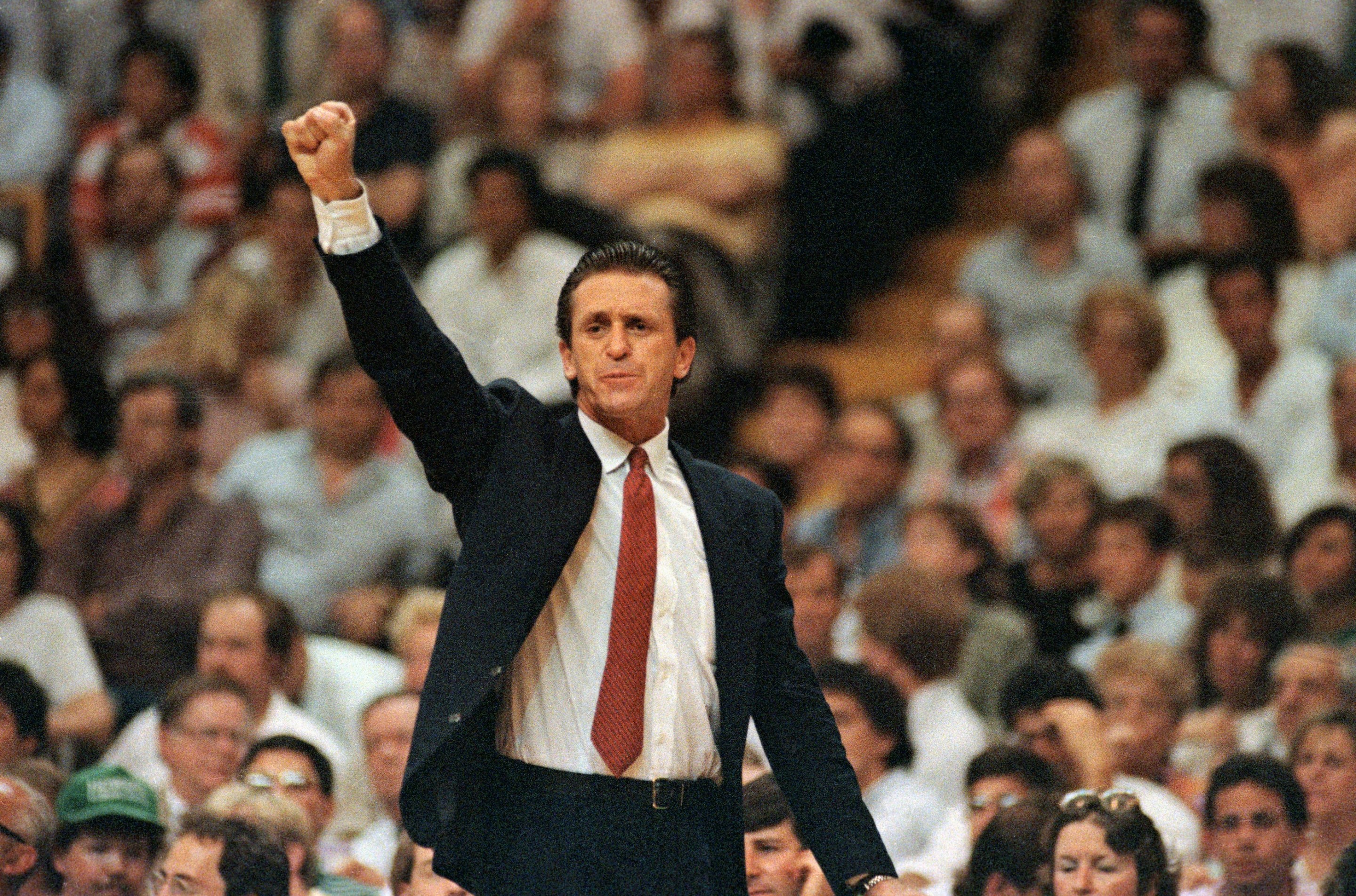
Which brings us, in a much scaled-down version, to the issue of NBA coaches' dress codes. Yes, this is a massive comedown from a war nobody asked for or bothered to justify, and even from the Mayweather-Pacquiao fight nobody asked for or should want to watch. But it's good enough for The Athletic, and its recurring series Peak, about the mental side of sports. Rustin Dodd elbowed through 1,100 words about Hall of Fame coach, menswear icon, and Miami Heat uber-executive Pat Riley urging a return to coaches wearing suits and ties on the sidelines—yes, even when New Orleans is playing Sacramento Thursday night. Maybe especially then. For Riley, it's a matter of principle.
Riley was known as an average (by NBA standards) player, a superb coach (when he had the best players, as these things normally go), and perennial executive (when in doubt, leave the Knicks and get a real job) whose entire public image was shaped by a fortuitous relationship he struck up with fashion designer Giorgio Armani before starting his career-defining gig as head coach of the Showtime Lakers in 1981. Those were the years when Magic Johnson and Larry Bird embodied the league and saved it from cultural oblivion through the sheer force of their charisma; it's a formula, speaking of the old being repurposed as new, that the NBA has tried to recreate with mixed success ever since. Those achievements helped get Riley a bronze statue outside Crypto.com Arena, which was dedicated last month. His suit and tie were, of course, impeccably welded.
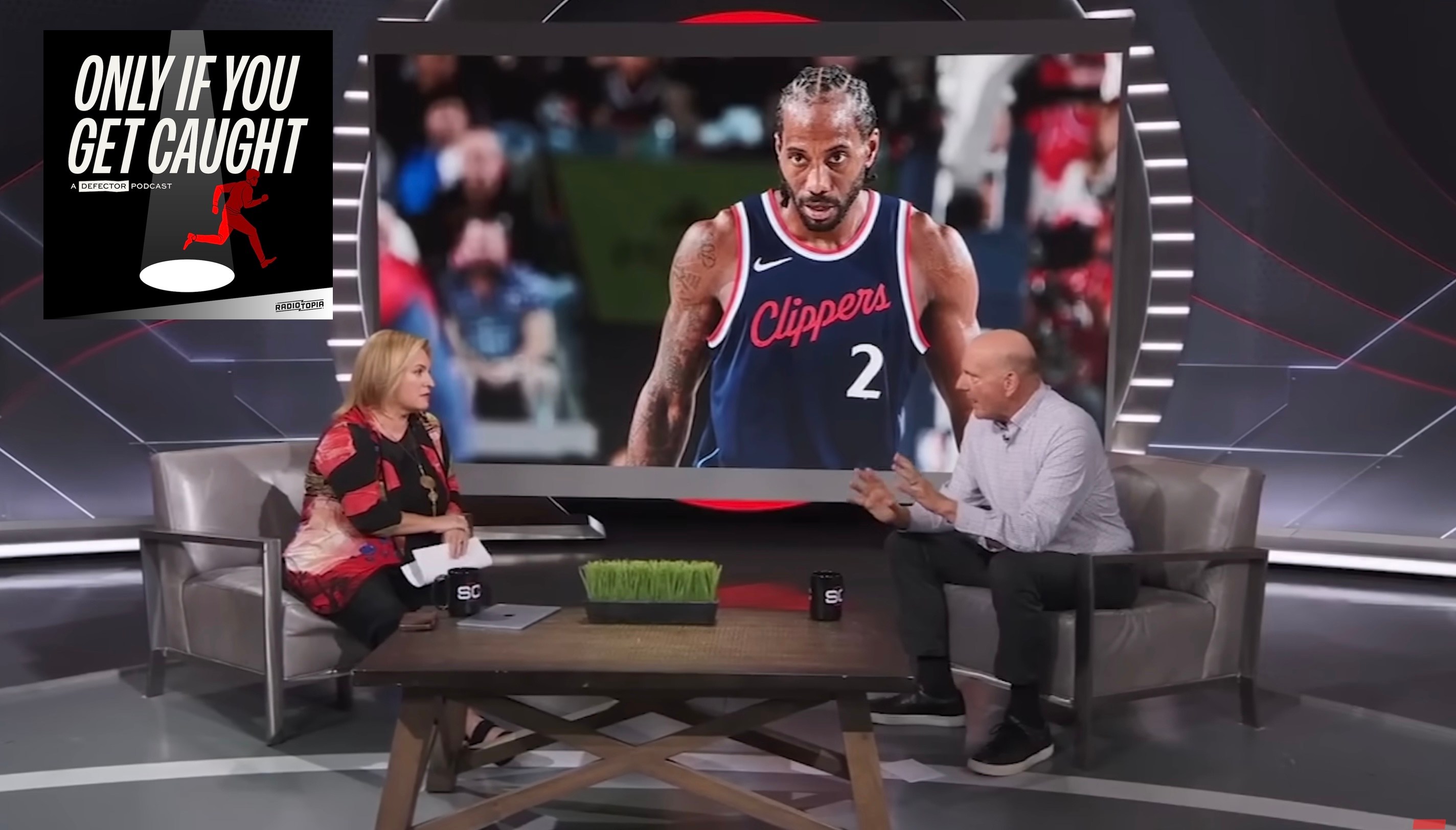
Riley's theory about suits, put in his own words and supported by various academics in Dodd's piece, is simple: "I think an audience wants to see somebody on the sidelines who looks like a leader, dresses like a leader, acts like a leader." There's a lot loaded into that, namely concepts that were first run through the wringer six decades ago—that costuming is part of leadership and that some leadership costumes are more inspiring than others, that leadership isn't what it used to be because kids don't respect their elders, and that costuming could have helped prevent the crumbling of standards that has led to passive (and sometimes active) player obstinants like Kawhi Leonard or Jonathan Kuminga. In short, get coaches out of team-issue gym clothes and back into coat-and-tie outfits, and players won't sass back; the road back to the more hierarchical and respectful world that came before begins at the tailor shop.
It's all part of a weary and confused society's attempt to ascribe power to an affectation. The Riley Look is a signature statement, to be sure, and there is something eternally appealing about watching a coach in an expensive suit go absolutely feral on the sidelines after a missed call. Seeing a man dressed in his Sunday best flailing around after a shooting foul such that his tie dope-slaps his face is never not funny. It's not necessarily more or less dignified than when the tantrum is being thrown by a grown man in moisture-wicking polyester blends, but the point is that dignity isn't really the thing to look for here. Proof: Nobody is racing out to buy clothes from the Mark Daigneault line, even though that was the impetus for coaches dressing down.
A 2015 study by a group of academicians at Columbia and Cal State-Northridge advanced the concept that looking like the boss helps you be the boss you want to look like, or something like that. For purposes of this discussion, the current coaches' more casual sideline athletic wear, which became a league directive during the pandemic and has stuck in the years since, addressed the scientific theory that expensive clothes help because COVID. This runs counter to the notion that coaches in track suits look like equipment managers trying extra hard to get noticed on TV. At any rate, coaches don't want to suit up; Rick Carlisle put public opinion in the coaches' association at "85 to 90 percent" against bringing back sideline suits. "It’s a tough one," Milwaukee head coach Doc Rivers told The Athletic, "because quarter-zips are so comfortable. They’re so easy to wear."
Don't get us wrong, it's a fun topic to chew on slow days like today, or when New Orleans plays Sacramento (don't forget to miss it on NBA League Pass). Riley trying to redefine style to conform with that which made him famous four decades ago is a noble enough pursuit for anyone at his stage of life, and it has the added advantage of being a topic far more benign than, say, U.S. foreign policy imitating the hot trends of the Soviet 1980s. And to be fair, Riley is actually appealing to "the audience" rather than the employees, here.
Either way, though, it reminds us that, like the 1960s, this kind of half-politicized aesthetic gripe comes off as the old'uns trying to push back the tide of the young'uns. At some point, a coach who looks like he works at Champs is pretty much the same as a coach in a suit, and still just someone else for the highest-paid player to ignore. Today's titans are meant to become tomorrow's footnotes because that's the way it has always worked. Who sits in a bar shooting the breeze about Winston Churchill any more? The same number of people who in 30 years will sit in a virtual bar and shoot the breeze with pretend friends about Andy Reid. Churchill looked like the Monopoly Man; Reid looks like a janitor. In the end, we will learn as we did half a century ago that it's actually the people wearing the uniforms who make the career. At some point, a subsequent generation will learn it again, too, for the first time but not for the last. In the meantime, there's still Celebrity Deathmatch to help make it all make sense.