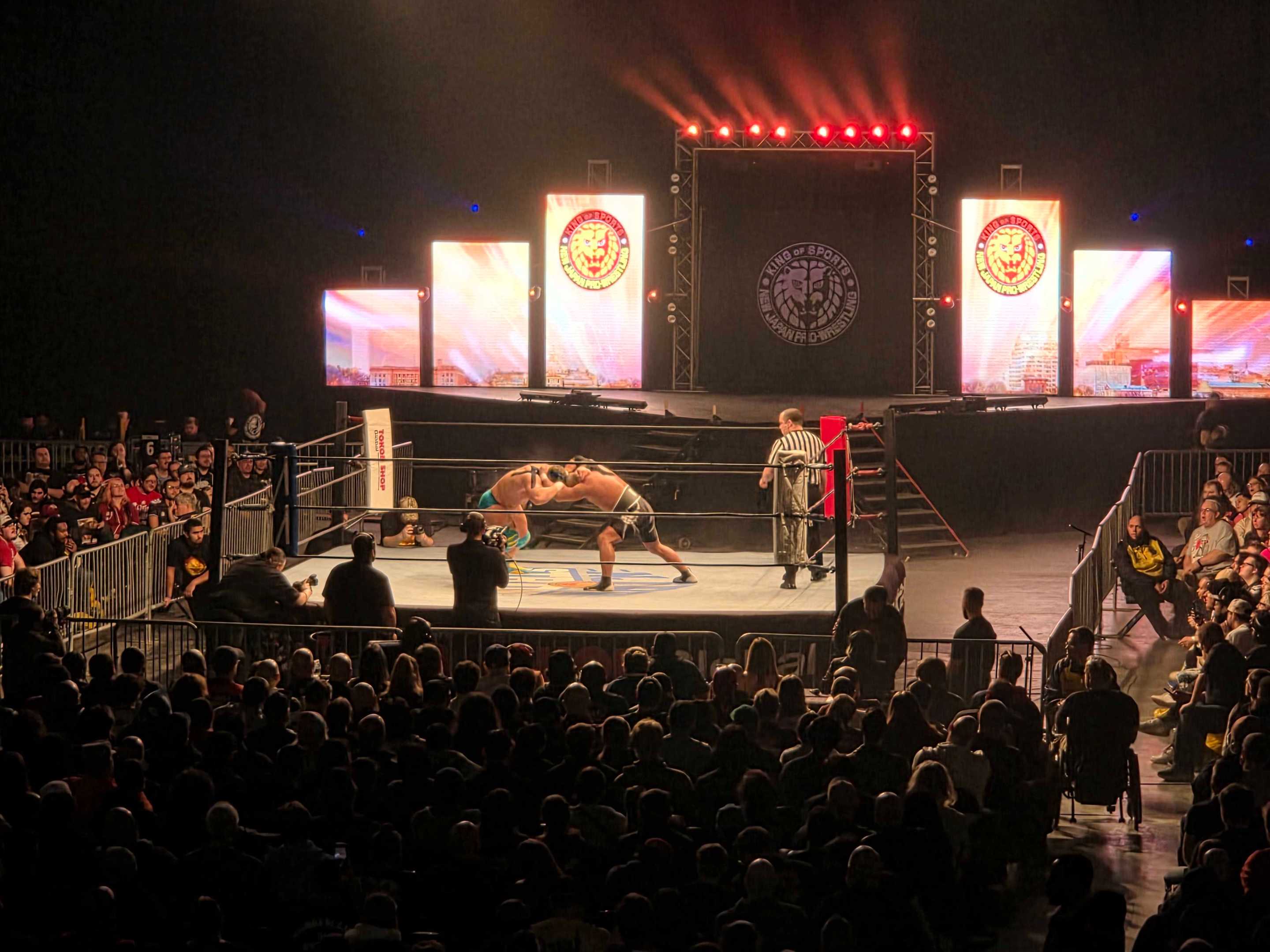
TRENTON, N.J. — The Trenton Transit Center isn't pretty, or even notable, and it won't win any architectural awards, but it gets the job done if you're coming down to see Tomohiro Ishii wrestling in the Garden State's capital. Ishii alone is worth any length of train journey, even if he's definitively past his prime at 50 years old. Short, wide, and hairless, New Japan Pro Wrestling's signature mid-card tough guy is my all-time favorite in the squared circle. Nicknamed "The Stone Pitbull," he walks to the ring with a lumbering gait, looking about as flexible as a He-Man action figure, his movement as smooth as a Nintendo 64-era entrance animation. Even at his peak, Ishii was too small (5-foot-7) to ever really be considered for a run as a top guy, but what he lacked in main-event wins he made up for in attitude. And on this night Ishii held a special, sentimental status for me: one of the last working links to his company's illustrious, vanishing past.
I love Ishii because his matches are formulaic. That word is almost always used as a criticism, but not here. He is so unrelentingly committed to his personal formula, night after night, year after year, that it long ago achieved a kind of authenticity. In the world of NJPW, striking Ishii is like fighting a brick wall. He stands tall in the aftermath of powerful blows. He gets right up from suplexes to deliver one of his own. If you back him into a corner, he'll growl in your face before delivering an onslaught of chops and forearms. Like watching Tom Hanks or Harrison Ford, you see it enough times, and the actor and the character blend together.
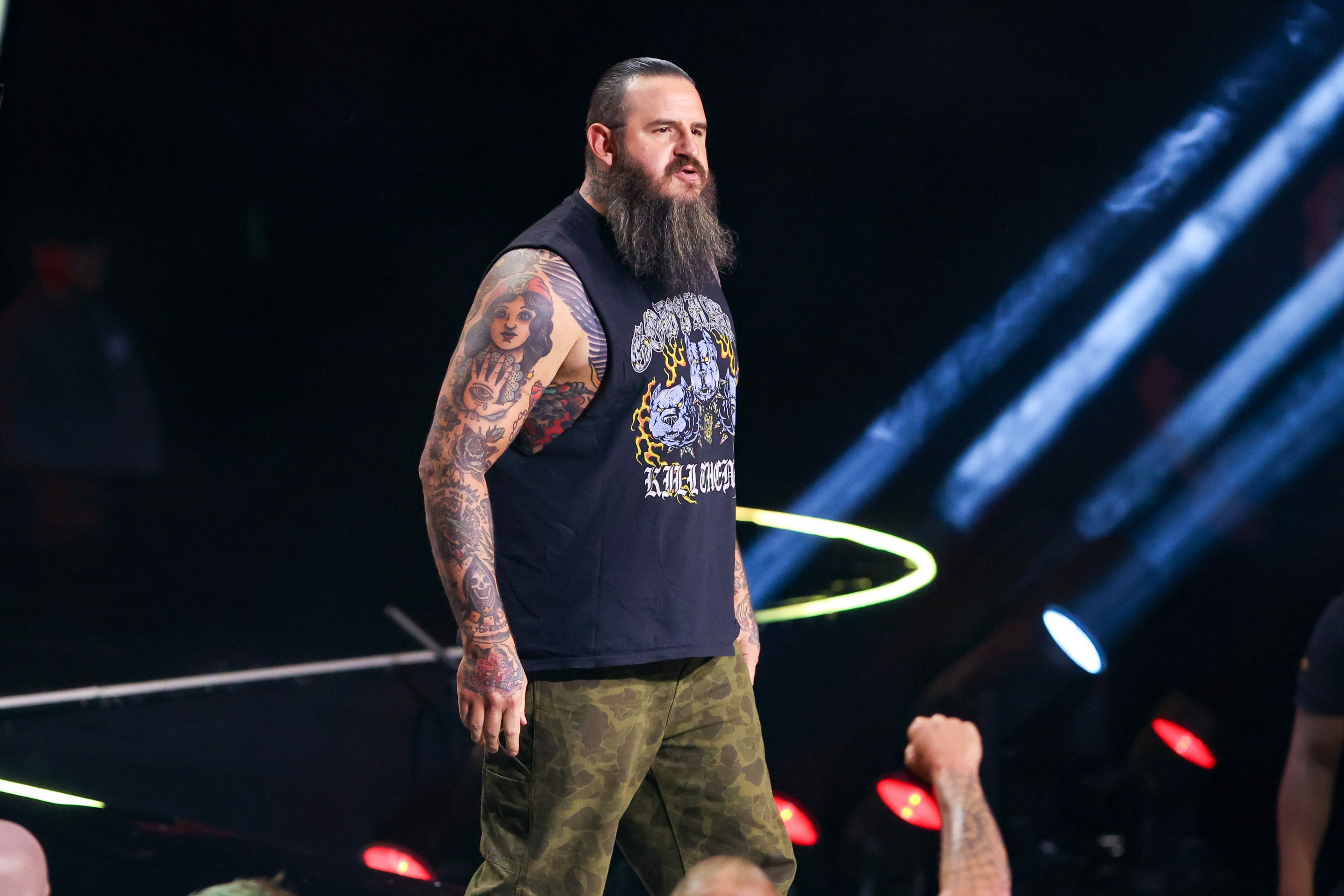
On this night Ishii wrestled Boltin Oleg, a 33-year-old strongman from Kazakhstan who came to pro wrestling relatively late after a successful run as a legit amateur. Boltin's probably not the future of this company, but he's interesting in large part because he isn't an especially polished worker. He's got a great body and a lot of raw strength, and in the hands of an experienced opponent, he can be molded into a compelling foe.
Just a couple minutes into the match, I was already smiling from ear to ear, because Ishii had given me exactly what I came for. After ceding the majority of the early offense to Boltin, he suddenly turned to stone. He escaped a piledriver, then took a forearm from Boltin without flinching. Standing upright, both feet firmly planted on the mat, he braved another pointless strike to the chin, and another that he just walked right through, staring at his enemy like a pedestrian might stare down a driver who's inched into the crosswalk. Ishii absorbed one more, then blasted Boltin to the canvas with a haymaker of his own. Ishii shouted in triumph, stumbled a little to sell the delayed damage from the exchange, then gathered himself for his next move as the crowd chanted his name.
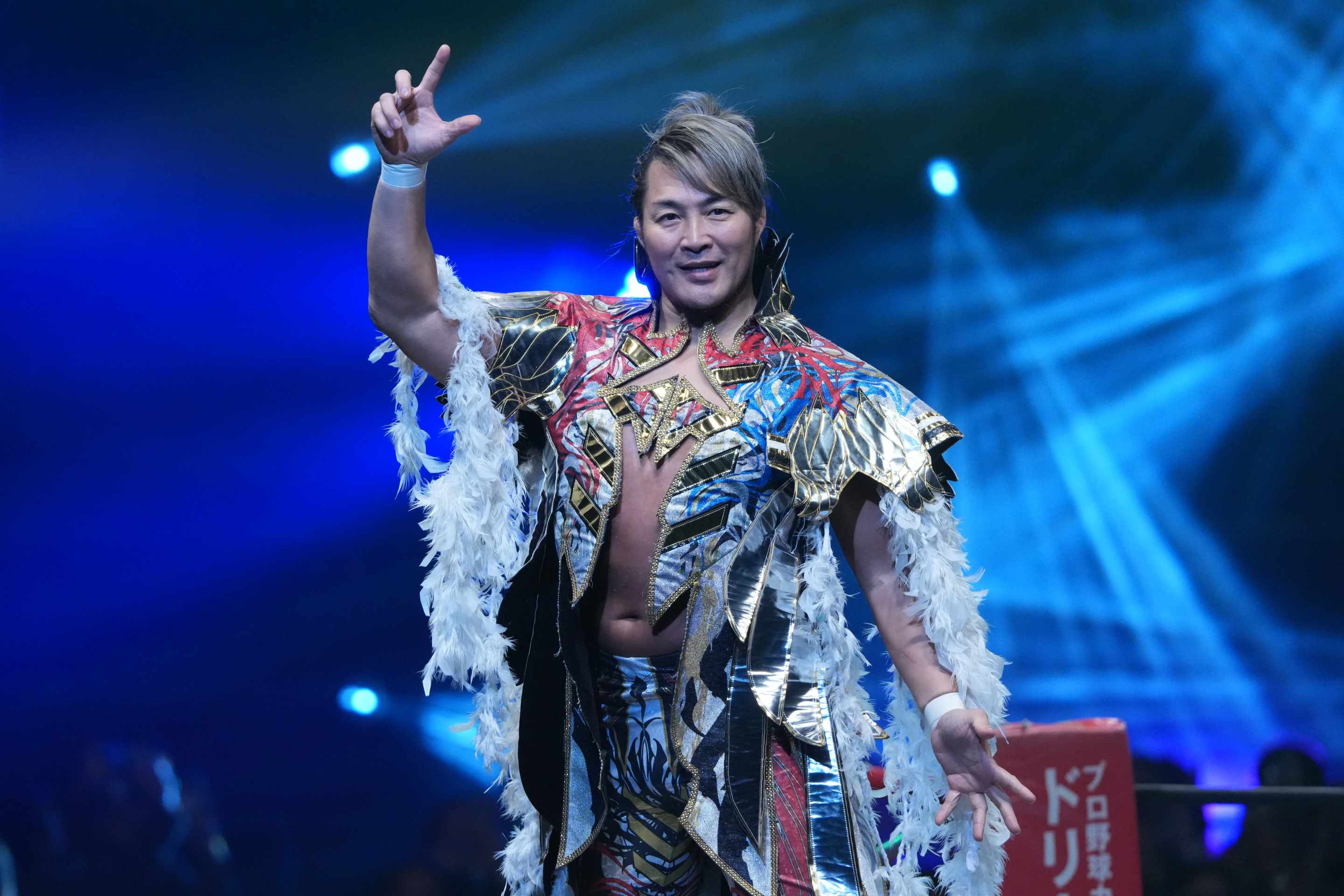
New Japan Pro Wrestling is hoping to pull off a recovery act kind of like Ishii's. Ten years ago, as the streaming boom made NJPW matches easily accessible anywhere on the globe, this company was the gold standard—the primary alternative for any fan turned off by WWE's lazy, hokey product. But the launch of All Elite Wrestling as a New Japan–inspired American competitor, the lingering hangover from the pandemic, and the aging of top stars all significantly weakened the company, leading to a year that honestly feels a little desperate. Hiroshi Tanahashi, longtime face of NJPW, has retired. Former Olympic gold medalist Aaron Wolf, who I likened to a quarterback drafted first overall in the hopes of a franchise turnaround, was unceremoniously benched just a month after his debut. And both major U.S. companies continue to lure away New Japan's talent with better offers, making their efforts at rebuilding feel like bailing water out of a leaky boat.
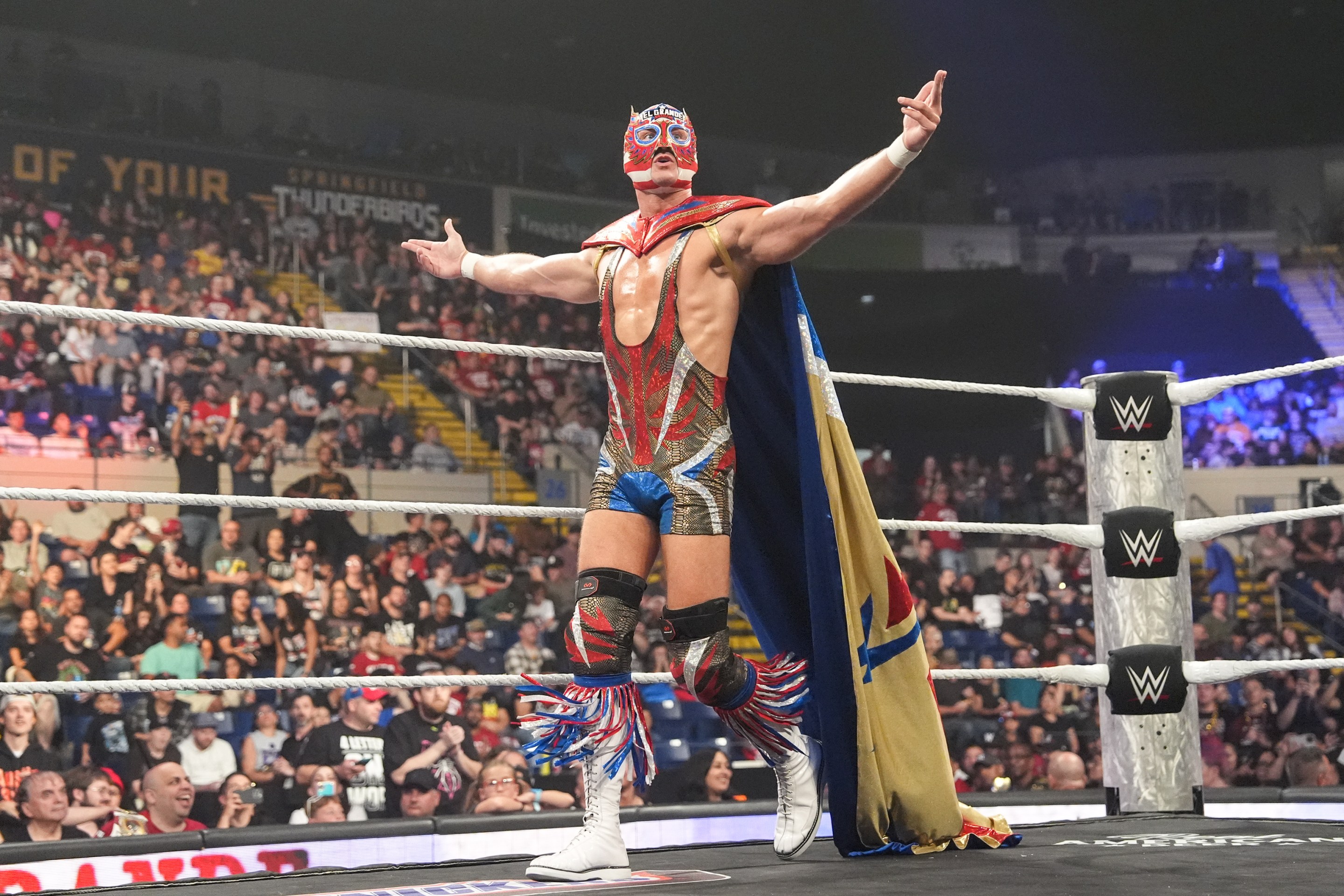
You could feel the shortcomings at the Trenton show, titled The New Beginning USA. (New Beginning is a long-running brand name for early-in-the-year shows, not a reference to a fresh era.) What made the card interesting was not that it contained a peak-NJPW group of wrestlers, but that NJPW only brought half the guys, and AEW (with whom they have a formal partnership) brought the other half. A decade ago, the company's top champion wrestling his first-ever singles match on the East Coast would be a huge deal for the hardcores, but Yota Tsuji, while not unpopular, felt eclipsed in his match by the U.S.-based Andrade El Idolo. In another universe, Konosuke Takeshita would be NJPW's top star, and an "Oh my god, I need to see him" guy for Americans. But in 2026, the man putting on perhaps the best matches in the world is a Japanese wrestler who primarily works in the States for AEW.
There's a question you might be asking: Why was this in Trenton? It's definitely worth wondering, and I can only give my best guess, which is that the venue is a pretty good bargain for the location—kind of close to tons and tons of folks in the Northeast Corridor, even if it's not super convenient for all that many. It's definitely a far cry from that time New Japan sold out Madison Square Garden over WrestleMania weekend in 2019, but what's more striking is that they couldn't even pack 'em in at the minor-league hockey venue. While the Cure Arena's lighted billboard outside warned drivers to stay away from the area to avoid traffic from the following week's Journey concert, the number of unsold seats on this night meant this show was more of a blip in the overall goings-on in Trenton on Friday night. Thinking about the recent talent defections in this company, I was curious if NJPW felt inspired by the city's iconic sign on the bridge over the Delaware: "Trenton Makes, The World Takes."
I note this because, in a lot of ways, the situation feels dire. But my thoughts on the peaceful train ride back to New York were anything but "Not enough people went to the Japanese wrestling show in New Jersey tonight." I was thankful for the 2,500 or so who did decide to buy tickets—the nerds and the bros, the goth couples and the normie parents. I was thankful for the talent I'd never seen live before: Syuri, the unflappable kick queen; Tsuji, who wants so badly to be able to carry this company and was so gracious to the crowd on the microphone (in English) after his win; and the tag team champs the Knockout Brothers, a quirky pairing that serves as an unlikely bright spot in a company that usually puts all its efforts into promoting singles matches.
What these performers put together was a night of very strong pro wrestling that, not too long ago, would have blown Americans' freaking minds. We're a lot more spoiled for that kind of thing now, but even as the zeitgeist slips away from NJPW—and Japanese wrestling as a whole, by extension—there's still a lot of good that's worth hanging onto.
In pro wrestling, when you deliver a backhand chop to your opponent's chest, you're actually making contact with their flesh, and it's the other person's job to suck it up. The performance is in making the pain seem worse than it really is, but there's no faking that smack that echoes through the arena. Because of that noise, and the perceived realness it represents, a hard chop is one of the most direct ways to excite a crowd, and I don't think anyone grasps that better than Ishii.
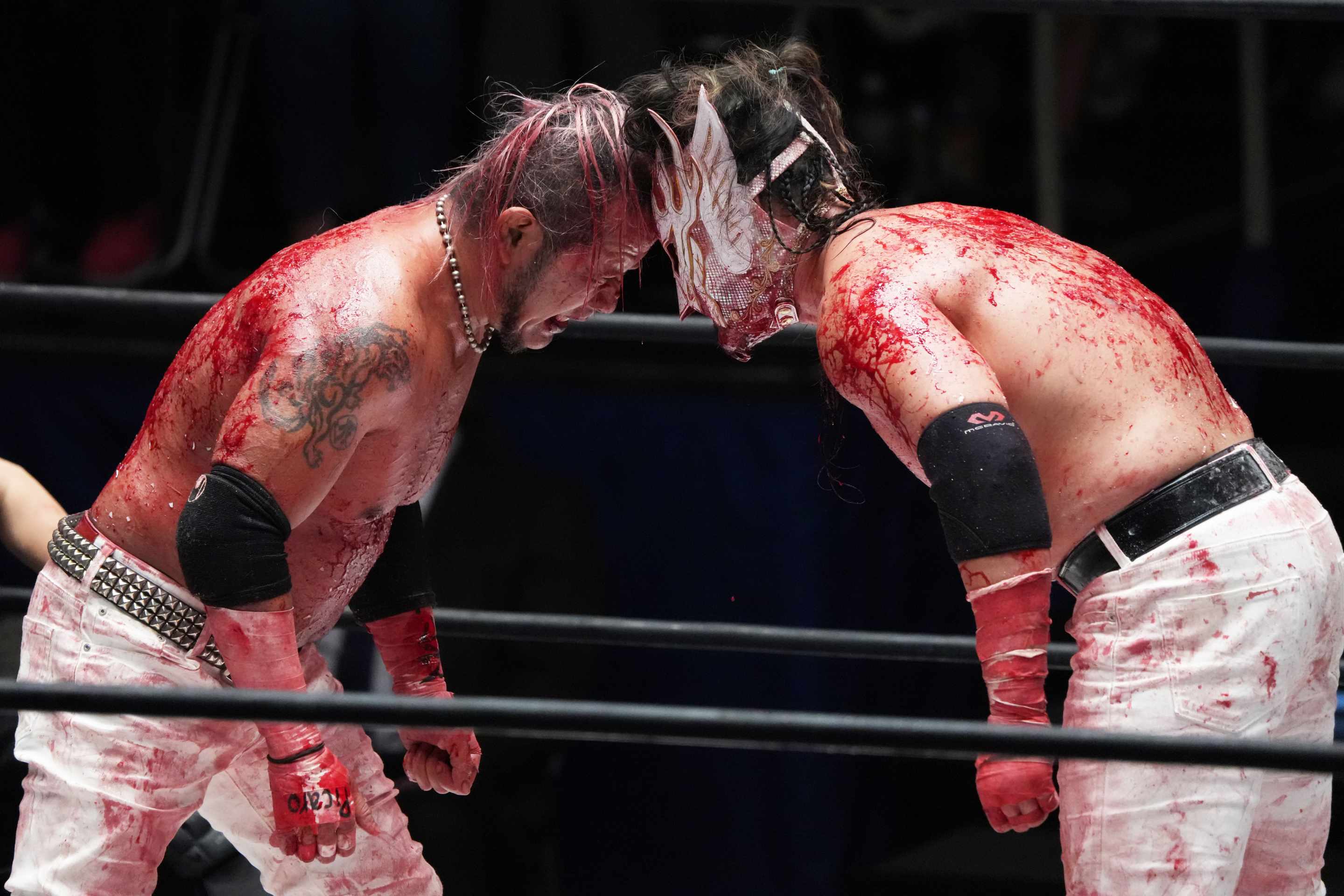
About midway through Ishii-Boltin, the two wrestlers butted heads and engaged in a chop battle. Boltin went first, sending a wincing Ishii against the ropes, and then they went back and forth. Boltin let out loud yells upon both giving and receiving, but Ishii was quiet and focused. The crowd provided the requisite "Oh!"s for each hit, but the two kept trading blows at a faster and faster pace. Chop. Chop. Chop. Chop. Folks cheered the effort, and the wrestlers kept hitting each other. Chop. Chop. Chop. Chop. More and more furious, until the exchange started to feel ridiculously long. Chop. Chop. Chop. Chop. They kept making that smack, and the fans rose for a standing ovation. This wasn't high-flying acrobatics, nor technically impressive mat grappling. It was just visceral, audiovisual storytelling, broken down to its simplest component. Chop. Chop. Chop. Chop. Finally, Ishii staggered, took a couple unanswered chops, and fell to his knees as the crowd chanted "Holy shit!" I went back to the footage later and counted 77 chops in this sequence. Don't try that with a friend, but just know the lengths to which wrestlers will go to entertain strangers.
Toughness, of course, doesn't guarantee survival. After 14 minutes of hard-hitting choreographed combat, Ishii went to lift up Boltin, but he couldn't get his man vertical. As he charged back in, Boltin grabbed the older man and lifted him high above his head with two hands, putting him in a fireman's carry before dropping him down on the canvas, where he lay flat and motionless. Not quite finished, Boltin gave him another slam for good measure. Boltin went for the cover, and the referee counted to three without any response from the pinned wrestler. Ishii, for all his persistence, lost the match.