

Most "women’s sports novels" are really novels about girls. In them, girlhood is something mourned before it's over. Like the games themselves, the books are set to ticking clocks. When the high school field hockey players of Quan Barry's We Ride Upon Sticks grill their teammate Kendra about losing her virginity, their inquest feels less nosy than urgent. "Time was running out, adultdom just around the corner," the novel's collective narrator says. "One by one, sex was coming for us, sex and death and taxes. We wanted to make sure it didn’t catch us unaware."
These novels see sports as an open field or training ground, a means by which girls can work out angst and desire—or even just retreat from them. In Marisa Crane's A Sharp Endless Need, published this past May, a high school basketball star is consumed by longing for a teammate. The game offers Mack "a place that existed outside of human curses." Gopi, the 11-year-old narrator of Chetna Maroo's Western Lane, picks up squash while she grieves her dead mother. Her age belies her skill at observation; Gopi is attuned to more than her father and sisters would guess. Squash grants her peace from this heaviness. On the court, "no one was rushing me, and if I wanted to, I could think."
They aren't so dissimilar, the patterns of sports and girlhood. What is teenage life but assigning too much importance to random and quickly forgotten events? "We wanted legacy … our names in bright lights, our names in everyone's mouths," A Sharp Endless Need begins, in a breathless prologue. Mack's feelings are cooled by the epilogue, her hoop dreams unrealized: "Now, though, we also want wisdom, we want quietude, we want the sweet decadence of boredom."
Rita Bullwinkel's Headshot, a novel about six girls competing at a boxing tournament, also tells of unrealized dreams. Her narrator pities the boxers for caring so much about a weekend so ultimately insignificant. One of them, Artemis Victor, will struggle to open the fridge in old age, a flash-forward tells us, and "no one in her life at that point, including her daughter, will have any remembrance of the meaning attached to what it means to be a boxer."
We leave the girls on bittersweet notes, the last gasps of girlhood just like the "glory days" of an athlete. When I read Catherine's sickbed lamentations in Wuthering Heights the other day—"I wish I were a girl again, half savage and hardy, and free; and laughing at injuries, not maddening under them! Why am I so changed?"—I thought she sounded like the creaky vets who show up three hours before tipoff to get treatment and talk about how they had to stop eating sugar.
Those are compelling enough reasons to set the women's sports novel in girlhood. Another is the uninspiring alternative: Growing up means new stakes and settings. A professional women's basketball superstar as protagonist might have seemed, until recently, a little far-fetched.
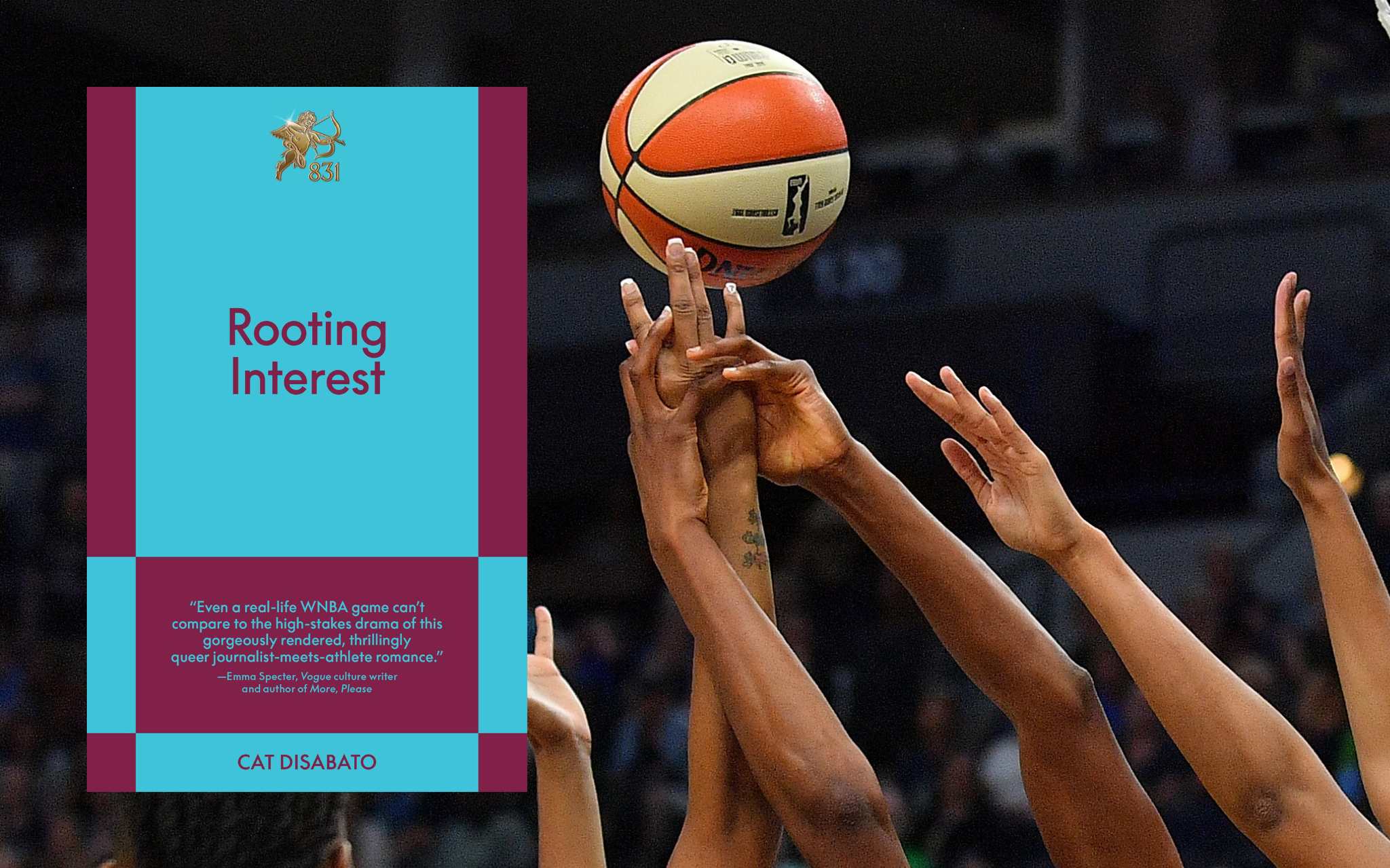
Cat Disabato's WNBA romance novel Rooting Interest, released by the romance publisher 831 Stories in January, is conspicuously adult, beyond just the sex—but then, yes, especially the sex, which is sex between people who know what they like. In Rooting Interest, basketball is no vessel for feeling, or shield from life's cold truths. Instead it's an industry, a colorful world of grown-ups who have long ago come to terms with those truths. They aren't without anxieties, but by the standards of the women's sports novel, these characters are rather at ease with themselves and their bodies. Natalie Czapski is a star WNBA player just returned from an ACL tear. Jennifer Felix covers a fictional NFL team for a Los Angeles newspaper until she's reassigned to the WNBA beat. Both women are openly gay, and spend enough time in queer spaces to share a sense of humor. When Jennifer introduces herself to Natalie, she insists on going by Felix, because "no one needs another dyke named Jen."
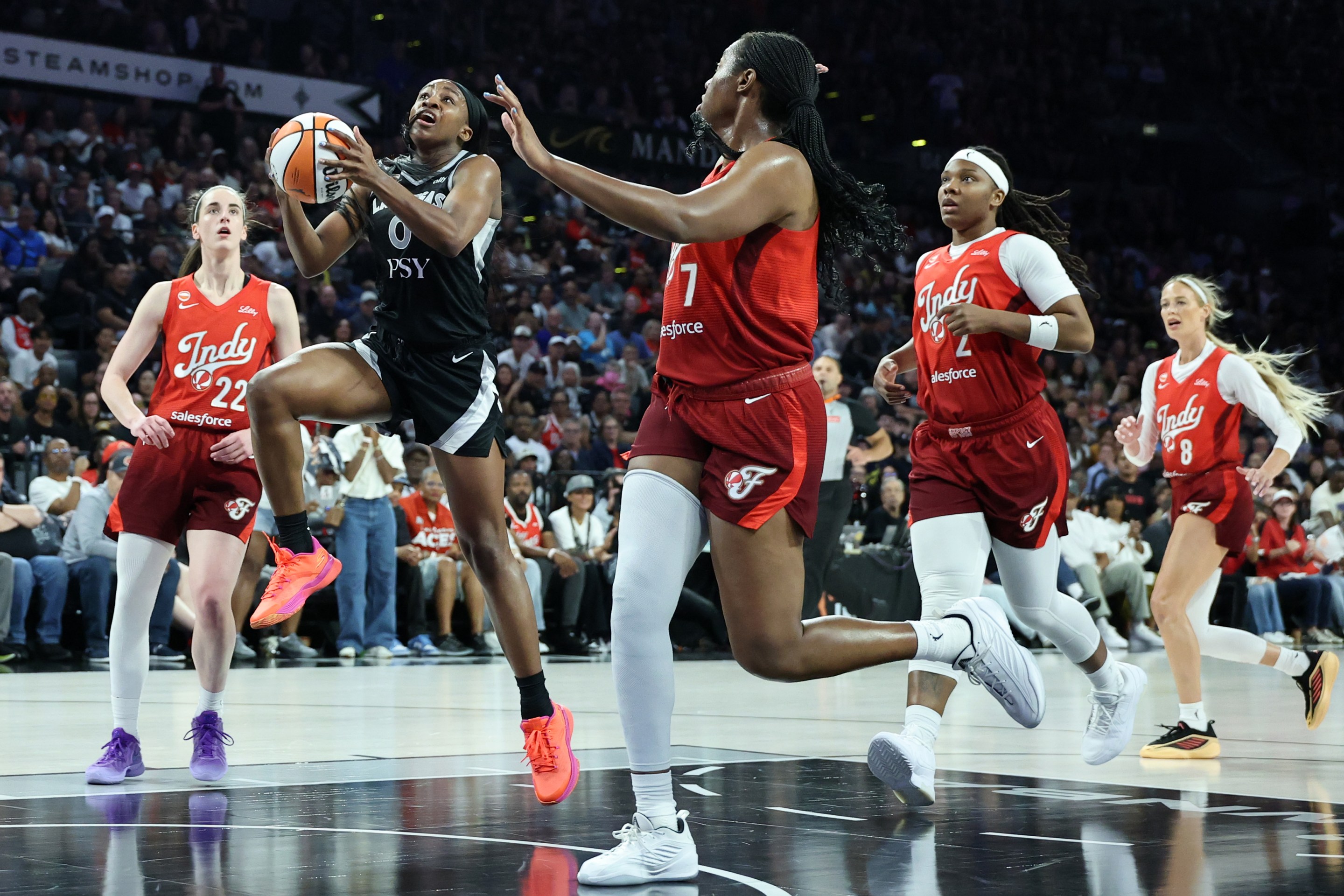
Rooting Interest takes place in a sort of semi-reality, where names familiar to WNBA fans share the court with Disabato's characters. Natalie plays for the fictional Sparks-analogue "Hollywood Lights." In one scene, she backs down the (not fictional) Jonquel Jones; in another, Caitlin Clark and Sabrina Ionescu splash threes in the background. The book's depictions of arenas, postgame pressers and life in sports media mostly check out, if other parts ring false: This newspaper has a sports desk, for example, and its coverage decisions are made to serve reader interests. Incredibly, Defector exists in the Rooting Interest universe. A colleague points Felix to Patrick Redford's "How To Watch Basketball" blog before she interviews Natalie. Later, a Defector reporter is among the media members with Felix at an Aces practice facility press tour. I did swoon at the thought of a travel budget big enough to send me to regular-season games in Vegas. Romantic and dreamy, indeed.
Rooting Interest is the latest release from the oft-profiled 831 Stories, which launched its first book in 2024. To describe their ambitions, the company's founders have invoked Marvel, Bravo and A24: media brands that offer fans "immersion" in the form of events, bonus epilogues, and merch. (On the 831 Stories website, you can purchase a Hollywood Lights hoodie.) Color-blocked and jewel-toned, 831's covers recall the uniform style of the Fitzcarraldo Editions or the NYRB Classics. As a New York Times profile of 831 describes one book, "were you to catch a glimpse of the cover, you’d never know it was a romance novel at all." Some fans of the genre view the whole project suspiciously, seeing in it shades of startup-style "disruption" and maybe some sheepish doth protesting too much.
The "WNBA" half of "WNBA romance" is admittedly what brought me to Rooting Interest, but it was easy to see what might bind fans of romance novels and fans of women's basketball, both of whom have long suffered from misogyny's shell shock: There's the same unease with mainstream dissection, a hard-earned wariness of outsiders, a propensity to overexplain ourselves, and a booming cottage industry of TikTok edits. The two can also feel like optimistic projects themselves. In a 2018 essay about romance in the Los Angeles Review of Books, Cailey Hall writes that by "depict[ing] relationships that involve negotiation and growth," the genre tends to model "a kind of personal, sexual, and professional fulfillment that does not feel like an unattainable fantasy."
I've been thinking lately about the WNBA in these terms; on a basketball court, that model of fulfillment is close and embodied. Space is meant to be taken up. Where else in women's lives does the winner get to say "too small"? In dozens of cities, you can sling back cocktails called "The Title IX" or "The Ice Princess" while you watch a women's basketball game. The sport's boom has felt a little like the fantasy that once seemed unattainable. Citing the literary critic Northrop Frye, Hall considers that romance might be engaged in a kind of "imaginative opposition" to the literary establishment. The many people who have turned to the WNBA, seeking something they have not found in men’s sports, invite a natural comparison. Being a WNBA fan may represent a similar kind of "opposition."
It’s taken me a while to entertain the idea that there is some important symbolic value in enjoying the WNBA. Some of that resistance was probably an artifact of my job; work applies a dull filter to everything. (Imagine that people walk into your office and start churning out thinkpieces about your desk chair.) I've also wondered whether it's not a little unfair to ask players to bear so much meaning while they try to live their lives. Forgetting that people are people, and not abstractions, can tee oneself up to be embarrassed or disappointed. And when a fan's earnest feelings are so easily co-opted or exploited, those feelings can recall the naive desperation of "Is MasterCard a queer ally?" Hall finds a refreshing solution in the work of the historical romance author and Shakespeare scholar Mary Bly, who warns against generalizing about an entire genre and offers instead that reading romance "may well be a rebellious act, but equally well it may not be."
Recently, another women's basketball journalist and I mused about a WNBA version of Heated Rivalry, the hit gay hockey drama adapted from a popular series of romance novels by Rachel Reid. Writing here about the show in December, Eva Holland also described "a specific sort of wish fulfillment" on offer in Heated Rivalry, the wish of a better and more accepting NHL. As the books progress, openly queer hockey players are more and more common. The challenge of "WNBA Heated Rivalry," we decided, would be to find some alternative stakes. Players dating each other is—no offense—not as interesting here. We’ve sped ahead to players divorcing each other, parenting together, and whatever the hell is going on with DiJonai Carrington and NaLyssa Smith.
In Rooting Interest, a romance sprouts from fertile ground. The more time Felix spends around the WNBA, the more she begins to wonder if her queerness "could be part of my professional identity, rather than something incidental and unrelated." Newly vulnerable this way, she can open herself up to a relationship with Natalie. (Readers with ethics concerns, don’t worry: She's moved back to the NFL beat before she and Natalie hook up.) The opposite is true of Heated Rivalry's Shane and Ilya, whose love is made more intense by their isolation. Still, both works grapple with the same questions. How do hyper-focused people make room in their lives for others? In the better, more compassionate, more accepting worlds we wish for, what might still be unsettled?
Rooting Interest is set in the WNBA, but crucially in this WNBA, one emerging from what Felix calls "the era of indifference" and hurtling into a sponsored, branded new age. She first begins falling for Natalie while she watches players at a photoshoot for the shapewear brand Skims at All-Star weekend, a campaign in which, Felix notes, "not only the whitest, straightest, and femmest athletes have been cast." All weekend, Felix has bristled at her editor's assignment, suspicious that she was only asked to write a women's basketball story because she's a gay woman. She prefers the neat, safe line between her writing and her self. However comforting it might be to be seen, it can be unnerving to feel like you're the product.
Even closeted, Shane knows parts of his identity are of commercial and professional importance. To be an Asian-Canadian hockey star, his mother Yuna reminds him, means serving as inspiration to many. "We’re thrilled that Shane is Asian," a team executive clumsily tells Shane's parents on draft night. Not long after Yuna tearily asks Shane to forgive her for making it hard to come out to her, she's in strategy mode, abuzz with plans to call his sponsors at Reebok and Rolex with the news. "There’s a world of opportunity here," she says between bites of lunch, "if they do it right." Yuna is savvy and driven—a little pushy, maybe—but never so flat as some stock "tiger mom" or "momager." Instead, she often comes through like the show's foremost adult. If the early part of life should be spent figuring out who you are, figuring out how much of yourself to share with other people is the next big challenge, Yuna knows, the sometimes romantic and sometimes unromantic work of being all grown up.
Toward the end of Rooting Interest, Felix is trusted with a story that forces her to reflect on being a lesbian on the NFL beat. She has always admired the sport for the way its players are subsumed into scripts and playbooks, cogs in one elegant machine. But her sojourn in the WNBA has helped her see football with new eyes. "The most stunning things happen when the plays don’t go as planned and the players have to follow their instincts," she says. "And the same is true for me; I am better when I know the rules but show up as myself."