
The NCAA at this point is an organization whose sole purpose is to lose in court. Wednesday brought another defeat, when an Alabama state judge granted temporary eligibility to Charles Bediako, a 23-year-old center who is seeking to rejoin the Alabama men's basketball team despite the NCAA declaring him ineligible to play.
Bediako played for Alabama for two seasons in 2021 and 2022 before declaring for the NBA draft. He was not selected, and went on to play three seasons in the G-League after briefly signing a two-way deal—a contract that allows a player to split time between an NBA team and its G-League affiliate—with the San Antonio Spurs. The NCAA tried to bar Bediako from returning to Alabama on the basis that any player who has previously signed an NBA contract, even a two-way deal, is ineligible to play college basketball.
Just like every arbitrary rule that the NCAA has attempted to apply over its long history, this one didn't stand up to much scrutiny. Bediako's lawyers successfully argued that the NCAA has, for many years, granted eligibility to players who had previously played professional basketball in Europe. Back in December, the NCAA allowed Baylor to sign James Nnaji, a 21-year-old big man who played five seasons at Barcelona before being selected 31st overall in the 2023 NBA draft.
"The NCAA has arbitrarily determined that it is acceptable for a student-athlete to compete professionally (either internationally or straight out of high school) and then compete in college, but it is not acceptable for a student-athlete to compete in college, leave college to pursue a professional career in the U.S., and then return to college as a student-athlete," Bediako's complaint read. "There is no principled justification for treating these groups of student-athletes differently."
The NCAA, meanwhile, has struggled to communicate a coherent explanation for why some former professional players are eligible—Thierry Darlan and London Johnson were also permitted to play college basketball after spending time in the G-League—while others are not. After Darlan and Johnson made their commitments, the NCAA released a statement saying that it maintains "the ability to set and enforce commonsense eligibility and transfer rules." In other words: We are making this up as we go along.
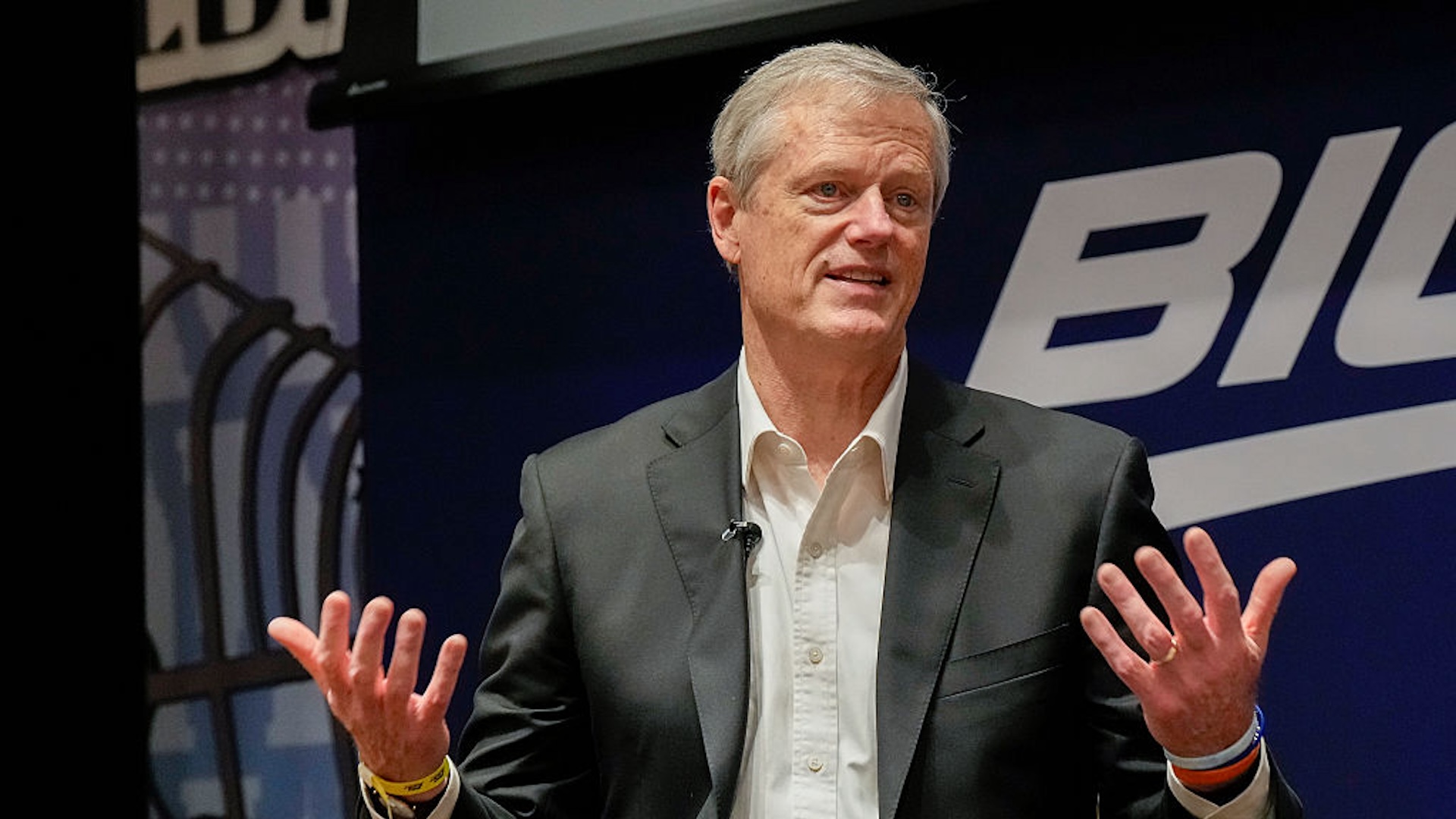
For his part, NCAA president Charlie Baker seems to want to draw a red eligibility line between players who have signed NBA contracts, even two-way deals, and those who haven't. Back in December, he threw some shit at the wall:
What the legal justification is supposed to be for making a distinction between a two-way contract with an NBA team and a pro deal with a European team is anyone's guess, and not one that the judge presiding over Bediako's case was interested in hearing.
Wednesday's ruling granted Bediako temporary eligibility, and a full hearing on his request for a preliminary injunction will happen next Tuesday. If the NCAA loses, expect it to do what it always does when confronted with another legal decision indicating that nobody is all that interested in submitting to its arbitrary and made-up authority: go crying to Congress.