
ÉVIAN-LES-BAINS, France — After several years of lurking in the shadows, the specter of doping once again looms over the Tour de France. Though nobody has tested positive—or no positive test results have been made public—the biggest story at this year's Tour is a renewed aggression from testing authorities and a resultant increasing hostility from the riders. The tactics executed by anti-doping officials and the legal justifications marshaled to support them represent a modernization of anti-doping rules, intended to disrupt hypothetical cutting-edge pharmacological routines designed specifically to beat previous testing methods. The International Testing Agency (ITA) and the Union Cyclistes International (UCI) are no longer passively accepting that the extant testing regime is good enough.
Here we see the latest iteration of an eternal story in cycling. The uneasy symbiosis between professional cyclists and the UCI is built on a shared interest in winning the public's trust. However, the sport's history makes that a fraught proposition, and while the riders would argue that a dearth of positive tests shows that nobody's cheating, the authorities would counter that no doping cases only means nobody's getting caught. Though riders and authorities ultimately want the same thing, it's incredibly difficult to balance labor's desire to be treated as trustworthy against management's desire to appear strong, without the former looking like liars or the latter looking like fools. So what's changed this year, and what does it say about the future of that delicate balance?
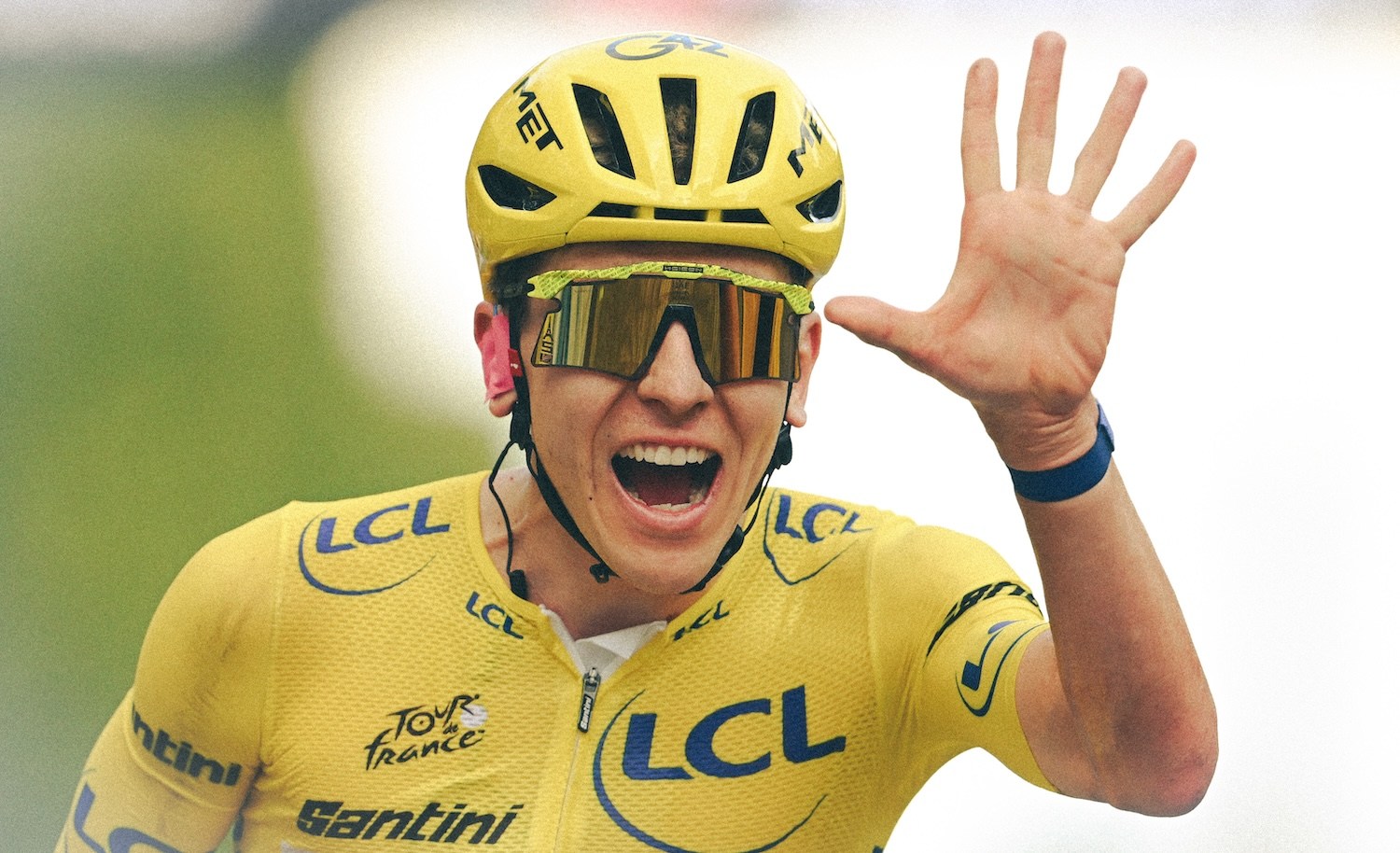
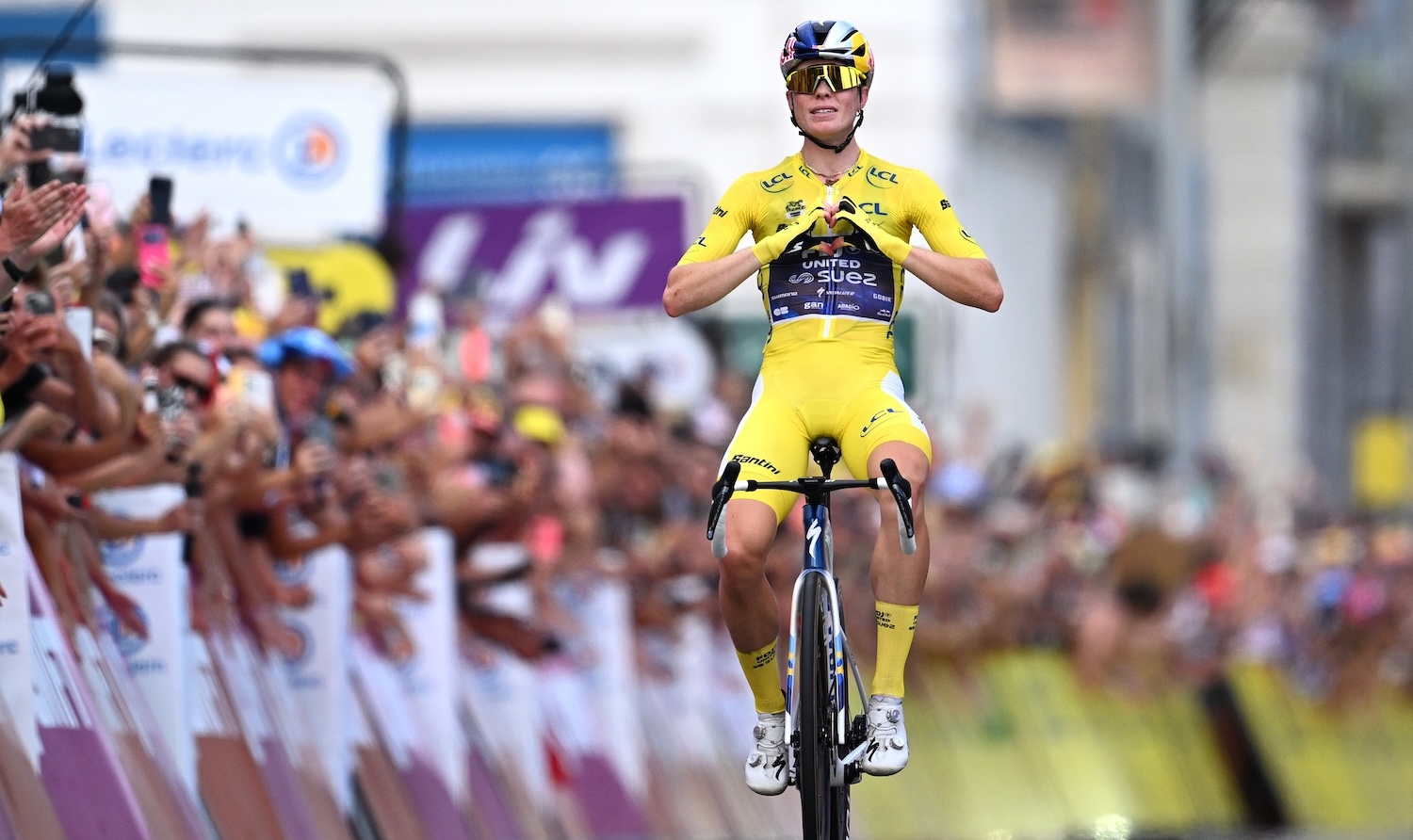
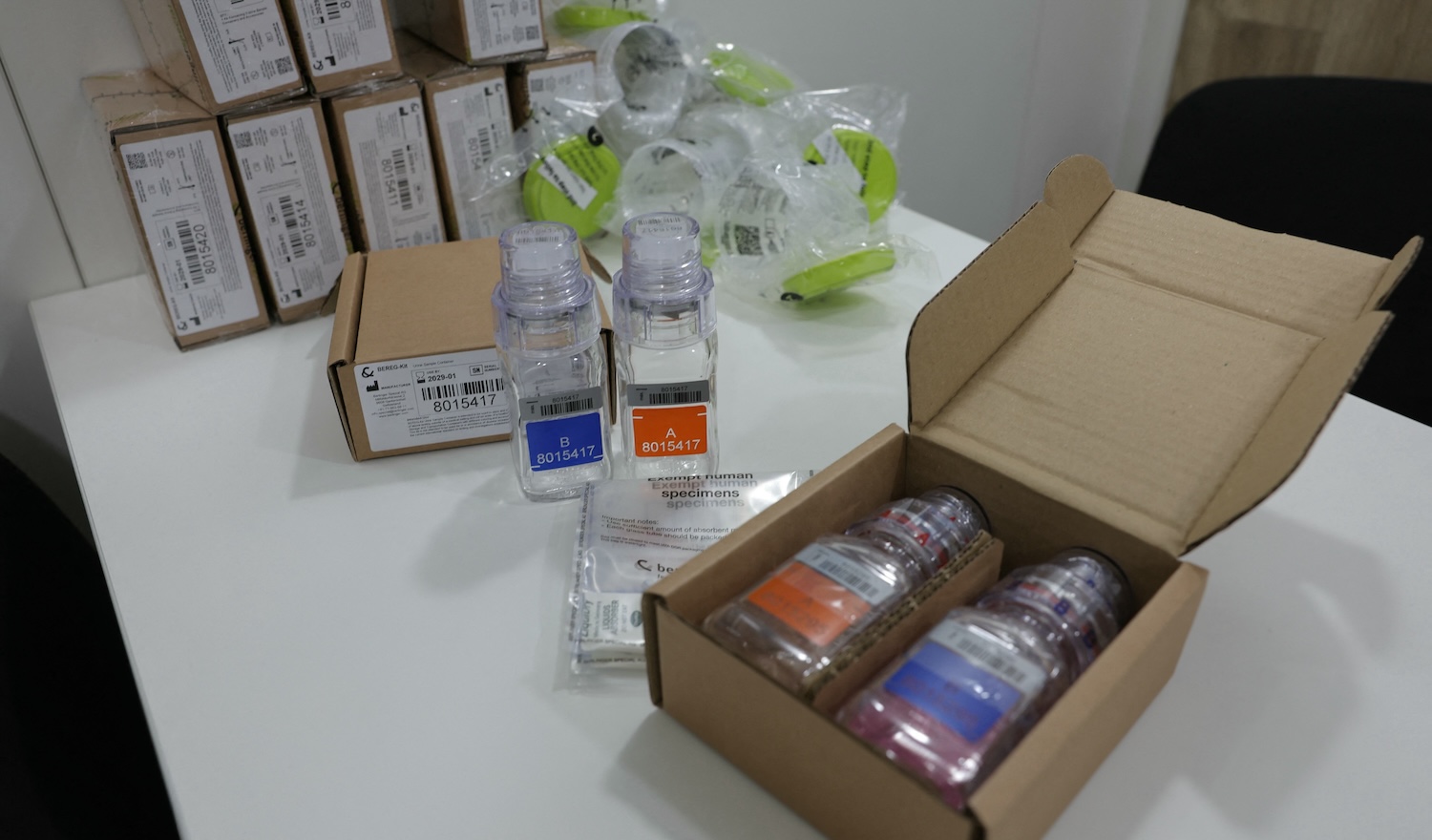
The first salvos were fired the night before Stage 15, when anti-doping authorities woke up Jonas Vingegaard at 2 a.m. and Tadej Pogacar at 5 a.m. to extract their blood and urine. The fact of their being tested isn't noteworthy. Riders must adhere to the biological passport program, which is quite rigorous and involves year-round testing. At the Tour, the yellow jersey holder and stage-winner are tested every day; every rider is tested at the start of the race; and many other riders get pulled in for random tests as the race progresses. Roughly 60 percent of the peloton will be tested at some point during the Tour. However, by rule those tests must take place between 6 a.m. and 11 p.m., unless authorities have "serious and specific suspicion that a rider may be engaged in doping."
On the second rest day, Monday, Chris Marshall-Bell reported that as many as eight other teams had been subject to late-night tests, including one in the first week and another in the second. That night, all eight Red Bull riders were subject to previously unannounced tests at 10 p.m. Unspecified numbers of Decathlon and Picnic Post-NL riders were also tested. The ITA didn't specify what its suspicions were founded upon, though L'Equipe broke the news that the ITA obtained approval from a French judge for the tests. The start paddock felt twitchier and more suspicious on Tuesday.
The involvement of the French judicial system speaks to how seriously this stuff is taken, but also to how muddled it can be. Both the legal standard for a French judge to sign off on the tests and the standard for a "specific suspicion" are more arbitrary than they might seem. Judges signed off on raids of Arkea in 2020 and Bahrain in 2021, and though two Arkea doctors were briefly arrested, no drug suspensions were ever imposed (Nairo Quintana did later have his sixth place at the 2022 Tour stripped over a Tramadol positive). The French government, unlike the UCI, doesn't really have anything to lose from doping positives, and has historically pursued them with more zeal. The "specific suspicion" bit is often the result of police work, focused more on the movement of drugs than the actions of riders.
But it's worth taking a broader perspective. Being in the yellow jersey and riding as strongly as Pogacar and Vingegaard have ridden is specific enough, since cycling has gotten so much faster over the last decade. Doping-era records have been shattered across the sport and money is pouring in. At the same time, positive tests are at a 30-year low: an Oier Lazkano here, a Miguel Ángel López there. People in cycling will say, I think pretty convincingly, that the increased speed is a factor of improvements to equipment, a finer understanding of aerodynamics, and improved nutrition. Riders will also talk about the total commitment it takes to race at this level. You can't win without isolating yourself for weeks in an altitude camp, turning yourself into a machine that converts a punishing diet into perfectly tuned cardiovascular performance, and generally optimizing every aspect of your physiology. It's about going right up to the line of what you're allowed, and their version of the story would assert that they get enough out of the hyper-optimization that nobody crosses it anymore.
That story has been pretty successfully told, and cycling is in a pretty healthy place right now. But it's important to remember how dire the situation was 20 years ago, and what role doping played in the decline. All seven of Lance Armstrong's Tours now have no winner, Floyd Landis's 2006 win and Alberto Contador's 2010 win were both stripped, and massive busts like Operacion Puerto revealed that many teams had been running comprehensive doping programs. Sponsors were fleeing. Without the public's trust, cycling was in a precarious financial position, and it wasn't clear how the sport would be able to sell any new up-and-coming stars without people immediately regarding their achievements as the product of cheating. The post–Lance Armstrong era was stippled with positive tests from the most famous riders in the world, and it wasn't until Team Sky came along and dominated the 2010s that cycling seemed to have finally turned over a new leaf.
But Sky was eventually also the subject of a sprawling doping investigation that showed they'd pioneered the use of therapeutic-use exemptions to get their riders access to mild performance enhancers, in addition to raising some huge questions about shady figures transporting jiffy bags of unknown substances across international lines. Though few major revelations emerged from the Sky scandal, it was the last major doping story in cycling. Maybe we'd know more if Richard Freeman hadn't destroyed a laptop with a screwdriver.
In the Pogacar era, a few good riders have earned suspensions, but nothing major has happened. The money in cycling has increased dramatically in that time. Several sovereign wealth funds have come into the sport, along with shipping giant CMA-CGM, French sporting equipment powerhouse Decathlon, and South African billionaire Ivan Glasenberg. Paul Seixas is currently the subject of a bidding war that could see him become cycling's first €20 million rider before his 20th birthday. All that money is good for everyone: both those who have an incentive to cheat, and those who are trying to sell a clean sport to the world. But the balance only holds and the lines only keep going up if the public believes what it's seeing.
Does that mean cycling is totally clean? Escape Collective's 2024 story on carbon monoxide doping is instructive: Teams found a way to enhance performance that wasn't then technically illegal, yet produced the same results as the already-banned stuff like erythropoietin (EPO). Ask around, and the loose, speculative consensus is that the sport is pretty clean, and whatever doping is going on today is taking one of two forms: hardcore gray-area stuff like huffing CO, or microdosing traditional performance enhancers in such a way that they won't show up on tests.
That was the point EF team boss Jonathan Vaughters made on Monday night, when he "rolled a grenade down the aisle," and said that 2 a.m. testing was designed to catch microdosing of testosterone, hGH, and EPO. Decathlon's Oliver Naesen likewise speculated that the ITA was looking for growth hormones, and doing so in a manner designed to catch any doping products that would clear the bloodstream overnight (for what it's worth, EPO doesn't leave the system that fast). That doesn't mean either of them suspect such doping, simply that they are on the inside and are trying to explain the ITA's rationale.
Most current riders and their teams have stressed that while being tested in the middle of the night is annoying, it's also an acceptable price to pay for a clean, trustworthy sport. Several former riders are indignant about cyclists being woken up in the middle of the night, as was legendary Irish reporter David Walsh. The point Remco Evenepoel joined them in making is that the demands of racing the Tour de France are so great and that uninterrupted sleep is the only way to endure the physical misery of three weeks of racing. Nobody here at the Tour is excited to talk about it, even if it's all anyone wants to talk about.
That hints at the odd tension running through this story: Cycling's relationship with its own past is fundamentally a traumatic one. The many doping scandals of the period between the Festina affair and the Team Sky inquisition were also coeval with millions of people feeling joy, excitement, and nervousness as they watched and fell in love with cycling. The degree to which the scandals that followed tainted the good times is up for debate, but being faced with the harsh, painful reality that so many riders were cheating would make it hard to watch the sport with any level of belief. Who would want to feel like a sucker, especially if they already did once?
This explains the current of paranoia and cynicism running through cycling. Better to watch with a sneer than to open yourself up to the possibility of another heartbreak, and with so many former dopers still involved, I understand the impulse.
For its part, the ITA also runs on belief. That explains the ramped-up testing not just at the Tour de France, but all year. Pogacar casually mentioned after Stage 14 that testers wanted to get their hands on his blood way sooner after his first race of the season than they ever had before, as new ITA rules allow the testers to extract one hour after a race instead of two. Per a February story from Marshall-Bell, the UCI "has been pressing the ITA to find a high-profile case of cheating within the sport," on the logic that it would show the efficacy of anti-doping and act as a deterrent.
What we see here is more evidence of how tricky it is to maintain the impossible balance of belief within cycling. Maybe there is widespread doping within the peloton and over the next few weeks and months, maybe riders and teams will experience yet another inquisition. Or maybe the ITA and the UCI need to appear to be taking things seriously, and maybe the tests are about needing to remind the world that they exist. That seems more likely to me, and to the journalists I've chatted with. But all we really know right now is that the delicate equilibrium that cycling has enjoyed for the past six years is wobbling.