If you went back in time to New York in the early '90s, not a soul would believe you if you told them Jay-Z would end up where he is today. Well, maybe one person would: Jay himself.
Jay-Z's relatively delayed breakthrough made him something of a late bloomer, even in an era when stars weren't minted as quickly and early as they are now. It took him a while to figure out how to be himself on wax. It was his big homie Jaz-O who put him on, and the two of them had a Das EFX, Fu-Schnickens fast-rapping style that was as technically impressive as it was uninteresting. The labels didn't know what to do with them. Those who heard them tended to think Jaz was cool, but that the light-skinned kid had something else they couldn't quite put into words.
DJ Clark Kent was Jay's biggest cheerleader at that time, but without label interest, Jay figured he was better off prioritizing his life in the streets over the studio. Things continued that way until Clark introduced Jay to Harlem hustler Dame Dash. The pair clicked, and together with another street guy, Kareem "Biggs" Burke, they decided to pool their resources and start their own label, Roc-A-Fella. Their first project would be Jay-Z's proper debut, Reasonable Doubt, which turned 30 this week.
On Reasonable Doubt, the fast, wiggety-spiggety rapper from "Hawaiian Sophie" is gone. Instead it's the Jay we're a lot more familiar with: not just the hustler, but the boss. Selling pounds instead of nickel bags. Rapping about the expensive cars, champagne, and a lifestyle viewed from a vantage point higher than what you typically found in street rap of the time. He gave you ambiance while others just rhymed.
Aside from the rapping itself, a big part of why Reasonable Doubt resonates so much still is that it was what we would call today an exercise in personal branding. The success of Reasonable Doubt validated Roc-A-Fella's early marketing strategy, which included showing up to clubs, shows, and radio stations in fly cars, buying out bottles of champagne, throwing around money very conspicuously. Jay was cool and flashy, but in an effortless way. Dame was flashy and loud, full of that classic Harlem bravado. The glamorous displays helped both advertise the music and authenticate it, proving that everything Jay rapped about had to be true, because you could see evidence of it right before your eyes.
Jay was one of my first "favorite rappers." He was the coolest guy in the world to me; no one wore a fitted and a big leather jacket better. He was the best at clever turns of phrase, and double or even triple entendres. And as DJ Clark Kent liked to point out, he was the best at saying his rhymes. With his self-assured smirk, he could make anything sound smooth.
That's what Reasonable Doubt represents to me, even now. Jay-Z differentiated himself by taking the Nas route of using his slick wordplay to tell the tales of the streets. If Nas's perspective was that of a young man watching the scenes from his project window, then Jay's was that of a boss in the thick of it, surveilling his domain from inside an Acura Legend parked on the corner. His first verse on "Dead Presidents II" is still as potent as it was 30 years ago: "Can't stop I, from drinking Mai-Tais, with Ty-Ty/Down in Nevada, haha, Poppa, word life/I dabbled in crazy weight/Without rap, I was crazy straight/Partner, I'm still spending money from '88."
His "Bring It On" verse might be my favorite on the whole album: "Mannerisms of a young Bobby De Niro/Spent Spanish wisdoms, in a whip with dinero." And "Can I Live" speaks for itself: "For precipitation we stack chips, hardly/The youth I used to be, soon to see a million/No more Big Willie, my game has grown, prefer you call me William."
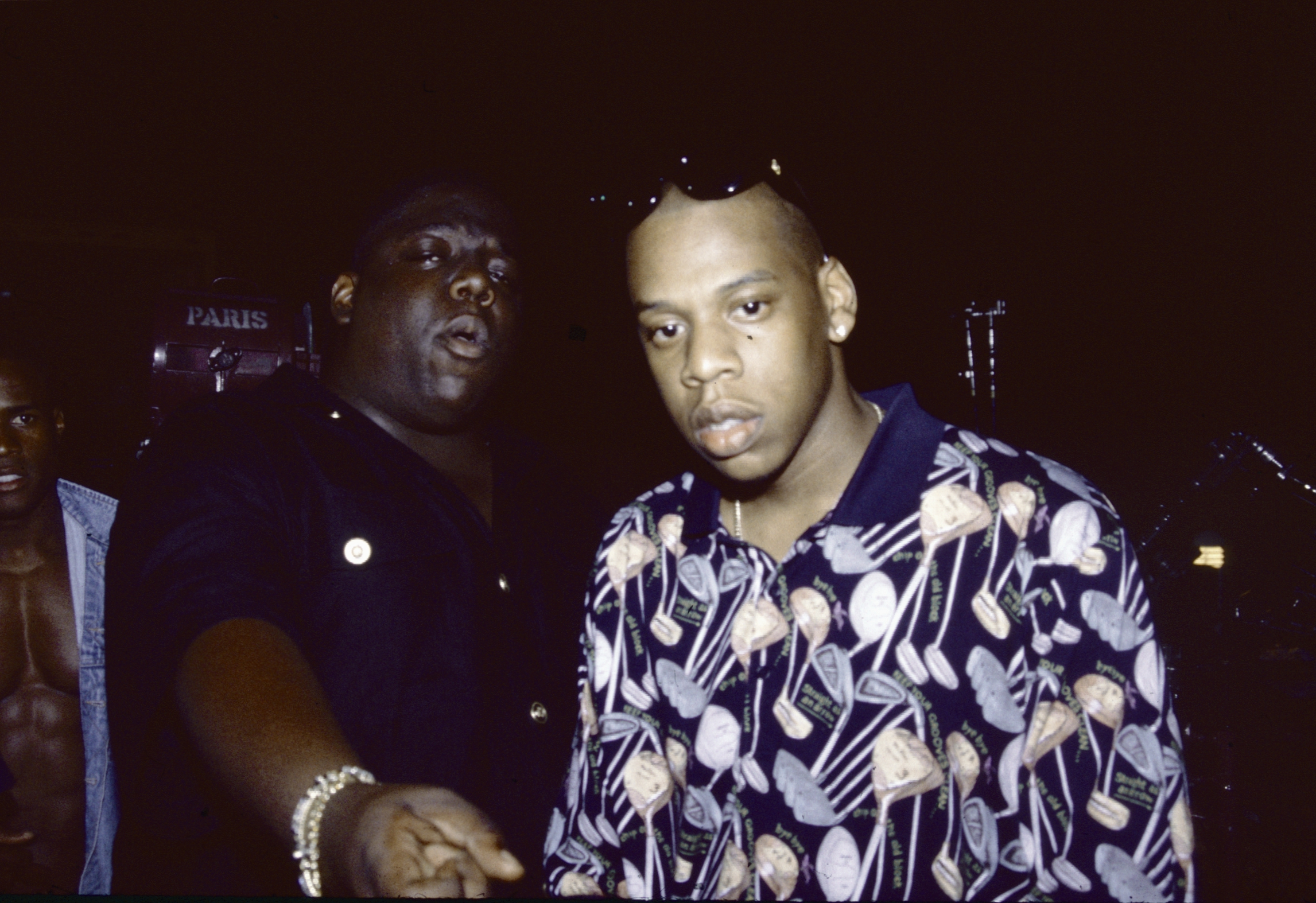
Reasonable Doubt also serves as a valuable snapshot of a golden age of New York hip hop, a real who's who of that period: features from The Notorious B.I.G., Foxy Brown, and Mary J. Blige; prominent samples of Nas, Prodigy, and Fat Joe records; beats from some of the most prominent New York producers of the day. Again, there's that synergy: The collaborations made for great music, and at the same time smart branding, marking him as a peer of rap's elite on just his first album.
The popular history reads that, after Biggie's death in 1997, Jay-Z comfortably stepped into those shoes as the new king of New York. However, it's interesting to remember that at no point in his career was Jay the highest-selling rapper from the city. Instead, his claim to the throne was based on his consistency. For over a decade, you could depend on Jay putting out a new album, and the album would be good. It helped that Jay was always a trendsetter. Any brand, drink, or style he shouted out in a song or flaunted in a video became the hot new thing. Jay was also wise enough to recognize the sleeping giant that was Southern rap. He was a huge fan of Cash Money Records, Scarface, and UGK, and did his part to help normalize them with the often provincial East Coast audience. (At times, he maybe went too far in that direction; the less said about his verse on the "Ha" remix, the better.) From down South, we often looked at his regional crossover efforts as him trying to jump on the wave right as the South was starting to take over. With Jay, both things are usually true. A Jay verse was always an event, whether it was a radio freestyle or a verse on a Mya record. At least until Kanye, it's fair to say Jay-Z was the most influential rap artist around.
These days, it's hard to remember that Jay-Z. In 2026, he might as well be Jeff Bezos; he's as corporate as they come. He's a guy the NFL could recruit when Colin Kaepernick and anthem kneeling was giving the league too much negative publicity. His last album should've come with a CPA exam. He was recently sued for sexual assault, though the accuser eventually dropped the case against him.
Jay is controversial, to say the least, even before getting into his effect within the music itself. He played a key role in rap's transition from music about the poor and downtrodden to music about "bosses" and "kingpins," and the rise of luxury lifestyle rap. He's basically responsible for rappers not physically writing their rhymes anymore, thanks to the lore surrounding his own creative process, which takes place all inside his head. There's the messy breakup of Roc-A-Fella, which Jay seems to have instigated so that he could leave to become president of Def Jam.
But even now, Jay-Z can have moments where he rekindles that old spark, like at the recent Roots Picnic. It's been interesting and maybe even a little suspicious to see Jay suddenly leaning hard into Roc-A-Fella nostalgia. Usually that kind of thing is limited, a bone thrown to the fans on every pivotal anniversary. A concert, maybe, or a re-release. This year, Jay seems to be playing it up. There are the shows at Yankee Stadium for Reasonable Doubt and The Blueprint, and the Roc reunion at the Roots' festival in Philly. Jay brought out Beanie Sigel, Freeway, Peedi Crakk, the Young Gunz, and Memphis Bleek for a big Roc-A-Fella lovefest. He also delivered a freestyle that, if nothing else, proved he still has the ability to make the world stop and take notice.
Jay's spent a decade content to let everyone reminisce about the good old Roc-A-Fella days, and to gossip about how those days fell apart, and whether or not he sold out his friends to get ahead. Perhaps he feels the need to remind people what they loved about him, given that he's now most closely associated with being a member of the loathsome billionaire class and helping the NFL whitewash its image. Maybe he understands that this is what sells now. You'd rarely be wrong by reading cynical intentions into anything Jay-Z does.
There was a brief moment while watching the Roots Picnic when I felt that familiar pang of affection for his ability to still do this, and for reminding me of what those old days were like. But Jay-Z isn't the only person who can speak in Wire references: The thing about the old days, they the old days. I don't know if I could bring myself to care enough to visit Yankee Stadium, or entertain the idea that new Jay-Z music could still be good. Nostalgia, for as powerful as it is, can't make it 1996 again. Life just ain't like that anymore. But I'll always appreciate him for teaching me the difference between a 4.0 and a 4.6 Range Rover.