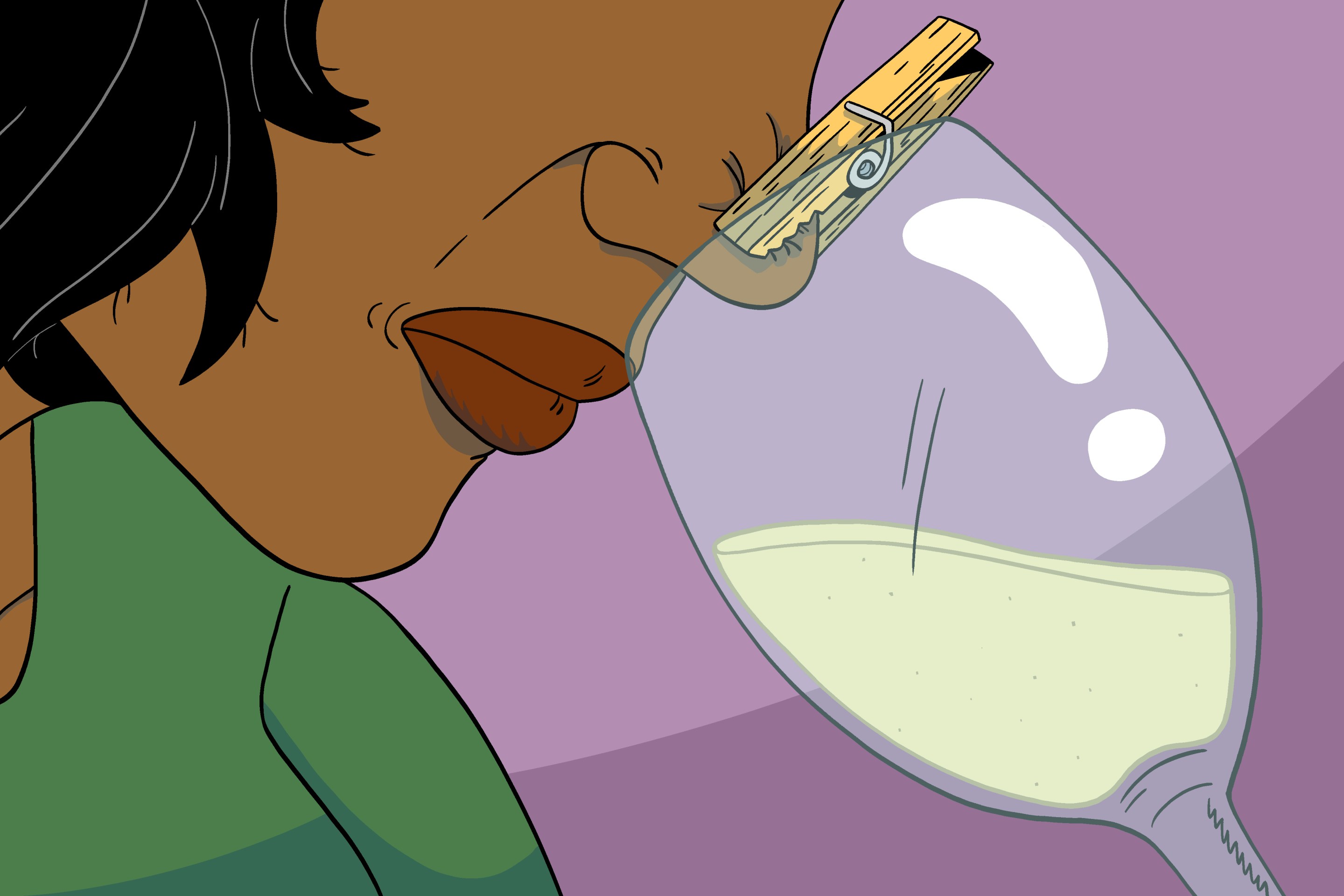

I knew I had gone too far when the question of whether we should buy a gun crossed my mind. This came at the apex of a weeklong anxiety spiral triggered by a New York Times feature about the possibility of an 18-month nationwide blackout. I was uneasy seeing the phrase “art form” used to describe the archaic manufacturing process of the transformers that underpin our electrical grid; the process involves painstakingly bespoke techniques of winding copper coils, wrapping paper insulation, and binding wiring, all by hand. The intensity and intricacy of that process means that there is a backlog of transformer manufacturing and repair, sometimes stretching as long as five years. There are more than 55,000 substations in the United States, but according to a Federal Energy Regulatory Commission official cited in the article, only nine of the most powerful substations would need to be taken out to trigger a nationwide blackout, which could go on to last as long as 18 months.
At the same time I read this article, an actual blackout was taking place in Gary, Indiana, a state where more than 370,000 people—the population is disproportionately black—were left in the dark for two weeks before power was restored. My social media feeds filled with videos of people rushing to put fresh batteries into their flashlights because the longer they stayed in a lit car, “the more chance you have of somebody running up and pistol-whipping you.” This same creator said that people were robbing each other for generators and called it “the motherfucking apocalypse.” I replayed the videos and then thought about them for days, imagining how I would respond in that type of situation and knowing that I was completely unprepared to defend myself if I needed to do so.
Compounding my anxiety was the fact that I am five months pregnant with my first child. I am trying to keep a grasp on a sense of coherent identity as my body becomes unrecognizable and mega-doses of hormones wreak havoc on my sanity. I have historically been ambivalent about parenthood; as the oldest of four kids, I resented caretaking and never harbored dreams of being a mother. But as this fetus makes its presence more evident, I am increasingly aware of the way my brain is reorienting around this helpless being for whom I will be completely responsible in just a few months’ time. In my adult life thus far, I’ve imagined the future as wide-open and abundant with choice, where any successes or mistakes I make will primarily affect me and no one else. Now I can feel my attention, energy, and resources reorienting toward this small human who didn’t ask to be born and has no idea what they’re in for. I am responsible for me and for this person, and if I fuck up, they will bear the consequences.
I find I’m increasingly aware of how dangerous the world is. Part of this is likely that I am an anxious person by nature, but I think it also makes sense that my transformation from child-free adult to parent would involve a heightened sense of alertness, maybe edging toward paranoia. I am immunocompromised from a medication I take for a chronic disease, which means the baby will be immunocompromised once they’re born, too, and I am so much more concerned about how the upcoming cold and flu season will affect them than I am worried about myself. At night, my subconscious works through the worst-case scenarios: I have been having nightmares about my partner’s death, that my closest family and friends have abandoned me, that I must pack a single bag full of supplies and leave my home forever, on foot.
The Covid pandemic was a lesson in catastrophe, a confirmation for many of us that the worst can actually happen. And the likelihood of disaster, which has always loomed in the background, continues to escalate in unprecedented ways. The air is dense and orange because wildfires are ravaging the north. Flash flooding caused horrific mudslides in Nepal. A super El Niño is brewing in the Pacific. How does a person, in good conscience, bring a baby into a world like this?
It was in this miasma of paranoia, anticipation, and horror that a self-preservation instinct began to take over, one grounded deeply in my ability to purchase comfort and safety. This is how I ended up on the Preppers subreddit, reading about the relative merits of pre-made emergency kits (pre-made is better than nothing, but you’re generally better off compiling your own) and the most important things to do in the first 12 hours of a blackout (stockpile as much water as you can, but also consider stocking cigarettes and alcohol for bartering). I let myself drift into a prepper spiral and bookmarked generators and hand-crank radios, and then considered how much space in my basement could be dedicated to storing food and water.
The websites that sold emergency prep kits depicted a post-blackout world as a ravaged apocalypse and the would-be owners of their kits as savvy, self-sufficient survivors. “When the grid dies,” one site says, “you don’t.”
The Reddit preppers recommended thousands of dollars worth of products, but they also extolled the virtues of practical knowledge. You should know basic construction, they said, and also collect seeds, and also know self-defense. There were always ways you could go deeper and become more self-sufficient. This is how people end up with massive compounds filled with weapons and enough food to last years. I could see the logical jumps my mind could make to land me there.
My personality is particularly susceptible to this kind of anxiety, and so is my partner’s. After a few days of sending links back and forth to each other, we sat down to talk about how far we actually wanted to take this. We landed on a 30-day supply of freeze-dried food from Costco and an emergency first aid kit—a modest financial investment toward alleviating our shared anxiety. We kept generators and solar panels off the table, but when the thought of buying weapons fleetingly crossed my mind, I knew I needed to call a timeout and figure out what I was actually worrying about.
I was afraid of losing control, of life not going according to plan, of another major disruption changing the course of history. I was afraid that my neighbors would turn on each other, that the world would turn into every post-apocalyptic movie I’ve ever seen, and that I would regret not doing everything I could to protect my family. I was afraid of the horror my child would inevitably experience when confronted with the cruelty and neglect that humans are capable of, and I was afraid that as their parent, I wouldn’t be able to do anything to protect them from it.
Once I articulated these fears, I realized I could not control them even if I spent my entire life in a defensive crouch of paranoid preparation. If the U.S. is plunged into an 18-month national blackout, it will be a cataclysmic event that will touch every part of our society and economy such that continuing any kind of normal life will be impossible. The amount of preparation I would have to do to maintain a semblance of normalcy in that instance would require such absurd investments of time and money that it would force me to adopt “emergency preparedness” as a main personality trait and hobby. And doing that would require a change of my fundamental values and worldview, too, because it would make me live in a way that assumes people are more likely to hurt than help each other.
Coincidentally, my partner, who is a college professor, taught a lesson recently contrasting Hobbesian and Lockean states of nature for his Intro To Government class. Thomas Hobbes believed that people were driven by competition, distrust, and scarcity. In projecting a disaster scenario, Hobbes would expect neighbors to steal from each other and would place a priority on self-defense and independence. John Locke, on the other hand, believed that people’s actions are generally governed by natural law to not hurt “Life, Health, Liberty, or Possessions,” that peace is the natural condition of society, and that any conflict that arises is an exception, rather than its fundamental nature. This doesn’t mean that Locke imagines a utopian response to disaster, but even if conflict arose, he would expect a greater amount of cooperation between people.
You can see why Hobbes and Locke are taught at the beginning of a government class: The way you view the world determines how you live in it. These two theories also underpin the central policy differences between the left and the right. What is responsible for the problems in our world, and how do we go about solving them? If you believe that people are mostly selfish and hungry for power and resources, for example, you will be less likely to advocate for social safety nets. I realized that my anxiety was leading me into an imaginary Hobbesian hellscape, and I was using my impending parenthood to justify it.
Later that day, we walked over to a block party in our neighborhood hosted by a coffee shop/bar/event space that some neighbors founded in an old church. The shop, West Art, serves as a third space and community hub for our neighborhood. Free clubs meet up there nearly every night of the week, from songwriting circles to watercolor painting; the actual church space is booked up multiple times a day for events like children’s art classes, political organizing, square dancing, and concerts. West Art’s founders, Josh Gibbel and Rufus Deakin, are two of my neighbors who just acted on the very common intrusive thought of “What if this was something?” They bought the church in 2023, and since then they’ve transformed it into what they call “the living room of Lancaster.”
The block party was an all-day event where vendors set up shop along the residential street that West Art occupies, along with two stages for bands to perform, food trucks, a bounce house, and lots of community organizing. As I sat on the ground and watched kids throw balls at the fundraising dunk tank, my anxieties about the apocalypse began to feel small and silly. If disaster does come, I’m lucky to live in a community of people who already have lots of practice in looking out for each other. There’s privilege in that; it’s easier to live up to your values, whatever they are, when you have a fridge full of groceries and a roof over your head. Even still, the block party was a reminder to me of the state of nature I believe in, where people are more likely to help than hurt each other and one’s survival isn’t just a matter of individual responsibility. When I’m anxiously scrolling /r/Preppers alone, my concept of “community” can seem like a treacly solution in the face of catastrophic disaster. But when I log off, it’s also the only thing that actually feels real.