Late Friday night, the United States launched airstrikes on Caracas, Venezuela, and military special forces landed, captured, and extracted President Nicolás Maduro. He was arrested and is expected to appear in a New York federal court within days on narco-terrorism charges. It was an insane thing to wake up to on Saturday, and it feels no less insane after the passage of a day: The U.S. kidnapped a sitting head of state, and now he's in a jail cell in Brooklyn.
It's the culmination of the Trump administration's longstanding aim of regime change in Venezuela, which has only escalated since Maduro was declared the winner of sham elections last summer. There are still a whole lot of unanswered questions. Why now? Who will run Venezuela next? Was this done with the cooperation of any of Venezuela's remaining government? What's not in question is why the U.S. acted in the first place. Donald Trump will happily tell you that himself.
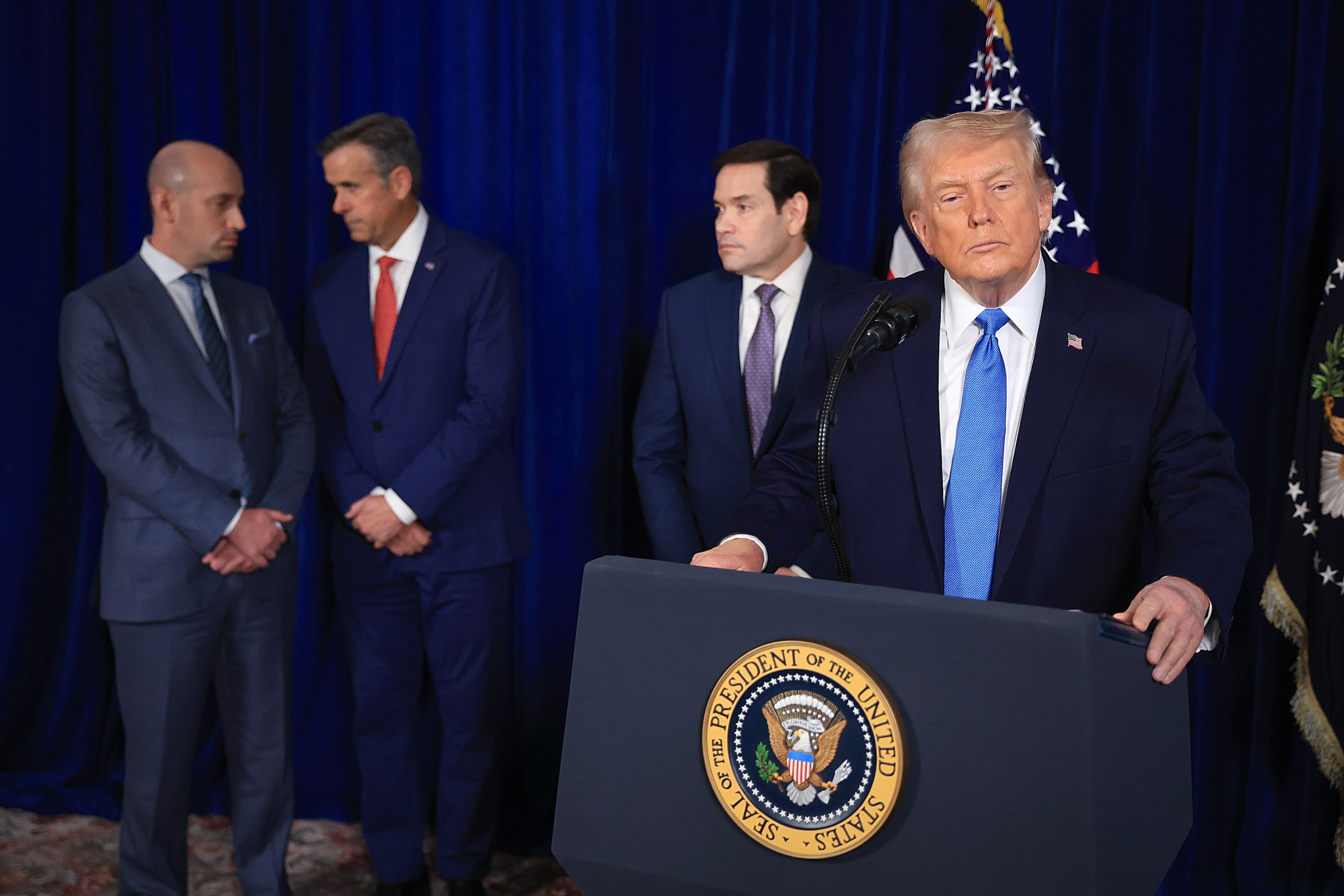
"The oil business in Venezuela has been a bust, a total bust for a long period of time," Trump said at a news conference Saturday. "We're going to have our very large United States oil companies, the biggest anywhere in the world, go in, spend billions of dollars, fix the badly broken infrastructure, the oil infrastructure, and start making money for the country."
And:
“We built Venezuela’s oil industry with American talent, drive and skill, and the socialist regime stole it from us during those previous administrations. And they stole it through force. This constituted one of the largest thefts of American property in the history of our country," Trump said.
The admission of a desire to get American hands on Venezuelan oil, obvious though it may be, flies in the face of the excuses offered up by other members of the administration, but those were half-hearted anyway. It's been 35 years since anyone believed the U.S. particularly cared about exporting democracy. A little more effort went to painting Venezuela as key to the flow of drugs into the United States, but that didn't hold water either. Declaring Maduro a terrorist, as the U.S. did in November, and the legally hollow justifications for airstrikes on fishing boats in the Caribbean that followed, never tracked as anything more than a cover story. Venezuela is not a major drug producer, and most of the cocaine trafficked through the country ends up in Europe, not the U.S.
Since no one was buying these justifications, they didn't bother too hard with selling them. Any remaining plausible deniability was detonated when Trump was asked Saturday about Juan Orlando Hernández, the former president of Honduras, who was charged with flooding the U.S. with cocaine and convicted. Trump pardoned Hernández in December, after Hernández wrote a letter claiming he was the victim of a witch hunt by the Biden administration, and he was released from prison in West Virginia.
"[Hernández] was treated like the Biden administration treated a man named Trump," Trump said yesterday. "This was a man persecuted very unfairly. He was the head of the country."
It's not and never has been about drugs, Trump is gleefully admitting. It's about oil and being nice to Trump. Secretary of State Marco Rubio confirmed as much that remaining Venezuelan administration, metaphorically at gunpoint, is expected to be obedient to American interests. "[T]he people left behind in Venezuela now that are in charge of the police and everything else," Rubio said Sunday morning, "I assure you they are going to probably be a lot more compliant than Maduro was as a result of this."
This is all very jarring to me, someone who remembers the buildup to the Iraq War, and the Bush administration's attempts to justify the planned invasion. This looked like convincing the American people, the legislative branch, and the international community. It relied on lies, and they would've gone to war without the widespread implicit approval, but at least they bothered to pretend it wasn't about oil and settling scores. They sent Colin Powell to the U.N.! There was a time in living memory when this country cared about presenting moral and legal justifications for the things it did, or at least providing the fictions, and that time now feels a million years ago. Rubio said he didn't even bother alerting Congress to the pending attack on Venezuela, let alone seek approval. Ours is a country of gangsters, and manufacturing consent is now only an optional step in the process.
This is—I don't want to say it's "refreshing," because it sucks. But the American superpower has always utilized some form or other of gunboat diplomacy, and there's something clarifying about ripping that mask off completely. It's impossible to claim the moral high ground now; we rarely had it before, even if we always pretended to.
What concerns me is why the Trump administration didn't feel the need to keep with tradition in attempting to justify its nation-building policy. It's not just laziness, though there is surely some of that. I fear that they have learned the lesson that there are simply no consequences for things like extrajudicial murder and invasions of sovereign states—and it is the correct lesson to take, because there have been no consequences, and it doesn't appear that there will be. So who's next? Cuba, Trump said Saturday, and Colombia, and Mexico. Take it seriously when he says these things, because he means it, and because he will do whatever he can get away with. "We have to do it again," Trump said. "We can do it again, too. Nobody can stop us."