

I don't remember the first time someone hit on me as a reporter. I believe this is because my brain has come to treat these events as unremarkable. For any woman in journalism, they pile up over the years. What I can recall are the worst examples. Like the guy my friends nicknamed Mr. Creepy.
We called him Mr. Creepy (I have changed his nickname somewhat to make it less identifying, but it did include the word "creepy") because he constantly asked me out for drinks. He could do this because he was one of the officials on my beat—covering several small cities for the Miami Herald, a typical job for an early-career reporter—and "asking a young reporter out for drinks over and over, no matter how many times she says no, even though you're married, and she can't choose not to be around you" wasn't against any city code. It did, however, run against the code of journalists: the very good and obvious rule that getting romantically involved with sources, or even appearing to, is off limits.
I don't recall saying anything to any of my supervisors at the time about it. Even if I had told someone, there was nothing the paper could do about it. They had no control over him. If anything, saying something would get me moved off my beat, possibly onto one I did not want, and potentially flagged as a complainer. Every other female reporter dealt with it, right? So I dealt with it too.
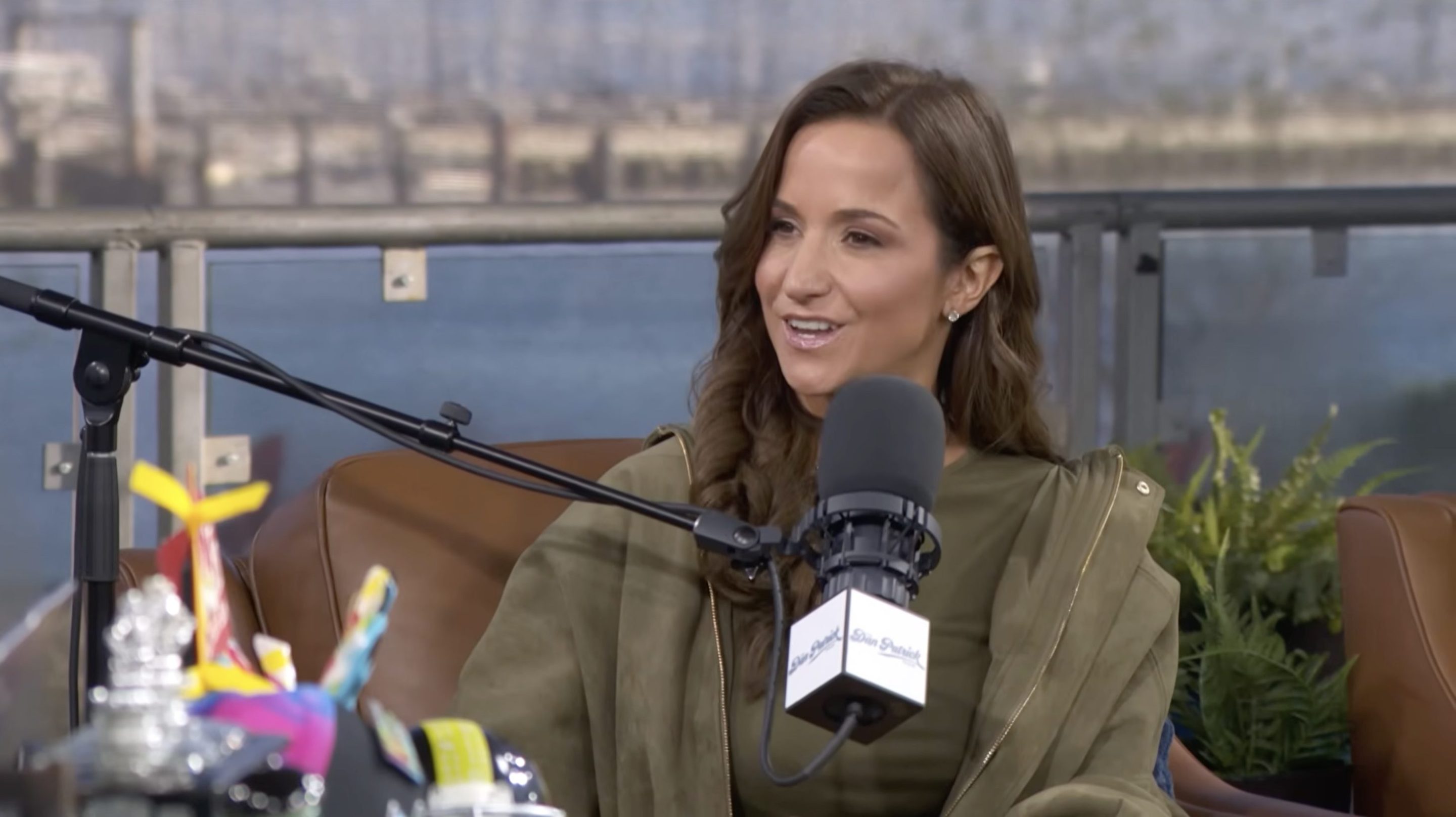
This was the first thing that came to my mind when longtime NFL reporter turned insider (and there is a vast difference between those two jobs) Dianna Russini was first caught in photos, published by Page Six, looking, shall we say, cozy at an Arizona luxury resort with New England Patriots head coach Mike Vrabel. With her employer, The Athletic, still investigating, Russini announced on Tuesday that she is resigning with a few months left on her contract.
There's a lot we don't know about Russini and Vrabel's relationship. We don't know who initiated it or how long it's gone on. We don't even know what "it" is, really, and whether it was ever romantic or sexual. All we can say is that—in the photo where it looks like Vrabel has his arm around Russini, and they both look out to the picturesque Sedona mountain view—it appears that a line has been crossed.
To be a woman who does reporting in any field, especially one dominated by men, is to put up with a lot of propositions and harassment and unfairness that your newsroom will be unable to do much about. You also must put up with a lot of people assuming you sleep with your sources because they think that this is the only way you as a female reporter can get any information. Despite all of this, you know there is a line you cannot cross. In part, it's because, journalistically, it is just wrong. But it's also about self-preservation.
Every time a woman is found to be credibly sleeping with a source—or, in the case of Russini, seen in a position that suggests she might be—the man hardly ever pays. There is no torrent of calls for Vrabel to be fired. But the woman? She always pays.
Russini stood out because she was, until Tuesday, one of the few women to ascend to the peak of her extremely male-dominated field: the world of the sports insider. Insiders have always existed in various forms of journalism. But the internet morphing every outlet into a 24-hour news service, followed by social media making every single journalist (like it or not) into a personal brand that can speak directly to fans, transformed the ability to break transactional news into a position of great power, particularly in sports. You probably don't even know that guys like Adam Schefter and former NBA insider Adrian Wojnarowski used to be newspaper people (covering the Denver Broncos and as a Fresno Bee sports columnist, respectively). They didn't get wealthy or famous by writing in paragraphs, though. They made their millions as insiders, breaking news about player trades and contracts.
It's not really surprising that insiders have been mostly men, in part because sports journalism already tends to lean male, and because being a person who covers powerful people invariably means spending a lot of time around men. Want to cover the CEOs of the biggest companies in the United States? That's mostly men. Want to cover the U.S. Senate? That's gonna be a lot of men. Want to cover cops, courts, or professional sports? You get the idea.
This matters—more than non-journalists realize—because being a good reporter, in the dwindling embers of what remains of mass media, remains one of the surest ways to secure a job in journalism. This is what I was told in college. It's still true, even as the jobs have disappeared. For proof, look no further than Cleveland, where the Plain Dealer is outsourcing writing to AI—but not reporting.
When I worked as a night police reporter, most of the law enforcement officers that I interacted with were men. I also would talk to, yes, "the man on the street"—people, men and women, who saw what happened, or people who knew a person involved, or people who didn't know a thing but I ended up talking to them anyway because there's no way to know without striking up a conversation. Sometimes, you even give them your phone number. You're a reporter. How else can they call you with useful information?
Every now and then, one of those men I met on the street would ask me out. One guy, after we had a long conversation about his neighbor, called me the next day. I remember it because he sounded so nervous on the phone, and I felt a little bad telling him no. He took it well and never called back. This was the end result the majority of the time. A guy would ask, I would refuse, and he would say OK. What builds up is the exhaustion of every single no, always offered so politely, followed by a brief explanation about why it's not the guy's fault. (I usually said I had a boyfriend, regardless of if I actually had a boyfriend. It's just easier.) You get good at saying no. Though female reporters sleeping with sources is very rare, it's depicted all the time in movies and on television. Maybe some of the guys who asked me out saw those shows.
Then there are the men who don't take the no gently, who just keep asking you out for drinks like Mr. Creepy. You just have to keep saying no to them, too. You have to find your own way, in newsroom parlance, to source up. But the experience leaves you, leaves all of us, with our rough edges.
That's why one night, after I had been moved onto my new beat—away from Mr. Creepy, but still dealing with men hitting on me—I found myself venting to a veteran investigative reporter when it was just the two of us in the office. Why are these cops always hitting on me? Did they really think I was going to flush my entire journalistic career away for one of them? The veteran proceeded to tell me the story of a young woman years ago on the night shift, the same shift I was working, who did great work and also had been sleeping with a Miami-Dade police officer—a sergeant from the vaunted homicide unit. Except the sergeant was married. He killed his wife and tried to make it look like a suicide—after all, he was a homicide investigator—but his fellow officers still put it together. In 1991, his former colleagues arrested him for the murder.
By then, the Herald reporter had lost her job. Years later, she told another newspaper that other people in the newsroom knew, and they would ask her to get police information from her boyfriend. "What upset me was the hypocrisy," she told the St. Petersburg Times. "And how people went scrambling to distance themselves from me." She would still work in journalism over the years that followed, including advising student reporters, but never for nearly as notable an outlet. (The former officer, Theodore MacArthur, was convicted and remains in prison.)
After my colleague told me about her, I rushed to search her name in the Herald's internal archives. There it all was in digital type, because the Herald covered the murder charges and the trial. As I scrolled, the old veteran imparted on me the lesson of his stroll down memory lane: That's why they hit on you. They think they stand a chance.
After that, I stopped complaining. I understood. I started to see it happen again and again. A man would get involved with a woman who was covering him. She would lose most or all of her journalism career. The future Miami-Dade superintendent who exchanged romantic emails with a reporter? He went on to have a glowing career, until the recent FBI raid. The politician who had an affair with a reporter? He's the current Health Secretary. All the women are out of journalism.
At some point, the parallels I can draw with Russini's story fall short. The details of my career have not been the subject of press coverage. I haven't spent time in locker rooms or on NFL sidelines. There's no Jersey Man magazine profile of me. I do not have more than 200,000 Instagram followers. My wedding was not breaking news. I might be accomplished, but she is famous, at least to a great many fans of the NFL, which is millions of people.
I also never worked as an insider, which is its own specific moral morass. The job is to break not just news, but a very specific type of news. Transactional news, as ephemeral as it is, does very well on social media. It gets the elusive "engagement" every outlet has to chase. That's why ESPN has an insider for all four major North American sports. You can't claim to exhaustively cover a sport without one.
There is no way to be an insider without, well, getting close. A lot of the tools at the disposal of other journalists—public records, courts documents, open meetings, databases, or even just events happening in public spaces—aren't available to the sports insider. They need to convince people to trust them with information—that they are The Guy (and it's usually a guy). When you're not a guy, this leaves a lot of room for people to wrongly assume things.
So when Page Six published the photos, people were already primed to make the assumption. When The Athletic issued a statement, saying essentially this was just a big misunderstanding, few bought it. The moment Russini tried to return to her job as normal, tweeting out a piece of NFL news, she got inundated with repulsive replies. She announced her resignation five days later, saying she did so because "I have no interest in submitting to a public inquiry that has already caused far more damage than I am willing to accept."
The photos are incredibly compromising. Still, people have defended her. Dan Le Batard spoke about Russini on his podcast—where Russini, his friend, has been a frequent guest—and said he was uncomfortable with the "sort of the dirtiness of what my profession has become." Others have taken to the written platforms to call out double standards. What they're really saying is: Being a woman in journalism just isn't fair.
They're right. It's not fair that Russini's life gets turned upside down, while for Vrabel it's "business as usual." This power imbalance, though, hasn't stopped many women in this profession from quietly—or sometimes not so quietly—seething over Russini crossing the line. Because even if her denials are true, it won't matter to some people. When we saw those photos, we could feel the door cracking open wider for the guy who wanted to hit on us, on the jerk who wanted to tell us, "Women just sleep with their sources," and the endless online debate raging now, every time I open my phone, about what this means for sports journalism, for women in sports journalism, and if any insider reporting can ever be considered ethical. It is exhausting.
This might not be the absolute end for Russini. It shouldn't be. She can start her own newsletter, her own podcast, or her own YouTube channel, and people with far worse blemishes on their record seem to be thriving in those mediums. She's talented, engaging on camera, and has a breadth of experience few can match. That will be valuable somewhere, in some capacity. This likely will be the end of the road for her as an NFL insider at a major outlet, though.
This won't be the end for female reporters or insiders. Women in sports reporting, and all of reporting, have come too far. But I am not naive enough to believe that nobody will hold this against us, that women out in the field won't have to hear horrible jokes about it from sources for years, or the trolls online will read all my good points and go quiet. What will emerge will be a cautionary tale told to younger women, about what you stand to lose if you screw up and how you can hurt more than just yourself, a tale like those once told to me. All we can do is just keep saying no, over and over and over again.