This past Saturday, Barcelona Femení met OL Lyonnes in the Champions League final and crushed them by a score of 4-0. The scoreline was a little misleading, but only a little. On one hand, the first half of the match tilted heavily in Lyon's favor. The French team put their Spanish counterparts to the sword, dominating Barça in a way no opponent has probably since Lyon won this very matchup four years ago. Only great penalty-box defending and heroics from Cata Coll in goal kept Lyon from getting the go-ahead goal they by all rights deserved. On the other hand, if the present moment of European club soccer, and arguably women's soccer as a whole, could rightfully be described as the Barcelona era, it's because the Blaugrana has more exceptional players than anyone else, players with long histories of coming up big in the difficult, decisive moments that separate victory from defeat.
From the second half's outset, Barça looked like a different team, one better equipped to escape the man-to-man press that had stymied them so thoroughly in the first 45 minutes. Where Lyon earlier had had its chances to convert its run-of-play superiority into a scoreboard lead but let them go begging, Barça was ruthless. In the 55th minute, Ewa Pajor put Barcelona ahead with the game's opening goal, and already it felt like the match had taken its final shape. A fatigued Lyon sought more open, direct attacks in an attempt to get back into the game, which only presented Barça more time and space in which to keep the ball and attack. Pajor struck again in the 69th minute, more or less putting the result out of Lyon's reach, and a pair of late strikes from Salma Paralluelo killed any chance of a comeback. The gaudy final scoreline might not have reflected the tension of the match, but did testify to the greater omnipotence this Barcelona team has demonstrated over and over for the better part of a decade now.
Saturday's win was the culmination of something bigger than just the Champions League season itself. Since the final whistle of last year's WCL final, when Arsenal upset Barça's attempt to threepeat as champions of Europe, Barcelona has been on a mission. Their warpath toward this year's WCL final had several inspirations: to redeem themselves for the Arsenal loss, to reassert their status as Europe's hegemonic power, and to eradicate the legions of doubters who had already sharpened their pencils preparing to write the Barça dynasty's obituary. It sounds funny to say this about a club coming off its fifth consecutive WCL final, but the prevailing narrative around Barcelona entering this season was that the team had reached the end of its rope. According to that thinking, the winds in soccer had already changed, now blowing in favor of England's WSL and Lyon, the latter Europe's deposed queen who had been quietly stockpiling weapons in an effort to reconquer the continent. Barcelona, with its comparatively weaker domestic opposition and its struggles to keep pace financially with the game's biggest spenders, were considered yesterday's women who, as soon as tomorrow, would learn of their fallen place the hard way.
Any clear-eyed look at the enduring quality of Barcelona's roster, even after the legitimate talent drain of the prior year or so, would've determined that that popular narrative about Barça's downfall was grossly overstated. The best proof of this came on Saturday, when, at the end of an undefeated WCL campaign, Barcelona faced Europe's other standout team, labored under the opponent's relentless pressure for 45 minutes, and yet still wound up winning in a blowout. The common refrain in the lead-up and aftermath of the final, echoed by players on both sides of the contest, emphasized just how achingly difficult it is to do what these two clubs have done better than any other, which is to perennially live up to sky-high expectations. (This was Lyon's eighth and Barça's seventh WCL final in the past 11 seasons.) The message from Barcelona's players in victory was unmistakable: You thought that we couldn't, but we just did.
As gratifying as Barça's fourth European Cup was, especially in how it let them stick it to the haters, the club barely had time to nurse its celebratory hangover before being forced to confront a bleaker reality, which is that the potentially dynasty-ending roster shakeup that so many erroneously predicted last summer is in fact on the horizon this summer. As the season has worn on, it has long been evident that the Blaugrana squad was set to yet again lose several important pieces. While the team has been able to tie down some of its stars and young hotshots to new longterm deals, fans have been worried about the lack of contract renewals for the likes of Mapi León, Ona Batlle, Paralluelo, and, most prominently, Alexia Putellas. Each of those four cases has its own unique dynamics, but they all can roughly lumped together as painful exits necessitated by Barcelona's financial woes, which threaten to not only put a premature end to Barça's long reign, but to even eliminate the club from the list of true competitors for the throne.
The impact of Barcelona's longstanding financial problems on the women's team is often misunderstood. At issue are La Liga's financial rules, which put a hard cap on the expenditures the league allows each of its clubs to amass. Though La Liga is only the authority in Spain's domestic men's soccer competition, its rules apply to its clubs in their entirety. For a multi-sport club like Barcelona, this means that all of its teams in various sports, from basketball to handball to women's soccer and beyond, are counted against the men's soccer team's books.
This is a pretty dumb rule, since it actively disincentivizes clubs from investing in their women's soccer sections, and stands in stark opposition to how things are run in England, where the Premier League doesn't factor in the costs of their clubs' women's teams as a way to incentivize investment there. La Liga's rules also artificially cap how much a team like Barcelona is able to spend on its women's team, even though the team has for the past couple years actively made a profit, and likely could make even more money with more investment. The situation isn't quite as simple as putting the Barça men's and women's teams in direct competition with each other for funds (and for what it's worth the women's team is the only one across the club's portfolio to have grown in salary over the past few years), but it does make Barça's efforts to build and sustain the best women's team in the planet much harder than it should be.
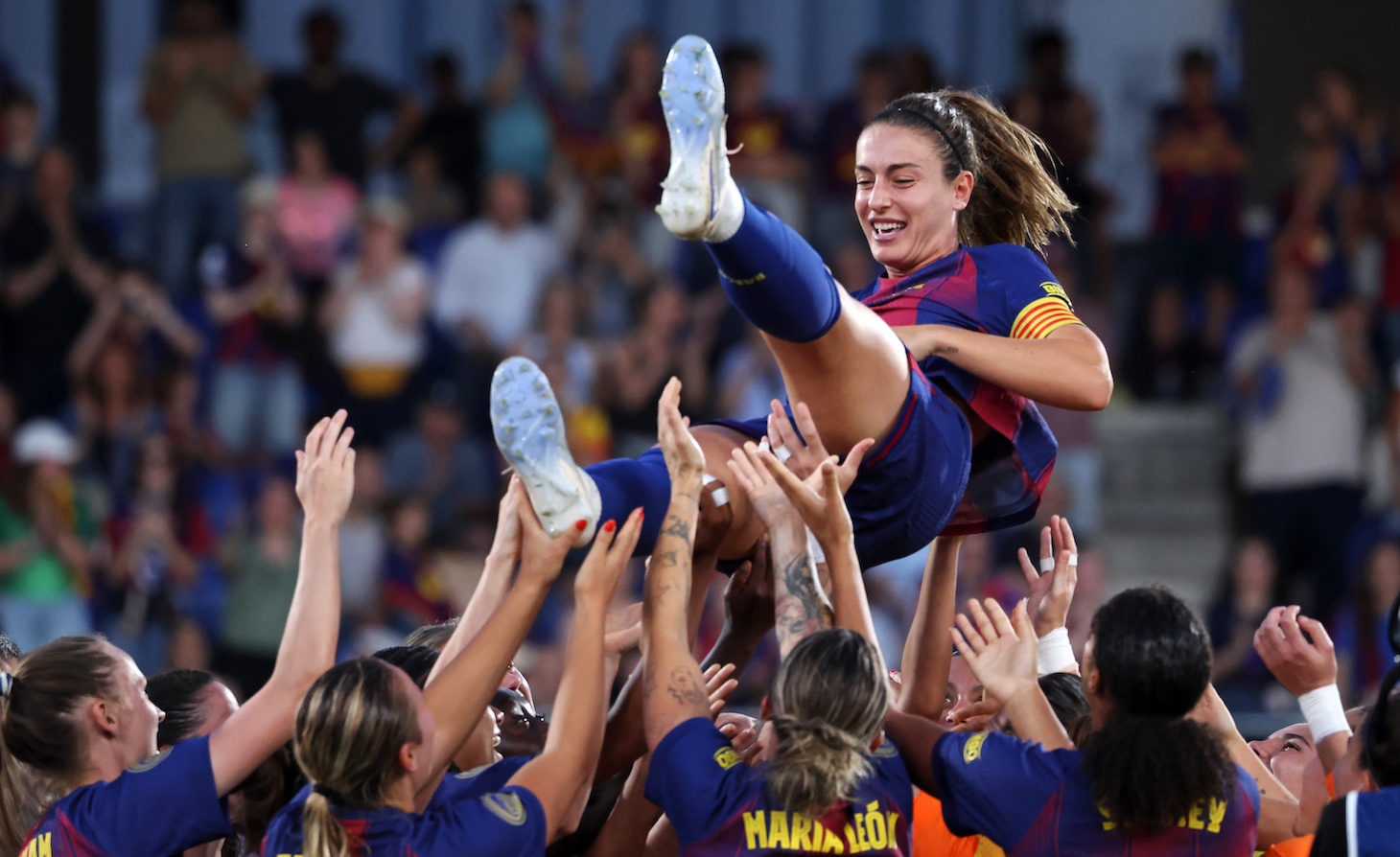
That is how we get to the club's existential dilemma this summer. For months now, fans have taken for granted that León and Batlle were all but certain to leave for the WSL. It's never been quite clear what would happen with Paralluelo, who has seen her talent stagnate some in recent years due to injuries and inconsistent play, and so both parties were probably happy to see the season out before deciding whether to continue on together or not. Alexia, as an icon of the club and the sport as a whole, has always been the most fraught case. The romantics would've hoped that she would at least agree to stay for the optional year that remained on her contract, in hopes of giving her an entire season-long send-off befitting the woman who has made the club what it is. The realists, though, would've accepted that, at 32 years old, playing out a below-market contract signed while still making her way back from a serious knee injury, it was always most likely that she would leave this summer to take the kind of salary Barcelona wouldn't be able to pay her. Sure enough, just three days after Saturday's final, Alexia officially announced that this season would be her last at Barcelona.
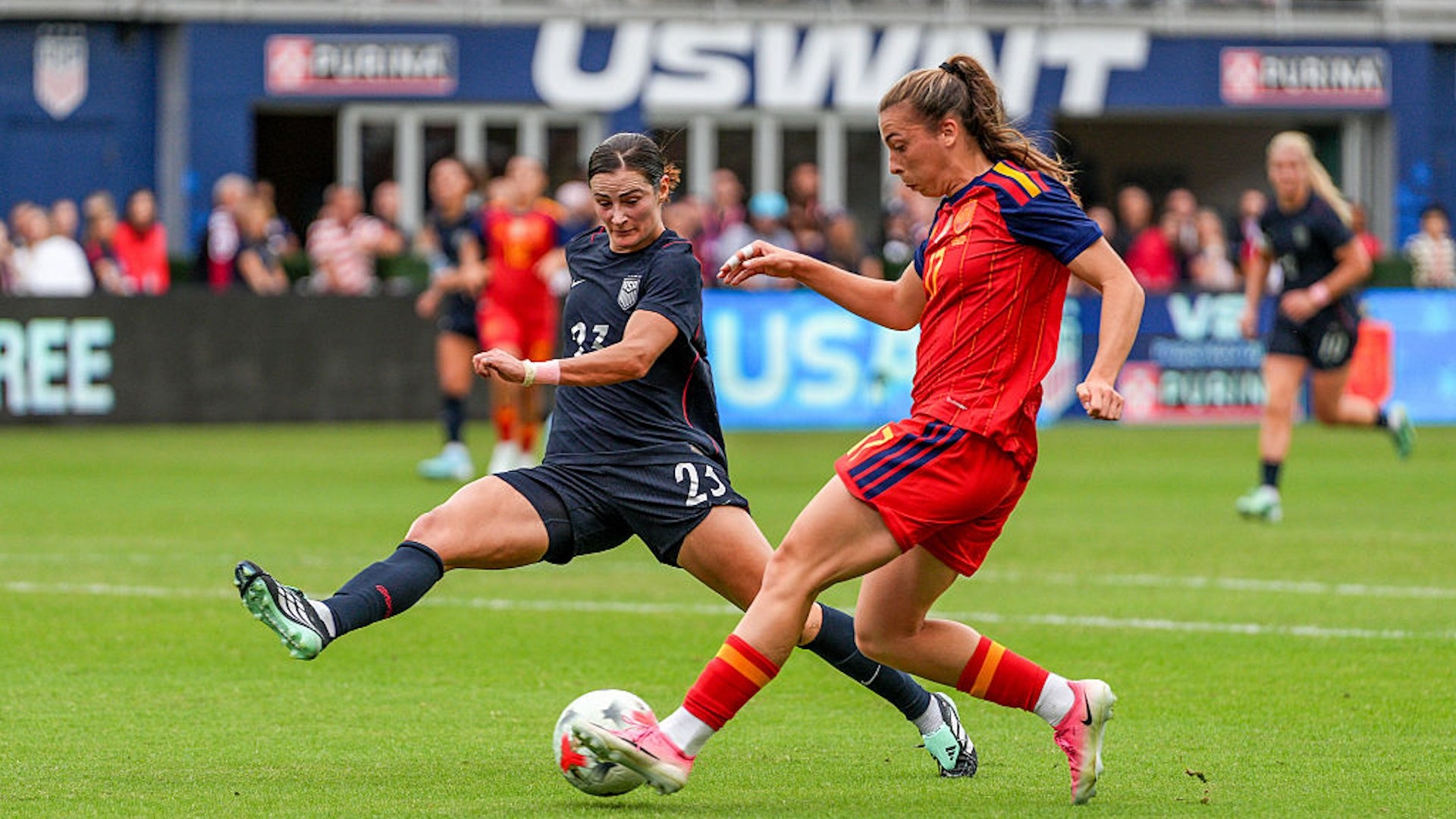
On Wednesday, in Barça's penultimate match of the Liga F season, Alexia got to say goodbye to her teammates and fans in her final match in Blaugrana. The emotional substitutions of fellow starters Batlle and León similarly communicated that they too had played their last game for the club, and both players' departures have since been confirmed. There's still no definitive word on Paralluelo's future, though the latest reports say Lyon is circling. That means three of Barça's starters from Saturday's final will not be at the club next season, and a fourth, Paralluelo, is likely to follow them out the door. Between Lyon and London City, the likely destinations of both Alexia and León, Michele Kang will have claimed all four of those starters for herself.
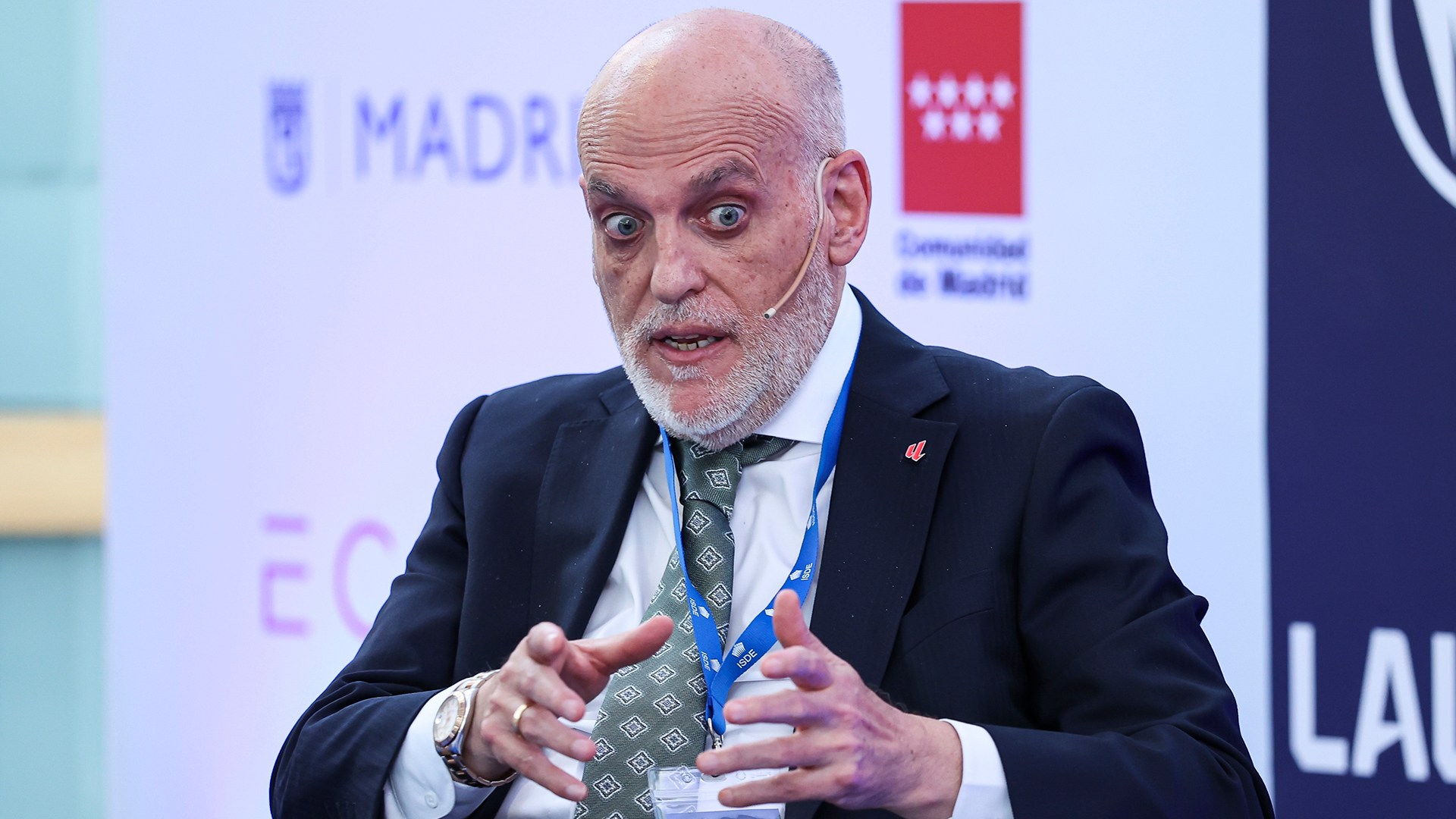
Kang is arguably the single most powerful person in all of women's soccer. She is the proprietor of the most influential multi-club ownership group in the women's game, which includes OL Lyonnes, London City, and the Washington Spirit. Her support for the sport via those three clubs, as well as donations to the U.S. Soccer Federation and her involvements with FIFA sponsorship, make her the women's game's biggest financial investor by a long shot. This also makes her somewhat controversial, mostly due to soccer fans' well-justified distrust of the multi-club ownership model, which threatens to pervert the sport though conflicts of interest and shady operations.
Though multi-club owners are understood to be relatively unambiguous villains on the men's side, the women's soccer world is a little more hesitant to accept even perceived criticisms of Kang. If you think of Kang purely as an enormous, deeply committed investor in the women's game, it's easy to see why you might then bristle at the notion that there could be something off-putting about the nature of her investment. This issue came to the fore after Saturday's WCL final, mostly centered around a statement Barça keeper Cata Coll made after the game, where she explained Barça's success this season by saying, "Money isn't everything." The statement was taken as a dig at Lyon's free-spending ways, and by proxy Kang's strategy of pouring money into her three clubs. Barça fans in particular have been some of the loudest critics of Kang's ownership, which has fed the perception that Barça sees itself as the paragon of virtue and women's soccer purity, while Kang is cast as the embodiment of decadence, avarice, and soullessness.
This perception, expounded upon in an article in the Athletic recently, seems more than a little silly to me. The idea that any fan of women's soccer, to say nothing of the players themselves, is in any way against increased investment in the sport is nonsensical. There are probably no bigger critics of the lack of investment in women's soccer in Europe than the Barça players. Many of them, including Coll, boycotted their own national team due to the ways its investment came up short, and regularly criticize Spanish soccer authorities' inability to invest and capitalize on the success of Barça and the Spain national team, contrasting Spain's slow-footedness with what the U.S. and England have done in similar moments. I've not seen a single player or serious fan criticize Alexia for leaving for a bigger check. Rather than begrudging her opponents (some of whom are former teammates) their salaries, I believe the actual targets of Coll's statement were the pundits who judged Barça's prospects by the team's balance sheet rather than its actual talent. Instead of glorifying their own relative poverty—itself a complex situation, since Barça does spend a lot on its team but unquestionably cannot reach the salary and transfer figures Lyon and Chelsea routinely dole out—the main thing most Barça fans are annoyed by is that La Liga's rules make it so that the club can't afford to pay up to keep all its stars at home.
Similarly, there is no contradiction in being in favor of deep investment in women's soccer and yet also being skeptical of the Kang model. Like most of the major American investors in men's soccer—who, tellingly, have turned to the multi-club model in disproportionate numbers—Kang's vision of how soccer should run is very Americanized in ways that go directly against what has made soccer the game it is today. The multi-club model is yet another advance in the further oligarchization of the sport, where more and more of the money and power is held in fewer and fewer hands. It's not difficult to envision a world where all of the biggest-spending clubs in the world are owned by the same handful of people, who get tired of those smaller freeloader clubs and that pesky competition thing and decide to recreate the Super League all over again. Even in the present, you have distasteful situations where Kang is able to decimate her flagship club's biggest continental rival by staging multi-front proxy wars. Kang is reportedly interested in adding a Liga F club to her portfolio. No doubt she'll choose one that doesn't have a men's section, in doing so letting her operate by a different set of rules than most of the league's other clubs have to abide by.
It's also worth remembering that one of Kang's early ideas for "innovating" in the women's soccer space was that Lyon should dismantle its academy and instead turn to a pay-to-play model like here in the U.S. Already Kang has cleaved the women's team from the men's side, giving the women a new name and new crest, divorcing what was once a unified, synergistic whole. Women's soccer as envisioned by Kang would surely be successful by her own narrow terms, but is it the kind of world anyone who cares about this sport really wants, one that speedrushes the women's game to the bleakly financialized place the men's game has reached?
The fate of academies and the division of the men's and women's sides are especially salient in terms of the recent WCL final. In their comments about the season as a whole, Barça's players almost to a woman have emphasized the importance of La Masia, the club's academy, and the fans. It was the academy that really stepped up to paper over the cracks Barça's financial constraints have allowed to form. Teenagers like Vicky López, Clara Serrajordi, Sydney Schertenleib, Aïcha Cámara, Carla Julià, and Martine Fenger—not all of them homegrown, but each of them signed young and brought up through the B-team—have been thrust into important roles this season due to exits and injuries, and their ability to seamlessly slot in and keep the best team in the world humming has been absolutely critical. On top of that, Barça's humongous, fanatical fan base has also boosted the team, most memorably in the boisterous, record-setting crowds that attended the team's long-awaited return to the renovated Camp Nou.
Barça's academy isn't magic, and in fact has proven so effective at cultivating great players simply because the club spends lots of money on attracting the most promising talents and the best coaches. What the academy is, though, is a crucial link that connects the players with each other, the team with its fans, and the women's side with the greater history of Barcelona as a cultural institution. Those communal bonds are at the heart of what has made Barcelona Femení a global phenomenon the likes of which women's club soccer has never seen before. And while those bonds are the kind of things money can indeed buy when it is spent carefully and in the right places, they are not the kinds of things Kang appears interested in spending her money on. Until or unless that changes, Kang may start winning the trophies she's after, but she'll never produce something as special as what we've seen in Barcelona.