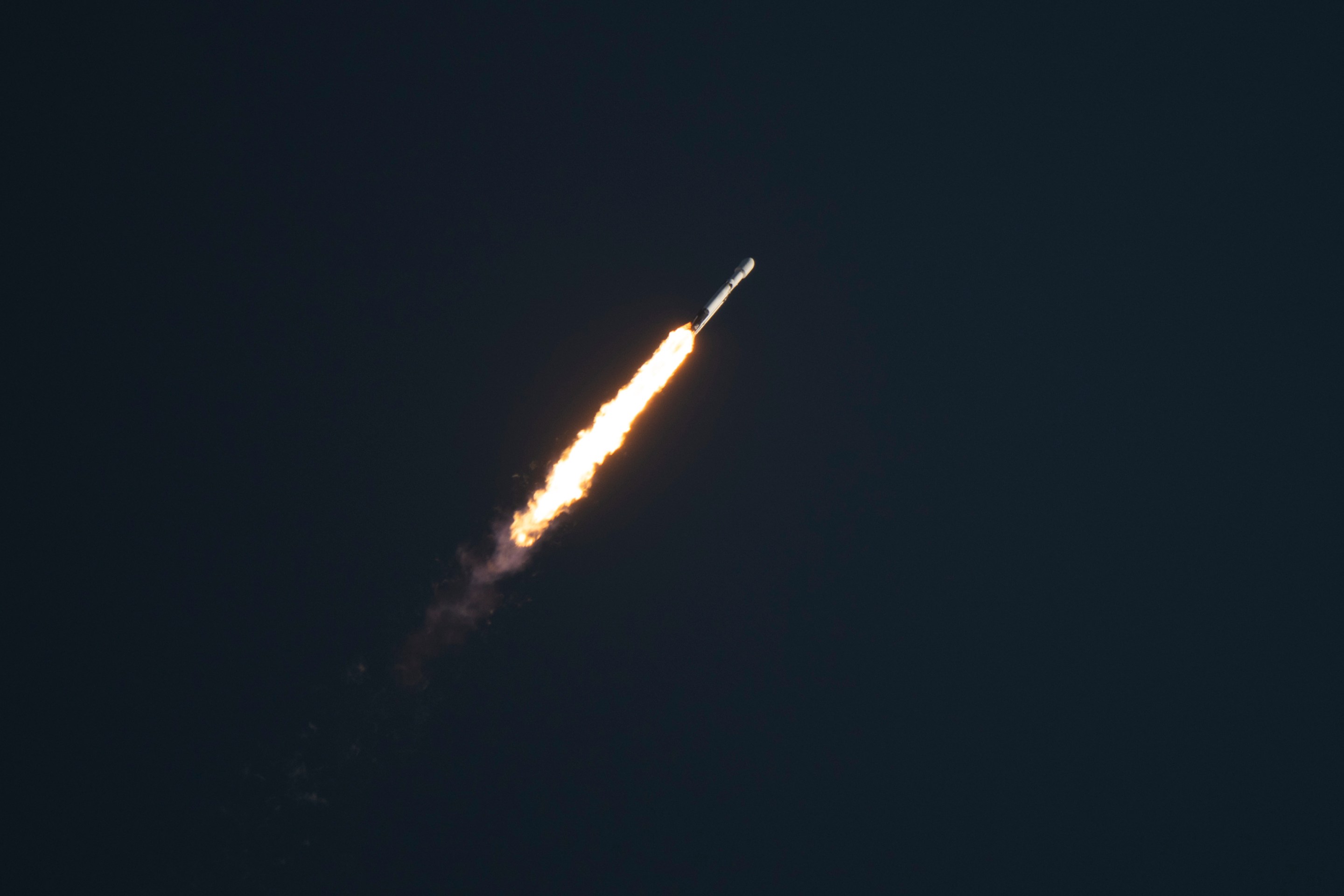


Artemis II is headed for the Moon; it quite literally cannot not go to the Moon, now. After a trans-lunar injection burn Thursday evening, there physically is not enough fuel on the spacecraft to do anything but relatively small course corrections. It's on a free-return trajectory, which means that the gravity of the Moon and Earth will do the work of getting it back home over the next eight days. If something went wrong and it started to float off into space forever, they could not stop it. This is very terrifying to me, a coward who is bad at math. But the astronauts are neither of those things, so they're copacetic.
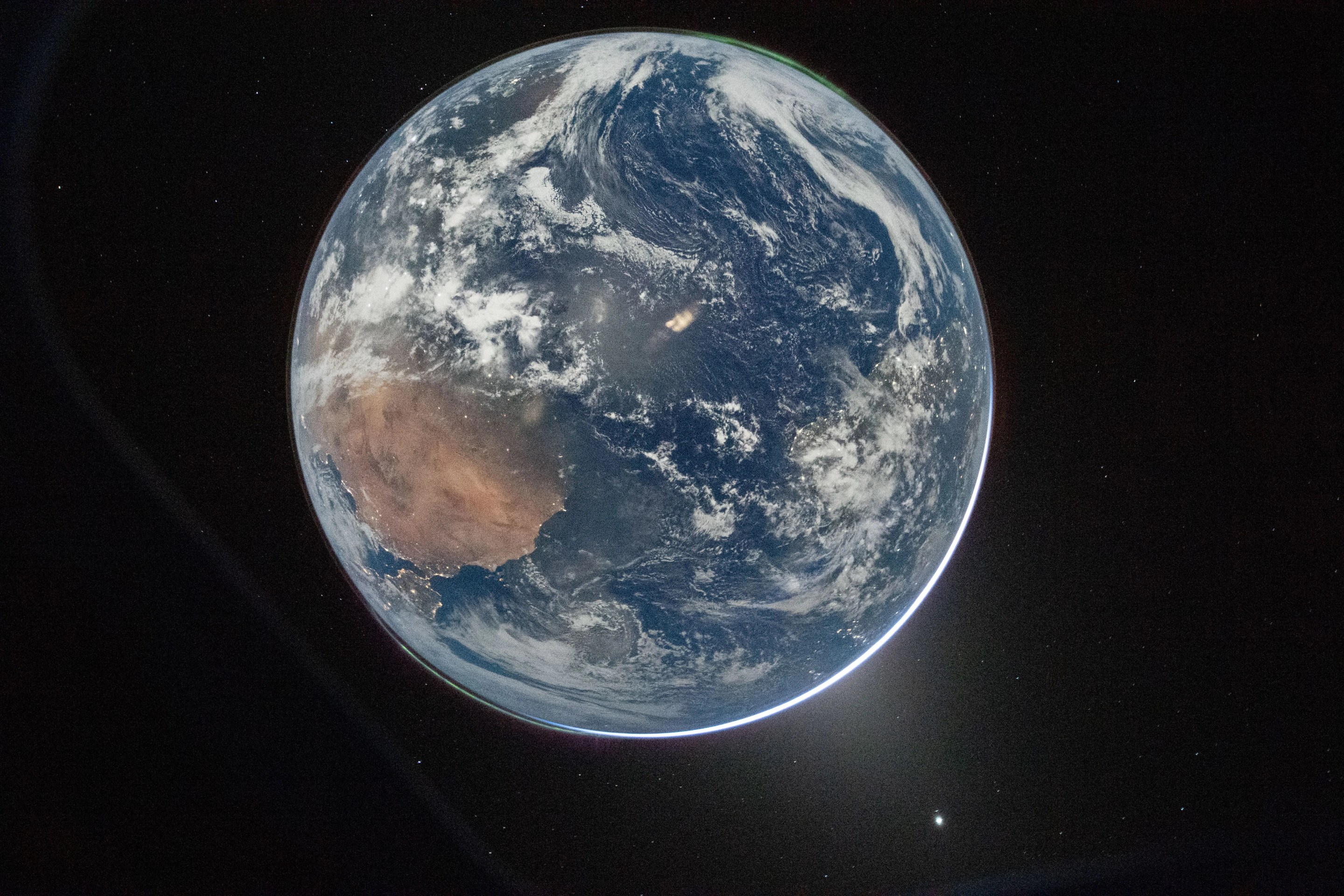
Soon after the burn finished, Commander Reid Wiseman snapped the above photo out the window of the Orion crew vehicle. Hey! I know that planet. I live there.
It is a particularly beautiful photo of Earth. The brown sands of the Sahara dominate the land we can see; the lights of Spain are visible at mid-lower-left. Clouds swirl above the Atlantic. Aurorae are visible as thin green bands in the lower left and upper right. Zoom in on the photo to see just how thin the atmosphere is, to scale: Our home appears both impossibly fragile and strangely robust.
Incredibly, this is a nighttime photo. The Earth is eclipsing the Sun; you can see its glare peeking around the rim. But with a long enough exposure, and in the darkness of space, moonlight is enough to make the Earth appear bright as day.
NASA shared another photo Wiseman took, a slice of Earth peeking in the Orion's window. No human has seen the Earth look this small since 1972. Low-earth orbit, where every single crewed space mission since Apollo has operated, tops out at around 1,000 miles above Earth's surface. The International Space Station orbits a mere 250 miles up. Orion is currently about 95,000 miles away.
It's still another couple hundred thousand miles to the Moon. They won't get there until Monday, which means there's some relative downtime for everyone involved. If they spent that time taking pictures, I wouldn't be mad.