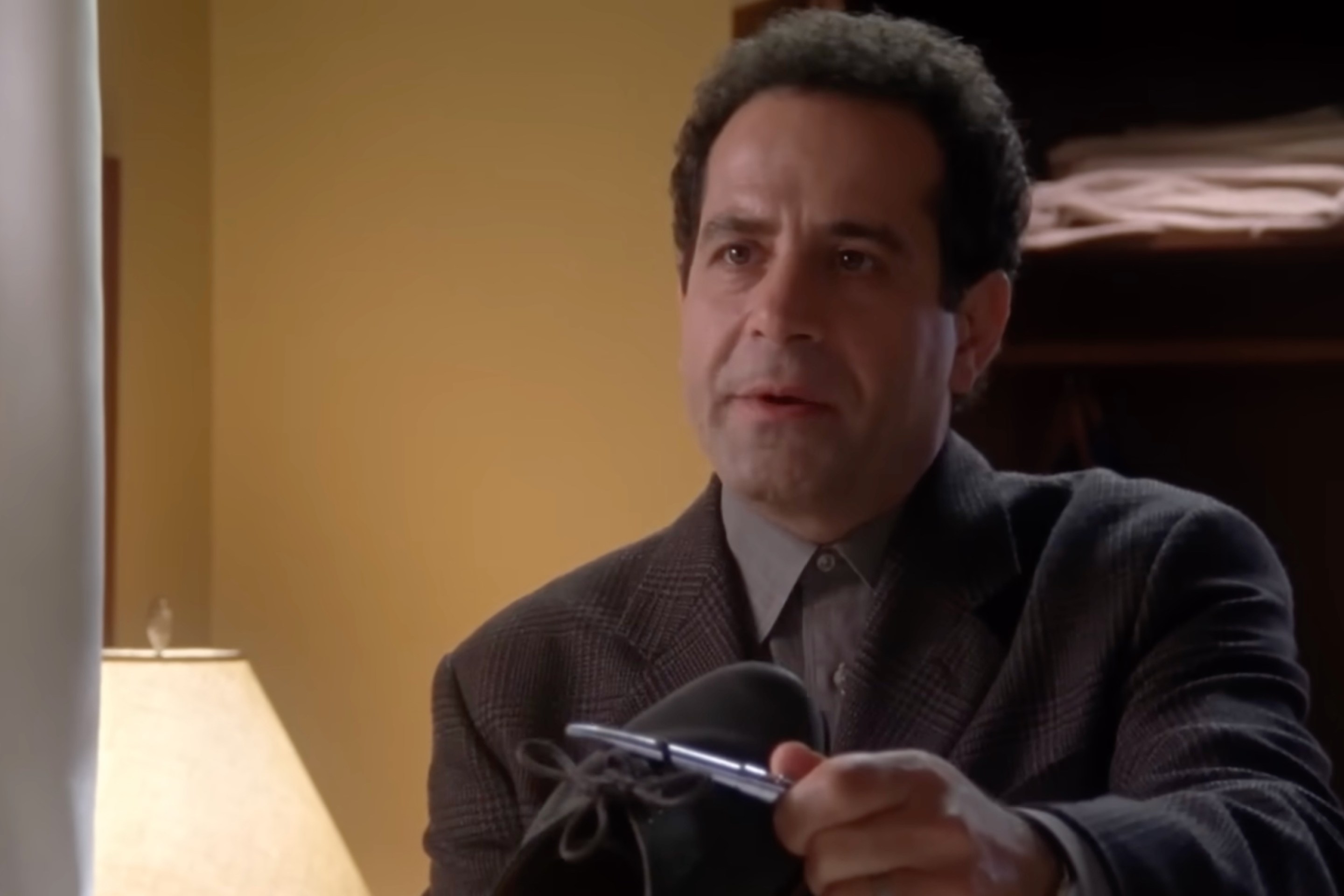
It’s Los Angeles in the 1970s. Cars are as long as boats. Beachside tacos are practically free. The sun glares through chunky brown fog, but does nothing to prevent assorted bad acts from happening. A man with a casual, even careless manner may not seem to have what it takes to see justice done, but being underestimated is essential to his process. If you’re thinking, “Yes, I already watched Columbo during Covid like everyone else,” I have some great news for you about The Rockford Files.
If you belong to the TV-watching community, chances are you have imprinted on at least one police or legal procedural. Maybe Law & Order marathons got you hooked on Sam Waterston’s tremulous righteousness as Manhattan A.D.A. Jack McCoy. Perhaps its spinoff, Special Victims Unit, drew you in with its mix of sexually based offenses and hysterical fearmongering about the many dangers of modern life. NCIS might be your opiate of choice if you prefer to see crimes solved navally. The appeal of shows in this category is twofold: 1) it’s satisfying to watch a mystery get wrapped up in 40-some-odd minutes; 2) these are network shows with three-digit episode counts, such that you might just get tired of their samey-ness before running out of episodes to watch. Indeed, all of the above are still pumping out new episodes right now.
But if you watch TV and consume news, there may come a point when your enjoyment of these shows, which both center and lionize characters on the enforcement side of the law, might start to curdle somewhat. Yes, McCoy wins cases, but it’s often via shady moves that the audience is expected to affirm. The members of the elite squad known as Special Victims Unit apprehend sex criminals at rates that far outstrip that actual division’s real-life stats, and hate nothing more than a suspect who knows his rights in ways that probably track much more realistically. NCIS’s Jethro Gibbs … okay, I have no idea what his deal is, but the man works for the Pentagon, so it’s probably at least a little immoral.
The point is that your knowledge of how the “justice” “system” actually works can make consuming entertainment set in that world feel queasy. But ethical consumption of TV procedurals thankfully is possible, because there are shows built around private investigators. Typically disdainful or openly hostile to law enforcement, PIs can help get justice for clients whose grievances haven’t been or wouldn’t be properly addressed by cops; they can also do cool shit like pick locks, steal evidence, and help a scared witness flee a jurisdiction or fake their death. Remember when producers at Brooklyn Nine-Nine threw out all the scripts for its final season because protests around the state murder of George Floyd forced a reconsideration of the soft copaganda that had previously been the show’s stock in trade? The new Season 8 had Rosa (Stephanie Beatriz) resigning from the NYPD to become a PI working with clients who had experienced police abuse; it was a change that, regardless of how well it did or didn’t work, made more sense for her character than being a detective ever did.
And now there are PIs everywhere for those with the eyes to see. Earlier this spring, ABC premiered R.J. Decker, based on a Carl Hiaasen character. Felicity alumnus Scott Speedman may be a little too soft-spoken for the titular PI character’s exploits, and I am simply never going to care about domestic squabbles between his ex and her new wife, but so far his cases have been weird enough to hold my interest: Introduce a high school mascot in a pickle costume and give that costume a little lore, and you’ve guaranteed my attention for at least a few episodes. Decker was preceded in the PI marketplace by Perry Mason, in HBO’s eponymous show: Matthew Rhys plays a non-canonical version of Erle Stanley Gardner’s famed character, who works as a private investigator in Depression-era Los Angeles before turning into the defense attorney later portrayed by Raymond Burr. Before that, we briefly enjoyed Cobie Smulders' bisexual self-saboteur in Stumptown, one of many shows un-renewed in the early months of Covid. Travel backward in time and there’s Veronica Mars, Poirot, Simon & Simon, Magnum, P.I., and Charlie’s Angels. Some of those shows are better than others, but all of them owe some debt to The Rockford Files, and none of them made for such delightful company.
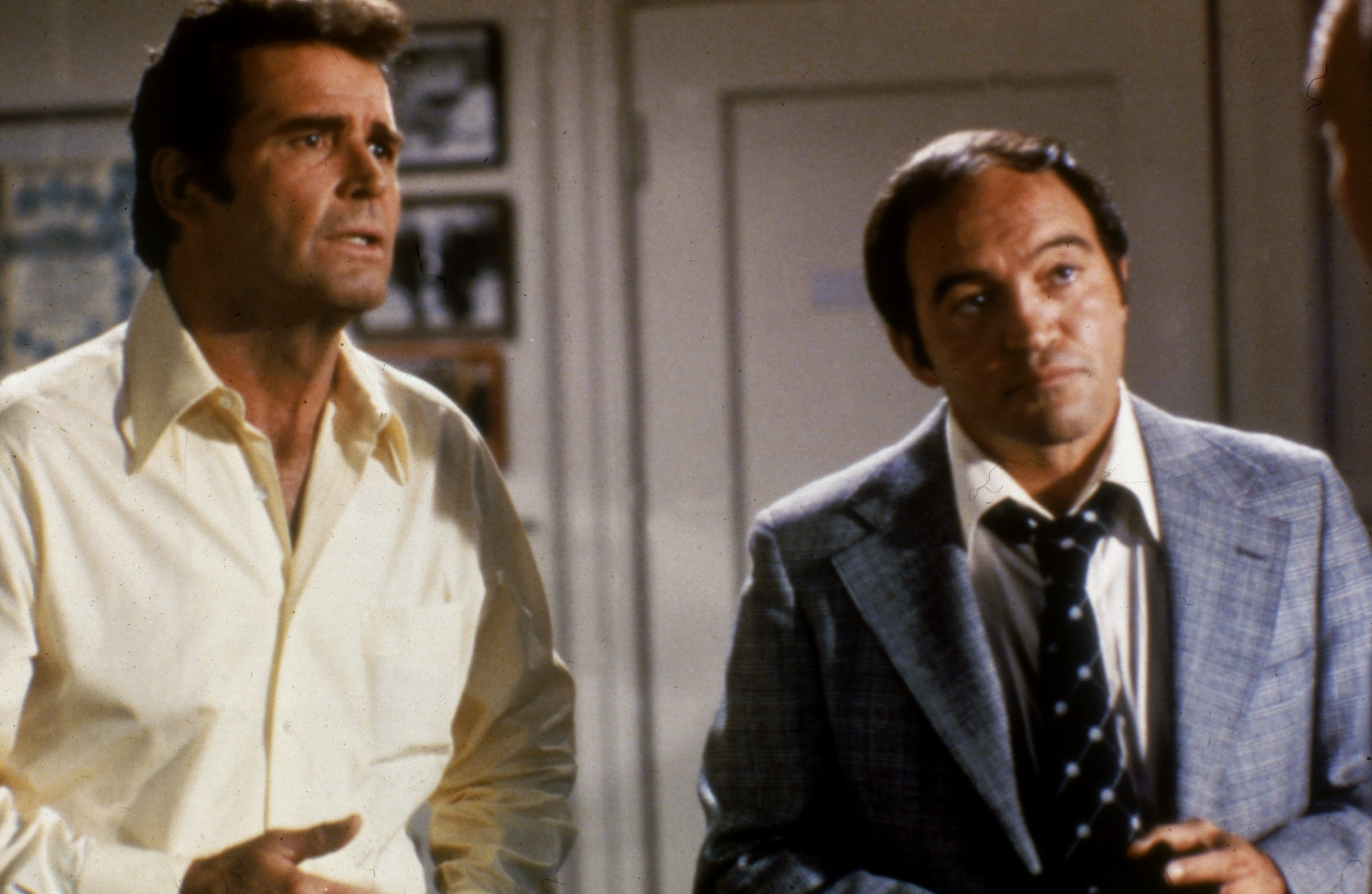
The titular Files belong to Jim Rockford, played by James Garner. Before the events of the series, which aired on NBC between 1974 and 1980, Rockford served five years in San Quentin on an armed robbery conviction, for which he was later pardoned. As we meet him, he’s living in a ramshackle mobile home, immobilized in a Malibu parking lot along the Pacific Coast Highway. The trailer also serves as the headquarters for Rockford’s job as a private investigator.
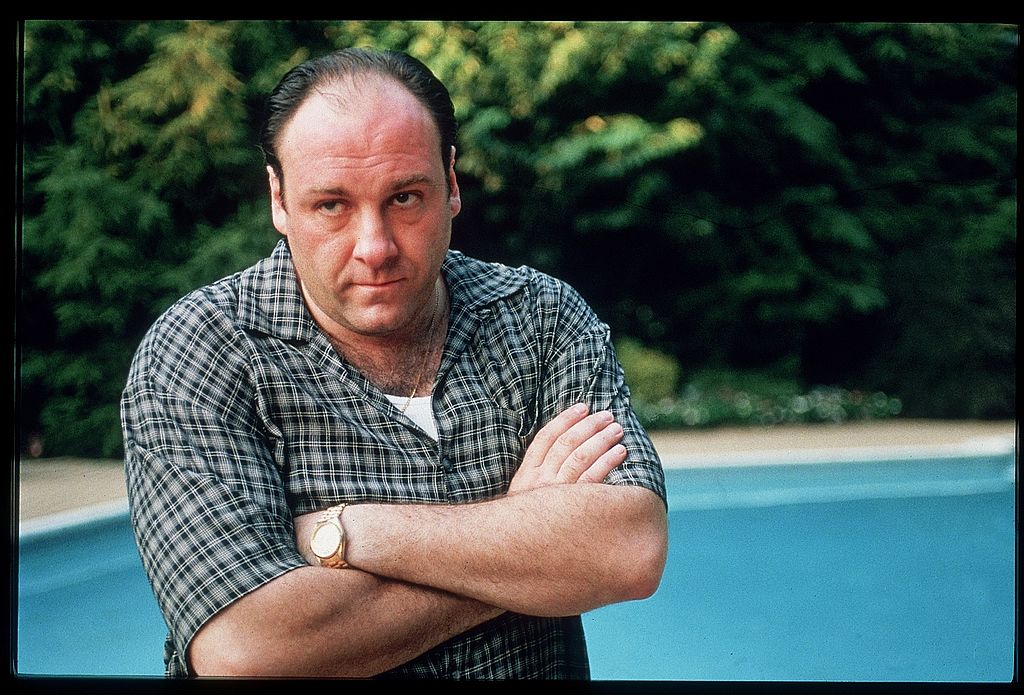
Occasionally, Rockford is assisted on a case by his father, retired truck driver James “Rocky” Rockford Sr. (Noah Beery Jr.), but mostly Rocky’s narrative purpose is to create minor comic-relief storylines—breaking Rockford’s garbage disposal by dropping a bullet from Rockford’s little-used gun down the drain, things of that nature—or to beg Jim to give up his dangerous vocation. The show reunited Garner with Maverick creator Roy Huggins, who co-created Rockford with a then-unheralded young writer named Stephen J. Cannell, who would go on to create Baretta, The Greatest American Hero, and Silk Stalkings; co-create The A-Team, Hunter, Riptide, Wiseguy, 21 Jump Street, and The Commish; and to recur, as himself, on Castle. Over the years, 17 Rockford Files episodes were written by David Chase, decades before he created The Sopranos.
Since each episode introduces Rockford to a new client who needs to engage his services—$200 a day, plus expenses—on a case that the cops have either screwed up or abandoned, Rockford and his father provide the only continuity the show has from one episode to the next. It’s important that Rockford makes its protagonist seem like a great hang, and that success is integral to what makes the show work. He’s resourceful and charming, motormouthed or taciturn as the situation requires; above all, he’s touchingly vulnerable to physical attacks. Early on, Rockford gets the better of a goon (or, to use his preferred term, “gorilla”) by covering a men’s room floor with liquid soap so that once the guy lunges at Rockford, he wipes out instead; on balance, though, Rockford is a lock to lose any physical fight that doesn’t end with him punching someone once, then running away. This feels right for a character of his vintage: Garner was 46 by the time the series properly premiered Sept. 13, 1974—it was preceded that March by the TV movie that introduced the character—but seems older in the way of screen stars from the era when no one drank water and everyone smoked.
Once he’s on a case, Rockford’s commitment to getting the job done while expending the least possible effort should be an inspiration to us all. Trying to bail on a selectively honest client mid-episode is a move Rockford pulls with impressive regularity. If he needs to transform his appearance, he won’t go further than a hat, fake eyeglasses, or, very rarely, a suit. Other than pay phones, the tools of his trade all fit in his car; a business card printing press that can be transported in a briefcase is a delightful revelation. Ending a high-speed chase by driving up the ramp of a car hauler to hide? Classic Rockford.
Like Columbo, Rockford is a feast for the nostalgic eye. The 1970s is one of Los Angeles’s most glamorously louche decades—The Long Goodbye! Night Moves!—but despite how much Rockford seems to take place in a bygone era, it’s kind of shocking how many extant L.A. locations you can identify in episodes. If your home-buying budget is around $10.2 million, you can live in the Toluca Lake estate where Larry Kirkoff, played by a young James Woods, allegedly killed his parents. Other well-known actors pop up: old Hollywood legends like Lauren Bacall and Joseph Cotten; Ned Beatty, dropping in between Deliverance and Network; then-up-and-comers like James Cromwell and Gerald McRaney. But by far, the faces you will recognize most are the ones whose names you’ll never remember, but who have 100-plus credits when you look them up on IMDb—Guy-grade TV actors like Ken Swofford, Bruce Kirby, or Warren J. Kemmerling—from shows that you would probably know only as trivia answers if at all—The Rookies, Judd For The Defense, Cannon. (If Joe E. Tata hadn’t booked Beverly Hills, 90210 in 1990, he might be best known for the six unrelated characters he played in eight episodes of The Rockford Files.) The combination of pleasantly grubby settings populated by well-worn character actors gives the show the comfortable and faintly disreputable feel of a good dive bar.
At the same time, Rockford can feel surprisingly modern. The most striking example of this is in its depiction of policing. Rockford’s frenemy, the LAPD detective Becker (Joe Santos), can be relied upon for good intel when Rockford’s run out of less legitimate angles, but whenever a case takes Rockford to any town smaller than Los Angeles, a local sheriff will send gorillas to rough him up and/or run him out of town. Agents of the FBI are portrayed as hidebound, credulous, or lazy. Even in cases in which the cops don’t appear on screen, their stink still hangs over the proceedings: If they had done their job properly, Rockford wouldn’t be pocketing his $200.
The touch that most makes Rockford seem most modern is the one that kicks off every episode, and (paradoxically) involves some of its most antique tech: Rockford’s answering machine.
Decades before The Simpsons had a couch gag, The Rockford Files had an answering machine gag. The message left after the tone is different in each episode, and helps flesh out the life we imagine Rockford is having offscreen—an old Army buddy asks to crash; the blood bank requests a pint of Rockford’s (assuming he doesn’t have malaria, hepatitis, or TB); a librarian requests that he return his borrowed copy of Karate Made Easy ("We abuse our library, we don’t get our cards renewed!"). Before I knew anything about The Rockford Files other than what I saw in promos when it was syndicated in A&E’s (peerless, by the way) daytime programming block in the 1990s, I knew about Rockford’s answering machine from a joke on NewsRadio.
Other PIs in pop culture have sexy or sardonic secretaries to take their messages; Rockford has none. The man had stripped his existence to the absolute essentials two generations before #vanlife or Tiny Homes were in vogue. All he needed was a car and a city full of people who kept getting into trouble.
This January, NBC announced a remake of The Rockford Files. At this late stage in media self-cannibalization, it’s hard to get very excited about any new take on old IP. Knowing that it would be run by Mike Daniels, who previously brought us 2018’s mawkish This Is Us-alike The Village, made me pessimistic on the project even before David “Bones” Boreanaz was announced as its titular lead. Sure, Boreanaz has played a PI of sorts before—he headlined the Buffy The Vampire Slayer spinoff Angel for five seasons—but Angel was a stolid (and cursed) detective, not a winking rogue like Rockford.
Someone who might have been a better fit is ex-Stumptown sidekick Jake Johnson, who recently played a pornographer in 1970s L.A. in the heartbreakingly short-lived Minx, but he’s already about to play a PI in a different NBC show. Still-untitled, that one comes from Brooklyn Nine-Nine creator Dan Goor and writer Luke Del Tredici, with The Lonely Island’s Akiva Schaffer booked to direct the pilot; Keith David was recently announced as detective agency head Garner Taggart, a name choice that has to be an intentional nod. (See also: Decker starting his series living in a mobile home, which soon falls into a sinkhole.)
For the same network to order two pilots in the same season that revolve around the same subject might seem risky, but NBC did the same thing in 2006 with Studio 60 On The Sunset Strip and 30 Rock, and I think we can all agree that choice shook out as it should. While we wait to see if this one does, too, there’s some comfort in knowing 119 episodes of The Rockford Files on Prime aren’t so much waiting for you as they are, like Rockford himself, just hanging out.