

There was a moment early in the first quarter of Sunday's Game 7 between the Detroit Pistons and Cleveland Cavaliers when James Harden had the ball and was isolated against Tobias Harris. "James Harden, acquired from the Clippers, this was the big move that the Cavaliers made for moments like this," said play-by-play man Ian Eagle, moments before Harden drove to the lane and kicked a grenade out to Evan Mobley in the corner, who missed a shot as the clock expired. I smiled to myself when this happened, and did so again a few possessions later when Harden committed the first of his two shot-clock violations. I was thinking about the blog you are reading right now, and how the story of this game, as it has been so many times before, would be about Harden melting down in the playoffs.
Well, I was partially right. Harden did indeed submit what might have been his worst performance yet in a big playoff game—nine points on 2-for-10 shooting, 0-for-6 from three—but the Pistons unveiled a surefire method for squandering a vintage "Big Game" James performance: Simply have your entire team play like James Harden did. The Pistons got absolutely rocked, 125-94, in what might have been the most dispiriting loss in a postseason that has been full of them.
Game 7s rarely live up to expectations, but this one fell especially short. A nervy, low-scoring contest full of exhausted players can still be fun if the score remains close, and even a blowout can be neat if it happens in front of a raucous home crowd or is the result of the superior team accruing tactical advantages over the course of the series. This was the worst kind of blowout, though: a wire-to-wire domination in front of a crestfallen home crowd that offers little explanation aside from "The Pistons played like shit."
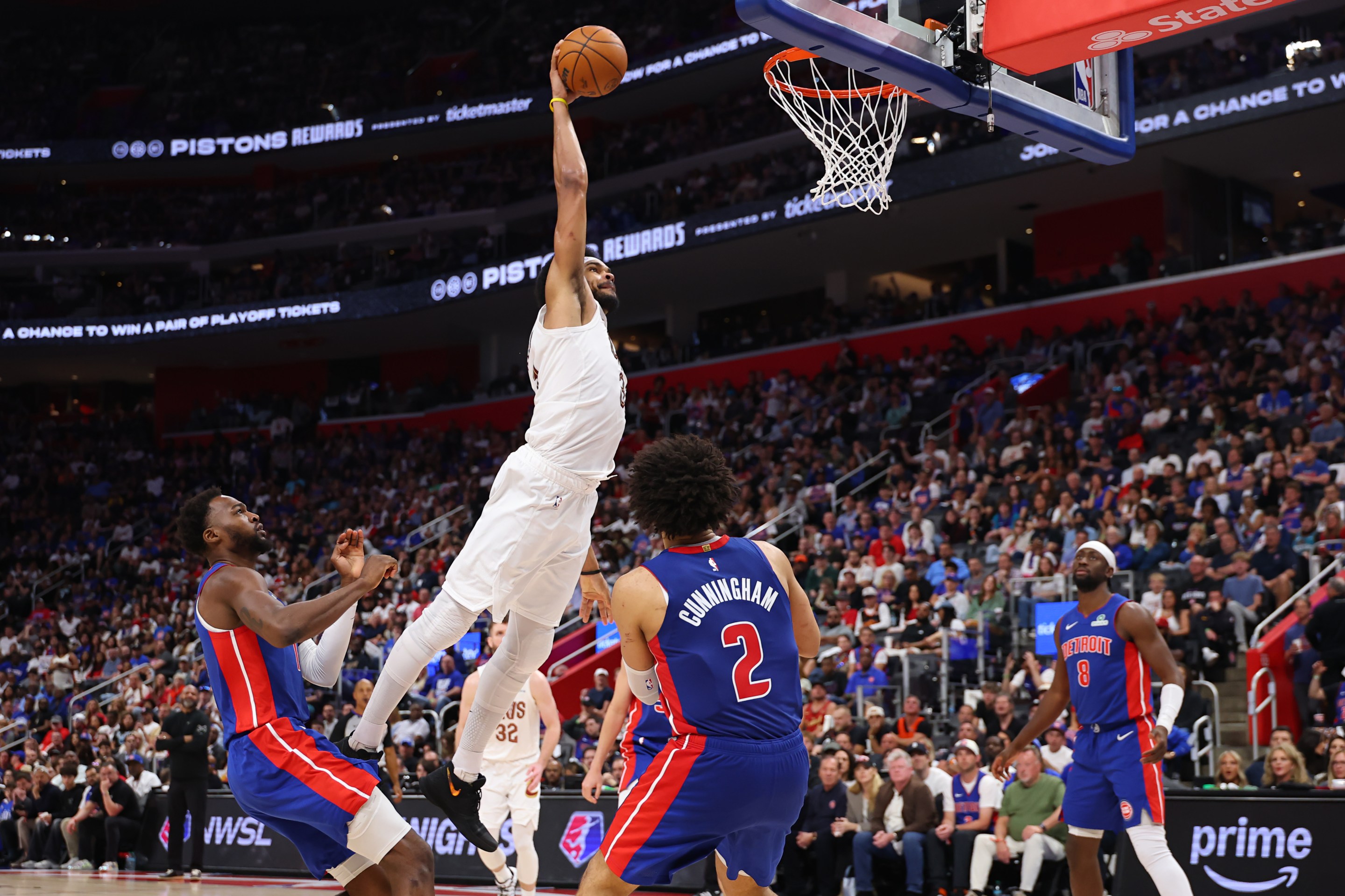
To watch this game was to be confronted by a Pistons team that was simply doing everything wrong on both sides of the floor. It felt as if the entire organizational project, one that yielded 60 wins and the No. 1 seed two seasons removed from a 14-win campaign, had been an illusion. This physical, nasty team that had the second-best defense in the league suddenly couldn't stop any Cavaliers player—and I mean any of them—from sauntering into the paint whenever they wanted to either get a shot at the rim or kick out to a wide open teammate. The following sequence happened what felt like dozens of times throughout the game: Donovan Mitchell would blow by his man and dump the ball off to Jarrett Allen at the rim for an easy dunk; the Pistons would run one rudimentary action before throwing a contested shot at the rim; Mitchell would drive again and kick the ball out to a wide open teammate who would miss, only for Allen to grab the offensive rebound and draw a foul. The Cavs shot 50 percent from the field, grabbed 14 offensive rebounds, and shot 44 free throws. Imagine how gruesome this game could have been if they had made more than 28 of those shots at the line.
There were signs that the Pistons' postseason could be building toward something like this. Their 3-1 deficit to the Magic in the first round was as concerning as their comeback was impressive, and even that may not have happened if Franz Wagner hadn't gotten injured. As the postseason went along, more and more of Detroit's key players faded into the background. Jalen Duren was so bad in this series that he kept losing crunch-time minutes to Paul Reed, defensive anchor Isaiah Stewart was a disaster, and injuries necessitated far too many contributions from Daniss Jenkins and Marcus Sasser. Cade Cunningham's best running mate throughout this series was probably Ausar Thompson, who was as impotent on offense as he was ferocious on defense, and spent a lot of time committing dumb fouls.
It was alarming to see a 60-win team dissolve so quickly into "Cade Cunningham and a bunch of guys," and it puts the Pistons in a more precarious position than you'd expect to find such a dominant regular-season team heading into the offseason. The Pistons clearly have an identity and culture that works for them, but postseason basketball revealed plenty of shortcomings that were harder to see in the regular season. All of a sudden, this team is headed toward some thorny roster decisions. The expiration of Tobias Harris's contract should feel like a blessing, but he is also one of the few players on the roster capable of creating and making shots. Duren looked like he was coasting toward a big extension, but now he will enter restricted free agency with bruises all over his reputation. Will the Pistons extend him anyway? Will he get an offer sheet? Are the Pistons secretly hoping he does so they can decline to match it? Also, can Ausar Thompson please learn to do one productive thing with the basketball in his hands?
Those are all questions for another day. For now, there's a more important one to consider: Does a Cavaliers team that got taken to seven games by these Pistons stand any chance against the Knicks in the next round? Well, of course they do. This is what they got James Harden for, after all.