
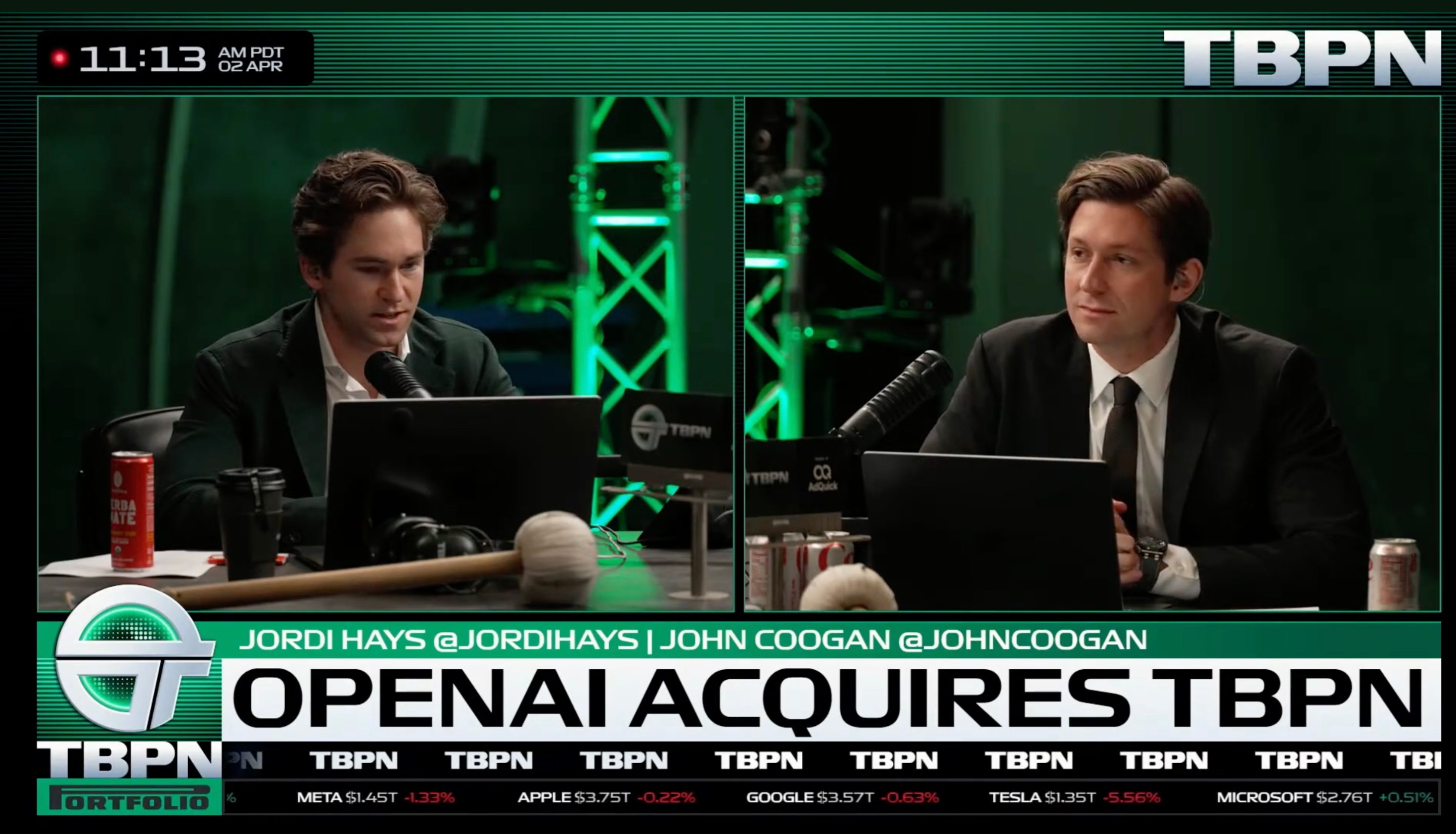
On Thursday, OpenAI announced that it had acquired the Technology Business Programming Network (TBPN) show. The Financial Times reports that the recently de-Sorafied AI giant paid somewhere in the "low hundreds of millions of dollars" for the purchase. The deal immediately prompted a great deal of online handwringing about a nominal media operation selling out to one of the biggest companies in Silicon Valley, which is understandable but unwarranted. Nothing will have to change, as even the independent version of TBPN was already so dedicated to cheerleading for the rich and powerful people in tech as to have been indistinguishable from marketing.
TBPN streams on Twitter for three hours a day, five days a week. It was launched by startup guys turned streaming guys John Coogan and Jordi Hays in October 2024, and quickly rose to relative prominence: Its audiences have always been small, but audience size doesn't matter as much when the tech world and particularly so many of its most powerful people pay so much attention. TBPN has scored a bunch of rare interviews with the biggest names in tech, including Mark Zuckerberg at last year's Meta Connect. Zuckerberg famously loathes the media and does not do interviews, yet there he was, chopping it up with the boys.
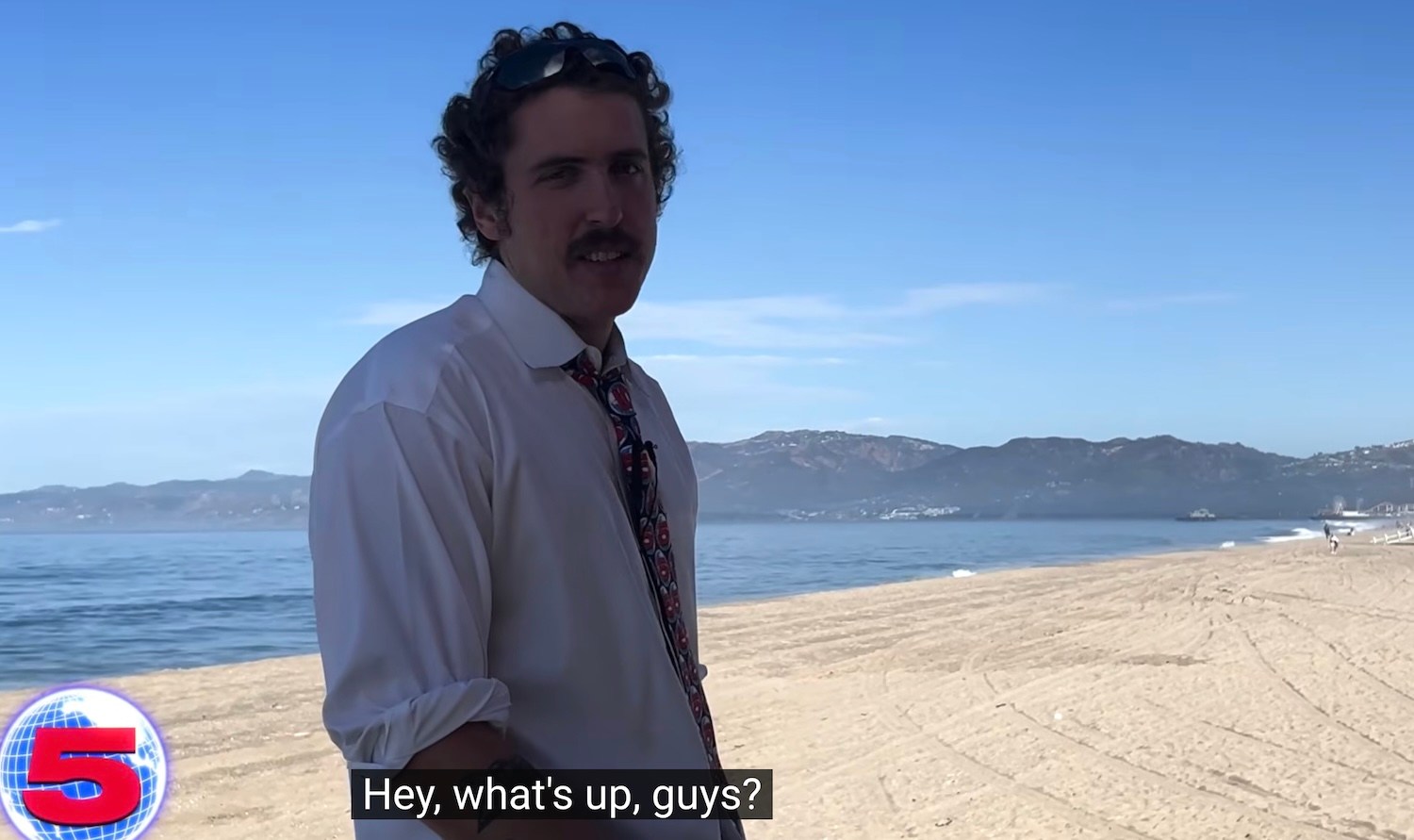
TBPN works because Coogan and Hays both have enough experience in the tech and venture capital worlds to inform the viewer, and they are both genuinely personable and funny. The show's name is a nod to ESPN, and its funniest and most useful bit is covering tech hires in the manner of that network covering sports personnel moves, complete with bespoke "BREAKING:"-style graphics. The hosts' shared sensibility is not unlike what ESPN itself, in its early days, once brought to sports coverage: gently irreverent, knowledgeable about but slightly distanced from the otherwise completely cloistered, paranoid, and nerdy tech world. In a fantastic profile from last October, the New York Times' Mike Isaac characterized TBPN's vibe as "two self-aware fellas who treat techno-capitalism like a Fantasy Football league." (No, I don't know why the Times capitalizes fantasy football like that.)
But the limit of that sensibility is that it's ultimately an aesthetic posture, not any sort of remotely substantive editorial commitment. "We're in the business of hanging out and talking about business," Hays told Isaac, "and we love business." As Coogan, co-founder of the nutrient sludge company Soylent, and Hays, co-founder of the crowdfunding venture-capital app Party Round, told Isaac last year, they "don't consider themselves journalists" but do gleefully identify as "tech-positive." Galactically rich and powerful (and, to be mildly redundant, odious) people like Larry Ellison, Palmer Luckey, Sam Altman, and Alex Karp love going on TBPN because they're assured of a friendly bro-down and no hard questions. TBPN is every public-relations representative's dream, an influential show whose popularity is premised on being complimentary and deferential to the guest.
The tech industry's antipathy toward the media is not new, as tech is in large part the business of hype, necessarily in opposition to the mandates of journalism. Zuckerberg hates the press; his mentor, Peter Thiel, secretly funded lawsuits until he successfully destroyed what was then the largest independent media company in the U.S. One of the first things Elon Musk did after buying Twitter and turning up the racism dials was ban journalists who'd covered the company. Still, the industry largely regarded the press as something of a necessary evil during the mid-aughts tech boom.
Today's AI companies are mostly founded by people who came up either during or after that wave, amid a much different media climate featuring a badly diminished press. (Also, they're all being advised by the anti-journalism veterans of the last wave, leading to a posture of intense hostility and venom toward the media.) Moreover, the AI companies in particular have an essentially extractive, or outright destructive, relationship to the field of journalism, one of many industries their products seek to obviate entirely. What logger feels the need to explain their thinking to a tree?
Here is the telling bit the message OpenAI's CEO of applications, Fidji Simo, sent to company staff (and later released publicly), announcing TBPN's acquisition:
As I've been thinking about the future of how we communicate at OpenAI, one thing that's become clear is that the standard communications playbook just doesn't apply to us. We're not a typical company. We're driving a really big technological shift. And with our mission to ensure artificial general intelligence benefits all of humanity comes a responsibility to help create a space for a real, constructive conversation about the changes AI creates—with builders and people using the technology at the center.
"A space for a real, constructive conversation about the changes AI creates" hints at the marketing problem facing OpenAI and its competitors in a crucial year for the industry. People are generally quite wary of AI, particularly its rapacious consumption of energy, which stands to become more fraught and uncertain amid the biggest energy shock in history. OpenAI is headed toward an initial public offering at some point later this year, and as impactful as that will be, they still need people to like them, not associate them with eliminating your job and doubling your power bill. Their in-house futurist and a team of executives are reportedly preparing a big policy push aimed at "rethinking the social contract."
This is where TBPN comes in. OpenAI needs good marketing to sell a skeptical public on something as seismic as accepting dimmer horizons in the era of superintelligence, and TBPN is fantastic marketing, even if the show's extant audience is mostly composed of people who are on the other side of that job-stealing equation. A fully torqued-up version of TBPN, one that can expand its core beat, secure more interviews, and work into new coverage areas, is an engine whose function is to spread broad techno- and AI-optimism. This is the tech press that OpenAI CEO Sam Altman and his ilk have always wanted to see: marketing in the ostensible form of media.
For their part, the TBPN people reportedly have provisions guaranteeing the show's editorial independence—which Simo, in her statement, says is "foundational to their credibility"—written into their contract. Which, sure, fine, it may reassure some people for TBPN's hosts to have down in writing that Altman promises not to get mad at them if they lightly rib some ChatGPT foible or interview a supposed competitor. But there's a rich irony to the notion of preserving the sacrosanct editorial independence of a show that, even before it literally sold itself to one of the companies it covers, bore the same essential relationship to the tech industry as Vince Shlomi to the Slap Chop. What good is independence to a hype man? And what good is a hype man to anything except the product he's shilling?