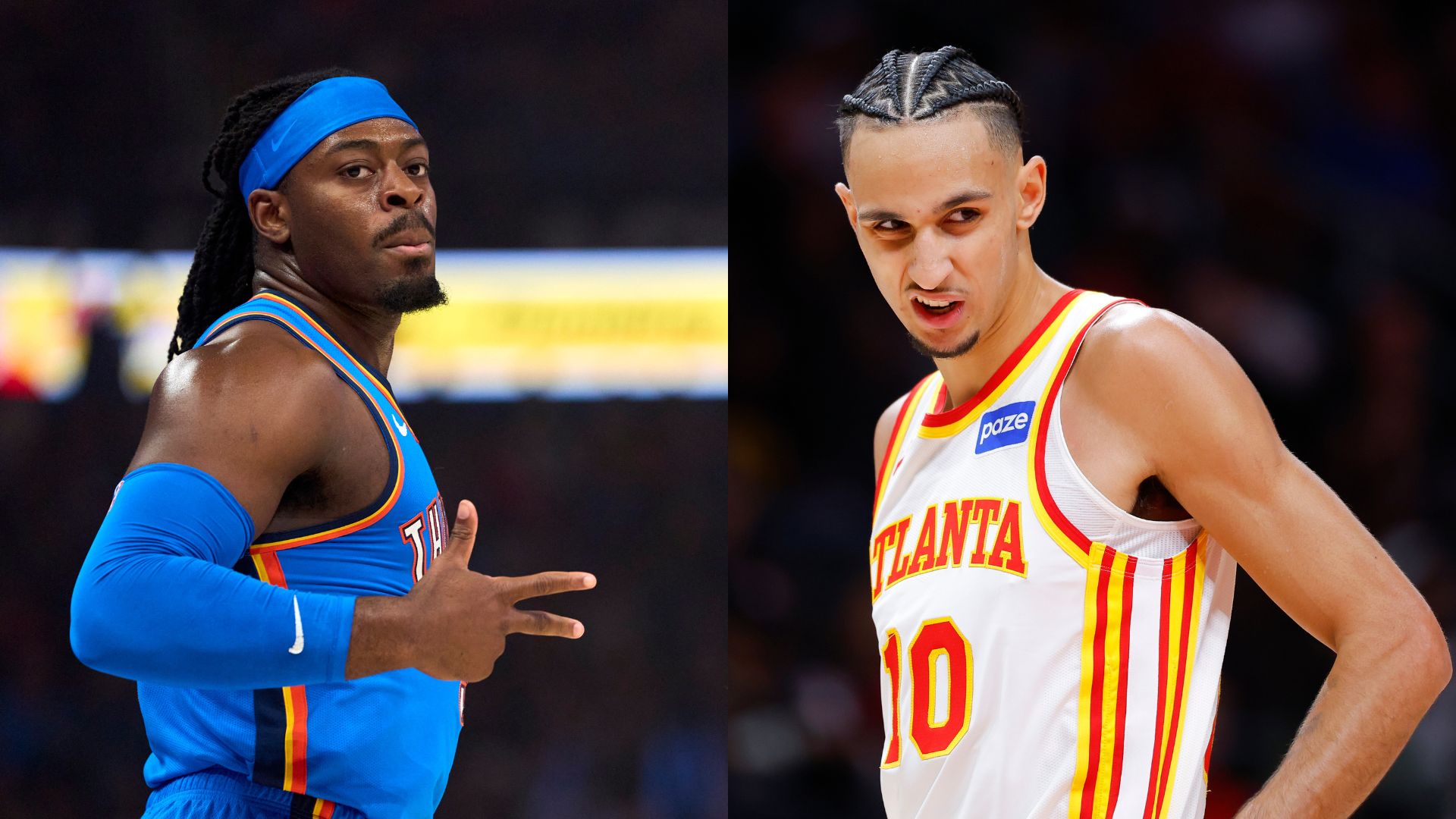
On Sunday, the Oklahoma City Thunder, Atlanta Hawks, and Dallas Mavericks completed a three-team trade that was depressing for at least two big reasons.
The first reason: Just two years after being selected first overall in the NBA Draft, Zaccharie Risacher has been kicked to the curb. The 21-year-old Frenchman had already fallen out of Atlanta's wing rotation during the regular season, and saw scant garbage-time minutes in the team's first-round playoff exit. To acquire a former No. 1 pick entering his third season, the Mavs only had to give up a second-round pick and undersized backup point guard Ryan Nembhard, who will go to Atlanta. The 2024 draft was thought to be a weak crop, but plenty of players taken in the first round, and possibly a handful taken in the second, appear to be headed for more fruitful NBA careers than Risacher. On an optimistic read, he's still got enough size and shooting to stick around someone's rotation after his current contract, but the fact that this is even a subject of speculation for a player of this pedigree is grim.
The second reason this trade is a bummer: Just one year after winning the NBA championship, the Thunder are already cutting costs and losing depth. Lu Dort, a beefy, goofy, dirty wing whose contributions were crucial to OKC's title run—even if his offensive shortcomings hurt them in their 2026 playoff push—was shipped to Atlanta, where he'll play out the last year of his current contract. In return, the Thunder merely picked up three second-round picks.
They were bound to feel the pinch of their three huge contracts. Shai Gilgeous-Alexander, Jalen Williams, and Chet Holmgren will each earn about 25 percent of the team's salary cap in the 2026-27 season; in the following season, SGA's contract will bump up to 35 percent, leaving little room to pad out the rest of the roster. It was a certainty that the Thunder would be shedding some salary this summer, but thus far they've shipped out Isaiah Joe, Aaron Wiggins, and now Dort to the Eastern Conference, losing the deep rotation that made their "48 minutes of psychotic defensive pressure" strategy viable, and they've done little to shore up their bench.
The Thunder won the 2025 title without paying the luxury tax, on the strength of superb drafting and player development, running rampant with a horde of young players. They continued to narrowly dodge the tax in 2026, a year that ended with them the missing out on the NBA Finals by an eight-point margin in a Game 7, despite losing their second- and third-best offensive creators to injuries. They're still a very good team, but those young players have since grown up and earned max extensions, the luxury tax is now unavoidable, and we're discovering the extent of their ownership's stinginess. This Dort trade leaves Oklahoma City over the first apron, but comfortably under the second.
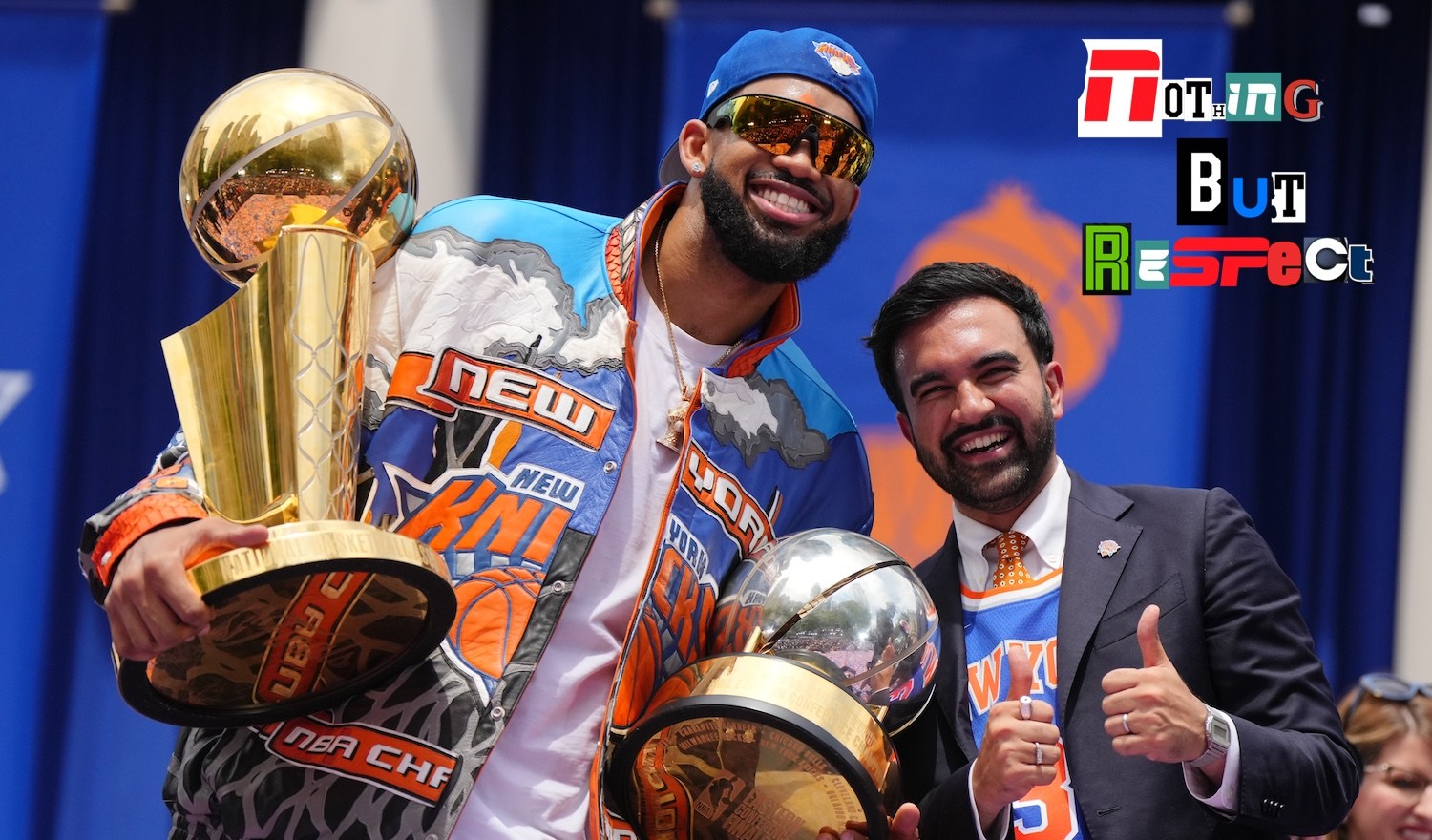
If you're a Thunder fan being driven mad by cheap-ass owners while still in a window of title contention, at least you're not alone. We've just seen an NBA owner vaporize post-championship goodwill in record time by refusing to spend: The New York Knicks' front office recently told The Athletic's Fred Katz that they wanted to spend more to run back their winning roster, but were hamstrung by owner James Dolan, who wanted to avoid the second apron. I can't recall any other instance of an NBA front office explicitly making it public that an owner was preventing them from making moves they wanted to make.
Thunder general manager Sam Presti, who has always been adept at using the media, is taking a subtler tack—but not that much subtler. Here's what he told The Oklahoman after the Dort trade:
You said at your season-ending press conference that the second apron wouldn’t prevent you from keeping this version of the Thunder together. But if we saw changes, it would be finances that would force a transaction, like the one we saw with Lu Dort. Is that still the case?
Yes, that’s accurate. We were comfortable being over the second apron with this team and how we were uniquely constructed. We have been consistent with that view for a few years now.
This was a financial decision. The impression I have been given is that the savings generated this summer, and from being out of the tax the last several years, will be re-allocated to future teams. Along with other new well-documented revenue streams, this will allow us to make more basketball-related decisions over the next several years.
"The impression I have been given" sure reads like a guy talking through clenched teeth, as he looks forward to "more basketball-related decisions" rather than further penny-pinching.